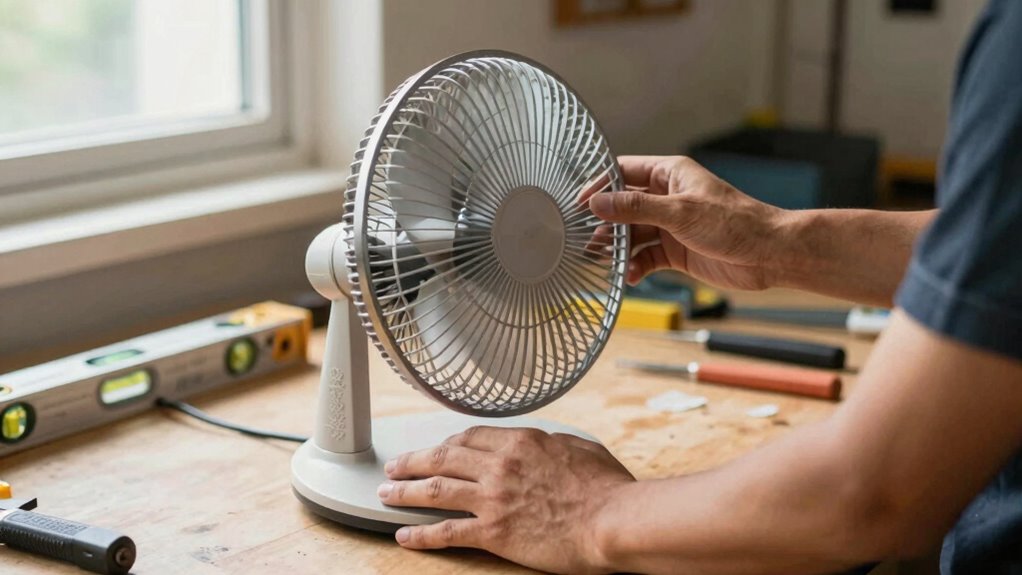
To balance a fan correctly, start by inspecting the blades to guarantee they’re aligned and free of damage. Use a balancing kit with weights and a mounting device to test adjustments. Attach small weights opposite the wobbling side and gradually fine-tune for smooth operation. Secure all weights once you’re satisfied with how it runs. With patience, you’ll find the right balance, and there’s much more to discover about perfecting this process.
Key Takeaways
- Use a balancing kit to temporarily attach weights and test fan vibrations during operation.
- Inspect fan blades for proper alignment, bending, or damage before starting balancing.
- Add small weights opposite the side with the most wobble, adjusting iteratively for smooth rotation.
- Secure weights firmly once optimal balance is achieved to prevent shifting or imbalance.
- Monitor fan performance after adjustments, fine-tuning as needed for quieter, more efficient operation.

Ever wondered how to keep your bike or vehicle perfectly balanced? When it comes to fans and rotating machinery, proper balancing is essential to ensure smooth operation and longevity. Using a balancing kit can seem daunting at first, but understanding the basics makes the process straightforward. Your first step involves fan blade alignment, which is crucial for reducing vibration and preventing uneven wear. Misaligned blades can cause the fan to wobble and generate unnecessary noise, so carefully inspect each blade to verify they are positioned correctly. If you notice any blade out of place or bent, realign or replace it before proceeding. Proper fan blade alignment ensures that the weight distribution is even, which is the foundation for effective vibration correction. Once the blades are correctly aligned, you can move on to the balancing process itself.
Vibration correction is the core of balancing a fan. To achieve this, you’ll need a balancing kit that typically contains weights, a mounting device, and sometimes a balancing stand. Start by temporarily attaching the weights to the blades or hub, testing the fan’s operation after each adjustment. The goal is to find the point where the fan runs most smoothly, with minimal wobble or noise. As you rotate the fan, observe the vibrations and adjust the weights accordingly. If the fan wobbles more on one side, add weight to the opposite side to counteract the imbalance. It’s a trial-and-error process, but patience pays off. Proper vibration correction not only improves performance but also extends the lifespan of the fan by reducing undue stress on its components. Additionally, understanding energy-efficient practices can help reduce operational costs over time.
Throughout this process, keep a close eye on how the fan responds to each adjustment. Use the balancing kit to fine-tune the weight distribution until you notice a significant reduction in vibration and noise. Remember, the key to balancing a fan effectively is consistency; make small adjustments, test thoroughly, and record what works best. Once the fan runs smoothly without excessive vibration, secure all weights firmly in place. Properly balanced fans operate more quietly, consume less energy, and experience less wear and tear over time. With a little practice and patience, you’ll find that balancing a fan becomes second nature, and you’ll gain confidence in maintaining your equipment’s optimal performance.
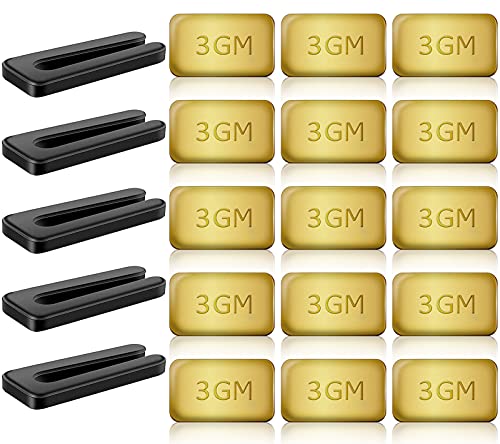
HFYHWT 20PCS Ceiling Fan Balancing Kit, 5 Sets High Calibration Blade Balance Tool Including 5 Pcs Resilient Clips and 15 Pcs Metal Self-Adhesive 3G Weight
PROFESSIONAL RESULTS: Ceiling fan balance kit include balance clip to locate problem area, self-adhesive 3G Weight-Balance helps to…
As an affiliate, we earn on qualifying purchases.
As an affiliate, we earn on qualifying purchases.
Frequently Asked Questions
Can I Use a Balancing Kit on All Types of Fans?
You can use a balancing kit on most types of fans, but its effectiveness depends on proper fan blade alignment. Balancing kits work well for ceiling and box fans, helping you fix wobbling issues. However, some specialty fans or those with unique blade designs may require specific tools or professional adjustments. Always check the fan’s manufacturer instructions to verify the balancing kit’s compatibility and that it will effectively improve your fan’s performance.
How Often Should I Check Fan Balance?
You should check your fan balance every few months to prevent issues. Regular fan maintenance is vital, especially if you notice unusual noises or vibrations. Don’t forget safety precautions—turn off the power before inspecting or balancing. Neglecting this could lead to motor wear or accidents. Stay ahead of problems by staying vigilant; a quick balance check now could save you costly repairs later. Keep your fan running smoothly and safely.
What Signs Indicate a Fan Needs Balancing?
You’ll notice your fan needs balancing if you feel unusual vibration patterns or increased noise levels during operation. These signs indicate uneven weight distribution or misalignment. When vibration feels rough or noise becomes louder than usual, it’s time to check and balance your fan. Addressing these issues promptly helps prevent damage and guarantees smooth, quiet operation, keeping your fan running efficiently and prolonging its lifespan.
Is Balancing a Fan Safe for Beginners?
Balancing a fan is generally safe for beginners if you follow proper safety precautions. Did you know that improper balancing can cause fans to wobble and potentially fall? While it’s doable, it’s wise to seek professional assistance if you’re unsure or uncomfortable. Always unplug the fan, wear safety gear, and follow instructions carefully to avoid accidents. With caution, you can confidently balance your fan and ensure safe, smooth operation.
Are There Alternative Methods to Balance a Fan?
Yes, there are alternative tools and DIY solutions to balance a fan. You can try using a small level or a smartphone app to check for wobbling, then adjust the blades accordingly. Some people use tape or washers as makeshift weights to correct imbalance. Just guarantee your adjustments are gentle and precise to avoid damaging the fan. These methods can be effective if you don’t have a balancing kit handy.

Supco FBP100 Fan Blade And Blower Wheel Puller
Package dimensions:2.286 cms(L) x2.286 cms(W) x28.702 cms(H)
As an affiliate, we earn on qualifying purchases.
As an affiliate, we earn on qualifying purchases.
Conclusion
So, you’ve got your balancing kit, and you’re all set to tame those wobbly fans. Ironically, the most precise tool in your hand might just be your patience—because let’s face it, balancing a fan isn’t exactly rocket science, but it does require a steady hand and a keen eye. Now, go ahead, enjoy the quiet hum, and remember: a little wobble is okay, as long as you’re in control (or at least pretending to be).

KALIONE Ceiling Fan Blade Balancing Kit Including Fan Balancing Clips and 12pcs Metal Self-Adhesive 3G Weight Practical Fan Balance Kit for Ceiling Fan Weight Balancing 4pcs
Package Content: You will receive 4 sets of fan balancing kit, enough quantity meets all your needs.
As an affiliate, we earn on qualifying purchases.
As an affiliate, we earn on qualifying purchases.
KALIONE Ceiling Fan Blade Balancing Kit Including Fan Balancing Clips and 12pcs Metal Self-Adhesive 3G Weight Practical Fan Balance Kit for Ceiling Fan Weight Balancing 4pcs
Package Content: You will receive 4 sets of fan balancing kit, enough quantity meets all your needs.
As an affiliate, we earn on qualifying purchases.
As an affiliate, we earn on qualifying purchases.