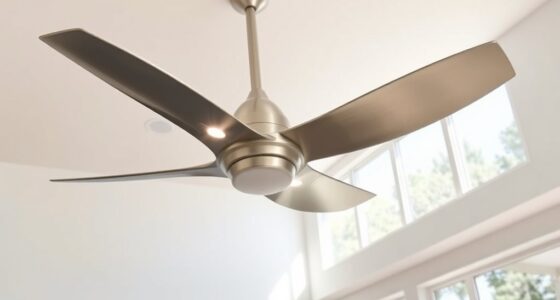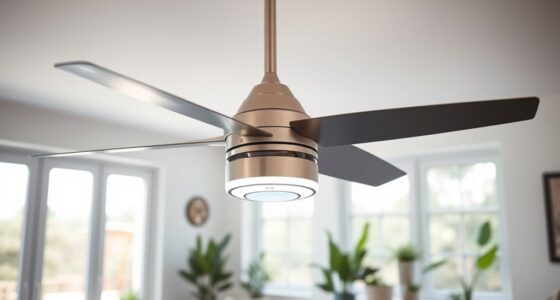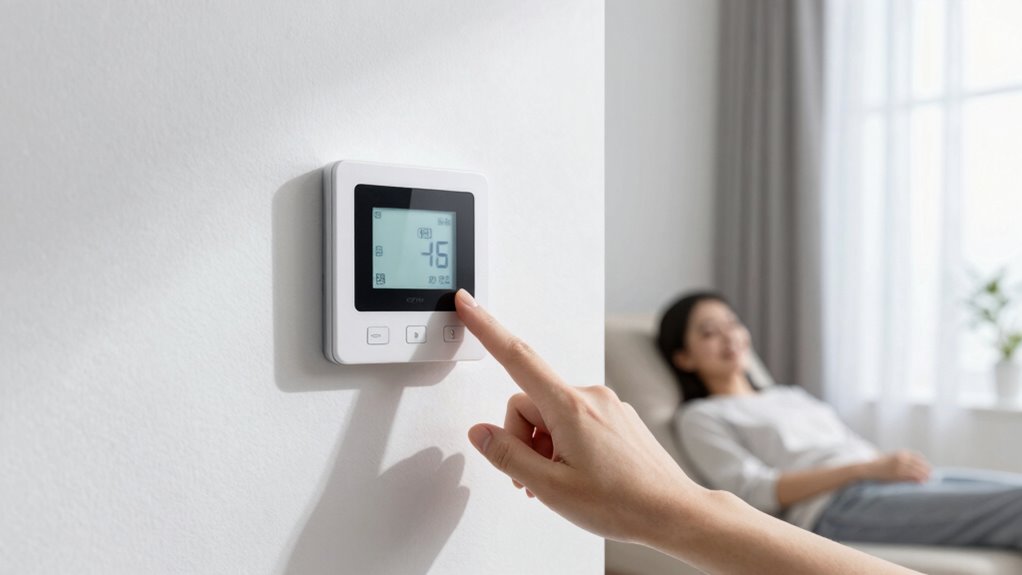

To feel cooler while raising your thermostat, set it a few degrees higher—about 2 to 3 degrees—since this reduces your AC’s workload and saves energy. Enhance the cooling sensation by using fans or opening windows during cooler times, which improves airflow and helps you feel comfortable even at higher temperatures. This simple trick works by balancing actual temperature with airflow, and if you’d like tips on optimizing this approach further, keep exploring.

Get home appliances delivered free — and shop member deals
- Fast, free delivery on millions of items
- Access to Prime Big Deal Days deals on October 6–7
- Prime Video, Amazon Music and more included
Key Takeaways
- Increase your thermostat setting by 2-3 degrees to save energy while using fans or open windows for a cooler feeling.
- Use fans and air circulation to enhance airflow, making higher temperature settings feel cooler.
- Combine raising the thermostat with strategic ventilation during cooler outdoor times for improved comfort.
- Adjust the set point gradually, monitoring comfort levels to find the optimal balance between temperature and perceived coolness.
- Remember that slight thermostat calibration issues can be offset by these techniques, maintaining indoor comfort efficiently.
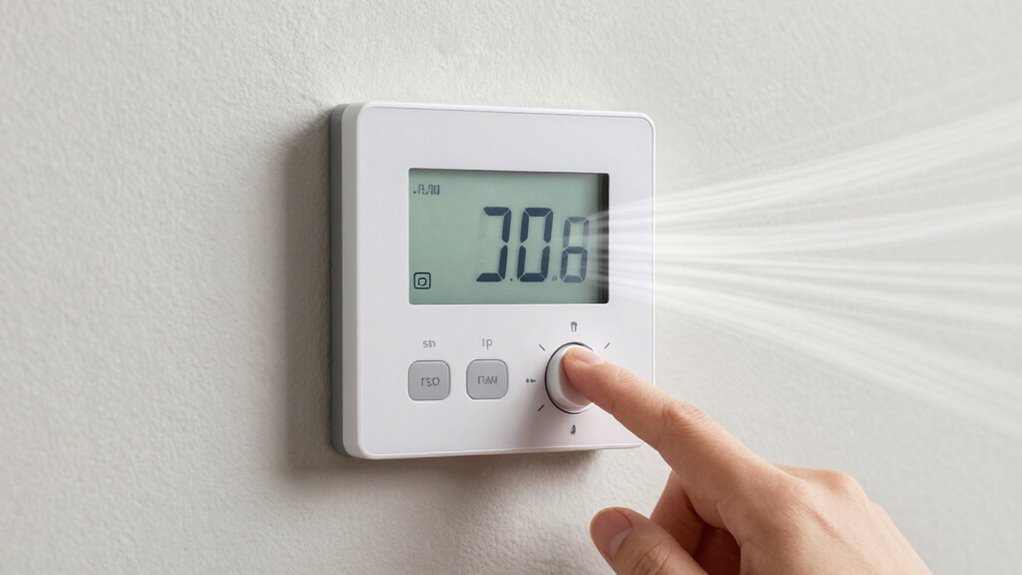
If you want to improve your home’s temperature accuracy without replacing your thermostat, the thermostat offset trick is a simple and effective solution. This method allows you to raise the thermostat’s set point slightly higher than your desired temperature and still feel cooler, leading to both energy savings and comfort optimization. It’s especially helpful if your thermostat isn’t perfectly calibrated or if you notice temperature inconsistencies in different rooms.
The core idea is to set your thermostat a few degrees higher than your comfort level but use additional strategies to create the sensation of coolness. For example, by increasing the thermostat setting by 2 or 3 degrees, your heating or cooling system works less often, reducing energy consumption. This results in noticeable energy savings, cutting down your utility bills without sacrificing comfort. The key is balancing this adjustment with other comfort-enhancing techniques, such as using fans or opening windows when outdoor temperatures are cooler.
You might find that raising the thermostat slightly helps your system operate more efficiently, especially during warmer months. When the air conditioning runs less frequently, it uses less energy, contributing to lower costs and a smaller environmental footprint. Meanwhile, you can offset the higher temperature setting by employing fans, which promote air circulation and create a cooling effect. This way, you get the best of both worlds: lower energy bills and a comfortable indoor environment.
Another benefit of this trick is that it helps mitigate the impact of a less accurate thermostat. If your device tends to read slightly higher or lower than the actual room temperature, adjusting the set point can compensate for that discrepancy. Over time, this can lead to a more consistent indoor climate, where you’re not constantly fiddling with the thermostat or feeling uncomfortable. The accuracy of your thermostat plays a significant role in maintaining optimal comfort and energy efficiency. The key is to find the right offset—small enough to save energy but large enough to make a noticeable difference in comfort.
In practice, start by raising your thermostat’s set point by 2 degrees and see how it feels over a few days. If you’re still comfortable, you’ve achieved both energy savings and comfort optimization. If not, tweak it slightly until you find the perfect balance. Remember, the goal is to maintain a temperature that feels cool enough for you, while still reducing your HVAC’s workload. This simple trick can have a meaningful impact on your energy bills and overall home comfort, making it a smart, cost-effective strategy for managing indoor climate.
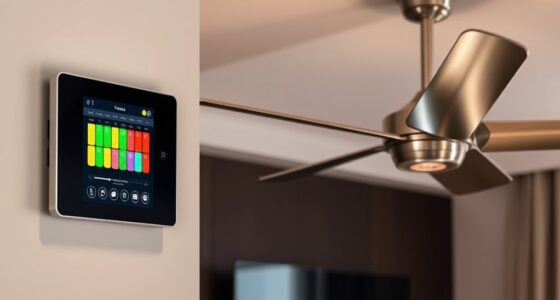
digital thermostat with calibration
As an affiliate, we earn on qualifying purchases.
As an affiliate, we earn on qualifying purchases.
Frequently Asked Questions
Does the Offset Trick Work With All Thermostat Types?
The offset trick works best with smart thermostats, as they allow you to adjust settings easily and customize temperature offsets. With analog thermostats, this trick might not be effective because they lack precise control features. So, if you want to try raising the temperature while feeling cooler, smart thermostats give you a better chance to make this adjustment successfully, while analog models may not respond as well.
Can This Method Impact Your Energy Bills?
Yes, this method can impact your energy bills positively. When you use thermostat calibration tricks like raising the temperature while feeling cooler, you optimize your HVAC system’s efficiency. This promotes energy savings because your system doesn’t work as hard to maintain a comfortable environment. Accurate thermostat calibration guarantees the temperature settings match your actual comfort level, reducing unnecessary energy use and lowering your utility bills.
Is There a Risk of Damaging the Thermostat?
Think of your thermostat as a delicate instrument, like a finely tuned guitar string. Raising the temp slightly won’t damage it if you avoid extreme changes, but frequent calibration tweaks might cause issues. If your thermostat’s temperature sensor isn’t accurate or gets out of sync, it could lead to improper readings, risking damage over time. So, be gentle with calibration, and avoid sudden, drastic adjustments to keep it working smoothly.
How Much Should I Raise the Temperature for Comfort?
You should raise the temperature adjustment by about 2-3 degrees to optimize comfort without overworking your system. This slight increase can help you feel cooler by reducing humidity and enhancing airflow, making your space more comfortable. Keep an eye on your thermostat to avoid unnecessary energy use. Adjust gradually and observe how your environment responds, ensuring comfort optimization while maintaining energy efficiency.
Does Humidity Affect the Effectiveness of This Trick?
Humidity impact definitely influences this trick. When moisture levels are high, your body feels warmer because sweat evaporates less effectively, reducing cooling. If humidity is high, raising the thermostat temperature might not feel as comfortable, even with the offset trick. In dry conditions, you’ll notice a bigger difference. So, moisture influence plays a key role; adjusting your approach based on humidity levels helps you stay cooler and more comfortable.
Conclusion
So, savvy savers, steer your thermostat wisely. By raising the setting slightly, you can still stay cool while saving cash. Remember this simple secret: shift, shuffle, and stay smart. This trick turns temperature tricks into terrific savings, all while feeling fresh and comfortable. Stay sharp, save smart, and enjoy the cool comfort without the costly climb. With this thermostat offset trick, you’ll stay cool and keep cash in your pocket!
NFL season / tailgating Picks
team gear
As an affiliate, we earn on qualifying purchases.