Choosing the right smart thermostats for home energy savings requires balancing upfront cost with long-term utility bill reductions. My top recommendation for most homeowners is the ecobee Smart Thermostat Enhanced because its room sensors eliminate hot and cold spots, leading to more consistent comfort and less wasted heating. For those deeply embedded in the Google ecosystem, the Google Nest Learning Thermostat offers superior automation that learns your habits without manual programming. The main tradeoff you will face is between ease of installation and advanced zoning capabilities; simple Wi-Fi models are cheaper but lack the granular control needed for multi-story homes. Continue reading to see how these fifteen models stack up against each other in real-world efficiency scenarios.

Get home appliances delivered free with Prime
- Fast, free delivery on millions of items
- Prime Video, Amazon Music and more included
- Member-only deals all year
Complete the kit


Key Takeaways
- Room sensors are the single biggest differentiator for energy efficiency in multi-zone homes, making ecobee models generally more efficient than sensor-less competitors.
- Ecosystem lock-in is real; choosing a thermostat that matches your existing smart home hub (Alexa, Google, or Apple) reduces friction and increases the likelihood you will actually use the energy-saving features.
- Basic Wi-Fi thermostats often fail to deliver significant savings because they lack the automated scheduling algorithms found in learning models like Nest or ecobee.
- Installation complexity varies widely; models requiring a C-wire adapter add hidden costs and setup time that can negate the initial price advantage of budget units.
- Premium designs like the Nest Learning Thermostat offer aesthetic value but do not always provide better energy data visibility than mid-range ecobee models.
| ecobee Smart Thermostat Essential, Wi-Fi, ENERGY STAR Certified |  | Best Overall for Flexible Scheduling | Connectivity: Wi-Fi | Display: 3.74-inch LCD touchscreen | Power: Battery powered | VIEW LATEST PRICE | See Our Full Breakdown |
| Honeywell Home X2S Smart Wi-Fi Thermostat, Gray |  | Best for Matter-Certified Scheduling | Connectivity: Wi-Fi | Display: 6.57-inch LCD | HVAC compatibility: Up to 2 heat/2 cool conventional or 2 heat/1 cool heat-pump systems | VIEW LATEST PRICE | See Our Full Breakdown |
| ecobee EB-STATE3LTP-02 Smart Wi-Fi Thermostat, Black |  | Best for Learning-Based Setbacks | Model: EB-STATE3LTP-02 | Connectivity: Wi-Fi | Display: 3.5-inch digital display | VIEW LATEST PRICE | See Our Full Breakdown |
| ecobee4 Smart Thermostat with Built-In Alexa and Room Sensor |  | Best for Room-Level Comfort | Model: ecobee4 | Connectivity: Wi-Fi | Power: Hardwired, 24 volts | VIEW LATEST PRICE | See Our Full Breakdown |
| Honeywell Home X7S Smart Wi-Fi Programmable Thermostat, Black |  | Best for Advanced HVAC Scheduling | Display: 4.3-inch customizable touchscreen | Connectivity: Wi-Fi at 2.4 or 5 GHz; Matter | Control methods: App, touch, voice | VIEW LATEST PRICE | See Our Full Breakdown |
| Honeywell Lyric T6 Pro Wi-Fi Programmable Thermostat |  | Best for Multi-Stage HVAC Systems | Model: TH6220WF2006/U | Heat pump compatibility: Up to 2 heat / 1 cool stage | Conventional system compatibility: Up to 2 heat / 2 cool stages | VIEW LATEST PRICE | See Our Full Breakdown |
| ecobee3 Smart Wi-Fi Thermostat with Remote Sensor (2nd Generation) |  | Best for Occupied-Room Savings | Model: EB-STATe3-O2 | Connectivity: Wi-Fi | Display: 2-inch touchscreen | VIEW LATEST PRICE | See Our Full Breakdown |
| Honeywell Home Wi-Fi Smart Color Programmable Thermostat, 7-Day, Touchscreen, ENERGY STAR, Gray |  | Best for Schedule-Based Savings | Model: RTH9585WF1004 | Connectivity: Wi-Fi | Programming: 7-day programmable | VIEW LATEST PRICE | See Our Full Breakdown |
| Amazon Smart Thermostat with Alexa and Ring Compatibility |  | Best for Alexa-Centered Homes | Model: S6ED3R | HVAC compatibility: Most 24V conventional forced-air, heat pump, and radiant boiler systems | Wi-Fi: 2.4 GHz, 802.11 b/g/n; no 5 GHz support | VIEW LATEST PRICE | See Our Full Breakdown |
| ecobee Smart Thermostat Enhanced |  | Best Premium All-Rounder | Connectivity: Wi-Fi | Compatible HVAC systems: Air conditioner, boiler, furnace, heat pump, humidifier | Display: 4-inch LCD | VIEW LATEST PRICE | See Our Full Breakdown |
| Google Nest Smart Thermostat, Charcoal | 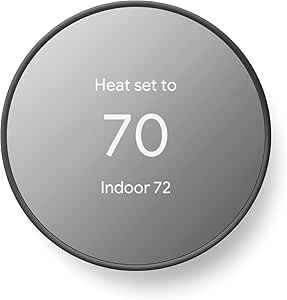 | Best for Google Home Ecosystem Users | Connectivity: Wi-Fi (2.4 GHz and 5 GHz), Bluetooth Low Energy | Voice Assistant Support: Google Assistant, Amazon Alexa, Matter-certified | Display Type: 2-inch LCD | VIEW LATEST PRICE | See Our Full Breakdown |
| ecobee3 Lite Smart Thermostat with Whole Home Sensors Bundle |  | Best for Sensor-Driven Energy Optimization | Energy Savings Claim: Up to 23% annually | Included Sensors: 1 SmartSensor, 1 Door/Window Sensor | Sensor Range: Up to 60 ft through walls | VIEW LATEST PRICE | See Our Full Breakdown |
| Google Nest Learning Thermostat Pro Edition with Temperature Sensor (4th Gen, 2024, Polished Silver) |  | Best Premium Design & Compatibility | Generation: 4th Gen (2024) | Material: Metal (Polished Silver) | Included Sensor: Nest Temperature Sensor | VIEW LATEST PRICE | See Our Full Breakdown |
| Sensi ST55 Wi-Fi Smart Thermostat |  | Best for Traditional Installation & Compatibility | Display Size: 5 inches | Form Factor: Rectangular | Platform Support: Apple HomeKit, Alexa, Google Assistant, SmartThings | VIEW LATEST PRICE | See Our Full Breakdown |
| ecobee3 lite Smart Wi-Fi Thermostat |  | Best Value Entry-Level Smart Thermostat | Display Type: Touchscreen | Voice Assistant: Amazon Alexa (device sold separately) | Platform Support: HomeKit, IFTTT, SmartThings, Vera | VIEW LATEST PRICE | See Our Full Breakdown |
| smart thermostats for home energy saving | Connectivity | Display |
|---|---|---|
| ecobee Smart Thermostat Essent | Wi-Fi | 3.74-inch LCD touchscreen |
| Honeywell Home X2S Smart Wi-Fi | Wi-Fi | 6.57-inch LCD |
| ecobee EB-STATE3LTP-02 Smart W | Wi-Fi | 3.5-inch digital display |
| ecobee4 Smart Thermostat with | Wi-Fi | — |
| Honeywell Home X7S Smart Wi-Fi | Wi-Fi at 2.4 or 5 GHz; Matter | 4.3-inch customizable touchscreen |
| Honeywell Lyric T6 Pro Wi-Fi P | Wi-Fi | — |
| ecobee3 Smart Wi-Fi Thermostat | Wi-Fi | 2-inch touchscreen |
| Honeywell Home Wi-Fi Smart Col | Wi-Fi | Customizable color touchscreen |
| Amazon Smart Thermostat with A | — | — |
| ecobee Smart Thermostat Enhanc | Wi-Fi | 4-inch LCD |
| Google Nest Smart Thermostat | Wi-Fi (2.4 GHz and 5 GHz), Bluetooth Low Energy | — |
| ecobee3 Lite Smart Thermostat | — | — |
| Google Nest Learning Thermosta | Wi-Fi, Bluetooth | LCD |
| Sensi ST55 Wi-Fi Smart Thermos | — | — |
| ecobee3 lite Smart Wi-Fi Therm | — | — |
More Details on Our Top Picks
ecobee Smart Thermostat Essential, Wi-Fi, ENERGY STAR Certified
I’d put the ecobee Smart Thermostat Essential first for households seeking practical energy savings without tying themselves to one smart-home platform. Its auto-away mode and auto-scheduling can reduce heating or cooling when the home is empty, while app and touchscreen controls make schedule changes straightforward. Compared with the Honeywell Home X2S, it supports a broader range of 24 VAC equipment, including boilers and dual-fuel systems, and it doesn’t require a C-wire in every installation. The tradeoff is that homes without one may need to buy the Power Extender Kit separately. Room-specific temperature monitoring also costs extra because the SmartSensor is sold separately. Its stated savings claim is up to 23% against holding 72°F, not a guaranteed result for every home.
Pros:- Auto-away and automatic scheduling can reduce heating or cooling when nobody is home.
- Works with Apple HomeKit, Google Assistant, and Amazon Alexa.
- Supports many 24 VAC systems, including boilers, heat pumps, and dual-fuel equipment.
- Offers both touchscreen and app control.
Cons:- Homes without a C-wire may need a separately sold Power Extender Kit.
- A SmartSensor for room-by-room temperature monitoring is sold separately.
Best for: Households with compatible 24 VAC heating or cooling that want app scheduling, auto-away, and broad smart-home compatibility.
Not ideal for: Buyers who need included room sensors or want to avoid extra wiring accessories if their home lacks a C-wire.
- Connectivity:Wi-Fi
- Display:3.74-inch LCD touchscreen
- Power:Battery powered
- Mounting:Wall mount
- HVAC compatibility:Most 24 VAC systems, including gas, oil, electric, dual fuel, forced air, conventional systems, heat pumps, and boilers
- Smart-home compatibility:Apple HomeKit, Google Assistant, Amazon Alexa
- Energy-saving features:Auto-away, auto-scheduling, fan control, humidity detection, programmable temperature control
- C-wire:Power Extender Kit sold separately for homes without a C-wire
- Stated energy savings:Up to 23% compared with holding 72°F/22°C
Our verdict“Choose this ecobee for broad HVAC compatibility and flexible energy-saving schedules, provided you’re comfortable checking wiring and buying any needed accessories.”
Honeywell Home X2S Smart Wi-Fi Thermostat, Gray
The Honeywell Home X2S suits buyers who want a clear schedule and smart-home flexibility without paying for room sensors or a large touchscreen. Its auto-away function can adjust the setpoint when the home is empty, while several scheduling formats let households match temperature changes to workdays and weekends. Matter support gives it an advantage over the older ecobee EB-STATE3LTP-02 in smart-home interoperability, though that ecobee adds learning and location-based adjustments. The X2S is less forgiving at installation: it requires a C-wire, and some systems may need an adapter. Its HVAC support is also capped at specified heating and cooling stages, so buyers with more complex equipment should verify compatibility before choosing it.
Pros:- Matter-certified with Alexa, Google Assistant, and Apple HomeKit support.
- Auto-away and multiple scheduling formats support routine temperature setbacks.
- Displays humidity and can provide filter reminders.
- Offers app, voice, and push-button control.
Cons:- Requires a C-wire, and some installations may also need an adapter.
- Supports only the listed conventional and heat-pump heating and cooling stages.
Best for: Households with a C-wire and a compatible conventional or heat-pump system that want Matter support and selectable weekly schedules.
Not ideal for: Owners of systems outside its listed stage limits or homes without a C-wire who want a simple installation.
- Connectivity:Wi-Fi
- Display:6.57-inch LCD
- HVAC compatibility:Up to 2 heat/2 cool conventional or 2 heat/1 cool heat-pump systems
- Smart-home compatibility:Matter, Amazon Alexa, Google Assistant, Apple HomeKit
- Control methods:App, push button, voice
- Scheduling:5-1-1, 5-2, 7-day, weekly, or non-programmable
- Power:Corded electric
- Wiring requirement:C-wire required; adapter may be needed
- Warranty:2 years
Our verdict“Pick the X2S if your wiring and HVAC stages match and Matter-enabled scheduling matters more than learning features or room sensors.”
ecobee EB-STATE3LTP-02 Smart Wi-Fi Thermostat, Black
The ecobee EB-STATE3LTP-02 is aimed at households that would rather let a thermostat learn routines than build every schedule manually. It can learn preferred temperatures and use phone location and sensors to lower heating or cooling when the home is empty, linking everyday convenience with potential energy savings. Compared with the Honeywell Home X2S, its emphasis is more on adapting to household patterns than on Matter certification and multiple preset schedule formats. The compromise is a smaller, button-controlled digital display, rather than the touchscreen interaction offered by the ecobee Essential. Its 24-volt power requirement also narrows installation fit, and the listed AAA battery is another component to account for. Choose it for automatic adjustments, not for the most modern display or broadest stated HVAC compatibility.
Pros:- Learns preferred temperatures to create an automatic schedule.
- Uses sensors and phone location to lower the temperature when the home is empty.
- Display can show the time, temperature, or weather.
- Supports Alexa, Android, Apple HomeKit, SmartThings, and iOS.
Cons:- Requires a 24-volt power supply, limiting fit in homes with other wiring types.
- Uses button controls and a 3.5-inch digital display rather than a touchscreen.
- Requires one AAA battery.
Best for: Households with compatible 24-volt wiring that want temperature adjustments to follow learned routines and phone-location signals.
Not ideal for: Buyers seeking a touchscreen, Matter support, or a clearly stated wide range of HVAC system compatibility.
- Model:EB-STATE3LTP-02
- Connectivity:Wi-Fi
- Display:3.5-inch digital display
- Control type:Button
- Power:AC/DC; 24 volts
- Battery:One AAA battery required
- Compatible platforms:Amazon Alexa, Android, Apple HomeKit, SmartThings, iOS
- Mounting:Wall mount
Our verdict“Choose this model if learned routines and location-based setbacks matter more than a touchscreen or Matter-certified controls.”
ecobee4 Smart Thermostat with Built-In Alexa and Room Sensor
The ecobee4 earns its place for buyers who want a room sensor included, rather than treating room-level temperature awareness as a separate purchase. That sensor can help the thermostat respond to conditions beyond the wall where it is mounted, making setbacks and comfort adjustments more relevant to occupied spaces. Its built-in Alexa voice service also allows voice control at the thermostat itself. Compared with the newer ecobee Smart Thermostat Essential, this model’s strongest distinction is the included sensor and Alexa integration; the Essential offers a touchscreen and explicitly lists auto-away and auto-scheduling. The ecobee4’s button controls feel less direct than a touchscreen, and it needs hardwired 24-volt power. Buyers should confirm their equipment fit, since the supplied compatibility details name heat pumps and humidifiers rather than a broad list of systems.
Pros:- Includes a room sensor for temperature information beyond the thermostat’s wall location.
- Built-in Alexa voice service supports hands-free control.
- Works with multiple platforms, including Apple HomeKit, Google Assistant, SmartThings, and IFTTT.
- Supports programmable, remote, and voice-enabled temperature control.
Cons:- Requires hardwired 24-volt power.
- Uses button controls rather than a touchscreen.
- The listed system compatibility is narrower than the ecobee Essential’s stated range.
Best for: Households with compatible 24-volt equipment that want an included room sensor and Alexa voice control built into the thermostat.
Not ideal for: Buyers who lack hardwired 24-volt power, prefer touchscreen controls, or need clearly documented compatibility with a wider range of HVAC systems.
- Model:ecobee4
- Connectivity:Wi-Fi
- Power:Hardwired, 24 volts
- Included component:Room sensor
- Voice control:Built-in Alexa voice service
- Controller compatibility:Amazon Alexa, Android, Apple HomeKit, Google Assistant, IFTTT, SmartThings, iOS
- Temperature control:Programmable, remote, voice-enabled
- Compatible systems:Heat pump, humidifier
- Mounting:Wall mount
Our verdict“Choose the ecobee4 if an included room sensor and built-in Alexa matter more to you than touchscreen control and broader stated system coverage.”
Honeywell Home X7S Smart Wi-Fi Programmable Thermostat, Black
The Honeywell Home X7S is the strongest fit here for owners of higher-stage compatible systems who want occupancy sensing and a larger display in one thermostat. Its 4.3-inch customizable touchscreen makes schedules and settings easier to adjust at the wall, while occupancy sensing and auto-scheduling can reduce unnecessary heating or cooling when household routines change. Compared with the Honeywell Home X2S, it supports more heat-pump stages and adds a larger touchscreen, but it still requires a C-wire and compatible Wi-Fi. A C-wire adapter voucher is included if needed, which softens—but does not remove—the wiring hurdle. It also cannot control 120–240 V electric baseboard heat, and humidity monitoring may require additional equipment or accessories. Check system type before buying.
Pros:- Occupancy sensing and auto-scheduling can adjust temperature as household presence changes.
- Customizable 4.3-inch touchscreen offers a clear wall-control interface.
- Matter support works with Alexa, Google Assistant, and Apple Home.
- Supports up to 3 heat/2 cool heat-pump or 2 heat/2 cool conventional systems.
Cons:- Requires Wi-Fi and a C-wire; an adapter voucher does not remove the need to address wiring.
- Not compatible with 120–240 V electric baseboard heat.
- Humidity monitoring may require additional equipment or accessories.
Best for: Owners of compatible multi-stage heat pumps or conventional systems who want occupancy-based adjustments and a customizable touchscreen.
Not ideal for: Homes with 120–240 V electric baseboard heating, no suitable Wi-Fi, or wiring that cannot meet its C-wire requirement.
- Display:4.3-inch customizable touchscreen
- Connectivity:Wi-Fi at 2.4 or 5 GHz; Matter
- Control methods:App, touch, voice
- Smart-home compatibility:Amazon Alexa, Google Assistant, Apple Home
- HVAC compatibility:Up to 3 heat/2 cool heat pump with electric backup, or 2 heat/2 cool conventional systems
- Additional features:Occupancy sensing, humidity monitoring, auto-scheduling
- Power and wiring:Hardwired; C-wire required, with C-wire adapter voucher included if needed
- Not compatible with:120–240 V electric baseboard heat
- Mounting:Wall mount
Our verdict“Pick the X7S for occupancy-aware scheduling on a compatible multi-stage system, but skip it if your home uses electric baseboard heat.”
Honeywell Lyric T6 Pro Wi-Fi Programmable Thermostat
The Lyric T6 Pro is a practical choice when energy savings depend on working with a more involved heating and cooling setup. It supports heat pumps with up to two heating stages and conventional systems with up to two heating and two cooling stages, giving it broader stage support than the Amazon Smart Thermostat, which is specified for most 24V systems. Wi-Fi and app control make schedule changes possible away from the wall, while Alexa and Apple HomeKit support suit homes already using either platform. The tradeoff is a more basic control experience: the listed display is manual, and the product data does not describe occupancy sensing or energy reports like those found on the Honeywell Home Wi-Fi Smart Color Thermostat. Its plastic build and two required AA batteries are also worth weighing. Choose it for system compatibility, not room-by-room automation.
Pros:- Supports multiple heating and cooling stages across compatible heat pump and conventional systems.
- Wi-Fi app control allows temperature adjustments away from home.
- Works with Amazon Alexa and Apple HomeKit.
- Wall-mounted design includes a clock display.
Cons:- Requires two AA batteries.
- Plastic construction feels less substantial than buyers may expect.
- Does not list occupancy sensing or energy reporting features.
Best for: Homeowners with a compatible multi-stage heat pump or conventional HVAC system who want app access and Alexa or Apple HomeKit control.
Not ideal for: Buyers seeking occupancy-based adjustments, detailed energy reports, or a touchscreen with extensive scheduling features.
- Model:TH6220WF2006/U
- Heat pump compatibility:Up to 2 heat / 1 cool stage
- Conventional system compatibility:Up to 2 heat / 2 cool stages
- Connectivity:Wi-Fi
- Smart home compatibility:Amazon Alexa, Apple HomeKit
- Control:App control
- Mounting:Wall mount
- Power:AC/DC; 2 AA batteries required
Our verdict“Choose the Lyric T6 Pro if your priority is app control for a compatible multi-stage HVAC system rather than advanced occupancy-based savings.”
ecobee3 Smart Wi-Fi Thermostat with Remote Sensor (2nd Generation)
The ecobee3 focuses savings on where people actually are: its included remote sensor reads both temperature and occupancy, so the thermostat can respond when a room is in use rather than relying only on the hallway reading. That gives it a stronger room-level energy strategy than the Honeywell Lyric T6 Pro, whose listed strengths center on multi-stage system support and app control. The ecobee3 can also use weather and home energy data, and it supports up to 32 sensors if you want to expand coverage later. The catch is that the box includes just one sensor, so broader coverage may require additional purchases. Alexa voice control also needs a separate Alexa device. It makes the most sense for households with uneven room temperatures and established smart-home platforms, not buyers seeking a simple, low-setup schedule controller.
Pros:- Included sensor measures both room temperature and occupancy.
- Supports up to 32 sensors for expanded room coverage.
- Uses occupancy, weather, and home energy data to guide heating and cooling.
- Compatible with Alexa, Apple HomeKit, SmartThings, and Vera.
Cons:- Only one remote sensor is included.
- Alexa voice control requires a separate Alexa device.
- Plastic construction may not suit buyers seeking a more premium finish.
Best for: Households with rooms that heat or cool unevenly, especially those willing to add sensors and use occupancy data to guide temperature changes.
Not ideal for: Buyers who want multiple room sensors included or built-in Alexa voice control without a separate device.
- Model:EB-STATe3-O2
- Connectivity:Wi-Fi
- Display:2-inch touchscreen
- Included sensor:1 temperature and occupancy remote sensor
- Maximum sensors:32
- Compatible platforms:Amazon Alexa, Apple HomeKit, SmartThings, Vera
- Mounting:Wall mount
- Warranty:3-year limited warranty
Our verdict“Pick the ecobee3 if you want occupancy-aware control in a frequently used room and may expand to more sensors over time.”
Honeywell Home Wi-Fi Smart Color Programmable Thermostat, 7-Day, Touchscreen, ENERGY STAR, Gray
For households that follow different routines through the week, the Honeywell Home RTH9585WF1004 makes savings easier to manage through flexible seven-day scheduling, remote app access, and energy reports with personalized tips. Its color touchscreen also gives schedule changes a more direct, at-the-wall feel than the Amazon Smart Thermostat, which relies on a small set of touch buttons and app or voice controls. Weather information and maintenance alerts add useful context for managing heating and cooling, while ENERGY STAR certification aligns with its energy-saving focus. This is not the strongest pick for room-by-room occupancy control: unlike the ecobee3, it does not list a remote sensor. It also requires a C-wire and does not support 120–240 V electric baseboard heat, so checking the system before choosing it matters.
Pros:- Seven-day scheduling supports different heating and cooling routines throughout the week.
- Energy reports, personalized tips, weather information, and maintenance alerts aid energy management.
- Customizable color touchscreen makes local control straightforward.
- Works with the Honeywell app, Amazon Alexa, and Google Home.
Cons:- Requires a C-wire.
- Does not support 120–240 V electric baseboard heat.
- Does not list remote room or occupancy sensors.
Best for: Households with varied weekday and weekend routines, compatible HVAC, and a C-wire that want scheduling and energy reports on the thermostat.
Not ideal for: Owners of 120–240 V electric baseboard systems, homes without a C-wire, or buyers who want remote occupancy sensors.
- Model:RTH9585WF1004
- Connectivity:Wi-Fi
- Programming:7-day programmable
- Display:Customizable color touchscreen
- Compatible systems:Forced-air gas, oil, or electric; hot water; steam; heat pumps with electric backup
- Smart home compatibility:Amazon Alexa, Google Home
- Power:AC; C-wire required
- Energy certification:ENERGY STAR
Our verdict“Choose this Honeywell if scheduled routines and energy reports matter more to you than occupancy-based room control.”
Amazon Smart Thermostat with Alexa and Ring Compatibility
The Amazon Smart Thermostat is the clearest fit here for homes already built around Alexa routines: schedules, presence-based adjustments, vacation mode, and an energy dashboard can reduce unnecessary heating or cooling without requiring manual changes every day. Guided setup in the Alexa app also gives first-time smart thermostat buyers a more directed installation path than the Honeywell Home Wi-Fi Smart Color Thermostat, whose appeal leans more toward hands-on scheduling and reports. Its compact controls keep the wall unit simple, but much of the experience depends on the Alexa app or a compatible Echo device; voice control is not standalone. It also needs a C-wire or separately sold power adapter and only supports 2.4 GHz Wi-Fi. For homes using other platforms, the ecobee Smart Thermostat Enhanced offers broader listed compatibility.
Pros:- Schedules, vacation mode, and presence routines can reduce heating or cooling in unoccupied homes.
- Energy dashboard and humidity sensing add useful monitoring tools.
- Alexa app offers guided installation.
- Works with Alexa and Ring apps.
Cons:- Requires a C-wire or separately purchased power adapter.
- Supports 2.4 GHz Wi-Fi only, not 5 GHz.
- Voice control requires a separate Alexa-enabled device.
Best for: Alexa and Ring households with compatible 24V HVAC that want guided setup, presence routines, and app-based energy monitoring.
Not ideal for: Homes centered on Apple HomeKit or Google Assistant, systems using 5 GHz-only Wi-Fi, or buyers without a C-wire who do not want a separate adapter.
- Model:S6ED3R
- HVAC compatibility:Most 24V conventional forced-air, heat pump, and radiant boiler systems
- Wi-Fi:2.4 GHz, 802.11 b/g/n; no 5 GHz support
- Power requirement:C-wire or separately sold power adapter
- Controls:Three touch buttons, Alexa app, voice control, or compatible Echo device
- App features:Humidity sensing, schedules, emergency heat mode, vacation mode, energy dashboard
- Certifications:ENERGY STAR, ECOLOGO Gold
- Dimensions:3.56 × 3.56 × 0.84 in
Our verdict“Choose the Amazon Smart Thermostat if Alexa presence routines are central to your home and your HVAC system and wiring are compatible.”
ecobee Smart Thermostat Enhanced
The ecobee Smart Thermostat Enhanced brings occupancy, schedules, preferences, and humidity into its temperature adjustments, making it the most adaptable all-rounder in this group for households with changing routines. Unlike the Amazon Smart Thermostat, it supports a wider set of listed platforms, including Alexa, Google Assistant, Apple HomeKit, and SmartThings. Its included Power Extender Kit can help homes without a C-wire avoid buying a separate power adapter, and the trim kit gives more flexibility around the wall installation. The savings strategy can expand with optional SmartSensors, but none are included, so room-by-room control takes extra hardware. Compared with the sensor-in-box ecobee3, this model starts without that occupancy sensor, though it offers a larger 4-inch display and broad HVAC compatibility. Confirm your system before purchase.
Pros:- Adjusts temperature based on occupancy, schedules, preferences, and humidity.
- Supports Alexa, Google Assistant, Apple HomeKit, and SmartThings.
- Includes a Power Extender Kit for homes without a C-wire.
- Compatible with added SmartSensors for room-by-room comfort.
Cons:- SmartSensors are sold separately.
- Specific HVAC compatibility should be confirmed before purchase.
- The included Power Extender Kit may still require installation work for homes without a C-wire.
Best for: Households seeking broad smart-home compatibility, occupancy-aware temperature adjustments, and a thermostat that can work with many HVAC setups.
Not ideal for: Buyers who need included remote room sensors or want to avoid checking system compatibility and adding accessories for expanded room coverage.
- Connectivity:Wi-Fi
- Compatible HVAC systems:Air conditioner, boiler, furnace, heat pump, humidifier
- Display:4-inch LCD
- Voice assistants and platforms:Amazon Alexa, Google Assistant, Apple HomeKit, SmartThings
- Power:24 volts; includes Power Extender Kit
- Mounting:Wall mount
- Included accessories:Power Extender Kit, trim kit
- Certification and warranty:ENERGY STAR; 3 years
Our verdict“Choose the ecobee Enhanced for flexible occupancy-based control and broad platform support, provided you are comfortable adding sensors separately.”
Google Nest Smart Thermostat, Charcoal
This thermostat stands out for its seamless integration with Google Assistant and Android devices, making it a natural choice for households already invested in Google’s smart home platform. Unlike the ecobee3 Lite, which often requires separate sensor purchases for similar room-based accuracy, the Nest Thermostat relies on its own algorithms and phone location data to adjust heating, though it lacks the physical room sensors of its competitors. The 2-inch LCD display is compact and unobtrusive, fitting well in modern interiors where a large screen might feel cluttered. However, it does not offer the same depth of third-party compatibility as the Sensi ST55, particularly for Apple HomeKit users who may find the connection less robust. It is designed for simplicity, prioritizing ease of use over granular control.
Pros:- Deep integration with Google Assistant and Android devices
- Automatic energy-saving adjustments based on phone location
- Compact, minimalist design fits modern wall aesthetics
- Simple self-installation process for most standard homes
Cons:- Limited compatibility with non-Google smart home platforms
- Lacks included physical room sensors for multi-zone accuracy
- Some HVAC systems require a C-wire or power adapter kit
Best for: Android users and households heavily invested in the Google Assistant ecosystem who prefer automated scheduling over manual programming.
Not ideal for: Apple HomeKit users or those with complex HVAC systems requiring C-wire power without an adapter.
- Connectivity:Wi-Fi (2.4 GHz and 5 GHz), Bluetooth Low Energy
- Voice Assistant Support:Google Assistant, Amazon Alexa, Matter-certified
- Display Type:2-inch LCD
- Power Source:24 V or 2 AA batteries
- Energy Certification:ENERGY STAR Certified
- Installation Time:Approx. 30 minutes
- Material:Plastic (Charcoal)
Our verdict“Choose this if you live in a Google-centric home and want a low-maintenance thermostat that automates energy savings without complex setup.”
ecobee3 Lite Smart Thermostat with Whole Home Sensors Bundle
This bundle differentiates itself by including both a room occupancy sensor and a door/window sensor, offering a level of automation that the standalone Google Nest Thermostat cannot match without additional hardware. The inclusion of eco+ features like time-of-use precooling helps shift energy consumption away from peak hours, directly impacting utility bills. While the ecobee3 lite Smart Wi-Fi Thermostat (base model) provides similar core functions, this bundle adds tangible hardware value for detecting open windows that waste energy. The main tradeoff is the subscription requirement for the door/window automation features, which adds a recurring cost that competitors like the Sensi ST55 avoid. It is a robust option for those who want hardware-backed efficiency gains.
Pros:- Includes SmartSensor and Door/Window Sensor for comprehensive monitoring
- Eco+ features optimize precooling based on utility time-of-use rates
- Detects open windows to pause HVAC and prevent energy waste
- ENERGY STAR certified with potential for up to 23% annual savings
Cons:- Door/window automation requires a paid Smart Security subscription
- Sensor range may be insufficient for very large or multi-story homes
- Higher initial cost compared to standalone thermostat models
Best for: Homeowners with variable room usage who want hardware sensors to detect open windows and unoccupied spaces automatically.
Not ideal for: Budget-conscious buyers who want to avoid recurring subscription fees for security or automation features.
- Energy Savings Claim:Up to 23% annually
- Included Sensors:1 SmartSensor, 1 Door/Window Sensor
- Sensor Range:Up to 60 ft through walls
- HVAC Compatibility:85% of residential systems
- Smart Features:Eco+, Humidity Detection, Time-of-Use
- Subscription Required:Yes, for door/window automation
- Certification:ENERGY STAR
Our verdict“Pick this bundle if you want physical sensors to catch energy leaks like open windows, and don’t mind a subscription for full automation.”
Google Nest Learning Thermostat Pro Edition with Temperature Sensor (4th Gen, 2024, Polished Silver)
The Polished Silver finish and metal construction give this unit a premium feel that plastic models like the ecobee3 Lite simply cannot replicate. It is engineered for professional installation, ensuring compatibility with complex 24V systems, including geothermal and dual-fuel setups that might challenge DIY units like the Sensi ST55. The inclusion of a Nest Temperature Sensor allows for room-by-room comfort balancing, a feature that significantly improves efficiency in large or poorly insulated homes. However, the requirement for professional installation adds to the total cost and complexity, making it less appealing for renters or DIY enthusiasts. It is a high-end choice for those who value aesthetics and system compatibility over ease of setup.
Pros:- Premium metal construction with polished silver aesthetic
- Includes temperature sensor for multi-room comfort control
- Broad compatibility with complex 24V HVAC systems
- Professional installation ensures correct wiring for tricky systems
Cons:- Requires professional installation, increasing total project cost
- Uses a nonstandard battery that may be harder to replace
- Higher price point compared to standard plastic thermostats
Best for: Homeowners with complex HVAC systems (geothermal, dual-fuel) who prioritize premium materials and professional-grade reliability.
Not ideal for: Renters or DIYers who want a simple, tool-free installation and lower upfront hardware cost.
- Generation:4th Gen (2024)
- Material:Metal (Polished Silver)
- Included Sensor:Nest Temperature Sensor
- System Compatibility:Gas, Electric, Oil, Heat Pump, Geothermal
- Installation Type:Professional Recommended
- Connectivity:Wi-Fi, Bluetooth
- Display:LCD
Our verdict“This is the luxury pick for complex homes where premium build quality and professional-grade compatibility matter more than DIY convenience.”
Sensi ST55 Wi-Fi Smart Thermostat
The 5-inch display and button controls make this model feel familiar to anyone used to traditional thermostats, avoiding the learning curve of the Google Nest Learning Thermostat. Its rectangular form factor is designed to cover old thermostat footprints, reducing the need to patch or repaint walls—a significant advantage over circular models like the Nest. The Sensi ST55 supports Apple HomeKit, which is a notable gap in the Google Nest Smart Thermostat‘s ecosystem. While it lacks the sleek modern aesthetic of some competitors, its focus on DIY-friendly installation and broad HVAC compatibility makes it a pragmatic choice for retrofitting older homes. It prioritizes function and ease of replacement over cutting-edge design.
Pros:- Rectangular shape covers old thermostat holes, minimizing wall repair
- Supports Apple HomeKit, Alexa, and Google Assistant
- Button controls offer tactile feedback for quick adjustments
- C-wire is not required for most standard HVAC installations
Cons:- Bulky 5-inch design may look dated in modern homes
- Plastic construction feels less premium than metal alternatives
- C-wire may still be needed for certain high-efficiency systems
Best for: Homeowners retrofitting older walls who need a rectangular thermostat that fits existing mounting plates and supports Apple HomeKit.
Not ideal for: Users seeking a minimalist, circular smart home aesthetic or those who prefer touchscreen-only interfaces.
- Display Size:5 inches
- Form Factor:Rectangular
- Platform Support:Apple HomeKit, Alexa, Google Assistant, SmartThings
- Control Type:Buttons, App, Voice
- Power Source:24 V AC
- Installation Feature:Built-in Level
- Certification:ENERGY STAR
Our verdict“Select this if you want a reliable, HomeKit-compatible upgrade that fits old wall plates without requiring extensive cosmetic work.”
ecobee3 lite Smart Wi-Fi Thermostat
This base model offers a touchscreen interface and Alexa integration at a price point that is often more accessible than the Google Nest Learning Thermostat. It provides monthly energy reports and remote monitoring, giving users the core benefits of smart climate control without the premium price tag. However, it requires C and Rc terminal wiring, which can be a hurdle for older homes compared to the battery-operated flexibility of the Google Nest Smart Thermostat. Unlike the bundled version, it does not include room sensors, meaning comfort is measured solely at the thermostat’s location. It serves as a solid entry point for users who want smart features but are willing to manage wiring requirements themselves.
Pros:- Affordable entry point into smart thermostat technology
- Touchscreen interface simplifies manual programming
- Strong integration with Amazon Alexa for voice control
- Includes installation hardware and app-based guidance
Cons:- Requires C and Rc wiring, limiting DIY options for some homes
- No room sensors included, reducing accuracy in multi-zone homes
- Basic plastic build lacks the premium feel of higher-end models
Best for: Budget-conscious smart home beginners who have a C-wire available and primarily use Amazon Alexa.
Not ideal for: Homes without a C-wire or users who need room-by-room temperature balancing without buying extra sensors.
- Display Type:Touchscreen
- Voice Assistant:Amazon Alexa (device sold separately)
- Platform Support:HomeKit, IFTTT, SmartThings, Vera
- Wiring Requirement:C and Rc Terminals
- Warranty:3 Years Parts and Labor
- Energy Reporting:Monthly Reports
- Included Hardware:PEK, Mounting Plate, Trim Plate
Our verdict“A solid, no-frills choice for Alexa users with standard wiring who want basic smart features without paying for sensors.”
How We Picked
I evaluated these fifteen thermostats based on three primary criteria: energy-saving algorithm efficacy, ecosystem compatibility, and installation practicality. The ranking prioritizes models that actively reduce consumption through automation rather than just offering remote control. I gave higher scores to devices with built-in or bundled room sensors because they address the common problem of uneven heating in larger homes. Additionally, I considered the user interface and app reliability, as a poorly designed app discourages users from adjusting schedules, which defeats the purpose of a smart device.
Models were penalized if they lacked compatibility with major smart home hubs or if they required complex wiring modifications without clear guidance. I also looked at hardware longevity and software update frequency, ensuring that the recommendations remain relevant and secure through 2027. This logic ensures that the top picks are not just feature-rich, but practically useful for lowering monthly utility bills.
| smart thermostats for home energy saving | Connectivity |
|---|---|
| ecobee Smart Thermostat Essent | Wi-Fi |
| Honeywell Home X2S Smart Wi-Fi | Wi-Fi |
| ecobee EB-STATE3LTP-02 Smart W | Wi-Fi |
| ecobee4 Smart Thermostat with | Wi-Fi |
| Honeywell Home X7S Smart Wi-Fi | Wi-Fi at 2.4 or 5 GHz; Matter |
| Honeywell Lyric T6 Pro Wi-Fi P | Wi-Fi |
| ecobee3 Smart Wi-Fi Thermostat | Wi-Fi |
| Honeywell Home Wi-Fi Smart Col | Wi-Fi |
| Amazon Smart Thermostat with A | — |
| ecobee Smart Thermostat Enhanc | Wi-Fi |
| Google Nest Smart Thermostat | Wi-Fi (2.4 GHz and 5 GHz), Bluetooth Low Energy |
| ecobee3 Lite Smart Thermostat | — |
| Google Nest Learning Thermosta | Wi-Fi, Bluetooth |
| Sensi ST55 Wi-Fi Smart Thermos | — |
| ecobee3 lite Smart Wi-Fi Therm | — |
Factors to Consider When Choosing Smart Thermostats For Home Energy Savings
Selecting a smart thermostat is not just about picking the most expensive model; it is about matching the device’s capabilities to your home’s specific heating and cooling needs. The following factors will help you determine which product offers the best return on investment for your situation.
The Importance of Room Sensors
Many homeowners assume a single thermostat controls the entire house equally, but this is rarely true in multi-story or open-plan homes. Room sensors allow the system to read temperatures in occupied spaces rather than just the hallway where the main unit sits. This feature is critical for energy savings because it prevents the system from overworking to heat an empty hallway. If your home has more than two bedrooms or multiple floors, a model without sensor support will likely waste energy. Conversely, for small apartments, the added cost of sensors may not yield noticeable savings.
Ecosystem Integration and Compatibility
Your existing smart home infrastructure should heavily influence your choice. If you already use Alexa for voice commands, an ecobee model with built-in Alexa offers seamless integration without needing separate smart speakers. Google users will find the Nest interface more intuitive and tightly integrated with Google Home routines. Mixing ecosystems can lead to fragmentation, where you need multiple apps to control different devices. This friction often causes users to abandon smart features, reverting to manual control and losing potential energy savings.
Installation Requirements and C-Wire Issues
A common mistake is buying a smart thermostat that requires a common wire (C-wire) when your existing system does not have one. While many modern units include power adapters or kits, these can look messy and may not provide stable power for all features. Installation complexity should be factored into the total cost; hiring an electrician can add significantly to the price. Before purchasing, check your current wiring or choose a model known for working without a C-wire, such as certain Honeywell or Amazon units, to avoid unexpected hurdles.
Learning Algorithms vs. Manual Scheduling
Some thermostats, like the Nest Learning Thermostat, use machine learning to adapt to your schedule automatically, while others require you to manually set programs via an app. Learning algorithms are better for people with irregular schedules who forget to adjust settings, as the device adapts over time. Manual scheduling offers more precision for those with rigid routines who want exact control over when the heat turns on. The tradeoff is effort: learning models require a few weeks of input to become accurate, whereas manual models work immediately but demand user discipline.
Energy Reports and Utility Rebates
Not all smart thermostats provide the detailed energy usage reports required to claim local utility rebates. Before buying, check if your utility provider partners with specific brands like Ecobee or Honeywell. These rebates can offset a portion of the device cost, making premium models more accessible. Furthermore, detailed monthly reports help you identify spikes in usage, allowing you to adjust habits or settings. A thermostat that looks good but provides no data feedback fails to help you actively manage your energy consumption.
Frequently Asked Questions
Do smart thermostats actually save money on energy bills?
Yes, but the amount depends on your previous habits and home insulation. If you previously left your heat on high while away, a smart thermostat can reduce usage by automatically lowering the temperature. However, if you were already manually adjusting your thermostat diligently, the savings might be minimal. The primary financial benefit comes from automation and preventing human error, such as forgetting to turn the heat down before leaving for the day. Over time, these small adjustments accumulate into measurable savings on heating and cooling costs.
Can I install a smart thermostat myself if I have no C-wire?
Many modern smart thermostats are designed to work without a C-wire, often using a power adapter kit that draws power from the HVAC system’s existing wires. However, this method is not always stable for all HVAC systems, particularly high-voltage systems or those with auxiliary heat. You should verify compatibility with your specific furnace or air handler before purchasing. If your system requires a C-wire for stable operation, you may need to hire a professional to run a new wire or install a C-wire adapter box, which adds to the total project cost and complexity.
Is the Nest Learning Thermostat worth the extra cost over cheaper models?
The Nest Learning Thermostat commands a higher price due to its premium design and advanced learning algorithms. It is worth the extra cost if you value aesthetics and want a device that requires minimal manual programming after the initial setup. The device learns your schedule and automatically adjusts to save energy, which is beneficial if you have an irregular routine. However, if you prefer manual control or have a tight budget, mid-range models from ecobee or Honeywell offer similar energy-saving features without the premium price tag or learning curve.
How many room sensors do I actually need for my home?
The number of sensors needed depends on the size and layout of your home. A general rule is one sensor per occupied room, excluding bathrooms and closets. For a standard three-bedroom home, three to four sensors are typically sufficient to balance comfort and cost. Adding too many sensors can confuse the algorithm if temperatures vary wildly between rooms. Start with the main living area and master bedroom, then add more if you notice significant temperature discrepancies in other parts of the house.
Do smart thermostats work with all heating and cooling systems?
No, not all smart thermostats are compatible with every HVAC system. Most work with standard forced-air, electric, and heat pump systems, but compatibility with multi-stage heating, dual fuel systems, or older millivolt systems varies. Always check the manufacturer’s compatibility tool before purchasing. For example, some models struggle with electric baseboard heaters or high-voltage systems without specific adapters. Choosing a model that explicitly lists your system type in its specifications prevents installation issues and ensures the device operates correctly.
Conclusion
Choosing the right smart thermostat depends largely on your home’s layout and your existing tech ecosystem. For best overall performance and balanced features, the ecobee Smart Thermostat Enhanced stands out due to its sensor integration and Alexa compatibility. If you prioritize premium design and automated learning, the Google Nest Learning Thermostat remains the gold standard for aesthetics and intuitive software. For those seeking best value without sacrificing core smart features, the Amazon Smart Thermostat offers a low-cost entry point for Alexa users. Beginners or those with simple heating needs should consider the Honeywell Home X2S for its straightforward setup and reliability. Finally, for large or multi-story homes, the ecobee3 Smart Wi-Fi Thermostat with its extensive sensor support provides the most accurate temperature management across zones.