
Resilient design helps your home stay comfortable during longer heat waves by using smart insulation that reacts to temperature changes, reflective roofing to bounce sunlight, and strategic window placement for natural ventilation. Incorporating high thermal mass materials and airtight construction keeps indoor temperatures stable, while shading devices and reflective surfaces reduce heat gain. These features lower energy use and create a resilient, cooler environment. Keep exploring to discover how these strategies work together for lasting protection.
Key Takeaways
- Incorporates smart insulation that reflects heat and traps warmth to maintain stable indoor temperatures during extended heat waves.
- Uses passive cooling techniques like strategic window placement and shading to naturally dissipate heat without mechanical systems.
- Employs high thermal mass materials and airtight construction to absorb heat during the day and release it at night, maintaining comfort.
- Designs climate-responsive features that adapt to specific environments and leverage biodiversity for natural cooling and air quality.
- Implements reflective roofing and energy-efficient windows to deflect solar radiation and reduce indoor heat gain.
Resilient design is essential for creating homes that can withstand the increasing challenges of extreme weather and natural disasters. As heat waves grow longer and more intense, your home needs to be equipped to handle these conditions effectively. One of the most critical strategies is integrating smart insulation, which helps regulate indoor temperatures without relying heavily on air conditioning. Unlike traditional insulation, smart insulation adapts to temperature changes, reflecting heat during the hottest days and trapping warmth when it’s cooler. This dynamic response keeps your home cooler during heat waves, reducing energy consumption and preventing overheating.
Smart insulation adapts to temperature changes, keeping homes cooler during heat waves and reducing energy use.
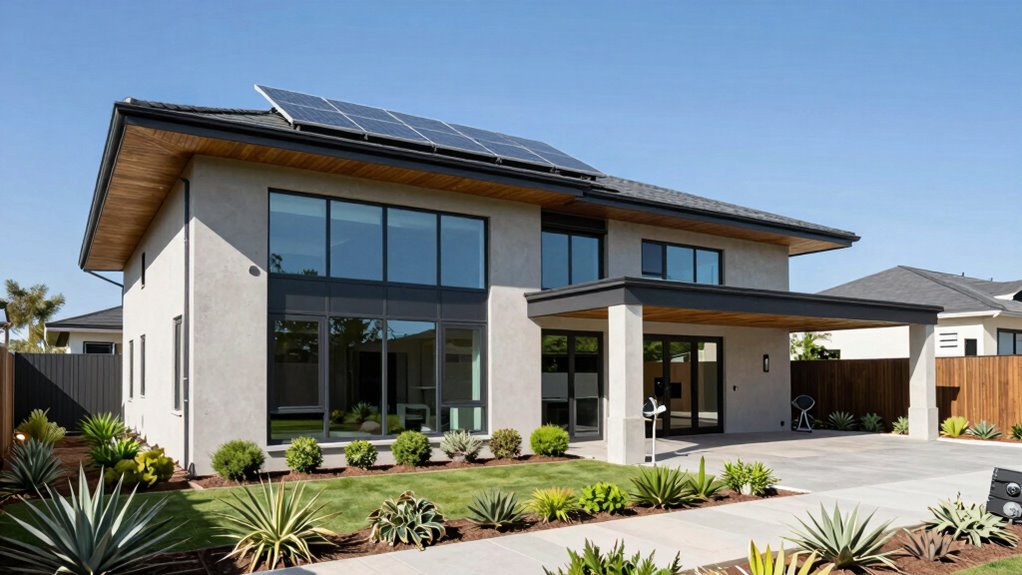
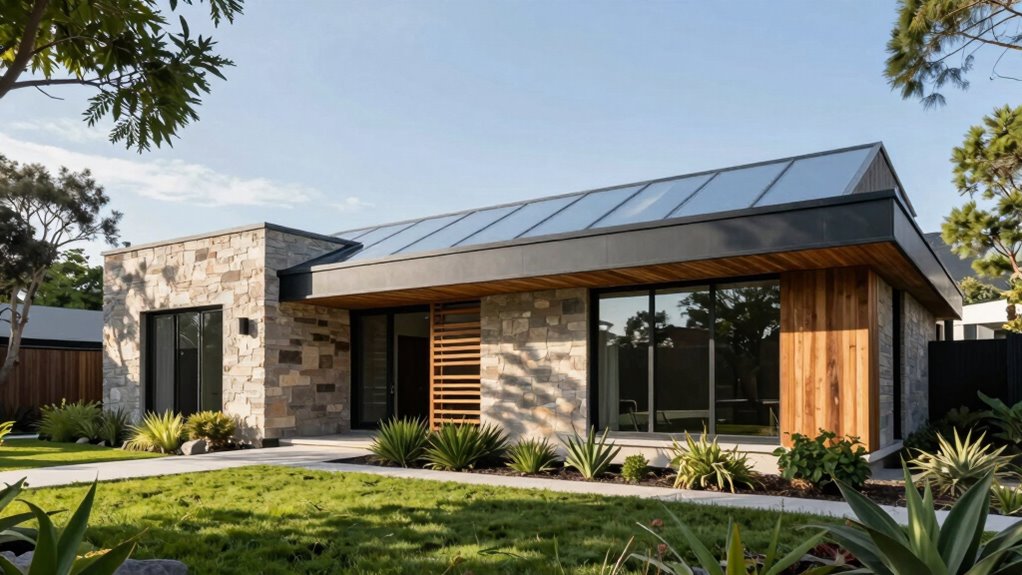
In addition to smart insulation, passive cooling techniques play a crucial role in preparing your home for prolonged heat events. Passive cooling involves designing your space to naturally dissipate heat, making interiors more comfortable without mechanical systems. This can include strategic placement of windows to maximize cross-ventilation, shading devices like overhangs or deciduous trees, and reflective roofing materials that bounce sunlight away. When combined, these features create a home that stays cooler during extended heat waves, lessening your reliance on air conditioning and lowering utility bills.
You’ll also want to contemplate how your home’s layout and materials contribute to resilience. Incorporating high thermal mass materials, like concrete or brick, can absorb daytime heat and release it slowly at night, moderating indoor temperatures. Properly sealing gaps and using airtight construction prevents warm air from infiltrating and cold air from escaping, maintaining a stable indoor environment. These design choices, paired with smart insulation and passive cooling, create a layered defense against extreme heat. Additionally, understanding the importance of climate-responsive design can help you tailor your home’s resilience features to your specific environment and anticipated weather patterns. Recognizing the role of biodiversity in urban planning can also enhance natural cooling and air quality around your home.
Furthermore, designing for resilience means thinking about your home’s overall energy efficiency. Installing energy-efficient windows with low solar heat gain coefficients reduces unwanted heat transfer. Ventilation systems that promote airflow without opening windows during the hottest parts of the day can also help keep indoor temperatures down. Additionally, incorporating cool roofs or other reflective surfaces helps deflect solar radiation, further enhancing your home’s ability to stay cooler. These measures work together to develop a home that’s not only more comfortable but also more durable against the increasing frequency and duration of heat waves.
As an affiliate, we earn on qualifying purchases.
Frequently Asked Questions
How Does Resilient Design Impact Overall Home Energy Consumption?
Resilient design reduces your home’s overall energy consumption by enhancing thermal insulation and incorporating passive cooling strategies. Good thermal insulation keeps indoor temperatures stable, minimizing the need for air conditioning. Passive cooling techniques, like strategic shading and ventilation, naturally lower indoor heat, further decreasing energy use. By implementing these measures, you’ll enjoy more energy-efficient living, lower utility bills, and a smaller environmental footprint, even during extended heat waves.
Can Resilient Design Features Be Added to Existing Homes Easily?
You can add resilient design features to your existing home, but retrofit challenges might arise, such as structural adjustments or system upgrades. Aesthetic considerations are also important, as you want the improvements to blend seamlessly with your home’s style. While it may take some effort and planning, many resilient upgrades—like enhanced insulation, shading devices, or better ventilation—are achievable without compromising your home’s appearance or comfort.
What Are the Cost Differences Between Resilient and Traditional Home Designs?
Resilient design often costs more upfront than traditional homes, but the difference isn’t massive. You might see a moderate increase in initial expenses, yet this investment pays off in long-term savings and durability. When considering cost comparison, think about design affordability—resilient features can reduce energy bills and repair costs over time. So, while the upfront cost is higher, the overall value and resilience make it a smart choice.
How Long Does It Take to Implement Resilient Design Modifications?
It typically takes several weeks to a few months to implement resilient design modifications, depending on the project’s scope. You’ll want to take into account material durability, as durable materials may require extra time for proper installation. The construction timeline can be affected by factors like permit approvals, labor availability, and weather conditions. Planning ahead ensures you can effectively incorporate resilient features without unnecessary delays, making your home better prepared for longer heat waves.
Are There Specific Climate Zones That Benefit Most From Resilient Design?
You’ll find that climate zones prone to extreme heat, like the Southwest, benefit most from resilient design. This approach enhances climate adaptation by incorporating features like better insulation and shading. Zoning benefits come into play by tailoring modifications to specific regional needs, ensuring your home stays cooler longer. Even if it seems complex, resilient design offers crucial protection, making your home more comfortable and resilient during prolonged heat waves.
Conclusion
By embracing resilient design, you’re not just building a house—you’re creating a sanctuary ready for the long, scorching heat waves of today and tomorrow. Think of it as your modern-day armor, protecting you from the rising temps. As the saying goes, “Keep calm and carry on,” but with resilient homes, you’ll be doing just that—staying cool, comfortable, and prepared, no matter how fierce the weather gets. It’s the smart way to stay ahead of the heat.