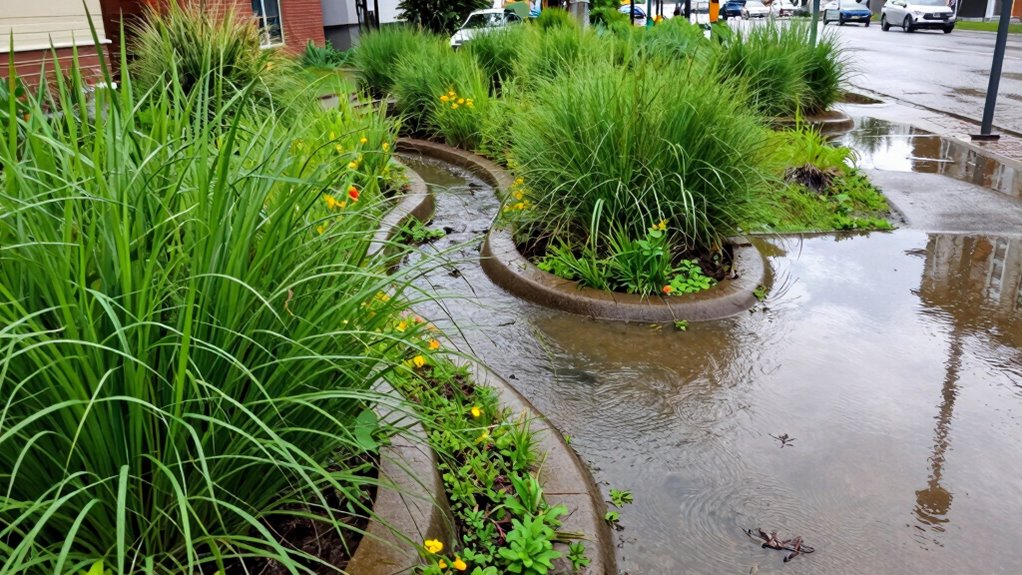

Bioswales slow flooding at street level by capturing and filtering rainwater before it can rush into storm drains. They encourage infiltration, allowing soil to absorb water gradually, which decreases runoff speed and volume. By acting as natural sponges, bioswales reduce street flooding and help recharge groundwater. They also support urban ecosystems and improve water quality. If you’re interested, there’s more to discover about how bioswales effectively manage flood risks and boost city resilience.

Get home appliances delivered free with Prime
- Fast, free delivery on millions of items
- Prime Video, Amazon Music and more included
- Member-only deals all year
Key Takeaways
- Bioswales capture and filter stormwater, reducing the volume flowing into storm drains during heavy rain.
- They promote infiltration, allowing soil to absorb water gradually and decrease runoff speed.
- By spreading out water flow, bioswales lower peak flood levels on streets.
- Their vegetated design slows water movement, helping prevent rapid street flooding.
- Bioswales act as natural barriers, reducing the pressure and volume of floodwaters at street level.

When heavy rains hit, urban areas often struggle with flooding, but bioswales offer an effective solution. These specially designed landscape features help manage urban water and improve ecological stormwater practices by capturing and filtering runoff before it reaches streets and drains. In cities where concrete and asphalt dominate, rainwater quickly accumulates, overwhelming stormwater systems and causing street flooding. Bioswales break up this process by acting as natural barriers, absorbing excess water and reducing the pressure on drainage infrastructure.
Bioswales absorb and filter stormwater, reducing urban flooding and easing pressure on drainage systems.
As you observe a bioswale along a street, you notice its vegetation and soil composition that work together to slow the flow of water. When rain falls, instead of rushing directly into storm drains, the water flows into the bioswale, where it’s temporarily stored and filtered. The plants and soil trap pollutants like oils, heavy metals, and sediments, improving water quality before it infiltrates the ground or drains away. This not only reduces pollution but also prevents pollutants from entering waterways downstream, supporting urban water management strategies that aim to protect local ecosystems.
Bioswales are especially effective during intense storms. As water moves through the landscape, they encourage infiltration, allowing the soil to soak up rainwater gradually. This process lessens the volume and speed of runoff, decreasing the likelihood of street flooding. The slow release of water also helps recharge groundwater supplies, contributing to a more sustainable urban water cycle. When you compare areas with bioswales to those without, the difference in flood severity becomes clear—bioswales create a buffer that moderates flood peaks and spreads out water flow over time. Additionally, stormwater management strategies like bioswales help mitigate the urban heat island effect, contributing to cooler, more comfortable cities.
Furthermore, bioswales foster ecological stormwater management by integrating vegetation that supports urban biodiversity. They encourage native plants that are adapted to local conditions, which require less maintenance and provide habitats for insects, birds, and other wildlife. This ecological aspect enhances the resilience of urban environments, making them better equipped to handle heavy rains without flooding. Incorporating green infrastructure like bioswales can also promote community engagement by transforming functional spaces into inviting public areas. Additionally, urban water systems can benefit from these features by becoming more adaptive and resilient to climate change.
As a part of comprehensive urban water management, bioswales also add aesthetic value, transforming what could be plain stormwater features into attractive, green spaces. In essence, bioswales slow street-level flooding by capturing, filtering, and infiltrating stormwater. They act as natural sponges that reduce runoff volume, improve water quality, and support ecological stormwater goals. By integrating these features into city landscapes, you help create more resilient, less flood-prone urban environments that work harmoniously with nature rather than against it.
As an affiliate, we earn on qualifying purchases.
Frequently Asked Questions
How Long Does It Take for a Bioswale to Fully Absorb Floodwaters?
It typically takes a bioswale several hours to fully absorb floodwaters, depending on soil absorption capacity and water volume. When the soil is well-drained, water moves quickly into the ground, supporting plant health and preventing runoff. Heavy rainfall or saturated soils slow absorption, which can prolong flooding. Regular maintenance and healthy plants help optimize absorption rates, ensuring your bioswale effectively manages floodwaters and promotes a thriving ecosystem.
Can Bioswales Be Installed in Urban Areas With Limited Space?
Yes, bioswales can be installed in urban areas with limited space by focusing on urban integration and space optimization. You can incorporate them into existing street medians, sidewalks, or curb extensions, making the most of available space. These compact designs effectively manage stormwater, reduce flooding, and enhance urban aesthetics. Proper planning guarantees bioswales fit seamlessly into tight city landscapes, providing eco-friendly flood control without sacrificing valuable urban real estate.
What Maintenance Is Required to Keep Bioswales Effective?
To keep bioswales effective, you need to treat them like a well-tuned garden. Regular vegetation management ensures plants thrive and filter runoff efficiently. Sediment removal is crucial—think of it as unclogging a drain—preventing blockages that hinder water absorption. Consistent inspection and maintenance keep the bioswale functioning like a natural sponge, soaking up floodwaters and filtering pollutants, preserving its essential role in flood mitigation and urban health.
Are Bioswales Effective During Heavy, Prolonged Storms?
Bioswales are quite effective during heavy, prolonged storms because they enhance stormwater filtration, reducing runoff and flooding. As water flows through, the vegetation benefits help absorb excess moisture, slowing water movement and promoting infiltration. While they can handle intense storms, maintaining healthy plants and proper design guarantees maximum efficiency. Overall, bioswales are a valuable green infrastructure tool for managing extreme weather events and minimizing street flooding.
How Do Bioswales Impact Local Groundwater Quality?
Bioswales act as a first line of defense for your groundwater by improving water quality. They use soil filtration to trap pollutants, preventing them from reaching underground aquifers. This process effectively removes contaminants like oils, heavy metals, and nutrients. By doing so, bioswales help safeguard local groundwater quality, ensuring it stays clean and safe for your community. Think of them as nature’s filter, turning runoff into cleaner, healthier water.
Conclusion
Bioswales are truly your neighborhood’s secret weapon against floods, transforming streets into resilient, green landscapes. By absorbing and filtering stormwater, they prevent streets from turning into raging rivers. When you see a bioswale, know it’s more than just pretty greenery—it’s a flood-fighting superhero working tirelessly beneath the surface. Embrace these natural solutions, and you’ll be amazed at how they turn potential disasters into manageable drizzles, saving your community from what could be catastrophic chaos.
NFL season / tailgating Picks
team gear
As an affiliate, we earn on qualifying purchases.