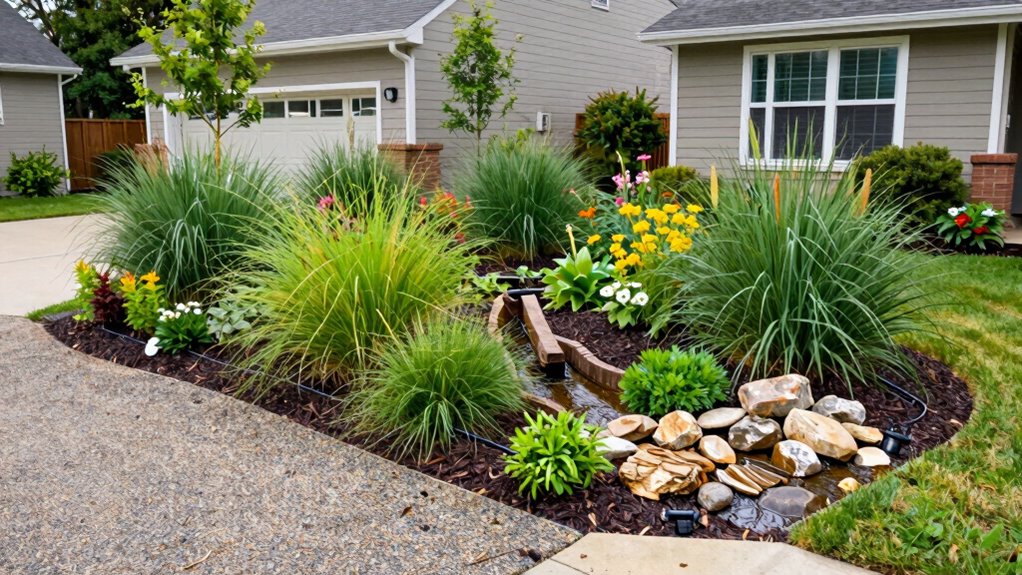

By incorporating nature-based design, you can considerably cut runoff at home through features like rain gardens and permeable pavements. Rain gardens filter and absorb stormwater, preventing pooling and flooding, while permeable surfaces allow water to infiltrate the ground. These strategies mimic natural processes to slow, filter, and manage rainwater effectively. If you want to discover more about eco-friendly ways to protect your property while enhancing your landscape, keep exploring the options available.
Key Takeaways
- Nature-based designs like rain gardens and permeable pavements allow water to filter into the ground, reducing surface runoff.
- These systems slow water flow and increase absorption, preventing pooling and flooding around homes.
- They mimic natural processes, filtering pollutants and decreasing urban water pollution.
- Combining rain gardens with permeable surfaces enhances stormwater management and minimizes runoff volume.
- Implementing eco-friendly landscape features boosts resilience against heavy rainfall and protects property from water damage.
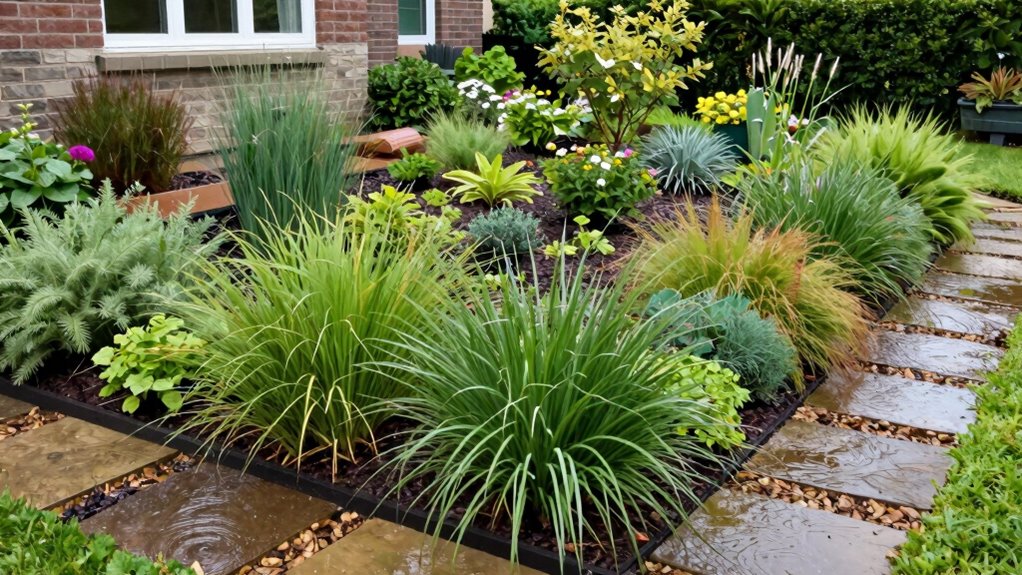
When you incorporate nature-based design elements into your home landscape, you can effectively reduce runoff and protect your property from flooding. These solutions work by allowing water to soak into the ground rather than overwhelming drainage systems or pooling on surfaces. Two key strategies are rain gardens and permeable pavements, both of which help manage stormwater sustainably.
Rain gardens are shallow, planted depressions strategically placed in your yard. When it rains, instead of water rushing over surfaces and into storm drains, it filters into the garden. The plants and soil in the rain garden absorb and slow down runoff, reducing erosion and preventing water from pooling where it shouldn’t. By selecting native, drought-tolerant plants, you create a resilient system that requires minimal maintenance while effectively capturing runoff. Rain gardens also add visual appeal to your landscape, attracting pollinators and enhancing biodiversity.
Permeable pavements are another effective feature. Unlike traditional concrete or asphalt, permeable surfaces have small holes or channels that allow water to pass through. When you replace your driveway, walkways, or patios with permeable pavers or porous concrete, you enable rainwater to infiltrate the ground beneath. This reduces surface runoff and lessens the burden on municipal drainage systems. Permeable pavements also help recharge groundwater supplies, which is essential during dry periods. They can be installed in various styles and materials, blending seamlessly with your existing landscape while providing a functional, eco-friendly solution.
Integrating rain gardens and permeable pavements creates an inclusive approach to stormwater management. As rainwater falls, instead of cascading down hard surfaces and rushing into storm drains, it’s directed into these natural systems. The rain garden absorbs excess water, while permeable pavements allow infiltration at the source. This combined effort minimizes runoff volume, reduces the risk of flooding, and curtails water pollution caused by urban pollutants washing into waterways. Incorporating stormwater management techniques can further optimize your landscape’s resilience to heavy rainfall.
The beauty of these nature-based solutions is that they mimic natural processes rather than fighting against them. They work with your landscape’s existing features to slow, absorb, and filter stormwater. Incorporating biodiversity-friendly features like native plants and permeable surfaces can further enhance the ecological benefits of your landscape. Not only do you protect your property from potential water damage, but you also contribute to a healthier environment. When you adopt rain gardens and permeable pavements, you’re making a smart, sustainable choice that benefits your home, community, and the planet.
As an affiliate, we earn on qualifying purchases.
Frequently Asked Questions
Can Nature-Based Design Be Implemented on Small Urban Lots?
Yes, you can implement nature-based design on small urban lots. You might install a rain garden to absorb runoff and plant native vegetation for added filtration. Permeable paving is another great option, allowing water to seep into the ground instead of running off. These strategies help manage stormwater effectively, reduce flooding, and improve your yard’s health, all while fitting into limited space.
What Are the Long-Term Maintenance Requirements?
You’ll find that maintaining your nature-based design is like tending a lively garden—regular maintenance schedules keep everything thriving. Expect to prune, weed, and monitor plant health seasonally, ensuring roots stay strong and plants remain resilient. This ongoing care prevents overgrowth and promotes biodiversity. With consistent attention, your landscape naturally sustains itself, reducing runoff over time and creating a vibrant, eco-friendly space that ages beautifully with minimal effort.
How Does It Compare Cost-Wise to Traditional Drainage Systems?
Nature-based designs typically cost less upfront than traditional drainage systems, mainly because they use natural materials and require less extensive infrastructure. Over time, the financial benefits grow as they reduce maintenance and repair costs, and improve water management. The cost comparison favors nature-based solutions for long-term savings, making them a smart investment. You’ll find that their eco-friendly approach not only saves money but also enhances your property’s environment.
Are There Specific Plants Best Suited for Runoff Reduction?
You should choose native plants for your rain garden, as they’re best suited for runoff reduction. Native plants like milkweed, switchgrass, and coneflowers thrive in local soil and climate, helping absorb excess water effectively. Rain gardens with these plants create a natural barrier that slows runoff, filters pollutants, and promotes healthy groundwater recharge. Their deep roots and adaptability make them ideal choices for sustainable, low-maintenance runoff control.
How Quickly Can Results Be Seen After Installation?
You can see rain garden benefits within weeks, as plants establish roots and start absorbing water. Stormwater management techniques like rain gardens can reduce runoff by up to 30% in just the first few months. Results depend on garden size and rainfall, but consistent watering and proper plant selection speed up the process. With time, your garden becomes a natural filter, substantially improving local drainage and reducing flood risks.
Conclusion
By embracing nature-based design, you gently guide excess water to where it can be absorbed and appreciated, rather than rushing away. Your home becomes a peaceful landscape, softly balancing the flow of rain and runoff, creating a harmonious environment. With these mindful choices, you help nurture a resilient, vibrant space that feels more like a sanctuary than a storm. Ultimately, your yard becomes a quiet steward of the land, quietly working to keep everything in gentle equilibrium.