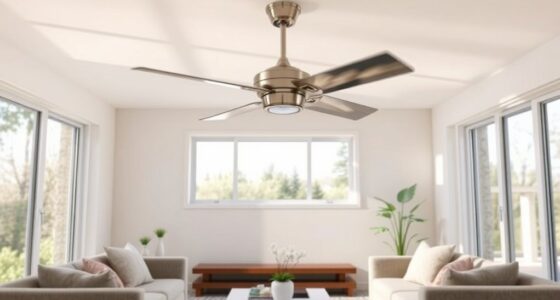

To calibrate your ceiling fan for ideal efficiency, first make certain it’s securely mounted and properly aligned to prevent wobbling. Check that blades are clean and set to the correct pitch using a gauge, and adjust the motor speed with a tachometer to match manufacturer specifications. Regularly balance blades and inspect the control system for responsiveness and electrical integrity. Mastering these adjustments can substantially improve airflow, reduce energy use, and prolong lifespan—continue to explore how precise calibration is achieved.
Key Takeaways
- Verify secure, level mounting to prevent wobbling and ensure accurate calibration.
- Check and adjust blade pitch according to manufacturer specifications for optimal airflow.
- Clean blades thoroughly to remove dust and debris, maintaining aerodynamic efficiency.
- Measure and calibrate motor speed at each setting with a tachometer for precise operation.
- Inspect and balance blades regularly to reduce vibrations and prolong fan lifespan.
Proper calibration of ceiling fans is essential to guarantee peak performance and energy efficiency. When correctly calibrated, a ceiling fan operates at its ideal speed, consumes less energy, and provides consistent airflow, which enhances comfort and prolongs the device’s lifespan. Precise calibration involves adjusting the fan’s components to ensure synchronized operation among the motor, blades, and control system. This process begins with verifying the fan’s installation, confirming that it is mounted securely and level, as any misalignment can cause wobbling or uneven airflow, leading to increased wear and energy waste.
Proper calibration ensures optimal performance, energy efficiency, and longevity of your ceiling fan.
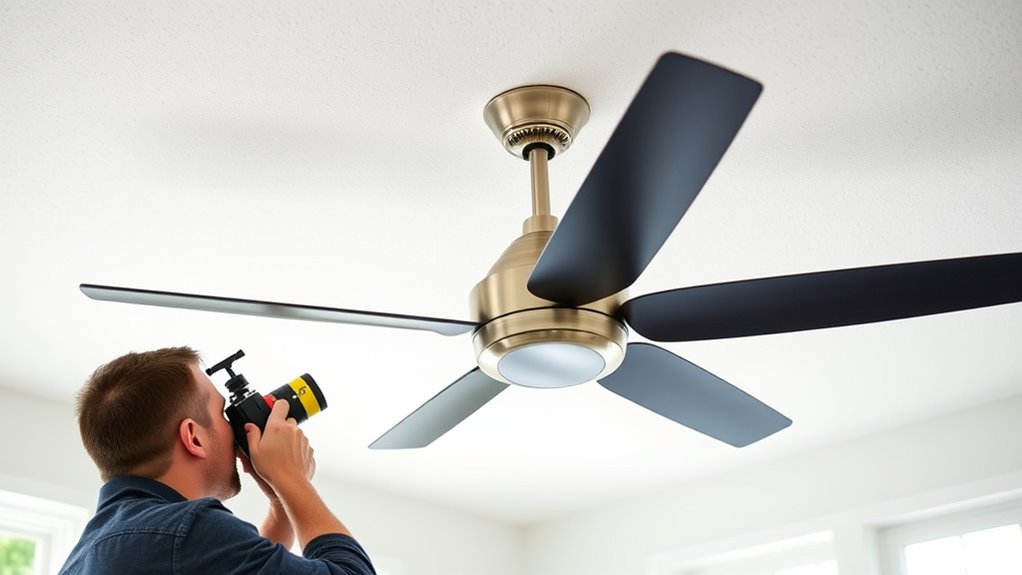
Next, you should check the fan’s blade pitch and cleanliness. The blades must be set at the manufacturer’s specified angle; deviations can impair airflow efficiency and increase motor load. Using a protractor or a specialized blade pitch gauge, measure the blade angle to ensure it matches the recommended settings. Accumulated dust, dirt, or debris on the blades can disrupt airflow and reduce efficiency, so cleaning the blades thoroughly is crucial before any calibration adjustments. A clean, correctly pitched set of blades guarantees maximum aerodynamic performance.
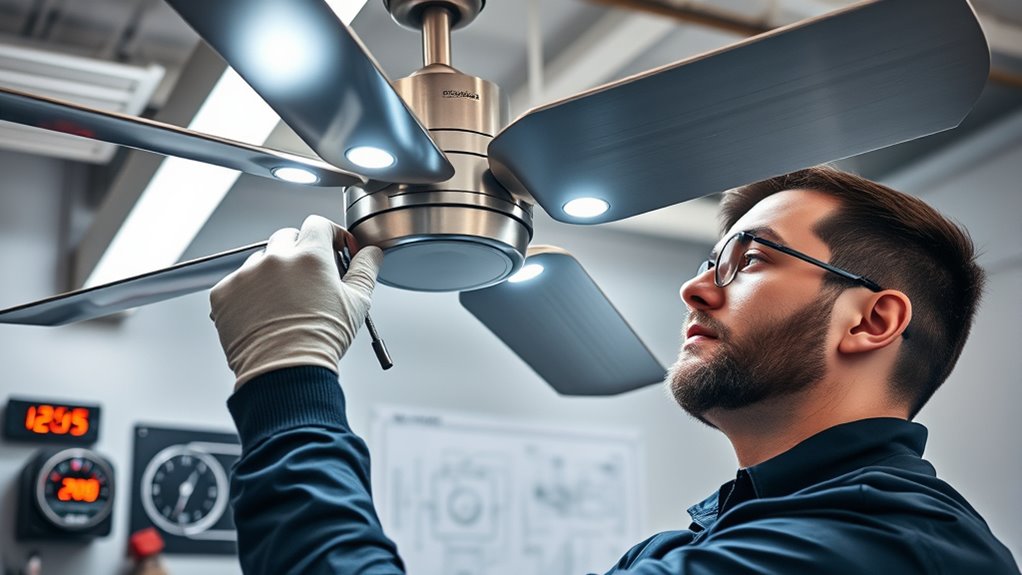
The motor’s speed settings require precise adjustment to match the intended operational parameters. Many modern ceiling fans feature remote controls or wall switches with multiple speed settings. To calibrate these, measure the actual RPMs at each setting using a tachometer. If discrepancies arise—such as the fan running faster or slower than specified—you need to adjust the control system or motor settings accordingly. For fans with configurable internal components, this might involve modifying the capacitor value or adjusting the control board firmware. For more advanced models, calibration may require specialized diagnostic tools to access and fine-tune the motor’s parameters directly.
Furthermore, balancing the blades is a critical step to minimize vibrations and ensure smooth operation. Use a blade balancing kit or a simple visual assessment to detect wobbling or uneven airflow. Attach balancing weights as needed, placing them on the blades to counteract any imbalance. Proper balancing not only improves comfort but also reduces mechanical stress on the motor and mounting hardware, thereby extending the fan’s service life and maintaining energy efficiency. Additionally, regularly checking for wear and corrosion and addressing electrical issues can prevent calibration problems and ensure ongoing optimal performance.
Finally, verify the control system’s responsiveness and safety features. Ensure that the fan responds accurately to commands and that the reverse function operates correctly. Regularly inspect wiring and connections for signs of wear or corrosion, as electrical issues can impair calibration and compromise safety. By meticulously following these calibration procedures, you enhance the ceiling fan’s functionality, ensuring it delivers maximum airflow with minimal energy consumption while operating reliably over time.

Forrovenco Ceiling Fans with Lights and Remote, 52 Inch Outdoor Ceiling Fan for Patios Indoor with 3 Downrods, 3 Blades Modern Ceiling Fan, 6 Speed Reversible Quiet DC Motor Solid Wood Fan,52in,Walnut
Modern Ceiling Fan with Light: Our 3 blade ceiling fan with light features unique, planet-friendly, and renewable high-quality...
As an affiliate, we earn on qualifying purchases.
Frequently Asked Questions
How Often Should I Recalibrate My Ceiling Fan?
You should recalibrate your ceiling fan every 6 to 12 months to maintain ideal efficiency. Regular calibration ensures the motor and blade alignment function correctly, preventing wobbling or noise that can reduce airflow. If you notice uneven airflow, strange noises, or vibrations, recalibrate immediately. Environmental factors like temperature fluctuations and dust accumulation can affect calibration, so periodic checks are essential for consistent performance and energy savings.
Can Calibration Improve My Ceiling Fan’s Energy Savings?
Yes, calibration can improve your ceiling fan’s energy savings. Think of it like tuning a musical instrument; precise adjustments ensure ideal performance. When you calibrate your fan, you align the motor and blades for balanced rotation, reducing unnecessary power consumption. Studies show that properly calibrated fans can cut energy use by up to 15%. Regular calibration ensures consistent efficiency, prolonging the fan’s lifespan and lowering your electricity bills.
Is Special Equipment Needed for Fan Calibration?
No, special equipment isn’t typically necessary for fan calibration. You can often adjust the fan’s speed and angle manually using the control switches or remote. For more precise calibration, a digital anemometer can measure airflow and guarantee ideal settings. However, most standard adjustments rely on existing controls. Follow manufacturer instructions carefully, and if needed, consult a professional to achieve the most efficient calibration without specialized tools.
What Signs Indicate My Ceiling Fan Needs Calibration?
Your ceiling fan may need calibration if it wobbles like a spinning top, produces uneven airflow, or makes unusual noises. If the blades seem misaligned, or if the fan doesn’t respond smoothly to speed adjustments, these are clear signs. These issues indicate imbalance or sensor misalignment. Addressing these problems guarantees maximum efficiency, prolongs the fan’s lifespan, and maintains consistent air circulation. Regular checks help catch calibration needs early.
Does Calibration Affect the Fan’s Warranty?
Calibration typically doesn’t void your ceiling fan’s warranty if performed correctly. Manufacturers often specify that adjustments or repairs done by authorized technicians or following official guidelines are acceptable. However, unauthorized or improper calibration may risk voiding the warranty. Always check your fan’s warranty terms and consult the manufacturer’s instructions before calibration. Proper calibration ensures ideal performance without compromising coverage, so proceed carefully and document any adjustments made.

addlon Ceiling Fans with Lights, 42 Inch Low Profile Ceiling Fan with Light and Remote Control, Flush Mount, Reversible, 3CCT, Dimmable, Quiet, Black Small Ceiling Fan for Bedroom Indoor/Outdoor Use
Ceiling Fan with Light: Bring more than just wind and light, but comfort! addlon modern ceiling fan, with...
As an affiliate, we earn on qualifying purchases.
Conclusion
Properly calibrating your ceiling fan ensures maximum efficiency and energy savings. Don’t assume it’s too complex or time-consuming; precise adjustments can be made quickly with the right tools. Overlooking calibration may lead to increased energy use and uneven cooling. By following the recommended steps, you enhance airflow and extend your fan’s lifespan. Implement these calibration techniques today—your comfort and savings depend on it. Accurate calibration isn’t optional; it’s essential for peak performance.

Amico Ceiling Fans with Lights, 42 inch Low Profile Ceiling fan with Light and Remote Control, Flush Mount, Reversible, 3CCT, Dimmable, Noiseless, Black Ceiling Fan for Bedroom, Indoor/Outdoor Use
Ceiling Fan with Light: Decorate your home with Amico ceiling fan! While bringing you coolness and comfort, it...
As an affiliate, we earn on qualifying purchases.

BvenuBigLite Outdoor Ceiling Fan with Light: 52 Inch 3 Blade Outdoor Fans for Patios - Modern Walnut Ceiling Fan with Dimmable Light Remote Control Ultra Quiet Reversible DC Motor Timer
Stylish & Functional: Elevate your space with the 52-Inch Ceiling Fan featuring dimmable LED lights. Ideal for patios,...
As an affiliate, we earn on qualifying purchases.