TL;DR
A Livingetc report compares sage paint samples from several brands and finds that many look similar, with differences in undertone, depth and warmth. The report highlights options ranging from cool, gray-blue Lick Green 02 to warmer Little Greene Hillside and softer Mylands Myrtle Green.
Livingetc has published a hands-on comparison of sage-green paints from several brands, finding that many shades look broadly similar but differ in undertone, warmth and depth. The report says those distinctions, along with a room’s light and the way the color is used, can matter more than the label “sage” when choosing paint for walls.

Get home appliances delivered free with Prime
- Fast, free delivery on millions of items
- Prime Video, Amazon Music and more included
- Member-only deals all year
The writer tested swatches from Lick, Little Greene and Mylands, with Farrow & Ball’s Green Smoke also included in the source material. The overall finding was that most of the shades were close in appearance, with relatively subtle differences. The report does not provide instrument-based color measurements or a standardized comparison across identical rooms and lighting.
Lick Green 02 is described as a classic, relatively light sage with gray and blue undertones. Lick supplies peel-and-stick samples rather than a tester pot, which the writer said gave a useful sense of the color on a wall. Little Greene’s Sage Green is characterized as soft but sufficiently deep to define areas in a home; the writer also praised its easy-to-reseal tester pot and paint consistency.
Little Greene Hillside came across warmer and bolder than the brand’s Sage Green, though the writer said it looked less intimidating in person than it did online. Mylands Myrtle Green was among the softer shades tested. The writer found its paint thicker than some competitors’ and said that may be relevant when planning coverage and coats. The supplied source cuts off during its description of Farrow & Ball Green Smoke, so it does not provide a complete assessment of that shade.
Choosing Sage by Undertone
The comparison offers a practical reminder for people choosing a wall color: “sage” covers a range, rather than one consistent shade. A gray-blue green may read cooler and quieter, while a warmer or deeper version can make a stronger visual statement. Looking at the paint name alone may not reveal those differences.
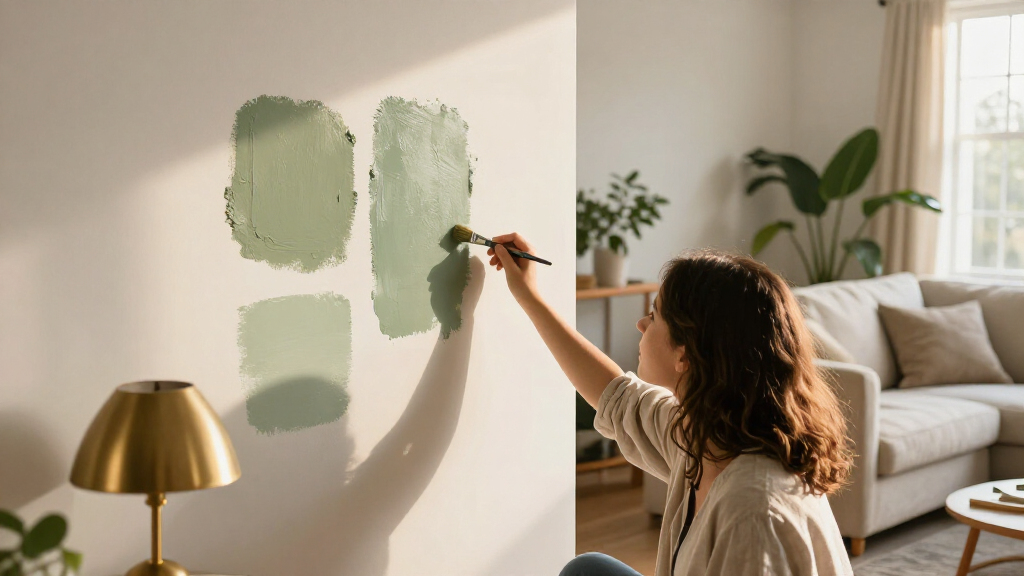
For readers planning a room, the report’s central takeaway is to judge a sample in the light and setting where it will be used. Paint can appear different on a screen than on a wall, and the report also notes that room orientation and natural light affect how shades are perceived. Sample formats and paint consistency differ by brand, too, which can shape how someone tests a color and estimates the work required.
Products Worth Considering

Philips Hue Starter Kit with Bridge Pro and 4 A19 E26 Smart Bulbs

Blueair Signature SP1i Smart Air Purifier

Levoit Eleva 300X Air Purifier with Sealed HEPA Filtration
As an affiliate, we earn on qualifying purchases.
How the Tested Shades Compare
Sage green is a familiar interior color, but its popularity has prompted discussion about whether it feels dated and how to use it in a more current way. The Livingetc report approaches that debate through sample testing rather than a trend survey: its writer looked at available shades and painted swatches to compare their appearance away from product images.
The brands frame their products in different ways. Lick describes Green 02 as soothing and connected to nature, while Little Greene presents Hillside as a warmer take on its Sage Green. The report also says Myrtle Green was brought back from Mylands’ archive books. These are brand descriptions and product histories; the article’s judgments about softness, warmth and visual impact come from the writer’s own sampling.
“Sage Green by Little Greene is a shade I return to time and again for its balance of subtlety and sophistication.”
— Interior designer Laura Stephens, quoted by Livingetc
Limits of the Paint Comparison
The source does not specify the full testing protocol, including whether every paint was applied to the same surface, in comparable conditions or with the same number of coats. It also gives no measured color values, coverage figures or durability results. The findings are therefore the writer’s visual impressions, not a controlled technical ranking of the paints.
The provided report text ends partway through the Green Smoke section. It does not establish how that Farrow & Ball shade compares with the others, nor does it supply a final ranked list of the writer’s preferred wall colors. The source also does not state when the article was published.
Test Samples in Your Room
The report’s practical direction is to test a sample before committing to a full wall. Readers can compare the shades in their own room and observe them under its natural and artificial lighting, rather than relying only on online images or color names. Sample format varies by brand, so shoppers may need to check whether a product is sold as a tester pot or a peel-and-stick sample.
For anyone weighing coverage or the number of coats, the writer’s observation that Myrtle Green felt thicker is a reason to consult the paint maker’s product guidance and test the finish on the intended surface. The source offers no later testing or follow-up results; whether the writer will publish a fuller comparison, including Green Smoke, is not stated.
Key Questions
What did the Livingetc comparison find about sage paints?
It found that many of the tested shades were similar overall, with differences in undertone, warmth and depth. The writer emphasized testing samples in the room where they will be used.
Which paint was described as having gray and blue undertones?
Lick Green 02 was described as a light, classic sage with darker gray and blue undertones.
How did Little Greene Hillside differ from Sage Green?
The writer found Hillside warmer and bolder than Little Greene’s Sage Green, though it appeared less intimidating as a physical sample than in online images.
Did the report name one best sage paint?
The supplied source material does not give a definitive winner or complete ranked list. It offers individual observations about several shades and notes that the best choice depends partly on the room and how the color is used.
Source: livingetc.com