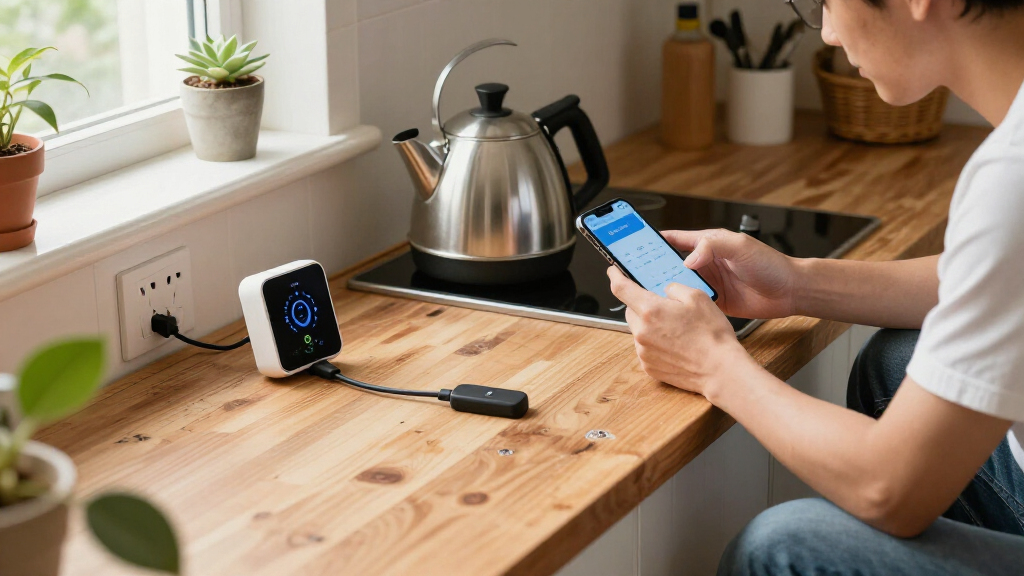

Smart plug energy monitors show how much electricity an individual appliance uses while adding app control and scheduling. My best overall pick is the TP-Link Tapo P110M Matter Smart Plug for its combination of energy tracking, Matter support, and a four-pack format; the Shelly Smart Plug US Gen4 stands out for broad connectivity, while the Emporia Wi-Fi Smart Plug suits households already using Emporia’s wider energy-monitoring system. The main tradeoffs are ecosystem compatibility, how much monitoring detail you need, and whether a multi-pack or a more flexible single plug fits your setup. Some options focus on simple app-based tracking, while others add Matter, Zigbee, Z-Wave, or whole-home monitoring. Read on for the full breakdown and help matching a plug to your devices and smart-home system.

Get home appliances delivered free — and shop member deals
- Fast, free delivery on millions of items
- Access to Prime Big Deal Days deals on October 6–7
- Prime Video, Amazon Music and more included
Complete the kit


Key Takeaways
- Tapo P110M earns the overall lead by pairing energy monitoring with Matter and a four-plug bundle, giving it a practical mix of flexibility and coverage.
- Shelly Gen4 is the standout for protocol choice, with Wi-Fi, Bluetooth, Zigbee, and Matter; that flexibility may be unnecessary if you only want app control.
- Emporia’s four-plug pack makes the most sense for buyers who want plug-level readings alongside Emporia’s whole-home monitoring ecosystem.
- Tapo P115 and Kasa KP125MP appear in both two- and four-pack versions, so the key distinction is how many devices you want to track at once.
- Several picks are rated for 15A, but that rating alone does not settle compatibility: outlet access, appliance load, wireless band, and smart-home platform still shape the right choice.






| smart plug energy monitor | Connectivity | Energy monitoring | Pack size | Model |
|---|---|---|---|---|
| Emporia Whole-Home Energy Moni | — | — | — | — |
| TOPELER 15A Smart Plug with En | 2.4 GHz Wi-Fi and Bluetooth | Power usage, current, and voltage | — | — |
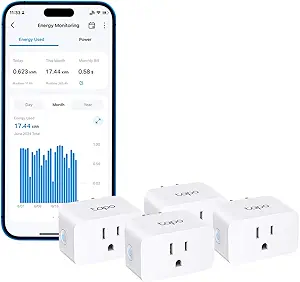
| TP-Link Tapo P110M Matter Smar | — | Yes | 4 | Tapo P110M |
| TP-Link Tapo P115 Smart Wi-Fi | Wi-Fi | Yes | 4 | P115 |
| Emporia Energy Monitoring Wi-F | 2.4 GHz Wi-Fi | — | 4 plugs | — |
| Govee Smart Plug with Energy M | Wi-Fi and Bluetooth | — | 2 plugs | — |
| Govee Smart Plug with Energy M | Wi-Fi and Bluetooth | — | 4 plugs | — |
| AiSeek Smart Plug with Energy | — | Real-time power and energy tracking | 4 plugs | — |
| Kasa Smart Plug Mini with Ener | 2.4 GHz Wi-Fi | — | 1 plug | KP115 |
| Tapo P115 Wi-Fi Smart Plug wit | Wi-Fi | Statistics and charts | 2 plugs | P115 |
| Shelly Smart Plug US Gen4 with | Wi-Fi, Bluetooth, Zigbee, Matter | Real-time power monitoring | — | — |
| Kasa Matter Smart Plug with En | Matter over Wi-Fi | Yes | — | KP125MP4 |
| Minoston Z-Wave Smart Plug wit | — | Supported | — | MP21ZP |
| Kasa Matter Smart Plug with En | Matter over Wi-Fi | Yes | — | KP125MP2 |
More Details on Our Top Picks
Emporia Whole-Home Energy Monitor with 16 Sensors and 4 Smart Plugs
The Emporia Whole-Home Energy Monitor bundle suits buyers who want to trace energy use beyond the devices plugged into a wall. Its monitor tracks the whole home and up to 16 individual circuits, while four included plugs add outlet-level readings and remote scheduling. Second-by-second updates can help identify when a circuit or appliance is drawing power, a wider view than the Tapo P110M four-pack offers through its plugs alone. That breadth comes with a more involved setup: sensors must be installed in the electrical panel, and anytime app access depends on cloud data storage. I’d choose this bundle to investigate household-wide usage or monitor solar alongside selected appliances; buyers who only need a few plug-in readings may find the panel hardware unnecessary.
Pros:- Tracks whole-home use and up to 16 individual circuits
- Includes four plugs for outlet-level monitoring, schedules, and remote control
- Provides second-by-second tracking
- Supports solar monitoring and net metering
Cons:- Electrical panel sensor installation is more involved than setting up plug-only monitors
- Anytime app access requires cloud data storage
Best for: Homeowners who want to compare whole-home and circuit-level usage with readings from selected plugged-in appliances
Not ideal for: Renters or buyers seeking a simple plug-only setup, since installation involves sensors in the electrical panel
- Energy monitor sensors:16
- Included smart plugs:4 Wi-Fi plugs
- Monitoring scope:Whole-home and up to 16 individual circuits
- Update frequency:Second-by-second
- App compatibility:iOS and Android
- Other compatibility:Solar systems and Alexa-enabled devices
- Style:Emporia Energy Monitoring Bundle
Our verdict“Choose this bundle if you want circuit and whole-home visibility alongside four monitored plugs and can accommodate panel installation.”
TOPELER 15A Smart Plug with Energy Monitoring, Timer, and Remote Control (2-Pack)
The TOPELER two-pack is a useful fit for buyers who want a small set of monitored outlets and a local control option when Wi-Fi is down. Through the Smart Life app, it reports power, current, and voltage; schedules and voice control add everyday convenience once Alexa or Google Assistant is linked. Its Bluetooth control gives it a fallback that the Wi-Fi-only Emporia Energy Monitoring Wi-Fi Smart Plug does not list. The tradeoff is a narrower smart-home setup: it needs 2.4 GHz Wi-Fi for network use, and voice assistants require initial Smart Life setup. I’d pick TOPELER for two appliances where local control matters; households standardizing on Matter or seeking four monitored outlets may prefer the Tapo P110M four-pack.
Pros:- Reports power usage, current, and voltage
- Bluetooth enables local control when Wi-Fi is unavailable
- Works with Alexa and Google Assistant
- No hub is required
Cons:- Wi-Fi connectivity is limited to 2.4 GHz
- Voice assistant integration requires setup through the Smart Life app
Best for: Buyers who need energy readings and local Bluetooth control for a couple of appliances
Not ideal for: Households using 5 GHz-only Wi-Fi or wanting Matter platform integration and a larger plug pack
- Quantity:2 plugs
- Maximum power:1800 W
- Connectivity:2.4 GHz Wi-Fi and Bluetooth
- App:Smart Life
- Voice assistants:Amazon Alexa and Google Assistant
- Energy monitoring:Power usage, current, and voltage
- Certifications:ETL and FCC
- Hub required:No
Our verdict“Choose TOPELER if two monitored plugs with Bluetooth fallback matter more than Matter support or a four-plug bundle.”
TP-Link Tapo P110M Matter Smart Plug with Energy Monitoring, 15A, 4-Pack
The Tapo P110M four-pack stands out for buyers who want energy monitoring across a smart home that spans multiple platforms. Matter compatibility includes Alexa, Apple HomeKit, Google Home, and Samsung SmartThings, giving it broader stated platform reach than the Wi-Fi-focused Tapo P115 four-pack. Energy tracking, schedules, remote control, and a user-set power threshold that can cut power make these plugs useful for more than switching lamps on and off. One tradeoff is that energy bill estimates depend on billing-system integration, so the readings may not translate directly into a household cost view. I’d choose P110M when platform flexibility is the priority; if a buyer already uses the Tapo app and mainly wants scheduling and overload shutoff, the P115 may cover those needs with less emphasis on Matter.
Pros:- Matter support spans several major smart-home platforms
- Tracks energy use and provides usage statistics
- Supports scheduling, remote control, and voice commands
- Can cut power at user-set thresholds
Cons:- Energy bill estimates require billing-system integration
- Matter features may be unnecessary for buyers using only the Tapo app and basic schedules
Best for: Smart-home households using a mix of Apple HomeKit, Alexa, Google Home, or SmartThings that want outlet-level energy data
Not ideal for: Buyers who need plug-level energy readings to produce bill estimates without compatible billing-system integration
- Model:Tapo P110M
- Pack size:4
- Maximum current:15 A
- Connectivity standard:Matter
- Energy monitoring:Yes
- Compatible platforms:Amazon Alexa, Apple HomeKit, Google Home, Samsung SmartThings
- Remote control:Tapo app
- Overcurrent protection:Automatic power cutoff based on set thresholds
Our verdict“Choose the P110M if cross-platform Matter support and monitored outlets are more useful to you than a simpler Wi-Fi-only setup.”
TP-Link Tapo P115 Smart Wi-Fi Plug with Energy Monitoring, 4-Pack, 15A
The Tapo P115 four-pack is aimed at buyers who want several monitored outlets, usage charts, and straightforward control through one app. Its schedules can shift connected devices to off-peak hours, while configurable smart charging and automatic overload shutoff add control beyond the energy graphs. Compared with the Tapo P110M, this model centers on Wi-Fi and the Tapo app rather than Matter’s wider platform compatibility. That makes it a more direct fit for an Alexa- or Google Assistant household already comfortable with Tapo, but less flexible for homes built around Apple HomeKit or SmartThings. Remote control depends on Wi-Fi, and some smart charging or bill-related features may need compatible devices or billing integrations. I’d pick P115 for Tapo-based routines; platform flexibility is the P110M’s advantage.
Pros:- Shows energy statistics and charts
- Supports scheduling and remote app control
- Works with Alexa and Google Assistant
- Includes configurable charging cutoff and overload shutoff
Cons:- Remote control requires Wi-Fi and the Tapo app
- Some smart charging and energy bill features depend on compatible devices or billing integrations
Best for: Tapo app users who want four monitored outlets, usage charts, and scheduled off-peak operation
Not ideal for: Households that need Matter-based integration with Apple HomeKit or Samsung SmartThings
- Model:P115
- Pack size:4
- Connectivity:Wi-Fi
- Energy monitoring:Yes
- Voice assistants:Amazon Alexa and Google Assistant
- App control:Tapo app
- Overload protection:Automatic shutoff
Our verdict“Choose the P115 if you want a four-pack of monitored plugs for Tapo schedules and charts and do not need Matter integration.”
Emporia Energy Monitoring Wi-Fi Smart Plug, 4-Pack
The Emporia Wi-Fi Smart Plug four-pack makes the most sense for buyers who want outlet-level readings and schedules inside the Emporia app. It supports remote and voice control with Alexa and Google Assistant, and its stated 120 V operating voltage fits compatible household appliances. Compared with the Tapo P115 four-pack, Emporia gives buyers a stated continuous-load limit, which matters when deciding whether a device is suitable for extended operation. That limit is 10 A continuous, despite a 15 A peak rating for up to one hour per day; the listing also gives a 1200 W wattage figure. Remote control requires 2.4 GHz Wi-Fi, so this isn’t a plug for every network setup. I’d select it for Emporia app users monitoring ordinary compatible loads, while buyers needing a higher stated continuous load should check the device requirements carefully.
Pros:- Monitors energy use for connected devices
- Supports scheduling and remote app control
- Works with Alexa and Google Assistant
- Offers app, touch, and push-button control
Cons:- Continuous load is limited to 10 A
- Remote control requires 2.4 GHz Wi-Fi
Best for: Emporia app users who want to monitor and schedule compatible 120 V appliances at several outlets
Not ideal for: Buyers whose appliances require a continuous load above 10 A or whose Wi-Fi network lacks 2.4 GHz support
- Pack size:4 plugs
- Operating voltage:120 V
- Maximum peak load:15 A for up to 1 hour per day
- Wattage:1200 W
- Connectivity:2.4 GHz Wi-Fi
- Control methods:App, remote, touch, voice, push button
- Compatible assistants:Amazon Alexa and Google Assistant
- Operating temperature:14°F to 140°F
- Color:White
Our verdict“Choose this Emporia pack for app-based monitoring of compatible everyday loads, after checking that the 10 A continuous limit fits your appliances.”
Govee Smart Plug with Energy Monitoring, Wi-Fi and Bluetooth, 2-Pack
The Govee 2-pack is a fit for buyers who want energy readings alongside app and voice control without adding a hub. It tracks power, current, and voltage, with history available for up to a year, giving you more context than a plug that only reports basic usage. Bluetooth joins 2.4 GHz Wi-Fi for connectivity options, while Alexa, Google Assistant, schedules, and remote control cover everyday automation. Compared with the Govee 4-pack, this set suits monitoring a couple of appliances without extra plugs; the four-pack is the better choice when you want broader coverage. Its main limitation is shared across both Govee sets: it requires 2.4 GHz Wi-Fi and won’t connect to a 5 GHz network. Choose it for a small setup where detailed readings matter.
Pros:- Reports power, current, and voltage in the Govee Home app
- Stores usage history for up to one year
- Offers app, touch, voice, remote, and scheduled control
- Includes Wi-Fi and Bluetooth connectivity without a hub
Cons:- Does not support 5 GHz Wi-Fi
- Two plugs cover fewer appliances than the Govee 4-pack
Best for: Households that want to track a couple of appliances and control them through Govee, Alexa, or Google Assistant
Not ideal for: Buyers whose router only offers 5 GHz Wi-Fi or who want to monitor many devices with one set
- Pack size:2 plugs
- Operating voltage:120 V AC
- Maximum wattage:1800 W
- Connectivity:Wi-Fi and Bluetooth
- Wi-Fi compatibility:2.4 GHz; no 5 GHz support
- Energy readings:Power, current, and voltage
- Voice assistants:Amazon Alexa and Google Assistant
- Certifications:ETL and FCC
Our verdict“Choose this set to monitor a small number of appliances with detailed readings and flexible control, provided your network supports 2.4 GHz Wi-Fi.”
Govee Smart Plug with Energy Monitoring, Wi-Fi and Bluetooth, 4-Pack
When the goal is to watch several appliances at once, the Govee 4-pack offers broader coverage than the two-plug Govee set while keeping the same core monitoring approach. The app tracks power, current, and voltage and keeps daily, weekly, monthly, and up-to-one-year history, which can help compare usage patterns over time. Group control, schedules, remote access, and Alexa or Google Assistant commands make it practical to manage plugs around the home. The tradeoff is that every plug depends on 2.4 GHz Wi-Fi and the Govee Home app; Bluetooth is supported, but this isn’t a 5 GHz option. Compared with the AiSeek 4-pack, Govee specifies a longer history window, while AiSeek lists short-circuit and overload protection. Pick Govee when tracking history across more devices is the priority.
Pros:- Tracks power, current, and voltage
- Offers daily, weekly, monthly, and up-to-one-year usage history
- Supports remote control, schedules, and group control
- Works with Alexa and Google Assistant and uses fire-resistant materials
Cons:- Requires 2.4 GHz Wi-Fi and the Govee Home app
- Does not support 5 GHz Wi-Fi
Best for: People who want to monitor and schedule several appliances across rooms using one app
Not ideal for: Buyers with 5 GHz-only Wi-Fi or those seeking a plug whose stated protections include short-circuit and overload protection
- Pack size:4 plugs
- Maximum current:15 A
- Operating voltage:120 V
- Connectivity:Wi-Fi and Bluetooth
- Wi-Fi compatibility:2.4 GHz; no 5 GHz support
- Energy readings:Power, current, and voltage
- Usage history:Daily, weekly, monthly, and up to 1 year
- Certifications:FCC and ETL
Our verdict“Choose this pack to track multiple appliances with extended usage history, if the Govee app and 2.4 GHz Wi-Fi suit your setup.”
AiSeek Smart Plug with Energy Monitoring, 15A, 2.4 GHz Wi-Fi, 4-Pack
The AiSeek 4-pack makes sense for buyers already using SmartLife who want real-time power and energy tracking across several devices. Its schedules, timers, and group control turn monitoring into routine automation, and stated short-circuit and overload protection add practical safeguards. Alexa and Google Assistant work after linking through SmartLife, so setup includes an app connection step; direct Alexa connection isn’t supported. Compared with the Govee 4-pack, AiSeek names SmartLife as its app and lists safety protections, while Govee specifies historical usage extending up to a year. The AiSeek product data describes real-time readings but doesn’t specify a history window, so buyers focused on long-term comparisons may prefer Govee. It also requires 2.4 GHz Wi-Fi. This is the better fit when SmartLife compatibility and a four-plug set matter more than documented long-range history.
Pros:- Tracks real-time power and energy use
- Supports schedules, timers, and group control through SmartLife
- Lists short-circuit and overload protection
- Four plugs work with Alexa and Google Assistant after app linking
Cons:- Requires 2.4 GHz Wi-Fi
- Voice assistants require linking through SmartLife; direct Alexa connection is unsupported
- The product data does not specify a usage-history window
Best for: SmartLife households that want real-time energy readings and group control for several appliances
Not ideal for: Buyers who need documented year-long usage history, direct Alexa setup, or 5 GHz Wi-Fi support
- Pack size:4 plugs
- Maximum current:15 A
- Maximum power:1800 W
- Wi-Fi:2.4 GHz
- Energy monitoring:Real-time power and energy tracking
- App:SmartLife
- Voice assistants:Alexa and Google Assistant through app linking
- Hub required:No
- Safety:FCC certified; fire-resistant materials; short-circuit and overload protection
Our verdict“Choose AiSeek if you already use SmartLife and want real-time monitoring across four devices, but skip it if long-term history is a requirement.”
Kasa Smart Plug Mini with Energy Monitoring (KP115)
The Kasa KP115 stands out in this group for its documented safety details: overheating protection, a fire-resistant shell, a sliding safety cover, and UL certification. That makes it a considered pick for buyers who place those features high on the list while still wanting app and voice control. Kasa’s app and Alexa or Google Assistant support cover remote operation, but the supplied product details don’t specify monitoring metrics or a history window. By comparison, the Govee 2-pack explicitly lists power, current, voltage, and up to a year of history, making it easier to judge the energy-monitoring side before buying. The KP115 is sold as a single plug in the provided data, so it offers less coverage than the four-packs from Govee or AiSeek. It also requires 2.4 GHz Wi-Fi and includes a two-year warranty.
Pros:- Includes overheating protection and a fire-resistant shell
- Has a sliding safety cover
- UL certified
- Supports remote control through Kasa and voice control with Alexa or Google Assistant
Cons:- Requires 2.4 GHz Wi-Fi
- Provided product details do not specify monitoring metrics or a history period
- Single plug provides less coverage than the four-plug options
Best for: Buyers who want a single app- and voice-controlled plug and prioritize listed safety features and UL certification
Not ideal for: People who need clearly specified energy metrics and historical data or want to monitor several appliances with one purchase
- Model:KP115
- Pack size:1 plug
- Connectivity:2.4 GHz Wi-Fi
- App control:Kasa app
- Voice assistants:Amazon Alexa and Google Assistant
- Safety features:Overheating protection, fire-resistant shell, sliding safety cover
- Certification:UL certified
- Warranty:2 years
Our verdict“Choose the KP115 for a single plug with detailed stated safety features, but favor Govee if specified energy readings and usage history are your priority.”
Tapo P115 Wi-Fi Smart Plug with Energy Monitoring, 15A, 2-Pack
The Tapo P115 2-pack is the clearest choice here for buyers who want charging cutoffs alongside energy tracking. Its configurable smart charging lets users set a battery limit, while overload shutoff adds another layer of control; charts and statistics help make usage easier to review. Scheduling, remote app access, and Alexa or Google Assistant support cover common automation needs. Compared with the Govee 2-pack, Tapo adds a stated charging cutoff and overload shutoff, while Govee explicitly identifies power, current, and voltage readings plus up-to-one-year history. The cutoff depends on the user’s set battery limit, so it requires configuration and may not suit every charging routine. The supplied details also specify Wi-Fi and Tapo app dependence for remote control without naming a frequency band. Pick Tapo when charging management matters more than documented measurement detail.
Pros:- Provides energy-use statistics and charts
- Supports schedules and remote control through the Tapo app
- Works with Alexa and Google Assistant
- Includes configurable charging cutoff and overload shutoff
Cons:- Remote control depends on Wi-Fi and the Tapo app
- Charging cutoff relies on a user-set battery limit
- Product details do not specify the monitored electrical metrics or history period
Best for: People who want to monitor energy use and set a battery charging cutoff for compatible charging routines
Not ideal for: Buyers who need specified current and voltage readings, a stated history period, or remote control without the Tapo app
- Model:P115
- Pack size:2 plugs
- Maximum current:15 A
- Connectivity:Wi-Fi
- Energy monitoring:Statistics and charts
- Remote control:Tapo app
- Voice assistants:Amazon Alexa and Google Assistant
- Charging and safety features:Configurable charging cutoff and overload shutoff
Our verdict“Choose the Tapo P115 if configurable charging cutoffs and overload shutoff are central to your setup, and choose Govee if explicit monitoring metrics and history matter more.”
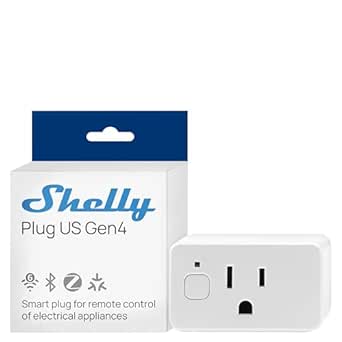
Shelly Smart Plug US Gen4 with Power Monitoring, Wi-Fi, Bluetooth, Zigbee, and Matter
The Shelly Gen4 is the flexible pick for a home where devices use different smart home standards. Its Wi-Fi, Bluetooth, Zigbee, and Matter support gives it broader connection options than the Kasa KP125MP4, which uses Matter over Wi-Fi. Real-time power monitoring, schedules, timers, and scene controls let you track an appliance and automate its use from compatible systems. The ambient light sensor and multicolor LED add status cues, while the protective socket cover and three-year warranty round out the hardware.
That range comes with a setup tradeoff: buyers need to check which features work with their chosen platform and connection method. It has one outlet and a 15 A, 1800 W limit, so it suits individual small appliances rather than a multi-device setup. Choose it for interoperability; the compact Kasa models may be simpler if Matter over Wi-Fi is all you need.
Pros:- Supports Wi-Fi, Bluetooth, Zigbee, and Matter
- Provides real-time power monitoring with schedules, timers, and scene automation
- Works with HomeKit, Google Home, Alexa, and Home Assistant
- Includes a protective socket cover and a three-year warranty
Cons:- Provides only one outlet
- The listed capacity is 15 A and 1800 W, and larger-device compatibility is unspecified
- Features can depend on the selected smart home platform and connection method
Best for: Smart home owners who use a mix of Wi-Fi, Zigbee, and Matter devices and want to monitor one appliance.
Not ideal for: Buyers who need multiple outlets or plan to connect equipment beyond the stated 15 A, 1800 W capacity.
- Plug type:Type B, 3-pin (North American)
- Maximum current:15 A
- Maximum power:1800 W
- Outlets:1
- Connectivity:Wi-Fi, Bluetooth, Zigbee, Matter
- Energy monitoring:Real-time power monitoring
- Smart home compatibility:HomeKit, Google Home, Alexa, Home Assistant
- Certifications:UL, RoHS
- Warranty:3 years
Our verdict“Choose the Shelly Gen4 if you want energy monitoring with several connectivity options; choose a Matter-only Kasa if you prefer a simpler setup.”
Kasa Matter Smart Plug with Energy Monitoring, KP125MP4, 15A/1800W
The Kasa KP125MP4 is a straightforward route to energy monitoring for households building around Matter. It works with Apple Home, Alexa, Google Home, and SmartThings, and its local network control can keep supported commands available when internet service is down. Compared with the Shelly Gen4, it has fewer connection standards, but that can make it a clearer fit for buyers who want Matter over Wi-Fi without adding Zigbee or Bluetooth to the decision.
Its compact, flame-retardant design is intended to leave nearby outlets accessible, useful when a plug occupies a crowded wall plate. At 15 A and 1800 W, it can monitor an individual compatible appliance. The tradeoff is platform dependence: Matter features vary by supported controller and device, so check the setup you already own. Its two-year limited warranty is shorter than Shelly’s three-year coverage.
Pros:- Works with four major Matter-compatible platforms
- Energy monitoring helps track an individual appliance’s use
- Local network control can work without internet service
- Compact, UL-certified flame-retardant design helps preserve nearby outlet access
Cons:- Feature availability depends on compatible Matter platforms and devices
- Two-year limited warranty is shorter than the Shelly Gen4 warranty
- Offers Matter over Wi-Fi rather than the Shelly Gen4’s additional connection standards
Best for: Matter beginners with Apple Home, Alexa, Google Home, or SmartThings who want to track a single appliance.
Not ideal for: Smart home owners seeking Zigbee, Bluetooth, or broad non-Matter connection options from one plug.
- Model:KP125MP4
- Maximum current:15 A
- Maximum power:1800 W
- Connectivity:Matter over Wi-Fi
- Energy monitoring:Yes
- Compatible platforms:Apple Home, Amazon Alexa, Google Home, Samsung SmartThings
- Safety design:UL-certified flame-retardant design
- Warranty:2-year limited warranty
Our verdict“Pick the KP125MP4 for a compact Matter energy monitor if your smart home already uses one of its supported platforms.”
Minoston Z-Wave Smart Plug with Energy Monitoring (MP21ZP)
The Minoston MP21ZP makes sense for buyers who already run a Z-Wave hub and want energy monitoring inside that system. Its 800 Series radio, S2 security, and SmartStart pairing suit a hub-based setup, while timers and schedules can automate the monitored appliance. With a compatible Long Range hub, the plug can extend network coverage up to 1,300 feet, a capability the Wi-Fi-based Kasa KP125MP4 does not target.
The hub requirement is the deciding tradeoff: this plug cannot connect directly to a phone or Echo Plus, and the hub is sold separately. Long Range coverage also depends on hub support, so the stated reach is not guaranteed in every setup. For a home without Z-Wave infrastructure, Kasa’s Matter over Wi-Fi approach is a more direct fit. Minoston is strongest when its protocol and security features complement a hub the buyer already owns.
Pros:- Monitors energy use through a compatible Z-Wave hub
- 800 Series chip supports S2 authenticated security
- SmartStart pairing simplifies supported hub setup
- Can extend coverage with a compatible Long Range hub
Cons:- Requires a separately sold Z-Wave hub
- Does not connect directly to Echo Plus
- Long Range reach depends on compatible hub support
Best for: Z-Wave users with a compatible hub who want to monitor and schedule one appliance on their existing network.
Not ideal for: Buyers without a Z-Wave hub or those who want a plug that connects directly to Wi-Fi or Echo Plus.
- Model:MP21ZP
- Wireless protocol:Z-Wave 800 Series
- Security:S2 authenticated security
- Pairing:SmartStart
- Energy monitoring:Supported
- Hub requirement:Compatible Z-Wave hub required; sold separately
- Maximum range:Up to 1,300 ft with a compatible Long Range hub
- Voice assistant compatibility:Alexa and Google Assistant via a compatible hub
- Compatible hubs:SmartThings, Hubitat, Vera, Wink, Z-Box, Fibaro, Ring, 2GIG, HomeSeer
Our verdict“Choose the MP21ZP if you already have a supported Z-Wave hub; otherwise, a Wi-Fi Matter plug such as the Kasa KP125MP4 avoids that extra requirement.”
Kasa Matter Smart Plug with Energy Monitoring, KP125MP2, 15A/1800W
The Kasa KP125MP2 offers the same core Matter and energy-monitoring approach as the KP125MP4, aimed at buyers who want a single plug rather than several. It supports Apple Home, Alexa, Google Home, and SmartThings, with local network control that can continue when internet service is unavailable. Like the Shelly Gen4, it monitors energy and supports app and voice control, but the Kasa keeps connectivity to Matter over Wi-Fi instead of adding Zigbee and Bluetooth.
That narrower setup is a practical fit when a supported Matter controller is already in place. The compact, UL-certified flame-retardant design helps preserve adjacent outlet access, while the 15 A, 1800 W rating sets its stated capacity. Local control still requires a functioning home network, and platform support affects available features. Its two-year limited warranty is also shorter than Shelly’s three-year term.
Pros:- Supports Apple Home, Amazon Alexa, Google Home, and Samsung SmartThings
- Tracks energy use and supports app and voice control
- Local control can continue when internet service is unavailable
- Compact, UL-certified flame-retardant design
Cons:- Local control requires a functioning home network
- Matter features depend on compatible platforms and devices
- Two-year limited warranty is shorter than the Shelly Gen4 warranty
Best for: Households seeking one compact energy-monitoring plug for a supported Matter platform, with local control on their home network.
Not ideal for: Buyers who need operation without a functioning home network or want Zigbee and Bluetooth alongside Matter.
- Model:KP125MP2
- Maximum current:15 A
- Maximum power:1800 W
- Connectivity:Matter over Wi-Fi
- Energy monitoring:Yes
- Compatible platforms:Apple Home, Amazon Alexa, Google Home, Samsung SmartThings
- Safety design:UL-certified flame-retardant construction
- Warranty:2-year limited
Our verdict“Choose the KP125MP2 for one compact Matter energy monitor if your home network and controller are compatible.”
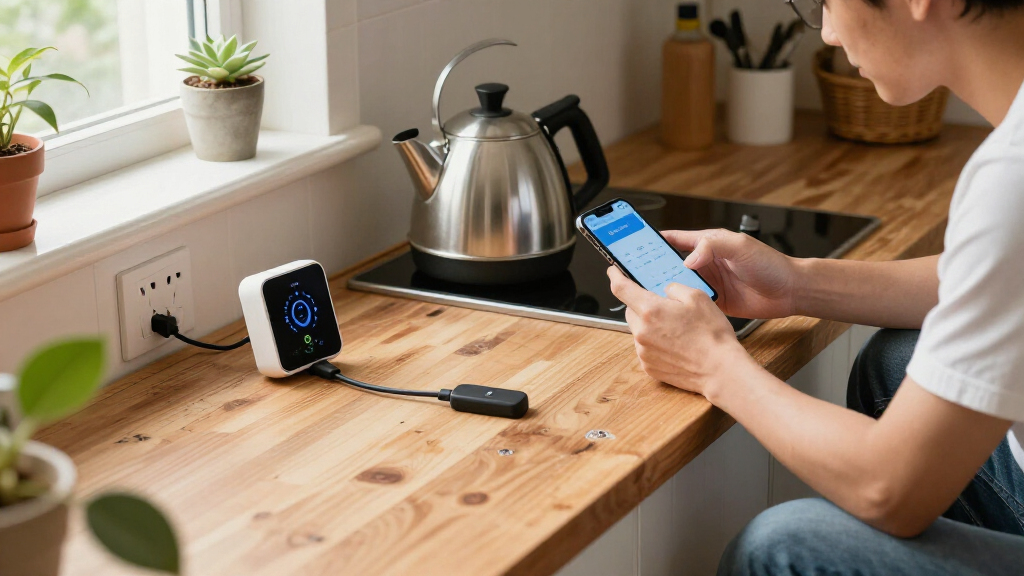
How We Picked
I compared these 14 products on the factors that change how useful an energy-monitoring plug is day to day: stated electrical capacity, energy-tracking features, setup and control options, smart-home compatibility, and the number of plugs included. I gave more weight to options that combine useful monitoring with flexible integrations or a clear advantage for a defined buyer, rather than treating every 15A plug as interchangeable.
The order reflects those differences. The Tapo P110M ranks first for its Matter support and four-pack coverage; Shelly Gen4 follows for buyers who need several connectivity paths, while Emporia earns a distinct place for integration with whole-home monitoring. Other entries suit simpler Wi-Fi setups, particular ecosystems, or buyers who need a two-pack, four-pack, or Z-Wave connection. I also weighed limitations such as narrower connectivity, reliance on a 2.4 GHz network, and whether a feature set may be more involved than a basic monitoring task calls for.
| smart plug energy monitor | Energy monitoring | Model |
|---|---|---|
| Emporia Whole-Home Energy Moni | — | — |
| TOPELER 15A Smart Plug with En | Power usage, current, and voltage | — |
| TP-Link Tapo P110M Matter Smar | Yes | Tapo P110M |
| TP-Link Tapo P115 Smart Wi-Fi | Yes | P115 |
| Emporia Energy Monitoring Wi-F | — | — |
| Govee Smart Plug with Energy M | — | — |
| Govee Smart Plug with Energy M | — | — |
| AiSeek Smart Plug with Energy | Real-time power and energy tracking | — |
| Kasa Smart Plug Mini with Ener | — | KP115 |
| Tapo P115 Wi-Fi Smart Plug wit | Statistics and charts | P115 |
| Shelly Smart Plug US Gen4 with | Real-time power monitoring | — |
| Kasa Matter Smart Plug with En | Yes | KP125MP4 |
| Minoston Z-Wave Smart Plug wit | Supported | MP21ZP |
| Kasa Matter Smart Plug with En | Yes | KP125MP2 |
Factors to Consider When Choosing Smart Plug Energy Monitors
Before choosing a smart plug energy monitor, decide what you need the readings to help you do. The best fit depends on your smart-home platform, the appliance you plan to track, and whether you want a quick estimate or a broader view of household energy use.
Match the plug to the appliance load
Check the appliance label and the plug’s stated electrical limits before connecting anything. A 15A rating is common in this roundup, but buyers should still confirm the device’s voltage, wattage, and intended use against the plug’s specifications. A rating does not mean every appliance is a suitable match, especially for equipment with high startup demands or specialized power requirements. Avoid choosing by the number alone; read the manufacturer’s compatibility guidance for both the plug and appliance. If you plan to monitor several devices, check whether each one can be plugged in without blocking adjacent outlets. Leave room for safe ventilation and easy access to the plug’s controls.
Choose an ecosystem before buying a bundle
Smart-home compatibility determines whether monitoring and control fit into routines you already use. Matter can make a plug easier to connect across supported platforms, while Zigbee and Z-Wave typically depend on a compatible hub or controller. Wi-Fi models may be simpler to add, but confirm whether your network meets the plug’s requirements; several products specify 2.4 GHz Wi-Fi. Do not assume a product’s app features will all appear in another platform after integration. Check the supported commands and energy data for your chosen ecosystem. This step can prevent a multi-pack from becoming a set of plugs you can control only through an app you did not plan to use.
Decide what energy data you actually need
Energy monitoring can answer different questions: whether a device draws power while idle, how usage changes over time, or which appliance contributes most to a bill. Compare the product’s stated tracking and reporting features with the question you want answered. A live power figure and a historical energy total serve different purposes, and neither automatically identifies the cause of a usage spike. If your goal is to understand household consumption as a whole, plug-level readings cover only the devices connected to monitored outlets. A whole-home monitor can provide a wider view, though it brings a different installation and setup decision. Choose the level of detail that will change a practical decision, such as adjusting a schedule or replacing an inefficient appliance.
Buy the right number of plugs
Two- and four-pack versions can look similar while serving very different homes. Count the appliances you want to monitor and control, then consider whether you need every plug at once or want room to expand. A larger bundle is useful when you have several accessible outlets and a consistent monitoring plan, but spare plugs add little value if your devices are concentrated in one room or the outlets are blocked. Check the physical dimensions and spacing around each outlet before buying multiple units. Also consider whether the bundle contains identical models, since similarly named products can have different connectivity or platform features. Buying for the actual outlet layout avoids ending up with more hardware than you can use.
Treat monitoring as a guide, not a bill guarantee
A smart plug’s energy figures can help compare appliances and spot standby draw, but they do not replace the utility meter or guarantee an exact bill forecast. Your bill may include time-based rates, fees, taxes, and usage from devices that are not connected to monitored plugs. Use readings consistently and compare similar time periods before drawing conclusions. If you want to estimate costs, check whether the app lets you enter your electricity rate and how it applies that rate to recorded consumption. Avoid assuming every app reports data in the same units or time intervals. A clear tracking routine often matters more than choosing the plug with the longest feature list.
Pay for flexibility only when you will use it
Extra radios and platform support can keep a smart plug useful through a changing smart-home setup, but they can add setup steps and dependencies. A Matter-capable model can suit a mixed-platform home, while a Z-Wave plug may fit a home that already relies on a Z-Wave hub. If you only need remote switching and energy tracking through one app, broad protocol support may not improve your day-to-day use. Check whether a feature requires a hub, a particular controller, or an account in the manufacturer’s app. Think about who will manage the setup and troubleshoot it later. Paying for a connection method you already own can make sense; paying for several you will not use may not.
Frequently Asked Questions
Can I use a smart plug energy monitor to find which appliance is driving my bill?
It can help you compare the energy use of appliances connected to the plug, especially over consistent time periods. It will not account for devices elsewhere in your home or all of the charges on a utility bill. For a useful comparison, monitor each appliance under similar conditions and note how long it runs. A whole-home monitor may be a better fit if you need a broader view of household consumption. Treat plug readings as a way to identify patterns and test changes, rather than as a complete bill calculation.
Should I choose Matter, Zigbee, or Z-Wave for an energy-monitoring plug?
Start with the smart-home system and hubs you already use. Matter is designed to support connections across compatible platforms, while Zigbee and Z-Wave usually need a matching hub or controller. Wi-Fi can be a straightforward choice for app-based control, but check the model’s network requirements and which energy data your preferred platform can display. Protocol support alone does not guarantee that every monitoring feature appears in every app. Verify compatibility for your exact controller before choosing a bundle.
Will these plugs monitor any appliance as long as it fits the outlet?
No. Check the plug’s electrical limits and manufacturer guidance against the appliance’s voltage, wattage, and operating characteristics. A stated 15A capacity does not mean the plug suits every high-load device or equipment with unusual startup demands. The outlet’s location and neighboring plugs also matter, since bulky adapters can block access or crowd the space. When specifications are unclear, choose a monitoring method designed for that appliance rather than guessing from the outlet shape.
Is a four-pack a better choice than buying one or two monitoring plugs?
A four-pack helps when you already know which several appliances you want to track and have accessible outlets for them. A smaller pack is easier to place strategically if you are still learning which readings are useful or have limited outlet space. Consider whether all plugs share the connectivity and features you need, since product names can be similar across versions. You can also begin with the devices most likely to affect your usage, then expand after reviewing their patterns. The right pack size follows your monitoring plan, not simply the number of plugs in the box.
Can I rely on smart plug readings to calculate my exact electricity costs?
Use the readings as estimates and comparisons, not as an exact statement of what your utility will charge. A plug measures only the connected appliance, and billing can also reflect rates that vary by time, fixed charges, and other fees. Check whether the app supports your electricity rate and how it handles changing rates. Consistent tracking can still show whether an appliance uses more energy at certain times or while idle. For the total household bill, compare the plug’s findings with your utility’s meter data and billing details.
Conclusion
For most buyers seeking a balance of energy tracking, smart-home flexibility, and several plugs in one purchase, I recommend the TP-Link Tapo P110M as the best overall pick. The TOPELER two-pack is a practical value choice for buyers who want basic monitoring and control across a pair of devices, while Shelly Gen4 is the premium fit for a home that can use its multiple connection options. Beginners who prefer a straightforward Wi-Fi setup can start with a Tapo P115 or Govee option after checking platform and network compatibility. For whole-home context, choose Emporia; for a Z-Wave setup, consider Minoston. Match the plug to your appliances, outlets, and smart-home system, and the readings will be far more useful.
Fall yard work Picks
leaf blowers
As an affiliate, we earn on qualifying purchases.