

Smart thermostats differ far more than their spec sheets suggest — the real dividing lines are learning capability, system compatibility, and whether a model needs a C-wire to run reliably. The ecobee Smart Thermostat Premium earns my best overall pick thanks to its included SmartSensor, built-in voice assistants, and smart recovery features that trim energy use without sacrificing comfort. The Google Nest Learning Thermostat (4th Gen) stands out for actually programming itself, while the Amazon Smart Thermostat is the value leader for Alexa households on a budget. The main tradeoff you will face: feature-rich learning models cost more and work best in larger homes, while budget models handle basics well but lack room sensors and automation depth. Keep reading for the full breakdown, including which models belong in homes without a C-wire.

Get home appliances delivered free with Prime
- Fast, free delivery on millions of items
- Prime Video, Amazon Music and more included
- Member-only deals all year
Complete the kit


![[Genuine] Waterdrop PF-01A Water Filter Replacement for W...](https://m.media-amazon.com/images/I/41+5tl9EiKL._SX342_SY445_QL70_FMwebp_.jpg)
Key Takeaways
- Room sensors proved to be the single biggest differentiator in this lineup — only amazon.com/dp/B08J4C8871?tag=topceilingfans08-20&ascsubtag=dc-1115775″ target=”_blank” rel=”nofollow sponsored noopener”>amazon.com/dp/B0DT9MC2Z9?tag=topceilingfans08-20&ascsubtag=dc-1115775″ target=”_blank” rel=”nofollow sponsored noopener”>ecobee includes one in the box, and it solves the common problem of uneven temperatures between floors in ways scheduling alone cannot.
- The Honeywell Home lineup is the most fragmented: the RTH9600WF and RTH9585WF overlap heavily, and the T5 and X2S make sense only for specific system types, so choosing within the brand matters as much as choosing the brand itself.
- Every thermostat in this roundup except the ecobee models either requires or strongly recommends a C-wire, which makes ecobee‘s power-extending kit the deciding factor for older homes with simple two-wire setups.
- Budget options like the Amazon Smart Thermostat and Sensi Lite deliver genuine app control and scheduling, but none of them learn habits — expect to program schedules manually forever.
- The two-pack Amazon option and single-stage generic model only make sense in narrow scenarios: rental properties with multiple units and basic 1-heat/1-cool systems respectively.
| Google Nest Learning Thermostat (4th Gen) with Nest Temperature Sensor (2nd Gen) – Obsidian |  | Best Overall | Model: Nest Learning Thermostat (4th Gen) | Energy Savings: Up to 31% on heating and cooling | Display: 60% larger display with Dynamic Farsight | VIEW LATEST PRICE | See Our Full Breakdown |
| ecobee Smart Thermostat Essential – WiFi Smart Thermostat, Energy Star Certified |  | Best Value for Full-Smart Features | Energy Savings: Up to 23% per year on heating and cooling | System Compatibility: 85% of systems (2H/1C or 1H/2C conventional, 2H/1C heat pump, boilers, dual fuel) | Display: Color touchscreen | VIEW LATEST PRICE | See Our Full Breakdown |
| Honeywell Home RTH9600WF Smart Color Wi-Fi Programmable Thermostat with Touchscreen |  | Best Display Customization | Model: Honeywell Home RTH9600WF | Display: Customizable high-definition color touchscreen | Voice Assistants: Amazon Alexa, Google Assistant, Microsoft Cortana | VIEW LATEST PRICE | See Our Full Breakdown |
| Honeywell Home T5 Smart Wi-Fi Thermostat |  | Best Budget-Friendly Smart Pick | Model: Honeywell Home T5 Smart Wi-Fi Thermostat | Connectivity: Wi-Fi | Scheduling: 7-day flexible scheduling | VIEW LATEST PRICE | See Our Full Breakdown |
| Honeywell Home X2S Smart Wi-Fi Thermostat |  | Best for Smart Home Tinkerers | Connectivity: Wi-Fi (2.4 or 5GHz), Matter Certified | Smart Home Compatibility: Amazon Alexa, Google Assistant, Apple HomeKit | System Support: Up to 2H/2C conventional, 2H/1C heat pump with electric backup, hot water, forced air | VIEW LATEST PRICE | See Our Full Breakdown |
| ecobee Smart Thermostat Enhanced – Programmable Wi-Fi Thermostat |  | Best Overall | Brand: ecobee | Connectivity: Wi-Fi | HVAC Compatibility: 90% of HVAC systems | VIEW LATEST PRICE | See Our Full Breakdown |
| Honeywell Home RTH9585WF Wi-Fi Smart Color Thermostat, 7-Day Programmable, Touch Screen, Gray |  | Best Touchscreen Design | Connectivity: Wi-Fi | Programming: 7-Day Programmable | Display: Color Touch Screen | VIEW LATEST PRICE | See Our Full Breakdown |
| Sensi Lite Smart Thermostat ST25 – WiFi, Alexa Compatible, ENERGY STAR Certified | 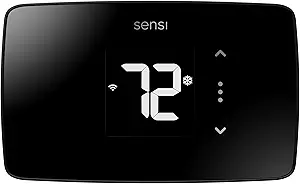 | Easiest DIY Install | Model: ST25 | Connectivity: Wi-Fi (2.4GHz) | Controller Type: Amazon Alexa, Google Assistant, SmartThings, app, touch | VIEW LATEST PRICE | See Our Full Breakdown |
| Google Nest Thermostat – Smart Programmable Wi-Fi Thermostat (Snow) |  | Best for Google Homes | Color: Snow | Connectivity: Wi-Fi | C-Wire Required: No in most homes; required for heating-only, cooling-only, zone-controlled, and heat pump systems | VIEW LATEST PRICE | See Our Full Breakdown |
| WiFi Smart Thermostat for Home – Single-Stage 1 Heat/1 Cool, App Remote Control, 7-Day Programmable (C-Wire Required) |  | Best Budget Pick | Compatibility: Conventional single-stage 1 Heat/1 Cool systems (gas, oil, electric) with AC | Power Source: 24V C-wire (corded electric, required) | WiFi: 2.4GHz only | VIEW LATEST PRICE | See Our Full Breakdown |
| ecobee Smart Thermostat Premium with SmartSensor – WiFi, Siri & Alexa Built-In |  | Best Premium Feature Set | Brand: ecobee | Voice Assistants: Siri and Alexa built-in | Connectivity: WiFi | VIEW LATEST PRICE | See Our Full Breakdown |
| Sensi Smart Thermostat ST55, Wi-Fi, DIY Installation, Works with Alexa, Energy Star Certified |  | Best No-Fuss Value | Model: ST55 | Connectivity: Wi-Fi | Works With: Alexa, most home HVAC systems | VIEW LATEST PRICE | See Our Full Breakdown |
| Amazon Smart Thermostat |  | Best Budget Entry Point | Works With: Alexa, Ring | C-wire Required: Yes | Certification: ENERGY STAR | VIEW LATEST PRICE | See Our Full Breakdown |
| Amazon Smart Thermostat (Pack of 2) – Works with Alexa and Ring, C-Wire Required |  | Best for Multi-Zone Homes | Quantity: Pack of 2 | Compatibility: Alexa and Ring | Installation: DIY (C-wire required) | VIEW LATEST PRICE | See Our Full Breakdown |
| Google Nest Thermostat – Smart Programmable WiFi Thermostat (Charcoal) |  | Best for Google Homes | Color: Charcoal | Certification: ENERGY STAR certified | Wi-Fi: 802.11b/g/n 2.4 GHz, 802.11a/n 5 GHz | VIEW LATEST PRICE | See Our Full Breakdown |
| smart thermostat | Certification | Connectivity |
|---|---|---|
| Google Nest Learning Thermosta | — | — |
| ecobee Smart Thermostat Essent | Energy Star Certified | — |
| Honeywell Home RTH9600WF Smart | ENERGY STAR | Wi-Fi |
| Honeywell Home T5 Smart Wi-Fi | ENERGY STAR | Wi-Fi |
| Honeywell Home X2S Smart Wi-Fi | ENERGY STAR | Wi-Fi (2.4 or 5GHz), Matter Certified |
| ecobee Smart Thermostat Enhanc | — | Wi-Fi |
| Honeywell Home RTH9585WF Wi-Fi | Energy Star | Wi-Fi |
| Sensi Lite Smart Thermostat ST | ENERGY STAR | Wi-Fi (2.4GHz) |
| Google Nest Thermostat | — | Wi-Fi |
| WiFi Smart Thermostat for Home | — | — |
| ecobee Smart Thermostat Premiu | — | WiFi |
| Sensi Smart Thermostat ST55 | Energy Star | Wi-Fi |
| Amazon Smart Thermostat | ENERGY STAR | — |
| Amazon Smart Thermostat | ENERGY STAR | — |
| Google Nest Thermostat | ENERGY STAR certified | — |
More Details on Our Top Picks
Google Nest Learning Thermostat (4th Gen) with Nest Temperature Sensor (2nd Gen) – Obsidian
The 4th-gen Nest earns the top spot because it does the thinking for you. Its self-learning schedule builds itself from your habits, which is why it can deliver savings up to 31% on heating and cooling — a higher ceiling than the ecobee Essential’s 23% — without you ever programming a thing. Compared with the Honeywell Home RTH9600WF, which relies on manual programming and Smart Response, this model removes the ongoing effort entirely. The 60% larger Dynamic Farsight display is readable across a room, and the bundled temperature sensor tackles hot and cold spots, something the base ecobee Essential charges extra to address. The tradeoff: learning takes a few weeks to settle, and buyers who want hands-off simplicity from day one may find the adaptation period frustrating.
Pros:- Learns your schedule automatically for savings up to 31%
- Included remote temperature sensor fixes hot and cold spots
- Matter support works with Alexa, Siri, and Google Home
- No C-wire needed in most homes, easing installation
Cons:- Learning algorithms take days or weeks to adapt to your routine
- Smart notifications and features demand some initial setup and ongoing engagement
Best for: Homeowners who want maximum energy savings with zero manual programming and whole-room temperature balancing
Not ideal for: Renters and people with line-voltage or baseboard systems — it only supports most 24V setups
- Model:Nest Learning Thermostat (4th Gen)
- Energy Savings:Up to 31% on heating and cooling
- Display:60% larger display with Dynamic Farsight
- C-Wire Required:No (in most homes)
- Smart Home Compatibility:Matter, Google Home, Alexa, Siri
- Included Accessory:Nest Temperature Sensor (2nd Gen)
- System Compatibility:Most 24V systems (gas, electric, oil, forced air, heat pump, radiant)
Our verdict“If you want one thermostat that saves the most energy while doing the least work, this is the one to buy.”
ecobee Smart Thermostat Essential – WiFi Smart Thermostat, Energy Star Certified
This option stands out for packing genuine smart functionality into a midrange package. The eco+ suite — including humidity detection, schedule assistance, and time-of-use optimization — gives it smarter energy behavior than the Honeywell Home T5, which tops out at basic scheduling and geofencing. Compatibility with 85% of HVAC systems plus Apple HomeKit, Alexa, and Google Assistant means it fits more homes than most rivals here. Compared with the pricier Nest Learning Thermostat, you give up self-programming and the bundled room sensor, and the savings ceiling is lower at 23% annually. The bigger annoyance is the accessory nickel-and-diming: the Power Extender Kit, trim kit, and SmartSensors are all sold separately, so homes without a C-wire should budget for the PEK before checkout.
Pros:- eco+ features add humidity detection and time-of-use energy optimization
- Works with 85% of HVAC systems and all three major voice ecosystems
- Energy Star certified with up to 23% annual savings potential
- DIY-friendly installation with a color touchscreen
Cons:- Power Extender Kit, trim kit, and SmartSensors all cost extra
- Some HVAC setups require a compatibility check before ordering
Best for: Buyers who want learning-adjacent smart features and utility-rebate eligibility without paying premium prices
Not ideal for: Homes without a C-wire who don’t want to buy the Power Extender Kit separately
- Energy Savings:Up to 23% per year on heating and cooling
- System Compatibility:85% of systems (2H/1C or 1H/2C conventional, 2H/1C heat pump, boilers, dual fuel)
- Display:Color touchscreen
- Smart Home Ecosystems:Apple HomeKit, Google Assistant, Alexa
- Smart Features:eco+ (humidity detection, schedule assistant, time of use)
- Installation:DIY; Power Extender Kit sold separately for homes without a C-wire
- Certification:Energy Star Certified
Our verdict“A strong middle pick that delivers most of the premium experience for buyers who already have a C-wire.”
Honeywell Home RTH9600WF Smart Color Wi-Fi Programmable Thermostat with Touchscreen
Where the Nest Learning Thermostat bets on automation, this model bets on control and polish. Its customizable high-definition color touchscreen lets you match the display to your décor — a genuinely nice touch for open wall spaces where a thermostat is always visible. The Smart Response technology learns how long your home takes to heat and cool, so your schedule hits target temperatures on time rather than late. Practical extras like filter change reminders and on-screen weather put it ahead of the plainer Honeywell Home T5 for everyday usefulness. The tradeoffs are real, though: a C-wire is required with no workaround offered, and electric baseboard (120-240V) systems are incompatible — a hard stop for many older apartments and condos.
Pros:- Customizable color touchscreen blends with home décor
- Smart Response learns heating/cooling cycles for on-time comfort
- Filter reminders, auto heat/cool changeover, and weather display
- Energy Star certified with utility rebate potential
Cons:- C-wire required with no Power Extender alternative
- Incompatible with 120-240V electric baseboard heating
Best for: Design-conscious homeowners with forced air, hot water, steam, or heat pump systems who like programming their own schedule
Not ideal for: Baseboard-heated homes and houses without a C-wire — this model offers no workaround for either
- Model:Honeywell Home RTH9600WF
- Display:Customizable high-definition color touchscreen
- Voice Assistants:Amazon Alexa, Google Assistant, Microsoft Cortana
- Power Requirement:C-wire required
- Compatible Systems:Forced air (gas, oil, electric), hot water, steam, heat pumps with electric backup
- Certification:ENERGY STAR
- Connectivity:Wi-Fi
Our verdict“The pick for buyers who see their thermostat daily and want both hands-on scheduling and a display they can style.”
Honeywell Home T5 Smart Wi-Fi Thermostat
The T5 makes the most sense for buyers who want app control and automation basics without paying for features they’ll never open. Its geofence technology automatically adjusts temperature when you leave and return — a genuinely useful trick the ecobee Smart Thermostat Essential reserves for its ecosystem, and one that works reliably here on its own. The 7-day flexible scheduling and monthly ENERGY STAR energy reports keep things simple and legible, with reported savings of 8-16% on heating and cooling. That’s a lower ceiling than the Nest Learning Thermostat’s 31%, which is the honest cost of the lower price: no learning, no room sensors, no humidity intelligence. Installation also demands a C-wire power adapter, and heating-only oil furnace owners are out of luck without one.
Pros:- Geofencing adjusts temperature automatically based on your location
- 7-day flexible scheduling with app and voice control
- Energy Star certified with monthly energy reports and rebate eligibility
- Reported savings of 8-16% on heating and cooling
Cons:- C-wire power adapter required
- Incompatible with heating-only oil furnace systems unless a C-wire is present
Best for: First-time smart thermostat buyers who mainly want remote control and set-it-and-forget scheduling on a budget
Not ideal for: Savings maximizers and smart home enthusiasts — the 8-16% savings ceiling and basic feature set will feel limiting
- Model:Honeywell Home T5 Smart Wi-Fi Thermostat
- Connectivity:Wi-Fi
- Scheduling:7-day flexible scheduling
- Location Control:Geofence technology with Auto Home and Away mode
- Reported Savings:8-16% on heating and cooling bills
- Certification:ENERGY STAR
- Power Requirement:C-wire power adapter required
Our verdict“A dependable entry point that covers the smart-thermostat fundamentals and skips everything you’d pay extra for elsewhere.”
Honeywell Home X2S Smart Wi-Fi Thermostat
This model is better suited to buyers building out a multi-platform smart home, because Matter certification means it slots cleanly into Alexa, Google Home, and Apple HomeKit without ecosystem lock-in — a flexibility the Amazon Smart Thermostat can’t match with its Alexa-first design. Dual-band Wi-Fi on both 2.4 and 5GHz also gives it stronger, more reliable connectivity than most single-band rivals. Compared with the Honeywell Home T5, it adds auto-away, humidity monitoring, and demand-response support, making it the more future-proof Honeywell option. The interchangeable decorative accent pieces are a small but thoughtful touch. Drawbacks mirror the rest of the Honeywell lineup: a C-wire is mandatory, and 120-240V baseboard heating remains unsupported, so verify your wiring before committing.
Pros:- Matter certified for cross-platform compatibility with Alexa, Google, and HomeKit
- Dual-band Wi-Fi (2.4/5GHz) for reliable connectivity
- Auto-away, humidity monitoring, and filter reminders included
- Interchangeable accent pieces let you restyle the look
Cons:- C-wire required for installation
- Not compatible with electric baseboard heat (120-240V)
Best for: Smart home enthusiasts running mixed ecosystems who want Matter-native control and demand-response program support
Not ideal for: Baseboard-heated homes and anyone without a C-wire — the X2S offers no power workaround
- Connectivity:Wi-Fi (2.4 or 5GHz), Matter Certified
- Smart Home Compatibility:Amazon Alexa, Google Assistant, Apple HomeKit
- System Support:Up to 2H/2C conventional, 2H/1C heat pump with electric backup, hot water, forced air
- Power Requirement:C-wire required (24 VAC)
- Certification:ENERGY STAR
- Warranty:2 years
- Design:White with included gray accent option
Our verdict“The choice for ecosystem-agnostic households that want modern Matter support and richer monitoring than budget models offer.”
ecobee Smart Thermostat Enhanced – Programmable Wi-Fi Thermostat
The ecobee Smart Thermostat Enhanced earns the top spot because it balances broad compatibility, real energy savings, and multi-platform support without drifting into premium pricing territory. Its occupancy sensing sets it apart from schedule-only models like the Honeywell RTH9585WF — instead of following a rigid 7-day program, it detects when you’re away and adjusts automatically, which is where the up to 26% annual savings claim comes from. The included Power Extender Kit also removes the C-wire headache that trips up the Honeywell and the budget WiFi Smart Thermostat later in this list. Compared with the Nest Thermostat (Snow), it adds Apple HomeKit and SmartThings support, so it fits nearly any smart home ecosystem.
The main tradeoff: room-by-room comfort requires SmartSensors sold separately, and it lacks the built-in voice assistant of the ecobee Premium.
Pros:- Occupancy sensing learns your routine and automatically adjusts for up to 26% annual savings
- Works with 90% of HVAC systems and includes a Power Extender Kit so most homes skip the C-wire
- Supports all four major smart home platforms: Alexa, Google Assistant, HomeKit, and SmartThings
- Adjusts for humidity, not just temperature, for steadier indoor comfort
Cons:- Room-by-room SmartSensors must be purchased separately
- Requires an HVAC compatibility check before buying, which adds a step competitors like the Sensi Lite mostly avoid
Best for: Homeowners who want strong energy savings and whole-ecosystem compatibility (Alexa, Google, HomeKit, SmartThings) in one thermostat
Not ideal for: Buyers wanting room-specific temperature balancing out of the box — SmartSensors cost extra and aren’t included
- Brand:ecobee
- Connectivity:Wi-Fi
- HVAC Compatibility:90% of HVAC systems
- Smart Home Compatibility:Amazon Alexa, Google Assistant, Apple HomeKit, SmartThings
- Included Accessories:Power Extender Kit (PEK), Trim Kit
- Energy Savings:Up to 26% per year on heating and cooling
- Warranty:3 years
Our verdict“If you want one thermostat that does almost everything well across any smart home platform, this is the one to buy first.”
Honeywell Home RTH9585WF Wi-Fi Smart Color Thermostat, 7-Day Programmable, Touch Screen, Gray
Where the ecobee Enhanced leans on sensors and automation, the Honeywell Home RTH9585WF leans on control. Its customizable color touch screen lets you match the display to your wall color or décor — something no other thermostat in this lineup offers — and the 7-day flexible programming suits households with predictable routines who’d rather set rules manually than trust an algorithm. Intelligent alerts for filter changes, extreme temperatures, and humidity give it a practical edge over the simpler budget WiFi Smart Thermostat at the end of this list. It’s also Energy Star certified with monthly reports, so you can actually see whether your schedule is saving money.
The catch is wiring: the mandatory C-wire means some homes need an electrician, and it flatly won’t work with electric baseboard heat — a dealbreaker the Sensi Lite or Nest don’t share to the same degree.
Pros:- Customizable color touch screen blends with any décor
- Energy Star certified with monthly energy reports and personalized savings tips
- Intelligent alerts for filter changes, extreme temperatures, and humidity
- 7-day programming with up to four periods per day for precise schedule control
Cons:- C-wire required, potentially needing professional installation in older homes
- Incompatible with electric baseboard heating (120-240V)
- No Apple HomeKit support, unlike the ecobee Enhanced
Best for: Design-conscious homeowners with conventional forced air, hot water, steam, or heat pump systems and structured weekly schedules
Not ideal for: Electric baseboard (120-240V) households and homes without a C-wire who want a wire-free DIY install
- Connectivity:Wi-Fi
- Programming:7-Day Programmable
- Display:Color Touch Screen
- Smart Home Compatibility:Amazon Alexa, Google Home
- Power Requirement:C-Wire Required
- Certification:Energy Star
- Compatibility:Forced air (gas, oil, electric), hot water, steam, heat pumps with electric backup
Our verdict“Pick this if you want hands-on scheduling and a thermostat that looks built into your wall — skip it if you lack a C-wire or run baseboard heat.”
Sensi Lite Smart Thermostat ST25 – WiFi, Alexa Compatible, ENERGY STAR Certified
The Sensi Lite ST25 is the pick for anyone intimidated by wiring. A built-in level and step-by-step in-app guidance make mounting and connecting noticeably simpler than the Honeywell RTH9585WF, and on most systems it runs without a C-wire — thanks to included AAA battery power — which removes the single biggest installation obstacle in this category. The geofencing and flexible scheduling deliver roughly 23% HVAC energy savings, putting it in the same efficiency conversation as the ecobee Enhanced, though without occupancy sensing or HomeKit support. Its standout differentiator is privacy: Sensi commits to never selling personal data, a stance none of the Google or Amazon-backed alternatives can match.
Be aware that heat pump and heat/cool-only systems still need a C-wire, and it’s locked to 2.4GHz WiFi — a problem only if your router is 5GHz-only.
Pros:- Built-in level and guided app instructions make installation genuinely beginner-friendly
- Runs on batteries on most systems, no C-wire needed
- Scheduling, geofencing, and usage reports deliver about 23% HVAC energy savings
- Strong privacy policy — personal data is never sold to third parties
Cons:- C-wire still required for heat pump and heat/cool-only systems
- Limited to 2.4GHz WiFi networks only
Best for: First-time smart thermostat buyers and renters-adjacent owners who want a no-stress DIY install without an electrician
Not ideal for: Heat pump owners (C-wire required) and smart home power users who want HomeKit or room sensors
- Model:ST25
- Connectivity:Wi-Fi (2.4GHz)
- Controller Type:Amazon Alexa, Google Assistant, SmartThings, app, touch
- Power Source:Battery (2 AAA included) or C-wire
- Compatible Systems:Air conditioner, boiler, furnace, heat pump
- Display Type:LCD
- Certification:ENERGY STAR
Our verdict“This makes the most sense for DIY novices who want core smart features and data privacy at minimal hassle.”
Google Nest Thermostat – Smart Programmable Wi-Fi Thermostat (Snow)
The Google Nest Thermostat is the obvious choice for households already living in the Google ecosystem — and its Matter support means it also plays nicely with a wider range of future devices than Alexa-only alternatives like the Amazon Smart Thermostat. Its approach to savings is location-based: it turns itself down when you leave home, similar in spirit to ecobee’s occupancy sensing but driven by your phone rather than an on-device sensor, so it works best if you reliably carry your phone. HVAC monitoring with maintenance reminders adds a preventive layer the Sensi Lite lacks, nudging you before small issues become repairs. Most homes won’t need a C-wire, keeping install simple.
Two honest drawbacks: heat pump, zone-controlled, and heating/cooling-only systems may still require a C-wire or power accessory, and there’s no lock feature — a real annoyance for parents or landlords worried about tampering.
Pros:- Automatically saves energy by turning down when you leave home
- Matter support plus Google Assistant and Alexa compatibility
- Works in most homes without a C-wire
- HVAC monitoring sends alerts and maintenance reminders before problems escalate
Cons:- C-wire or power accessory may be needed for heat pumps, zone systems, and heating/cooling-only setups
- No lock feature to prevent manual tampering
Best for: Android and Google Home users who want location-based energy savings and proactive HVAC health alerts
Not ideal for: Landlords and parents who need a lock feature, or heat-pump households without a C-wire
- Color:Snow
- Connectivity:Wi-Fi
- C-Wire Required:No in most homes; required for heating-only, cooling-only, zone-controlled, and heat pump systems
- Voice Assistant Compatibility:Google Assistant, Alexa, Matter-certified assistants
- Control Method:Google Home app, phone, laptop, tablet
- Energy Features:Auto energy-saving schedule, HVAC monitoring alerts
Our verdict“Buy it if Google Home is your hub and you want set-and-forget savings; look elsewhere if you need a lock or run a heat pump without a C-wire.”
WiFi Smart Thermostat for Home – Single-Stage 1 Heat/1 Cool, App Remote Control, 7-Day Programmable (C-Wire Required)
This no-name WiFi Smart Thermostat covers the basics competently: remote control via app, 7-day scheduling, and temperature accuracy within 2°F, which keeps rooms steady without the drift of older mechanical thermostats. For a straightforward gas, oil, or electric furnace with standard AC, it does the core job that a Nest or ecobee does — at a fraction of the complexity. The backlit LCD is genuinely useful at night, and 24/7 customer support is unusual at this price point. But the tradeoffs are structural, not cosmetic: it handles only single-stage 1 Heat/1 Cool systems, so heat pumps, mini splits, and multi-stage equipment are out, and the C-wire is non-negotiable since it can’t run on batteries like the Sensi Lite can.
Compared with the ecobee Enhanced, you give up occupancy sensing, voice assistants, and platform integrations entirely.
Pros:- Remote temperature control from a smartphone app
- 7-day programmable scheduling reduces wasted heating and cooling
- Accurate within 2°F for consistent indoor comfort
- Backlit LCD screen is easy to read in dark hallways
Cons:- C-wire mandatory — no battery option at all
- Only compatible with conventional single-stage 1 Heat/1 Cool systems
- No smart home platform or voice assistant integration
Best for: Budget-conscious owners of simple single-stage furnace-and-AC systems who just want app control and scheduling
Not ideal for: Anyone with a heat pump, mini split, multi-stage, or line-voltage system — it simply won’t connect
- Compatibility:Conventional single-stage 1 Heat/1 Cool systems (gas, oil, electric) with AC
- Power Source:24V C-wire (corded electric, required)
- WiFi:2.4GHz only
- Scheduling:7-Day Programmable
- Temperature Accuracy:Within 2°F
- Control Method:App / button
- Display:Backlit LCD
Our verdict“A sensible low-cost upgrade for basic furnace-and-AC homes, provided you already have a C-wire — everyone else should step up to the Sensi Lite or ecobee.”
ecobee Smart Thermostat Premium with SmartSensor – WiFi, Siri & Alexa Built-In
This option stands out for packing more into one wall device than anything else in the lineup: built-in Siri and Alexa voice control, a smart speaker, and an air quality monitor that tracks pollutants and humidity. Compared with the ecobee Smart Thermostat Enhanced, the Premium adds the included SmartSensor, which fixes the most common thermostat complaint — uneven temperatures between rooms — by prioritizing the room you actually occupy. The radar-based occupancy sensing preheats or precools before you arrive rather than reacting after the fact, which is how it claims up to 26% energy savings.
The tradeoffs are real, though. Doorbell streaming and smoke alarm alerts sit behind a paid ecobee subscription, and Siri control requires an Apple home hub. Compared with the simpler Sensi ST55, this is more device — and more ecosystem commitment — than many buyers need.
Pros:- SmartSensor delivers room-by-room temperature balancing out of the box
- Siri and Alexa are built directly into the unit — no separate speaker required
- Air quality monitoring with filter change reminders adds health value beyond temperature
- Works with 95% of HVAC systems and includes a Power Extender Kit for homes without a C-wire
Cons:- Doorbell camera streaming and smoke alarm alerts require a paid ecobee Smart Security subscription
- Siri functionality only works with an Apple home hub on the network
- Feature depth makes setup and daily use more involved than simpler rivals
Best for: Smart home enthusiasts who want voice control, whole-room comfort balancing, and air quality data from a single device
Not ideal for: Buyers who just want reliable scheduling and remote control — the Sensi ST55 covers that at a fraction of the complexity
- Brand:ecobee
- Voice Assistants:Siri and Alexa built-in
- Connectivity:WiFi
- HVAC Compatibility:95% of HVAC systems
- Included Accessories:SmartSensor, Power Extender Kit, Trim Kit
- Air Quality Monitor:Built-in (pollutants and humidity)
- Energy Certification:ENERGY STAR certified
- Warranty:3 years
Our verdict“This pick makes the most sense for buyers who want a thermostat that doubles as a voice hub and air quality monitor, and who are willing to accept subscription-gated extras.”
Sensi Smart Thermostat ST55, Wi-Fi, DIY Installation, Works with Alexa, Energy Star Certified
The Sensi ST55 earns its place by refusing to overcomplicate things. Installation is where it beats most of the lineup: a built-in bubble level and step-by-step app guidance mean most homes can swap out an old thermostat in under half an hour, and no C-wire is needed in most applications — the same advantage the ecobee Smart Thermostat Premium achieves only via its Power Extender Kit. That makes this the safer bet for older houses with legacy wiring.
What you give up is depth. Unlike the Google Nest Thermostat, there’s no automatic learning or geofencing that turns heating down when you leave — savings come from the schedules you build yourself, and the ~23% figure is an estimate, not a guarantee. Its privacy commitment not to sell personal data is a genuine differentiator in a category full of data-hungry apps, and it fits in the same footprint as the thermostat it replaces, so no wall patching required.
Pros:- No C-wire required in most applications — rare among major-brand smart thermostats
- Genuinely easy DIY installation with built-in level and in-app instructions
- Does not sell personal information to third parties
- Fits in the same wall space as a traditional thermostat
Cons:- Energy savings depend entirely on the schedules you create and may vary
- Smart home integration is more limited than ecobee or Nest alternatives
- No room sensors, air quality features, or built-in voice assistant
Best for: Owners of older homes without a C-wire who want app control and scheduling without a complicated setup
Not ideal for: Automation-focused buyers who want learning schedules, geofencing, and deep smart home integration
- Model:ST55
- Connectivity:Wi-Fi
- Works With:Alexa, most home HVAC systems
- C-wire Required:No (in most applications)
- Certification:Energy Star
- Installation:DIY with built-in level and app instructions
Our verdict“This model is better suited to buyers who prioritize painless installation and privacy over cutting-edge automation.”
Amazon Smart Thermostat
For anyone upgrading from a dumb dial thermostat, this is the lowest-friction path into smart climate control. Built on Honeywell Home Thermostat Technology, it handles the fundamentals — home, away, and sleep schedules, remote adjustment through the Alexa app, and ENERGY STAR certification — without asking much in return. Compared with the Sensi ST55, its app experience is more polished if you already live in the Alexa ecosystem, and it also ties into Ring devices for a unified smart home view.
The compromise is wiring: unlike the Sensi or the ecobee Smart Thermostat Premium, this unit requires a C-wire, which instantly rules out a chunk of older homes unless they add a power adapter. Its feature ceiling is also lower — there’s no air quality monitoring, no room sensors, and advanced routines lean on Alexa hardware you may not own. As a straightforward, app-guided first upgrade, though, it’s hard to argue with.
Pros:- Guided DIY installation through the Alexa app with customer support available
- Remote monitoring and control from anywhere via the Alexa app
- Backed by Honeywell Home thermostat engineering
- Works with both Alexa and Ring ecosystems
Cons:- C-wire is required, which some homes lack
- Most advanced features depend on owning Alexa ecosystem devices
- No room sensors, air quality data, or learning capability
Best for: Alexa households with a C-wire who want simple app scheduling and remote control at a low entry cost
Not ideal for: Homes without a C-wire — the installation requirement makes the Sensi ST55 the easier choice there
- Works With:Alexa, Ring
- C-wire Required:Yes
- Certification:ENERGY STAR
- Technology:Honeywell Home Thermostat Technology
- Installation:DIY guided by Alexa app
- Estimated Yearly Savings:$90 (EPA estimate)
Our verdict“This pick makes the most sense for Alexa-centric households that want dependable smart scheduling with minimal setup fuss.”
Amazon Smart Thermostat (Pack of 2) – Works with Alexa and Ring, C-Wire Required
Most thermostats in this roundup are sold as singles, which makes multi-story or zoned HVAC homes pay twice and manage two separate purchases. This two-pack solves that in one box, giving upstairs and downstairs units identical hardware, one shared app, and consistent scheduling across zones. Compared with buying two Amazon Smart Thermostats individually, the practical benefit is convenience and setup coherence rather than different features — the units themselves are the same Honeywell-backed design with Alexa app control and ENERGY STAR certification.
The tradeoffs carry over from the single unit: C-wires are required for both installations, so if one zone lacks the wire, you’re buying adapters or calling an electrician. Automatic presence-based adjustment also depends on Alexa+ and compatible Alexa devices. For zone-controlled systems where the Google Nest Thermostat would need a C-wire anyway, this becomes a clean, uniform solution.
Pros:- Two identical units in one purchase for multi-zone coverage
- Unified remote control and scheduling through the Alexa app
- Backed by Honeywell Home Thermostat Technology
- ENERGY STAR certified with estimated annual energy savings
Cons:- C-wire required for both installations
- Automatic adjustment features depend on the Alexa ecosystem and Alexa+
- Rebate eligibility varies by location and energy provider
Best for: Owners of two-zone HVAC systems who want matching thermostats managed from a single app
Not ideal for: Single-thermostat homes — a single Amazon Smart Thermostat or Sensi ST55 is the more sensible buy
- Quantity:Pack of 2
- Compatibility:Alexa and Ring
- Installation:DIY (C-wire required)
- Certification:ENERGY STAR
- Technology:Honeywell Home Thermostat Technology
- Control:Alexa app, Alexa+ voice
- Estimated Energy Savings:$50 per year (EPA estimate)
Our verdict“This option stands out for two-zone households that want matched hardware and one-app management without doubling their shopping effort.”
Google Nest Thermostat – Smart Programmable WiFi Thermostat (Charcoal)
Where the Amazon Smart Thermostat is built around Alexa, this one is the natural pick for anyone already running Google speakers, Pixel phones, or a Google Home app full of devices. Its standout behavior is automatic: it turns itself down when you leave, so savings happen without you writing a schedule — a step the Sensi ST55 leaves entirely to you. Dual-band Wi-Fi and Bluetooth Low Energy keep connections stable, and HVAC monitoring sends maintenance alerts before small problems become expensive ones.
The wiring picture is more nuanced than Sensi’s blanket no-C-wire claim: most homes can skip the C-wire, but heating-only, cooling-only, zone-controlled, and heat pump systems need one or a power accessory. There’s also no lock feature, a real drawback for rentals or homes with curious kids who can freely crank the temperature. Compared with the Nest Learning Thermostat (4th Gen), this model trades learning intelligence and the included temperature sensor for a lower price point.
Pros:- Automatically turns down heating and cooling when you leave home
- Works without a C-wire in most homes
- HVAC monitoring sends alerts and maintenance reminders
- Matter support keeps it compatible beyond just Google Assistant
Cons:- C-wire or power accessory needed for heating-only, cooling-only, zone-controlled, and heat pump systems
- No lock feature to prevent unwanted temperature changes
- Voice control requires a separate compatible smart speaker or display
Best for: Google-ecosystem households wanting automatic energy savings without hand-building schedules
Not ideal for: Heat pump and zone-controlled homes without a C-wire, plus anyone needing a temperature lock for kids or tenants
- Color:Charcoal
- Certification:ENERGY STAR certified
- Wi-Fi:802.11b/g/n 2.4 GHz, 802.11a/n 5 GHz
- Wireless Interconnect:Bluetooth Low Energy
- C-wire:Not required in most homes; required for heating-only, cooling-only, zone-controlled, and heat pump systems
- Works With:Google Assistant, Matter-certified voice assistants
- App:Google Home (Android and iPhone)
Our verdict“This pick makes the most sense for Google-centric homes that want set-and-forget energy savings, provided their wiring doesn’t demand a C-wire.”

How We Picked
I ranked these 15 smart thermostats on five factors that actually change the ownership experience: heating and cooling system compatibility, ease of installation (especially C-wire handling), automation and learning capability, smart home ecosystem integration, and long-term energy savings potential. Models that work across more HVAC configurations ranked higher because compatibility failures are the number one reason smart thermostats get returned. I also weighed what comes in the box — a bundled room sensor or power adapter adds real value that a bare thermostat cannot match.
The ranking logic favors models that reduce buyer friction. A thermostat that programs itself or includes hardware for homes without a C-wire earns a higher spot than one requiring an electrician visit. Within the budget tier, I compared app quality, scheduling flexibility, and platform support to separate genuine value from cheap hardware with clunky software. Finally, I penalized redundancy — where two models overlap heavily, I positioned each for the buyer it genuinely suits rather than ranking both equally.
| smart thermostat | Certification | Connectivity |
|---|---|---|
| Google Nest Learning Thermosta | — | — |
| ecobee Smart Thermostat Essent | Energy Star Certified | — |
| Honeywell Home RTH9600WF Smart | ENERGY STAR | Wi-Fi |
| Honeywell Home T5 Smart Wi-Fi | ENERGY STAR | Wi-Fi |
| Honeywell Home X2S Smart Wi-Fi | ENERGY STAR | Wi-Fi (2.4 or 5GHz), Matter Certified |
| ecobee Smart Thermostat Enhanc | — | Wi-Fi |
| Honeywell Home RTH9585WF Wi-Fi | Energy Star | Wi-Fi |
| Sensi Lite Smart Thermostat ST | ENERGY STAR | Wi-Fi (2.4GHz) |
| Google Nest Thermostat | — | Wi-Fi |
| WiFi Smart Thermostat for Home | — | — |
| ecobee Smart Thermostat Premiu | — | WiFi |
| Sensi Smart Thermostat ST55 | Energy Star | Wi-Fi |
| Amazon Smart Thermostat | ENERGY STAR | — |
| Amazon Smart Thermostat | ENERGY STAR | — |
| Google Nest Thermostat | ENERGY STAR certified | — |
Factors to Consider When Choosing Smart Thermostats
Before picking a specific model, it helps to understand the factors that make or break a smart thermostat purchase. These are the considerations that separated the winners from the also-rans in this comparison — and the mistakes that catch buyers out most often.C-Wire Compatibility: The Dealbreaker Most Buyers Miss
The most common mistake in this category is buying a thermostat without checking for a C-wire, the constant power wire most smart models need to keep their Wi-Fi radios running. Without it, screens go blank, connections drop, and in some cases HVAC equipment can be damaged by power-stealing circuits. Roughly half of American homes lack this wire, particularly older houses with basic heating systems. Ecobee models ship with a power-extending kit that eliminates this problem, which is why they dominate the top of this ranking for older homes. If your home lacks a C-wire and you choose a model like the Amazon Smart Thermostat or Nest Thermostat, budget for either a C-wire adapter or an electrician. Check your existing thermostat’s wiring before you order anything — a two-minute look behind the faceplate prevents the most common return in this category.
Learning vs. Programming: How Much Effort Do You Want to Put In?
Smart thermostats split into two philosophies: learning models that study your habits and build schedules automatically, and programmable models where you set everything yourself. The Nest Learning Thermostat is the flagship of the first approach — after a week or two, it adjusts temperatures based on your comings and goings without any input. The tradeoff is cost and unpredictability: some households find learned schedules fight against their preferences. Programmable models like the Honeywell RTH9600WF and Sensi ST55 put you in full control with 7-day scheduling, which suits people with regular routines who want predictable behavior. Honest assessment: if your schedule varies wildly, learning features shine; if you leave and return at the same times daily, a cheaper programmable model does the same job. Do not pay a premium for learning you will never benefit from.
Ecosystem Lock-In: Match the Thermostat to Your Smart Home
A smart thermostat is only as useful as its integrations, and this is where ecosystem choice quietly locks you in. The Amazon Smart Thermostat works beautifully with Alexa and Ring but is a poor fit for Google Home households. Nest models integrate deepest with the Google ecosystem but interact more awkwardly with Alexa. Ecobee is the most platform-agnostic option, with Siri and Alexa built directly into the Premium model and solid Matter support, making it the safest choice for mixed or undecided households. Honeywell and Sensi play reasonably well with everything but lead in none. Before buying, list the devices you already own — smart speakers, doorbells, sensors — and pick a thermostat that shares their ecosystem. Switching ecosystems later usually means replacing the thermostat entirely, so this decision outlasts the hardware itself.
Room Sensors and Zoning: Why Whole-Home Comfort Costs More
A thermostat only measures temperature where it sits — usually a hallway nobody cares about. That is why remote room sensors emerged as the biggest comfort differentiator in this comparison. With sensors, the system can prioritize the freezing bedroom upstairs or the stuffy living room instead of averaging blindly. Ecobee includes a SmartSensor with its Premium and 4th Gen-compatible packages, and Nest’s 4th Gen bundles its second-generation sensor, but every other model in this lineup either lacks sensor support entirely or sells it separately. If your home has temperature swings between floors or rooms, sensor support should rank above almost any other feature. Homes with a single well-placed thermostat location and even airflow can safely skip this and save money.
Energy Savings Claims vs. Reality
Manufacturers advertise ENERGY STAR certification and double-digit savings percentages, but the realistic savings depend on your behavior more than the hardware. If you already adjust your thermostat religiously when you leave, a smart model saves little — the automation simply does what you were doing manually. Where savings genuinely appear: households with irregular schedules, people who forget to adjust before vacations, and homes using geofencing or occupancy detection for the first time. Eco modes, smart recovery (which pre-heats or pre-cools at the cheapest, most efficient time), and usage reports all contribute, but none are magic. A realistic expectation is modest annual savings on heating and cooling bills — enough to justify a mid-range model over time, but not enough to rationalize a premium purchase purely on payback math in a small apartment.
HVAC System Complexity: Multi-Stage and Heat Pump Owners Beware
Not every smart thermostat supports every system, and this is the second most common compatibility failure after the C-wire issue. The generic single-stage WiFi model in this lineup handles only 1-heat/1-cool systems — fine for a basic furnace and AC, useless for multi-stage equipment or heat pumps with auxiliary heat. Heat pump owners in cold climates should verify auxiliary and emergency heat wire support before buying anything, because a mismatch can leave you without backup heat during a freeze. Multi-stage systems need models like the ecobee Premium or Honeywell RTH9600WF, which support the additional staging wires. Conventional two-wire boiler setups present yet another compatibility puzzle. When in doubt, use the manufacturer’s online compatibility checker with a photo of your existing wiring — every brand offers one, and it takes less time than a return shipment.
Frequently Asked Questions
Do I really need a C-wire, or can I install a smart thermostat without one?
Most smart thermostats need a C-wire to maintain a stable power supply for their Wi-Fi radios, and running without one causes dropped connections, blank screens, and potential strain on your HVAC control board. That said, you have options if your home lacks one. Ecobee models include a power-extending kit that reuses existing wires, making them the best choice for older two-wire setups. Nest’s basic thermostat can power-steal on many systems but not reliably on all of them. Alternatively, a C-wire adapter (around the cost of a pizza) can be installed at the furnace control board by a reasonably handy homeowner. My advice: check your wiring first, and if you see only two wires and want a hassle-free install, lean toward ecobee.
Is the Nest Learning Thermostat worth the premium over the regular Nest Thermostat?
It depends entirely on how predictable your household is. The Learning model builds its own schedule by observing your habits, supports remote temperature sensors for multi-room comfort, and has a premium metal build with a sharper display — the regular Nest requires manual scheduling and lacks sensor support. If your daily routine varies, the learning features and bundled sensor in the 4th Gen package deliver real comfort benefits that justify the price gap. But if you work a fixed schedule and already remember to adjust the temperature when you leave, the cheaper Nest Thermostat accomplishes nearly the same savings. Renters and apartment dwellers with small, even-heated spaces should almost always take the savings. Homeowners with temperature swings between floors get more from the Learning model’s sensor support than from its learning itself.
Which smart thermostat works best if I have both Alexa and Google devices at home?
The ecobee Smart Thermostat Premium is the strongest fit for a mixed household, because it builds in both Siri and Alexa voice control at the device itself while still working with Google Home through integration — no single brand covers all three platforms that broadly. The Honeywell Home models and Sensi thermostats are also solid neutral choices, since their apps support both assistants without favoritism, though they lack any built-in voice control. What you want to avoid is deep ecosystem lock-in on one side: the Amazon Smart Thermostat is designed around Alexa and Ring, and while it technically works elsewhere, its best features assume an Alexa-first home. Nest models invert that dynamic toward Google. If you genuinely use both assistants daily, platform neutrality matters more than any single feature.
Can a smart thermostat actually lower my energy bills, and by how much?
Yes, but the honest answer depends on your starting habits. Households that already manually adjust their temperatures when away see modest additional savings, while those who leave the system running at one setting all day can trim a meaningful share of heating and cooling costs. The savings come from three mechanisms: automated setbacks when you are away (via geofencing or schedules), smart recovery that reaches your target temperature efficiently instead of blasting heat, and usage reports that reveal wasteful patterns. ENERGY STAR certified models like the ecobee and Sensi units are validated to deliver savings when used with their eco features enabled. Realistic expectation: a few hundred dollars per year in a typical detached home with average usage, less in a small apartment. Treat aggressive marketing percentages as best-case scenarios, not guarantees.
Should I buy the Amazon Smart Thermostat two-pack or two different models?
The two-pack only makes sense in specific situations: a two-story home with separate HVAC zones, a duplex or rental property you manage, or a parent’s home you want to monitor alongside your own. If any of those describe you, the per-unit savings are real and the shared Alexa and Ring integration keeps everything manageable from one app. However, if you are buying for one home with a single HVAC system, a single thermostat controls the whole house regardless of square footage — extra units do nothing without separate zones. Also remember both units require a C-wire, so verify wiring in both locations before committing. For a primary home plus a vacation property, mixing models often works better: a feature-rich ecobee or Nest at home, and a cheap basic unit at the cabin.
Conclusion
After comparing all 15 models, the right choice comes down to your home’s wiring, your ecosystem, and how much automation you actually want. For best overall, the ecobee Smart Thermostat Premium earns the top spot with its bundled SmartSensor, built-in Siri and Alexa, and the power-extending kit that makes it work in almost any home. The Google Nest Learning Thermostat (4th Gen) is the best premium alternative for Google households that want self-programming convenience and polished industrial design. For best value, the Amazon Smart Thermostat delivers dependable app control and scheduling for Alexa homes at a fraction of the competition’s cost.
Best for beginners goes to the Sensi Smart Thermostat ST55, whose guided DIY installation and straightforward app remove nearly all the intimidation from the process. The Honeywell Home RTH9600WF suits buyers who want full manual control with a color touchscreen and flexible 7-day programming. For specific needs: choose the ecobee Enhanced for sensor support on a tighter budget, the Nest Thermostat (Snow or Charcoal) for affordable Google ecosystem entry, the Amazon two-pack for zoned or multi-property setups, and the single-stage generic model only for basic 1-heat/1-cool systems with an existing C-wire. Whatever you choose, verify your wiring first — it is the one step that determines whether any of these thermostats works in your home at all.
Halloween Picks
halloween
As an affiliate, we earn on qualifying purchases.