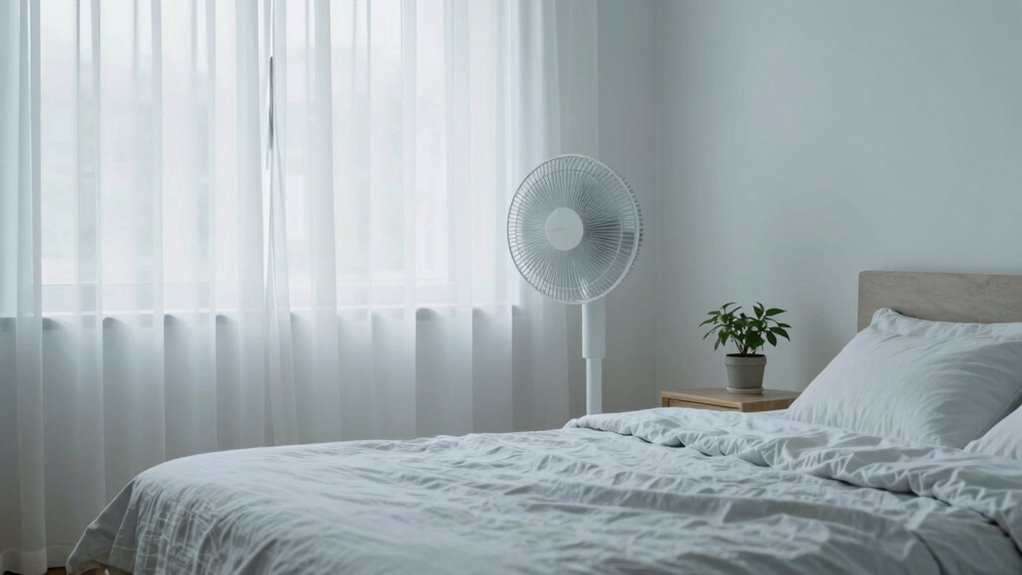

To make your bedroom feel cooler without lowering the thermostat, focus on color choices and airflow. Use light, cool tones like soft blues or pale greens for walls, bedding, or accents to reflect heat and promote a calming vibe. Increase ventilation by opening windows during cooler times and using fans to circulate air. Combining these simple strategies can boost comfort and create a fresh, cool environment—think about how small tweaks can make a big difference.

Get home appliances delivered free with Prime
- Fast, free delivery on millions of items
- Prime Video, Amazon Music and more included
- Member-only deals all year
Key Takeaways
- Use light, cool-colored accents like blue or green to reflect light and create a calming, cooler perception.
- Maximize airflow by opening windows during cooler times and using ceiling or box fans to circulate air.
- Keep furniture away from vents and windows to ensure unobstructed airflow and better ventilation.
- Incorporate light-colored curtains or shades to block heat from sunlight while allowing air to flow.
- Combine visual cooling cues, such as cool tones, with physical airflow techniques for an enhanced cooling effect.
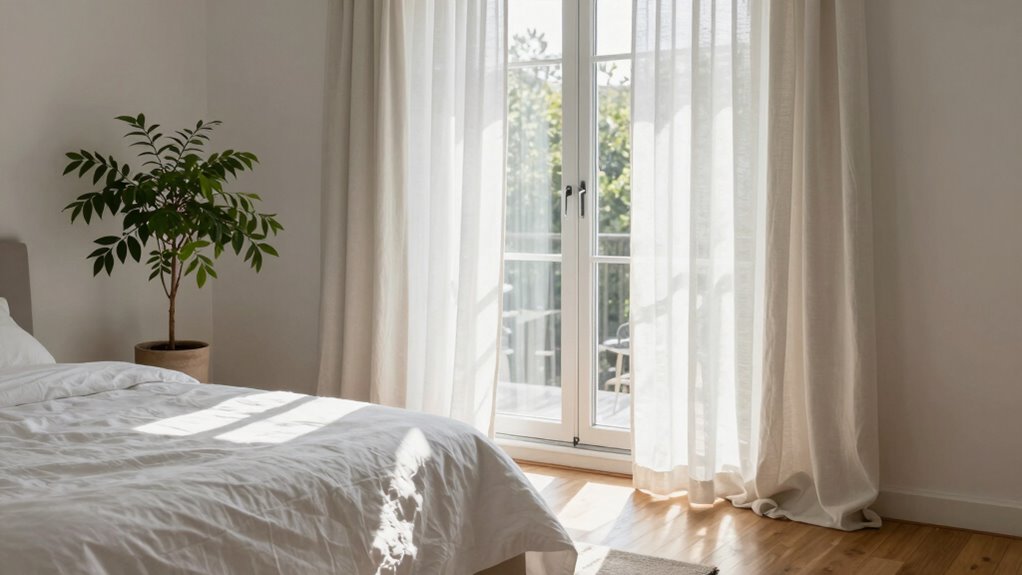
Ever wonder how to make your bedroom feel cooler without turning down the thermostat? It’s all about creating an environment that tricks your senses into feeling cooler, and a few simple adjustments can do just that. One effective way is by paying attention to your color schemes. Light, cool tones like soft blues, pale greens, and crisp whites reflect more light and heat, making the space feel less warm. Darker shades tend to absorb heat and can make a room feel warmer, even if the temperature isn’t higher. By choosing colors that evoke a sense of freshness and calm, you can psychologically lower the perceived temperature in your bedroom. This doesn’t mean you have to repaint everything; even small accents like bedding, curtains, or rugs in cool tones can make a noticeable difference.
Another key element is airflow optimization. Proper airflow can considerably influence how cool your room feels. If your space isn’t well-ventilated, hot air can stagnate, making it feel stuffy and warm. To improve airflow, keep windows open whenever possible, especially during cooler parts of the day. Use fans strategically—placing a ceiling fan on a low setting can circulate air without creating a chilling draft. Positioning a box fan near an open window can pull in cooler outside air and push out warm indoor air, creating an invigorating breeze. Make sure furniture isn’t blocking vents or windows, which could hinder airflow. Additionally, installing vent registers or using door sweeps can help direct airflow through the room more efficiently. Creating a well-ventilated environment helps ensure consistent airflow, which can make the space feel cooler even if the temperature remains unchanged. Ensuring proper air circulation is essential for maintaining a comfortable and cool atmosphere. Implementing ventilation techniques effectively can further enhance the cooling effect and improve overall comfort. When airflow is optimized, your body perceives the environment as cooler, even if the actual temperature remains unchanged.
Combining these two strategies — selecting a calming color palette and enhancing airflow — amplifies their effects. For instance, a room painted in light blue with a ceiling fan gently whirling can create a cool, breezy atmosphere. Using light-colored curtains that allow ventilation while shading the room from direct sunlight further supports this effort. The goal is to pair visual cues with physical airflow to make your bedroom feel more comfortable. These simple adjustments don’t require expensive upgrades or complicated systems, but they can notably influence how cool your space feels. By consciously choosing your color schemes and ensuring proper airflow, you create a soothing environment that feels naturally cooler and more inviting, all without adjusting the thermostat.
As an affiliate, we earn on qualifying purchases.
Frequently Asked Questions
Can Using Fans Actually Make a Room Cooler?
Using fans can make a room feel cooler, especially through evaporative cooling, which reduces humidity and enhances comfort. To maximize their effect, you should pay attention to fan placement—placing fans near open windows or doorways can improve airflow and create a breeze that cools your skin. Remember, fans don’t lower the room’s temperature but make it feel cooler by increasing air circulation and helping sweat evaporate more efficiently.
How Does Lighting Affect Bedroom Temperature Perception?
Lighting considerably impacts your perception of temperature in the bedroom. An ambient glow creates a soft, calming environment, making the room feel cooler. Conversely, high contrast lighting, with bright spots and shadows, can make the space seem warmer. You can adjust lighting to influence how cool or warm your bedroom feels, using softer, dimmer lights to enhance a cool sensation and reduce the perception of heat.
Do Certain Colors Make a Room Feel Cooler?
Yes, certain colors can make a room feel cooler through color psychology and visual perception. Light, cool tones like blues, greens, and soft grays are known to evoke calmness and reduce the sensation of heat. These colors reflect more light and create an airy, spacious feel, making your bedroom seem cooler without changing the thermostat. So, choosing the right color palette can considerably influence how cool your space feels.
Can Indoor Plants Help Lower Room Temperature?
Indoor plants can help lower room temperature by managing indoor humidity and enhancing airflow, much like a natural breeze. You should place them strategically—near windows or in well-ventilated spots—to maximize their cooling effect. As they absorb moisture and promote evaporation, they create a invigorating environment. Think of plants as nature’s air conditioners, making your bedroom feel cooler without lowering the thermostat, and adding a touch of green serenity.
How Does Air Circulation Impact Bedroom Comfort?
Air circulation plays a vital role in bedroom comfort by enhancing airflow optimization. When you improve cooling airflow with fans or open windows, you help remove warm, stagnant air and introduce cooler air from outside. This process keeps the room feeling fresher and more comfortable. Proper airflow prevents heat buildup and humidity, making your bedroom feel cooler naturally, without needing to lower the thermostat.
Conclusion
By tweaking your room’s surroundings, you can turn your bedroom into a invigorating oasis without changing the thermostat. Think of it as giving your space a cool breeze without a wind machine—smart choices like curtains, fans, and light colors work like magic. When you implement these tips, you’ll find your room feels as cool as a cucumber, proving that sometimes, a little cleverness can be the key to staying comfortable—no extra cost needed.
Fall Picks
fall essentials
As an affiliate, we earn on qualifying purchases.