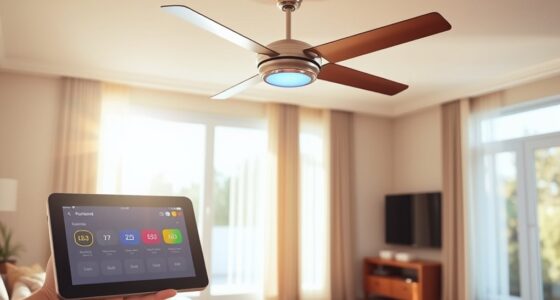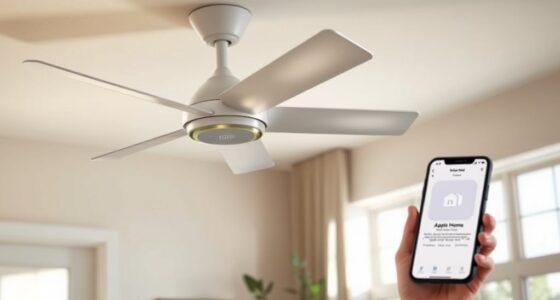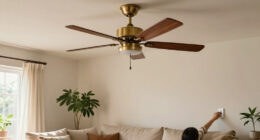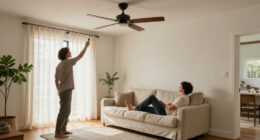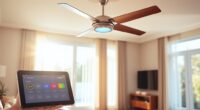
To automate your fan lights according to circadian rhythm schedules, you can use smart switches, sensors, and compatible hubs to synchronize lighting and fan control with natural light patterns. By setting schedules that mimic sunrise, sunset, and daylight changes, you can boost alertness in the morning and promote relaxation in the evening. Proper customization and ongoing adjustments guarantee your environment aligns with your body’s internal clock. If you want to master this setup, you’ll find helpful tips ahead.
Key Takeaways
- Use smart switches or sensors to automatically adjust fan light brightness and color temperature based on time or ambient light.
- Schedule lighting changes to mimic natural light patterns—brighter in the morning and warmer in the evening.
- Integrate circadian lighting principles with automation to support sleep-wake cycles and improve mood.
- Calibrate sensors regularly to ensure accurate response to environmental light and maintain schedule effectiveness.
- Choose compatible smart home devices (Zigbee, Z-Wave) for seamless automation and easy schedule customization.
smart light switch with circadian rhythm scheduling
As an affiliate, we earn on qualifying purchases.
As an affiliate, we earn on qualifying purchases.
Understanding Circadian Rhythms and Their Impact on Daily Life

Since your body’s internal clock, known as the circadian rhythm, regulates many essential functions, understanding it can help you optimize your daily life. Disruptions like jet lag throw off your sleep-wake cycle when you travel across time zones, making you feel fatigued and disoriented. Similarly, seasonal affective disorder (SAD) affects your mood and energy levels during shorter winter days. Knowing how your circadian rhythm responds to light and darkness allows you to adjust your routines to minimize these effects. Light exposure during the day can boost your mood and alertness, while dimming lights at night signals your body to prepare for sleep. Recognizing these patterns helps you maintain better overall health and well-being. Additionally, understanding light and darkness cues can assist in optimizing your body’s natural responses to support better sleep and alertness. Incorporating color temperature adjustments into your lighting routines can further enhance your circadian alignment and overall comfort.
Benefits of Automating Fan Lights According to Biological Clocks
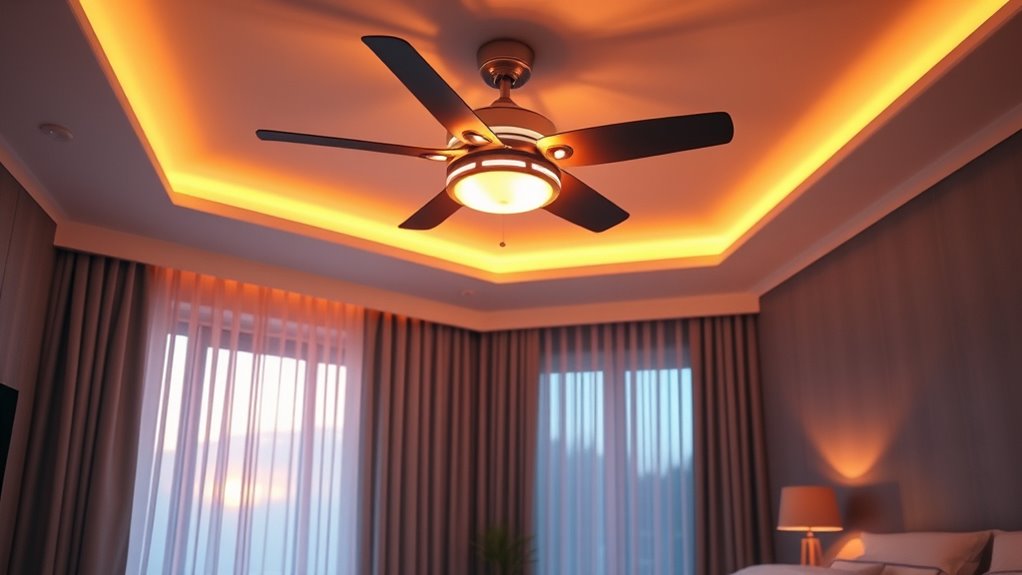
Automating your fan lights can improve your sleep quality by syncing with your natural biological rhythms. When your lighting adjusts automatically, it helps your body stay aligned with day and night cycles. Plus, this automation promotes energy efficiency while supporting your overall well-being. Incorporating creative practice into your routine can also enhance your ability to adapt to new systems and innovations.
Enhances Sleep Quality
Have you ever considered how your sleep quality could improve with lighting that aligns with your biological clock? Automating your fan lights can create a calming environment that signals your body it’s time to wind down. Proper lighting aesthetics, like soft, warm tones at night, help your brain prepare for sleep, making it easier to fall asleep faster and stay asleep longer. Plus, when combined with fan speed control, you can set your fan to operate quietly and gradually reduce speed as you approach bedtime, minimizing disruptions. This smooth transition supports your natural circadian rhythms, promoting deeper, more restful sleep. Additionally, using UV filters in lighting or fans can help protect against potential damage from light exposure at night, further enhancing sleep quality. Incorporating biological clock alignment into your environment design can further optimize your sleep patterns. By syncing your lighting and fan settings to your biological clock, you’re creating an environment that naturally encourages better sleep quality. Recognizing how dreams affect our emotional well-being can also motivate creating a sleep-friendly environment that reduces stress and promotes restful dreaming.
Aligns With Natural Rhythms
Ever wonder how your environment can better support your body’s natural rhythms? Automating your fan lights to sync with your biological clock helps reduce light pollution, which can disrupt your sleep and alertness. By mimicking natural light patterns, your circadian rhythm stays aligned, making you feel more energized during the day and relaxed at night. This alignment prevents your internal clock from being thrown off by artificial lighting. Adjusting your lights gradually throughout the day ensures your environment supports your natural sleep-wake cycle. Here’s a quick overview:
| Time of Day | Light Intensity | Biological Effect |
|---|---|---|
| Morning | Bright, natural light | Boosts alertness and mood |
| Afternoon | Moderate light | Maintains focus |
| Evening | Dim, warm light | Prepares your body for sleep |
| Night | Minimal or no light | Supports rest and recovery |
Aligning lights with your biological clock enhances well-being and sleep quality. Incorporating circadian lighting principles into your automation setup can further optimize these benefits, as understanding the biological effects of light can help tailor your environment for better health. Additionally, using light therapy in your routine can reinforce healthy circadian rhythms, especially during seasons with limited natural daylight.
Promotes Energy Efficiency
By syncing your fan lights with your body’s natural rhythms, you not only improve your sleep and alertness but also reduce unnecessary energy consumption. Automating your fan lights based on circadian schedules promotes energy conservation by ensuring lights and fans operate only when needed. This targeted approach prevents wasteful usage during times when your body doesn’t require extra lighting or cooling. Lighting optimization ensures that your home’s lighting is aligned with natural cycles, further enhancing energy efficiency. Additionally, using preppy dog names as inspiration for naming your home’s smart devices can add a touch of personality and style to your technology setup. As a result, you’ll notice significant cost savings on your energy bills over time. By optimizing lighting and fan activity to match your biological clock, you minimize energy waste without sacrificing comfort. This efficient use of resources benefits both your wallet and the environment, making your home more sustainable while maintaining a cozy, health-supporting atmosphere. Incorporating energy-efficient practices into your home setup can further enhance these benefits and support sustainable living.
Selecting Smart Devices for Circadian-Based Lighting and Fan Control
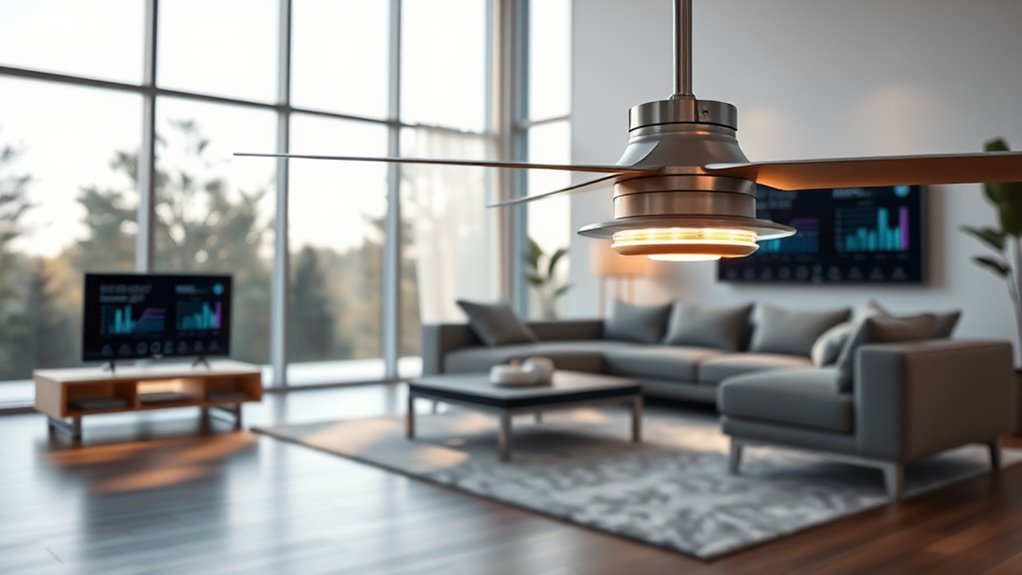
What factors should you consider when selecting smart devices for circadian-based lighting and fan control? First, verify the devices are compatible with your existing smart home ecosystem to prevent integration issues. Look for devices that support common protocols like Zigbee or Z-Wave, which enhance compatibility. Next, prioritize user interface design; a simple, intuitive interface makes it easier to customize schedules and monitor system performance without frustration. Check if the devices offer features like adjustable color temperatures and dimming options, which are essential for circadian lighting. Additionally, consider the device’s reliability and update frequency to ensure consistent performance. Understanding signs of spoilage in related contexts can help you choose durable, long-lasting devices that won’t fail prematurely. Moreover, assessing the compatibility with other smart devices can streamline your automation setup and create a more cohesive environment. Being aware of industry standards can also guide you in selecting devices that adhere to recognized quality and safety benchmarks. By choosing compatible, user-friendly smart devices, you’ll create an effective system that seamlessly adjusts your lighting and fan settings to match your circadian rhythms.
Step-by-Step Guide to Setting Up Your Automated System
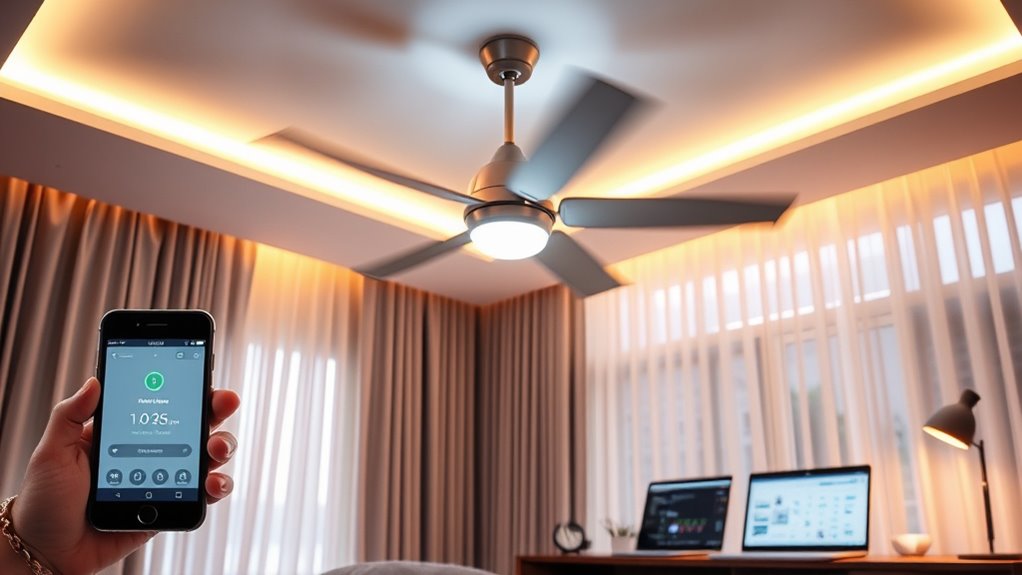
To set up your automated fan light system, start by choosing the right hardware that fits your needs. Next, program the circadian timings to match your daily schedule, ensuring ideal comfort. Additionally, consider integrating cost-effective strategies for asset division into your planning, especially if the system involves significant investment or shared resources, which can help streamline the process. Moreover, understanding Steampunk and Victoriana designs can inspire a unique aesthetic for your environment, blending Victorian elegance with industrial charm. Furthermore, consider integrating essential oils for respiratory health into your environment, which can promote easier breathing and overall well-being. Finally, test and make adjustments to fine-tune the system for smooth operation.
Choose Suitable Hardware
Are you unsure which hardware components are best suited for automating your fan lights? To create an efficient system, consider these key options:
- Smart switches that can be easily installed and controlled remotely
- Sensor lights that detect motion or ambient light levels to trigger automation
- Compatible hub devices to connect and manage multiple smart components
- Reliable Wi-Fi or Zigbee modules for seamless communication and scheduling
- Selecting hardware that supports Ice Cream Recipes can inspire fun, themed lighting effects for special occasions. Incorporating home automation standards ensures your system remains compatible with future upgrades and devices. These hardware choices ensure your fan lights respond automatically, aligning with circadian rhythms. Using smart switches allows manual control alongside automation, while sensor lights provide hands-free operation. Make sure the components you select are compatible with your existing home setup for smooth integration. With the right hardware, you’ll set a solid foundation for a truly automated and adaptive lighting system.
Program Circadian Timings
Setting up your fan lights to follow circadian rhythms requires precise timing adjustments to match natural light cycles. To program these timings, focus on your lighting design by aligning fan automation with sunrise and sunset times in your area. Use a smart control system or app that allows you to set specific schedules based on your location. Input the ideal lighting changes for different times of the day—brighter in the morning to boost alertness and dimmer in the evening to promote relaxation. Adjust these settings seasonally if possible, to reflect changes in daylight hours. Consistently updating your program ensures your fan automation supports your circadian rhythm, enhancing comfort and well-being. Proper timing setup is key to maximizing the benefits of your automated lighting system.
Test and Adjust System
Once you’ve programmed your fan lights to follow your desired schedule, it’s time to verify that everything works as intended. Start by observing how the sensors respond to changing light conditions and ensure they’re properly calibrated. Check if the lights turn on and off at the correct times, and adjust sensor calibration if needed. If the system isn’t behaving as expected, troubleshoot common issues like faulty wiring or incorrect settings. You might need to recalibrate the sensors for more accurate readings or reset the system entirely. Keep a close eye on how smoothly the automation runs during different times of day. This step ensures your circadian rhythm schedule keeps your environment comfortable and synchronized with natural light patterns.
Customizing Schedules to Match Your Lifestyle and Preferences
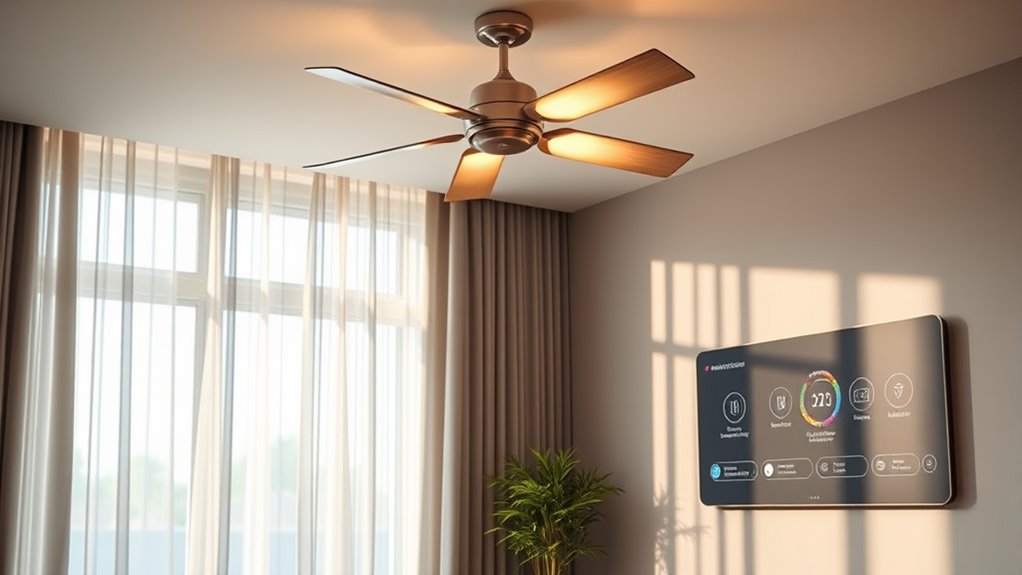
Customizing schedules for your fan lights allows you to tailor their operation to fit your daily routine and preferences. With personalized scheduling, you can set specific times for your fan lights to activate or modify based on your habits. This ensures the lighting aligns with your natural circadian rhythms, promoting better sleep and alertness. By considering your user preferences, you can customize brightness levels, color temperature, and timing to match your lifestyle. For example, you might schedule brighter lighting in the mornings to energize you or softer, warmer tones in the evening to prepare for rest. These adjustments give you control over your environment, making your circadian lighting system more effective and comfortable for your daily needs.
Tips for Maintaining and Optimizing Your Circadian Lighting Routine

To keep your circadian lighting routine effective, regularly review and adjust your schedules based on changes in your daily habits or seasonal shifts. This helps maintain ideal lighting aesthetics and comfort. Consider how ambient light levels affect your mood and productivity, and tweak your schedules accordingly. Pay attention to fan noise, ensuring it remains unobtrusive during rest or work periods. To enhance your routine, you might:
Regularly review and adjust your lighting and fan settings to optimize comfort and mood throughout the seasons.
- Adjust fan speed settings to minimize noise during sleep hours
- Incorporate warmer lighting in the evening for a cozy atmosphere
- Use dimmable lights to fine-tune brightness levels throughout the day
- Regularly clean fixtures to preserve lighting quality and aesthetics
Consistent adjustments keep your circadian rhythm aligned, ensuring a smoother, more comfortable experience.
Frequently Asked Questions
How Do I Troubleshoot Connectivity Issues With My Smart Fan Light System?
If you’re having connectivity issues with your smart fan light system, start by checking for firmware updates and install any available ones. Make certain your Wi-Fi signal isn’t disrupted by signal interference from other devices or walls. Restart your router and the smart device. Keep your system’s firmware current and minimize interference sources to improve connectivity. These steps often resolve common issues and keep your system running smoothly.
Can I Integrate Circadian Lighting With Existing Home Automation Platforms?
You can definitely integrate circadian lighting with your existing home automation platform. First, check the lighting compatibility of your smart bulbs and controls to guarantee they support circadian schedule features. Then, use your platform’s automation tools to set or customize lighting routines that mimic natural light patterns. This allows seamless automation integration, enhances your environment, and promotes better sleep and well-being through tailored lighting adjustments.
What Safety Precautions Should I Consider When Installing Automated Lighting Controls?
When installing automated lighting controls, you should prioritize electrical safety by turning off power before starting. Make sure your setup complies with local electrical codes to prevent hazards. Use proper wiring techniques and secure all connections. If you’re unsure, consult a professional. Avoid shortcuts, and double-check your work. These precautions help protect you from shocks and ensure your system operates safely and reliably.
How Does Weather or Seasonal Change Affect Circadian Lighting Schedules?
You’ll notice that seasonal daylight variation and weather-related lighting adjustments impact your circadian lighting schedules. As days grow shorter or longer, you’ll want to adapt your lighting to match natural light patterns, ensuring your circadian rhythm stays aligned. Weather changes, like cloudy days, may require additional lighting, while sunny days may need less. By staying flexible, you keep your environment comfortable and your sleep-wake cycle healthy year-round.
Are There Any Health Risks Associated With Automated Circadian Lighting?
Health concerns related to automated circadian lighting mainly involve light sensitivity, which can cause discomfort or headaches for some people. While these systems aim to improve well-being, if the lighting isn’t properly calibrated, it might disrupt your sleep or mood. You should monitor how your body responds and adjust settings if you notice any adverse effects, ensuring the lights support your health without causing unnecessary discomfort.
Conclusion
By automating your fan lights with circadian rhythms, you align your environment with your body’s natural clock. Imagine waking up refreshed as lights gradually brighten, or winding down effortlessly as they dim. This seamless harmony can boost your mood, sleep, and energy. Think of your home becoming a living, breathing space that adapts to you—like a gentle breeze guiding you through each day’s rhythm. Embrace this harmony, and let your space support your well-being effortlessly.