
Battery efficiency losses are vital because they affect how well your backup system performs during outages. When energy is stored and used repeatedly, efficiency drops, leading to less usable power and possible system failures. These losses also cause faster battery degradation, increasing maintenance costs. As renewable energy and electric vehicles add cycling stress, understanding efficiency impacts helps you plan better for reliable backup. Keep exploring, and you’ll discover ways to optimize your system’s longevity and performance.
Key Takeaways
- Efficiency losses reduce the available stored energy, affecting backup system reliability during power outages.
- Increased cycling from renewable integration and EVs accelerates battery degradation, raising maintenance costs.
- Diminished efficiency shortens battery lifespan, leading to higher replacement expenses and system sustainability concerns.
- Technological improvements and management strategies can mitigate efficiency losses, enhancing backup performance.
- Understanding efficiency impacts aids in better planning, ensuring cost-effective and reliable energy backup solutions.
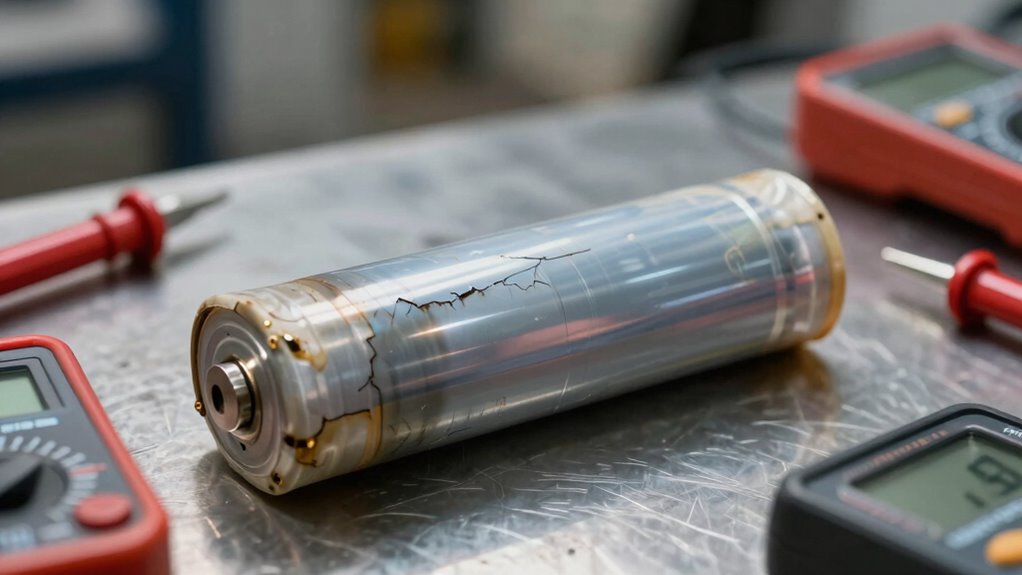
When you rely on backup batteries to keep your essential systems running, understanding efficiency losses becomes vital. These losses directly influence how well your backup system performs during outages and how cost-effective it remains over time. One of the key factors contributing to efficiency losses is renewable integration. As more renewable energy sources, like solar and wind, feed into the grid, batteries are increasingly used to store excess energy for later use. However, the variability of renewable sources and the need for frequent charge and discharge cycles can lead to higher energy losses. These losses mean you get less usable power from your stored energy, reducing the overall reliability of your backup system. If you’re integrating renewable energy, understanding how efficiency diminishes with repeated cycles helps you plan for sufficient storage capacity and avoid unexpected failures when you need backup power most.
Another significant aspect impacting battery efficiency is the electric vehicle impact. As electric vehicles (EVs) become more common, many are using vehicle-to-grid (V2G) technology to feed energy back into the grid during peak demand. While this practice supports renewable integration and grid stability, it also introduces additional cycling of backup batteries. Each charge and discharge cycle causes some energy loss, which accumulates over time, decreasing overall efficiency. This means your backup system might not only be less effective during outages but also require more frequent maintenance or replacement, increasing your ongoing costs. Recognizing the influence of EV impact helps you better understand the trade-offs involved and plan accordingly, ensuring your backup system remains robust amid the evolving energy landscape.
Furthermore, efficiency losses affect the lifespan of your batteries. As energy is lost during storage and retrieval, batteries undergo more stress, leading to faster degradation. This degradation shortens their usable life and escalates replacement costs. When you factor in the impact of renewable integration and EV impact, it becomes clear that optimizing battery efficiency isn’t just about immediate performance; it’s also about long-term sustainability. Additionally, battery technology advancements play a crucial role in mitigating these efficiency losses, helping to extend battery lifespan and improve overall system reliability. Staying informed about advanced management systems can further enhance efficiency and longevity. Incorporating smart energy management strategies can also reduce unnecessary cycling and energy waste, preserving battery health over time. Recognizing the importance of proper maintenance practices ensures your backup system remains reliable, cost-efficient, and capable of supporting your essential operations, especially as the energy landscape continues to evolve with increasing renewable adoption and electric vehicle usage.
As an affiliate, we earn on qualifying purchases.
Frequently Asked Questions
How Can I Measure My Backup Battery’s Real-World Efficiency?
You can measure your backup battery’s real-world efficiency by performing regular battery calibration, which helps guarantee your battery’s readings are accurate. Use power management tools to monitor how much energy your battery consumes during typical use and compare it with its rated capacity. Tracking these metrics over time reveals efficiency losses, allowing you to adjust usage or consider replacements before critical backup failures occur.
Do Temperature Changes Significantly Impact Battery Efficiency Losses?
Temperature fluctuations substantially impact battery efficiency losses by affecting chemical stability. When temperatures rise or fall sharply, your battery’s internal reactions become less stable, leading to decreased performance and faster degradation. Just like metal expands and contracts, batteries suffer from thermal stress. You need to monitor and manage temperature changes, especially in backup systems, to guarantee ideal efficiency and longevity. Staying within recommended temperature ranges keeps your battery functioning reliably.
Are Certain Battery Chemistries More Prone to Efficiency Loss?
Some battery chemistries are more prone to efficiency variance than others. For example, lithium-ion batteries tend to maintain high efficiency, but lead-acid types often experience greater efficiency loss over time. You should consider the specific chemistry when selecting a backup system, as it directly impacts performance and reliability. Understanding these differences helps you choose a battery that minimizes efficiency losses, ensuring your backup system remains effective when you need it most.
How Does Age Affect a Backup Battery’s Efficiency Over Time?
Like a worn-out shoe, a backup battery’s efficiency declines with age. You’ll notice battery degradation causes capacity decline, meaning it can’t hold as much charge. Over time, chemical reactions weaken, reducing performance and runtime. This decline impacts backup reliability, especially during emergencies. Regular maintenance and timely replacements help guarantee your system stays dependable, even as the battery ages and capacity drops.
Can Regular Maintenance Reduce Efficiency Losses in Backup Batteries?
Yes, regular maintenance can reduce efficiency losses in backup batteries. You should follow proper charging protocols to prevent overcharging or deep discharges, which can degrade performance. Additionally, practicing battery recycling ensures you dispose of old batteries responsibly, reducing environmental impact and maintaining system efficiency. Regular checks and maintenance help identify issues early, prolonging battery life and keeping your backup system running smoothly when you need it most.
Conclusion
Understanding battery efficiency losses isn’t just technical mumbo jumbo — it’s your secret weapon against unexpected failures. When you ignore these hidden drains, you risk plunging into chaos at the worst possible moment. Think of efficiency losses as tiny leaks in a massive dam; eventually, they become an unstoppable flood. Stay vigilant, optimize your backup systems, and keep that floodgate of reliability wide open. Your peace of mind deserves nothing less than full efficiency!