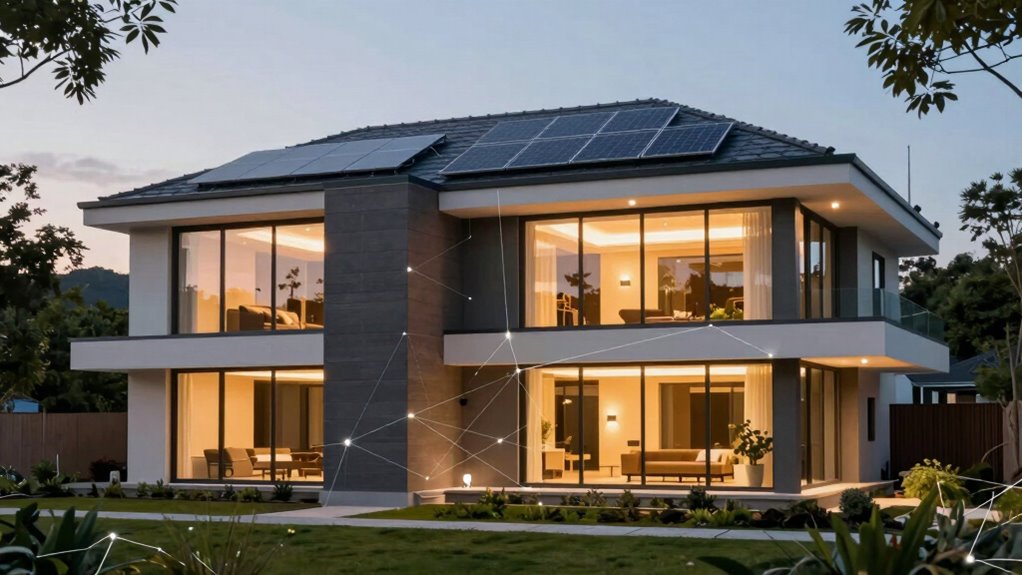

A grid-interactive home actively manages its energy use by communicating with the power grid, adjusting consumption, and integrating renewable storage systems. It can send and receive energy signals to optimize efficiency, support grid stability, and reduce costs. By using smart technology, real-time data, and automation, your home can store excess solar power, shift loads during peak times, and participate in demand response programs. Keep exploring to discover how these features work together to make your home smarter and more sustainable.
Key Takeaways
- A grid-interactive home actively manages energy by communicating with the grid, sending and receiving signals for optimal use.
- It integrates renewable energy storage to store excess power and ensure reliable supply during peak demand or low generation.
- It automatically responds to grid signals to reduce or shift energy consumption, supporting grid stability.
- It combines renewable sources, storage, and demand response into an intelligent, flexible energy management system.
- It uses real-time data and smart technology for precise energy optimization and remote control.
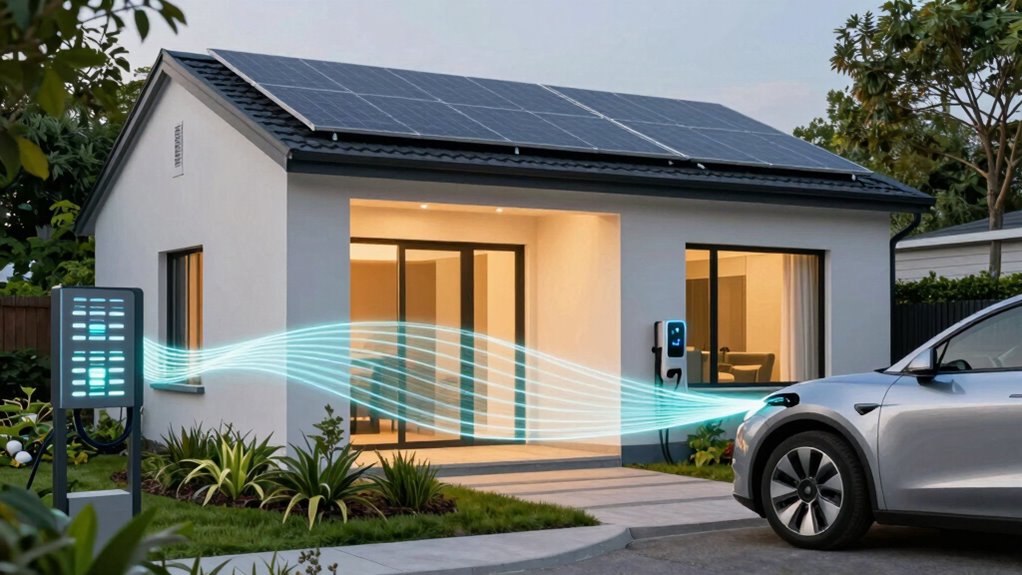
Have you ever wondered what it truly means for a home to be “grid interactive”? It’s about more than just having a connection to the power grid; it’s about actively participating in energy management. A grid-interactive home can send and receive energy signals, adapt to changing demands, and optimize energy use efficiently. This setup empowers you to take control of your energy consumption while supporting the stability of the entire grid.
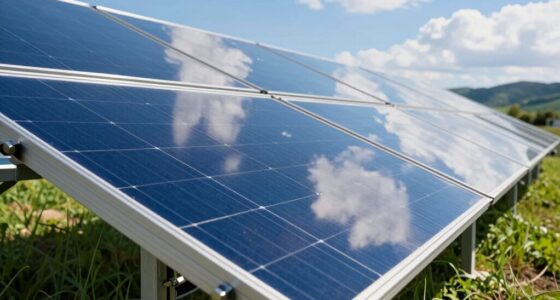
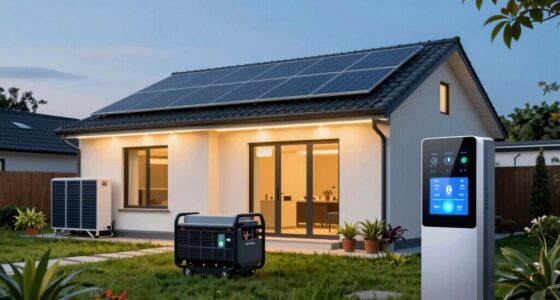
One of the key features that make a home “grid interactive” is renewable storage. This typically involves integrating batteries or other energy storage systems that can store excess renewable energy, like solar power, generated during the day. Instead of wasting surplus energy or sending it back to the grid at inopportune times, your home can store it for later use. During peak demand periods or cloudy days, your stored renewable energy guarantees you have reliable power without relying solely on grid supply. This flexibility helps balance your energy needs and reduces your reliance on fossil fuels, making your home more sustainable and cost-effective.
Demand response is another essential component. When your home is demand response-enabled, it can automatically adjust energy consumption based on signals from the grid. For example, during times of high demand, your system might temporarily reduce power to certain appliances or shift loads to off-peak hours. This not only helps prevent grid overloads but also lowers your utility bills. Demand response turns your home into an active participant, helping to stabilize the entire energy network by responding to real-time needs. You don’t have to do anything manually; smart systems manage this process seamlessly, ensuring your comfort while supporting grid health. Implementing advanced energy management systems can further enhance this process by coordinating multiple aspects of energy usage efficiently.
Integrating renewable energy sources and energy storage further enhances your home’s ability to participate actively in energy management. Combining renewable storage with demand response creates a smart, flexible energy ecosystem within your home. You become less vulnerable to fluctuating energy prices and grid disruptions. Your home can even generate revenue by participating in demand response programs, as utility companies often compensate consumers who help balance the grid during peak times. This integrated approach transforms your house from a passive energy user into an active, contributing part of a smarter, greener energy system. Additionally, adopting real-time data and analytics allows homeowners to make better-informed decisions about energy consumption and system operation. Using smart technology, homeowners can optimize their energy use more precisely and respond swiftly to changing conditions. Moreover, utilizing cloud-based platforms can enable remote monitoring and control, making it easier to manage your energy system from anywhere.
In essence, a grid-interactive home is about leveraging technology to optimize energy use, support renewable integration, and participate in demand response. It’s a forward-thinking way to make your home more sustainable, economical, and resilient, all while playing a vital role in creating a cleaner energy future.
As an affiliate, we earn on qualifying purchases.
Frequently Asked Questions
How Much Does Installing a Grid-Interactive Home Typically Cost?
Installing a grid-interactive home usually costs between $10,000 and $30,000, depending on your system size and features. You should do a cost comparison to see what fits your budget. The installation process involves upgrading your existing electrical system and adding smart inverters and energy management tools. While the upfront cost can be high, the long-term savings and energy independence often make it worthwhile.
Are There Any Tax Incentives for Upgrading to a Grid-Interactive Home?
Yes, you can benefit from tax credits and government incentives when upgrading to a grid-interactive home. These programs often include tax credits that reduce your overall cost, making the investment more affordable. By taking advantage of government incentives, you can offset expenses related to installing smart energy systems, solar panels, or energy storage. Check local, state, and federal programs to maximize your savings and support your shift to a more efficient, grid-ready home.
Can Existing Homes Be Converted Into Grid-Interactive Systems?
Imagine your home quietly transforming into a smart, responsive system—yes, existing homes can be converted into grid-interactive setups. By integrating home automation and renewable energy sources, you can optimize energy use and support the grid. Upgrades may involve adding smart meters, energy storage, and renewable integration components. While it takes some investment, these changes make your home more efficient, eco-friendly, and capable of interacting seamlessly with the grid.
What Safety Measures Are Involved in Grid-Interactive Technology?
You need to guarantee grid safety by implementing proper safety measures in your grid-interactive system. Adhering to technology standards is essential, as they guide safe installation and operation. Use certified equipment and protect your system with safety devices like circuit breakers and surge protectors. Regular inspections and professional maintenance help prevent hazards, ensuring your home remains safe while interacting smoothly with the grid.
How Does a Grid-Interactive Home Impact Energy Bills?
A grid-interactive home can substantially lower your energy bills by enabling smart energy use and efficient power management. It automatically adjusts energy consumption based on grid demands, allowing you to take advantage of lower rates during off-peak times. This smart energy system not only reduces costs but also optimizes your power use, making your home more sustainable and cost-effective.
Conclusion
So, now you’ve got the scoop on what makes a home “grid interactive.” Basically, it’s like giving your house a brain—one that’s enthusiastic to save energy, cut costs, and maybe even make you feel a little bit like a tech genius. Just remember, the real magic happens when your home and the grid start chatting like old friends. Who knew that saving the planet could be so stylishly high-tech? Cheers to your smarter, sassier home!