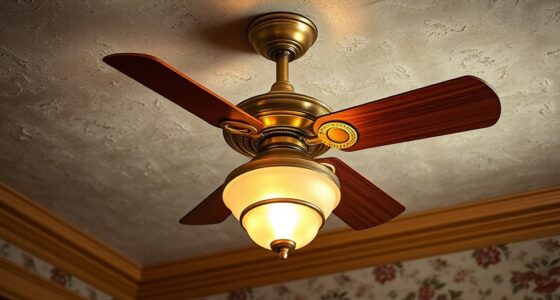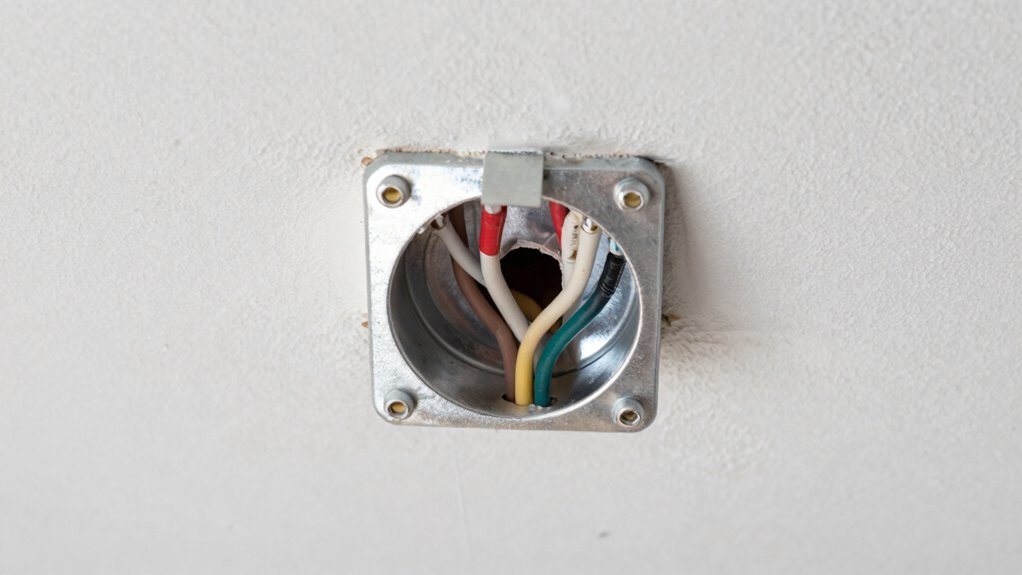

Junction boxes in ceilings safely contain wiring connections, splits, and terminations, preventing damage and hazards. You should use them for securing fixtures, switches, and outlets, ensuring proper grounding and following electrical codes. Avoid overfilling or using boxes not rated for ceiling use. Proper installation prevents loose connections and fire risks. If you want to learn more about what belongs in a ceiling junction box and how to install it correctly, keep exploring for helpful guidance.
Key Takeaways
- Ceiling junction boxes should securely enclose wire connections, splits, and fixture terminations to ensure safety and code compliance.
- Only install boxes rated for ceiling or heavy fixtures, avoiding boxes not designed for support or weight.
- Keep wiring neat, properly grounded, and free of exposed bare wires outside the box to prevent hazards.
- Do not overload boxes; adhere to box fill limits based on size and number of conductors to prevent overheating.
- Avoid placing non-electrical items inside junction boxes; only electrical connections and components belong there.
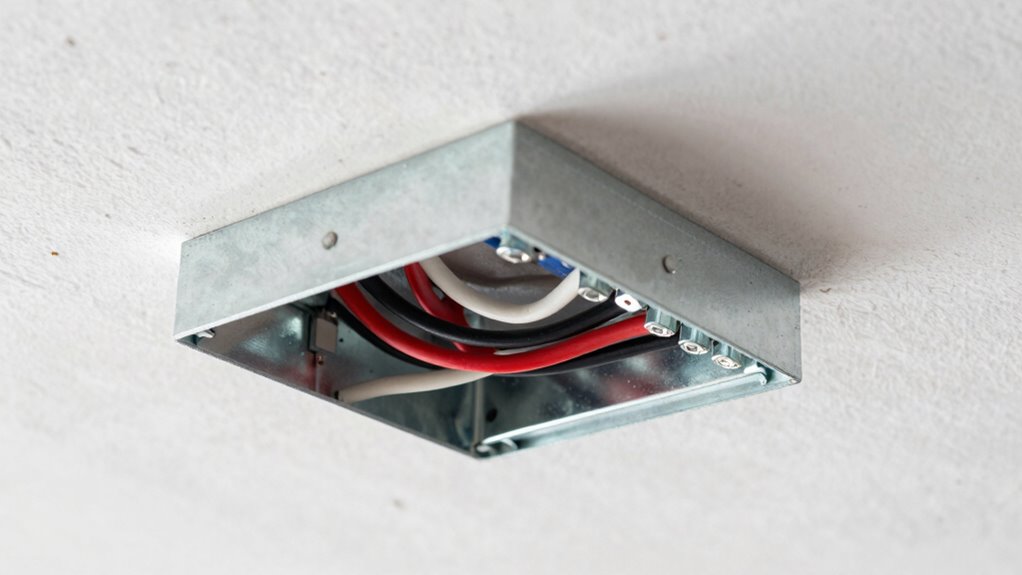
Junction boxes are indispensable components in electrical systems, serving as safe enclosures where wires connect, split, or terminate. They protect connections from damage, prevent accidental contact, and help contain sparks or heat that could cause fires. Proper installation of junction boxes isn’t just about convenience; it’s a crucial safety measure. When working with these boxes, you must follow grounding practices and wiring code standards to guarantee everything functions safely and legally. Grounding practices involve connecting the electrical system to the earth, reducing the risk of electric shock and helping to clear faults. Making certain that the grounding conductor is properly connected within the junction box is a fundamental step, as it provides a safe path for stray electrical currents. Wiring code standards, such as the National Electrical Code (NEC), specify how junction boxes should be installed, what types of boxes are acceptable, and how wiring must be arranged. These standards are designed to minimize hazards and make sure your electrical system works efficiently and safely over time.
You should always use a junction box that’s appropriate for your specific application. For ceiling installations, this means selecting a box that is rated for the weight and type of fixtures you plan on attaching. When wiring in the ceiling, make sure the box is mounted securely and that all connections are made according to code. This includes ensuring that wires are properly stripped, connected with the right connectors, and that no bare wire is exposed outside the box. When it comes to grounding, connect the grounding wire securely to the grounding terminal or screw inside the box. This ensures that any fault current has a clear path to the ground, reducing the risk of shock or fire. Additionally, understanding electrical safety standards and adhering to them can greatly reduce the risk of accidents and ensure compliance with local regulations.
It’s equally important to avoid overfilling the junction box. Overcrowding can lead to loose connections, which may cause arcing or overheating. Always follow the wiring code standards regarding box fill limits, which specify the maximum number of conductors allowed in a given box size. If you’re installing a ceiling fixture, check whether the junction box is rated for ceiling fans or heavy fixtures, as these have special requirements for support and safety. Remember, the goal is to keep all wiring neat, secure, and compliant with regulations. Proper grounding practices and adherence to wiring code standards aren’t just bureaucratic hoops—they’re crucial for your safety and the longevity of your electrical system. When in doubt, consult the latest electrical codes or hire a licensed electrician to ensure everything is installed correctly.
As an affiliate, we earn on qualifying purchases.
Frequently Asked Questions
Can Junction Boxes Be Installed Outdoors Safely?
Yes, you can install junction boxes outdoors safely if you use weatherproof enclosures. They protect outdoor wiring from moisture, dirt, and weather elements. Make sure the junction box is rated for outdoor use and properly sealed to prevent water intrusion. Proper installation and weatherproofing are essential for safety and durability. Always follow local electrical codes and consult a professional if you’re unsure about outdoor wiring requirements.
How Do I Know if a Junction Box Is Overloaded?
Think of your junction box as a busy highway; if too many cars (wires) cram in, it gets overloaded. You’ll spot this when wires feel tight or start to heat up. To prevent this traffic jam, guarantee overcurrent protection is in place and check the box capacity—if it’s full or wires are straining against the sides, it’s time to upgrade. Keep your electrical system safe and running smoothly.
Are There Specific Codes for Ceiling Junction Box Installations?
Yes, there are specific codes for ceiling junction box installations to guarantee electrical safety and code compliance. You should follow the National Electrical Code (NEC) guidelines, which specify proper box sizes, grounding methods, and secure mounting. Always check local building codes, as they may have additional requirements. Staying compliant helps prevent fire hazards, protects your home, and keeps your electrical system safe and reliable.
What Tools Are Needed to Open a Ceiling Junction Box?
To open a ceiling junction box, you’ll need some basic tools. Grab a screwdriver, typically a flat-head or Phillips depending on the screws, and a pair of needle-nose pliers for handling wires. A voltage tester is also essential for safety. Use the screwdriver to remove the cover plate, then carefully open the junction box. These tools make it easier to access and work inside the junction box safely and effectively.
How Often Should Junction Boxes Be Inspected or Replaced?
Think of your junction boxes like regular check-ups for your health—they need attention to stay safe. You should inspect them every 3 to 5 years or if you notice issues like flickering lights or loose wires. Follow replacement guidelines if you find corrosion, damaged components, or outdated wiring. Regular inspections help prevent hazards, ensuring your electrical system remains reliable and safe over time.
Conclusion
Understanding what belongs in junction boxes helps keep your wiring safe and compliant. Did you know that improper wiring connections cause nearly 20% of electrical fires? By ensuring only appropriate connections go in ceiling junction boxes, you reduce fire risks and improve safety. Keep wiring organized and follow code guidelines—your home’s safety depends on it. Staying informed about junction box best practices is the best way to protect your loved ones and property.