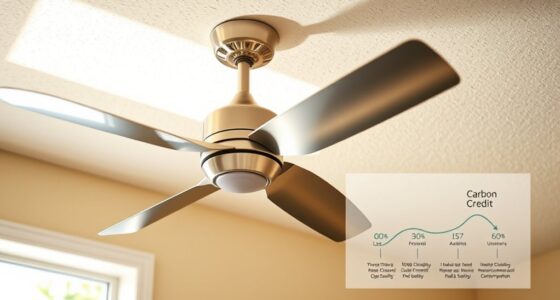

To measure your ceiling fan’s energy use accurately, connect a plug-in power meter to record wattage at various speed settings, ensuring you account for different power draws. Alternatively, use a clamp meter to measure current and multiply it by your supply voltage for precise calculations. Consider measuring power factor and reactive power for a thorough efficiency analysis. Continuing further will reveal how to optimize your fan’s operation for energy savings.

Get home appliances delivered free with Prime
- Fast, free delivery on millions of items
- Prime Video, Amazon Music and more included
- Member-only deals all year
Key Takeaways
- Use a plug-in power meter to measure real-time wattage at different fan speeds.
- Measure current with a clamp meter and multiply by supply voltage for power calculation.
- Record power consumption at various settings to determine average energy use.
- Consider power factor measurements with a power analyzer for more accurate efficiency assessment.
- Analyze data to identify the most energy-efficient fan speeds and optimize overall energy consumption.
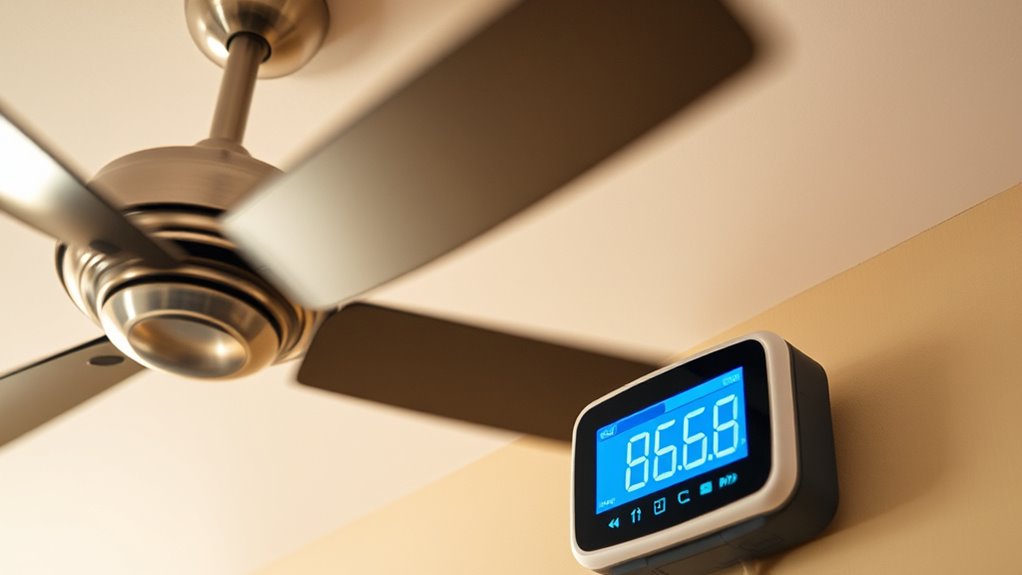
Understanding the energy consumption of a ceiling fan is essential for evaluating its efficiency and minimizing electricity costs. Accurately measuring this consumption involves quantifying the power drawn by the fan during operation, which can be achieved through various methods that provide precise data for analysis. The most straightforward approach is to use a plug-in power meter, a device designed to measure real-time energy usage directly from the outlet. By plugging the fan into this meter, you can record the wattage as it runs at different speed settings, providing an immediate and tangible measure of its energy consumption. This method is accessible, non-invasive, and offers high accuracy, making it suitable for most residential applications. To guarantee precise results, measure the wattage at each speed setting, as fans typically consume different amounts of power depending on their operational level. Recording these readings over time allows for the calculation of average power consumption, which can then be used to estimate monthly or annual energy costs based on your utility rates.
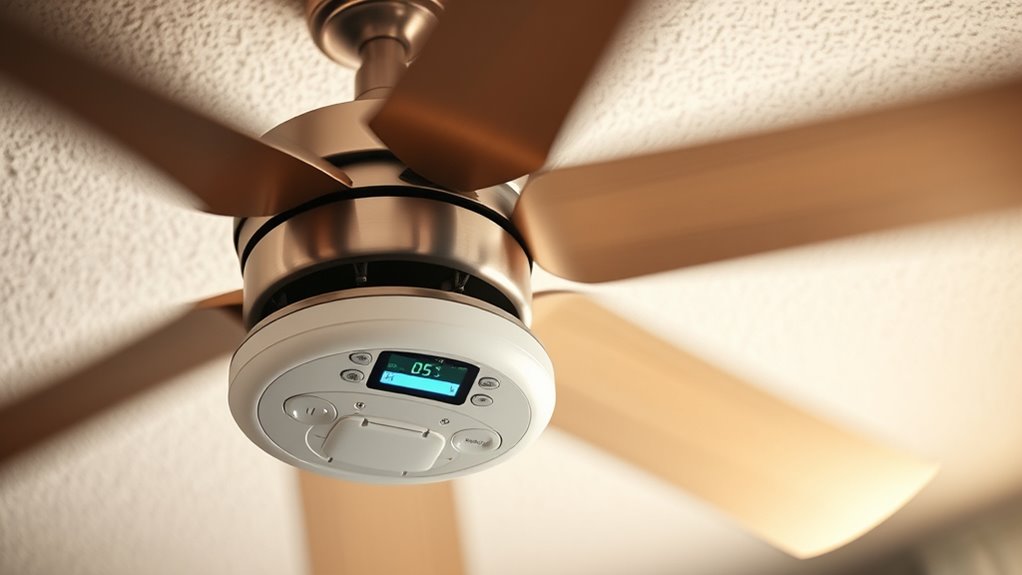
For a more detailed analysis, especially when evaluating efficiency at a component level, you may consider using a clamp meter or a multimeter with a current clamp attachment. This technique involves measuring the current flowing through the fan’s power cord while the fan operates normally. By multiplying the measured current by the voltage supplied, you can determine the power consumption in watts. This method offers the advantage of isolating the fan’s current draw without disconnecting it from the circuit, thereby avoiding interference with other appliances. To enhance accuracy, guarantee the multimeter is properly calibrated and that the voltage measurement reflects your local supply conditions. Additionally, record the current draw at different speeds, as the current varies with the operational setting, providing a detailed profile of energy use.
Furthermore, considering the power factor is vital for an accurate assessment, especially in regions where utilities bill based on apparent power. Power factor correction devices or power analyzers can measure reactive power and help you understand how efficiently the fan converts electrical energy into mechanical energy. Incorporating power factor measurements enables a thorough evaluation of the fan’s electrical efficiency, particularly for fans with electronic controllers or variable speed drives. Using tools like Merkle trees can also aid in verifying data integrity when analyzing large datasets or multiple measurements. By systematically obtaining these measurements, you can identify the most energy-efficient settings, compare fans more objectively, and develop strategies to reduce overall energy consumption. Ultimately, precise measurement methods empower you to make informed decisions about fan operation, replacement, or upgrades, leading to cost savings and optimized energy use.
plug-in energy consumption meter for ceiling fan
As an affiliate, we earn on qualifying purchases.
As an affiliate, we earn on qualifying purchases.
Frequently Asked Questions
How Often Should I Measure My Ceiling Fan’s Energy Consumption?
You should measure your ceiling fan’s energy consumption monthly to track efficiency and identify any performance changes. Regular monitoring helps you detect increased power usage that could indicate motor issues or other malfunctions. Use a power meter during peak and off-peak hours for accurate readings. Consistent measurement guarantees ideal operation, aids in energy management, and can help reduce your electricity bills over time.
Can a Ceiling Fan’s Energy Use Vary With Different Speed Settings?
Yes, a ceiling fan’s energy use varies with different speed settings. Higher speeds increase motor workload, consuming more electricity, while lower speeds reduce power draw. This variation results in fluctuating energy consumption depending on the selected setting. To optimize efficiency, you should monitor energy use at each speed, as the difference can be significant, affecting overall energy costs and environmental impact.
Is It Necessary to Measure Energy Consumption for Older Ceiling Fan Models?
You should measure energy consumption for older ceiling fan models, especially if they’ve shown signs of inefficiency or increased noise. For example, a homeowner found their 15-year-old fan consumed 50% more energy than modern equivalents, raising electricity costs. Conducting such measurements helps identify inefficiencies, optimize energy use, and reduce expenses. Regular assessments guarantee your fan operates within expected parameters, maintaining performance while preventing unnecessary energy waste.
How Does Room Size Affect a Ceiling Fan’s Energy Efficiency?
Room size directly impacts a ceiling fan’s energy efficiency, as larger spaces require higher airflow, often leading to increased power consumption. You should select a fan with an appropriate CFM (cubic feet per minute) rating for your room; underpowered fans struggle to circulate air efficiently, wasting energy. Conversely, oversized fans in small rooms cause unnecessary energy use and noise. Proper sizing optimizes airflow and minimizes energy waste, ensuring maximum efficiency.
Are There Specific Tools Recommended for Accurate Energy Measurement?
You need a power meter, specifically a clamp-on power meter or a plug-in energy monitor, for accurate measurements. These devices directly connect to your ceiling fan or its power source, providing precise data on wattage and energy consumption. Using such tools eliminates guesswork, ensuring you get reliable, real-time readings. Remember, investing in quality equipment guarantees accurate results, helping you optimize your fan’s efficiency and reduce energy costs effectively.
Conclusion
By accurately measuring your ceiling fan’s energy consumption, you reveal the secret to potentially saving hundreds of dollars annually—transforming your utility bill from a monstrous expense into a manageable, even negligible, cost. This precise analysis not only optimizes your fan’s efficiency but also empowers you to make data-driven decisions that could revolutionize your energy savings. In essence, understanding your fan’s power draw is the key to conquering energy waste and achieving ultimate cost control.
Cold & flu season Picks
humidifiers
As an affiliate, we earn on qualifying purchases.