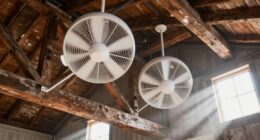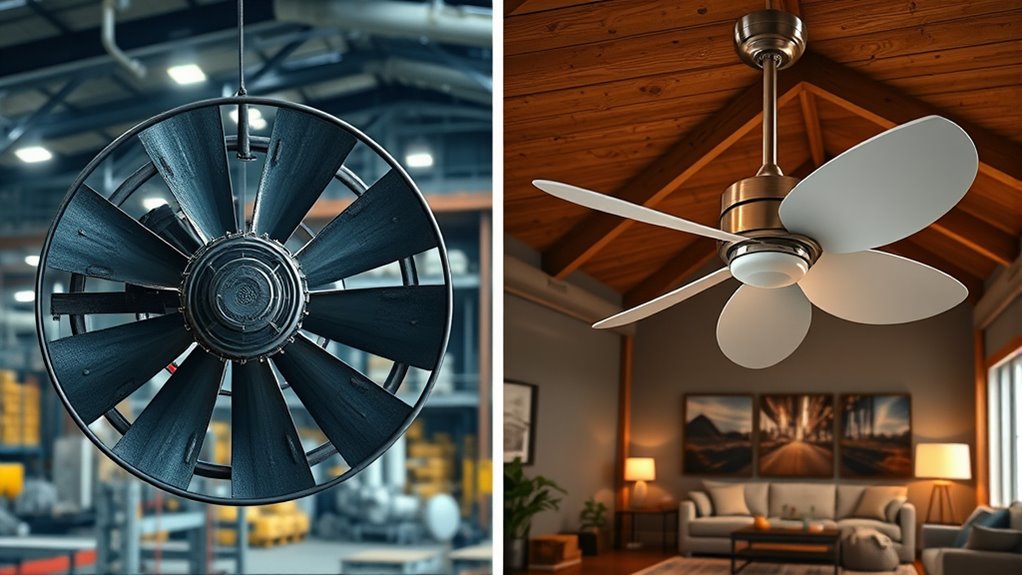
Industrial fans are designed for continuous, high-capacity operation with advanced control systems like VFDs, making them more energy-efficient for large-scale ventilation. They feature larger blades, robust motors, and tailored aerodynamics, allowing better airflow with less energy waste. Residential fans, while consuming less power individually, lack these efficiencies and are less suitable for extensive or constant use. To understand how these differences impact performance and cost, explore the factors that influence their energy use.
Key Takeaways
- Industrial fans are designed for high-capacity, continuous operation, offering greater efficiency in large-scale ventilation compared to residential fans.
- They often incorporate variable frequency drives (VFDs), enabling precise airflow control and improved energy efficiency.
- Industrial fans feature larger blades and robust motors, reducing energy waste during high-volume, prolonged use.
- Residential fans consume less power overall but are less effective and efficient for large or continuous airflow demands.
- Overall, industrial fans outperform residential models in energy efficiency when operating at optimal capacity in demanding environments.
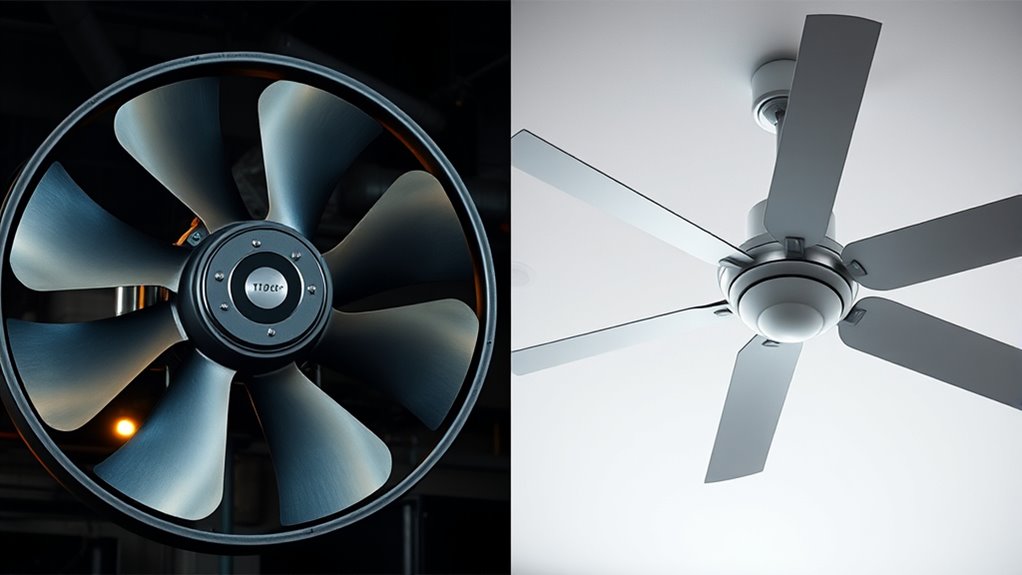
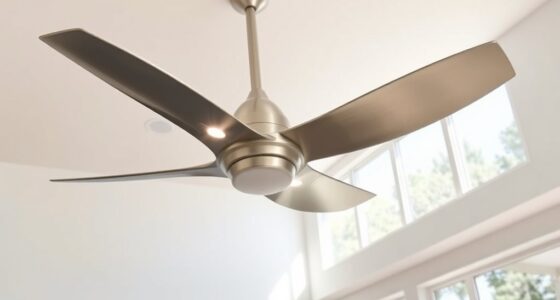
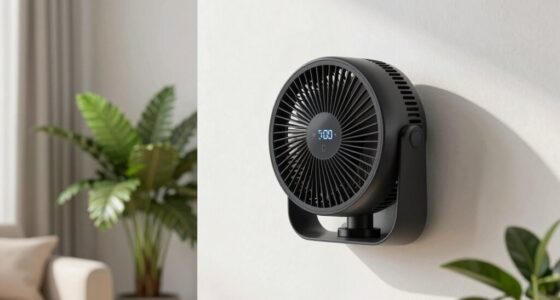
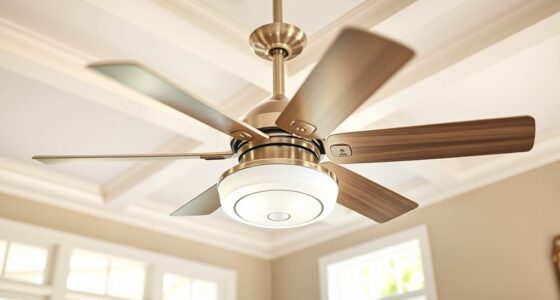
When evaluating energy consumption, understanding the efficiency differences between industrial and residential fans is crucial for optimizing operational costs and reducing environmental impact. Industrial fans are engineered for high-capacity, continuous operation in large-scale applications, such as ventilation in manufacturing plants, HVAC systems, and process cooling. These fans typically feature larger diameters, more robust motors, and specialized blade designs to move substantial volumes of air efficiently. Their design prioritizes durability and performance under continuous load, often resulting in higher initial energy input but lower operational costs per unit of airflow over time. Conversely, residential fans are designed for lower-volume airflow, primarily in household settings like ceiling fans, exhaust fans, and small circulators. Their motors are generally smaller, less powerful, and tailored for intermittent use, which inherently limits their efficiency at higher airflow demands. Additionally, industrial fans often incorporate advanced control systems such as variable frequency drives (VFDs), enabling precise regulation of airflow and further improving energy efficiency during fluctuating load conditions. From an efficiency perspective, industrial fans tend to outperform residential models when operating at their most effective capacity. Because they operate in large-scale environments, their design focuses on maximizing airflow while minimizing energy losses due to factors such as aerodynamic drag and motor inefficiencies. Many industrial fans incorporate variable frequency drives (VFDs), enabling precise control over motor speed and airflow, which considerably enhances energy efficiency during variable load conditions. In contrast, residential fans often lack such advanced control systems, leading to less efficient energy usage—particularly when operating at partial loads. While a residential fan may consume less power per unit time, its lower airflow capacity means it’s not suitable for applications requiring large-volume ventilation, making it less effective in terms of energy per unit of air moved. The use of high-efficiency motors is also more prevalent in industrial fans, aligning with energy standards and regulations that promote sustainable practices. Furthermore, the operational context influences their efficiency. Industrial fans benefit from optimized placement, tailored blade geometries, and integrated control systems that fine-tune performance and reduce unnecessary energy expenditure. Residential fans generally lack these features, operating under more generic conditions. As a result, while individual residential fans might seem energy-efficient in small-scale use, their overall performance in large-scale or continuous applications is inferior when compared to industrial counterparts. Understanding these distinctions helps you select the right fan type for your specific needs, ensuring maximal energy use and cost savings in the long run.

addlon Ceiling Fans with Lights, 42 Inch Low Profile Ceiling Fan with Light and Remote Control, Flush Mount, Reversible, 3CCT, Dimmable, Quiet, Black Small Ceiling Fan for Bedroom Indoor/Outdoor Use
Ceiling Fan with Light: Bring more than just wind and light, but comfort! addlon modern ceiling fan, with...
As an affiliate, we earn on qualifying purchases.
Frequently Asked Questions
How Do Maintenance Costs Impact Overall Fan Efficiency?
Maintenance costs directly impact fan efficiency by ensuring ideal operation and preventing performance decline. Regular inspections and timely repairs reduce wear and tear, minimizing energy losses caused by dirt buildup, misalignment, or worn components. Neglecting maintenance leads to increased energy consumption and potential equipment failure, raising operational costs. Consequently, investing in routine maintenance maintains peak efficiency, lowers energy expenses, and extends fan lifespan, ultimately enhancing overall system performance.
Are There Specific Brands Known for Energy-Efficient Industrial Fans?
You should consider brands like Greenheck, Vortex, and Twin City Fan for energy-efficient industrial fans. These brands invest in advanced motor technologies, aerodynamically optimized blades, and smart controls that reduce power consumption. When selecting a fan, evaluate their efficiency ratings, such as the IE3 or IE4 standards, and review technical datasheets to guarantee they meet your operational demands while minimizing energy costs.
How Does Fan Size Influence Energy Consumption?
Fan size directly impacts energy consumption, much like a car’s engine size affects fuel use. Larger fans have bigger blades and motors, requiring more power to operate efficiently. As size increases, so does energy demand, especially if the fan isn’t properly optimized for its scale. Consequently, selecting a fan that matches your ventilation needs without over-sizing can considerably reduce power consumption and improve overall energy efficiency.
What Are the Environmental Impacts of Industrial Vs Residential Fans?
Industrial fans generally have a larger environmental footprint due to higher energy consumption and manufacturing impacts, such as raw material extraction and emissions. Residential fans consume less energy but contribute to environmental issues through electricity use and disposal waste. You should consider energy sources, efficiency, and lifespan when evaluating their environmental impacts. Opting for energy-efficient models and renewable energy sources reduces overall environmental harm across both fan types.
Can Smart Technology Improve Fan Energy Efficiency?
Yes, smart technology can substantially improve fan energy efficiency by enabling real-time monitoring and adaptive control. You can optimize operation schedules, adjust speeds based on demand, and detect inefficiencies promptly. Smart sensors and automation systems reduce unnecessary energy use, leading to lower operational costs and environmental impact. Implementing these technologies guarantees your fans operate at peak efficiency, ultimately conserving energy and enhancing overall system performance.

ZMISHIBO 52 Inch Ceiling Fan with Light, App&Remote Control, Flush Mount Low Profile, Dimmable 20W LED Light, Quiet Reversible Motor for Bedroom, Living Room, Apartment, Black
Perfect Size for Rooms: This 52-inch ceiling fan is ideal for cooling and illuminating spacious areas like living...
As an affiliate, we earn on qualifying purchases.
Conclusion
Ultimately, understanding the energy efficiency differences between industrial and residential fans enables you to make informed decisions that optimize performance and reduce costs. While industrial fans often deliver higher efficiency through advanced engineering, residential fans prioritize simplicity and user-friendliness. Recognize that selecting the right fan is like choosing the right tool for a job—you maximize energy savings when your choice aligns with your specific needs. Making informed choices guarantees your energy consumption remains controlled, like a well-tuned engine running smoothly.

Amico Ceiling Fans with Lights, 42 inch Low Profile Ceiling fan with Light and Remote Control, Flush Mount, Reversible, 3CCT, Dimmable, Noiseless, Black Ceiling Fan for Bedroom, Indoor/Outdoor Use
Ceiling Fan with Light: Decorate your home with Amico ceiling fan! While bringing you coolness and comfort, it...
As an affiliate, we earn on qualifying purchases.

72 inch Ceiling Fans with Lights,Large Ceiling Fan with Light and Remote Control, Dimmable, 3CCT, Quiet, Black Modern Ceiling fan For Living Room, Bedroom, Kitchen, Patio, Farmhouse, Indoor/Outdoor
Ceiling Fan with Light: Decorate your home with Amico ceiling fan! While bringing you coolness and comfort, it...
As an affiliate, we earn on qualifying purchases.