Choosing ceiling fans with eco-friendly materials helps reduce your environmental impact. Look for fans made from sustainably sourced bamboo or reclaimed wood, which lower deforestation and waste. Recycled metals and plastics in components further decrease reliance on finite resources. Opt for designs with low-VOC finishes and repairable parts to extend lifespan and improve indoor air quality. Focusing on energy-efficient motors completes the sustainability picture. Explore more to discover how these choices make a difference for your home and the planet.
Key Takeaways
- Use of certified bamboo and reclaimed wood minimizes environmental impact and promotes rapid renewability.
- Incorporating recycled metals and plastics reduces reliance on virgin resources and lowers manufacturing emissions.
- Preference for low-VOC or VOC-free finishes and adhesives enhances indoor air quality and reduces pollution.
- Energy-efficient motors and integrated lighting decrease overall power consumption, supporting sustainable operation.
- Designing for durability, repairability, and recyclability extends product lifespan and minimizes waste at end-of-life.
As consumers become increasingly aware of environmental impacts, the demand for eco-friendly materials in ceiling fans has grown substantially. This shift reflects a broader awareness of sustainability issues and a desire to reduce carbon footprints. When evaluating ceiling fans, choosing models made from eco-conscious materials isn’t just about energy efficiency—it involves understanding the lifecycle, sourcing, and environmental impact of each component. By prioritizing sustainable materials, you contribute to minimizing waste, reducing reliance on non-renewable resources, and supporting manufacturers committed to greener practices.
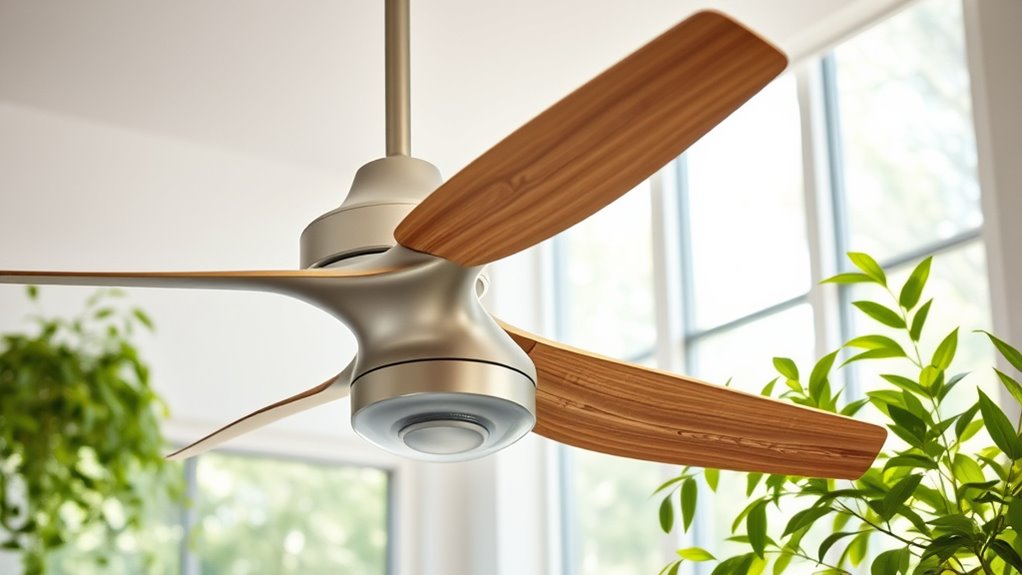
One key aspect is the selection of sustainable wood or bamboo for fan blades. Traditional wood, if sourced irresponsibly, can contribute to deforestation and habitat loss. However, certified bamboo and reclaimed wood present viable alternatives. Bamboo, in particular, is a rapidly renewable resource that absorbs carbon during growth, making it an eco-friendly choice. Reclaimed wood utilizes existing materials, preventing additional harvesting and reducing waste. These materials also tend to have a lower carbon footprint during production, especially when sourced locally, as transportation emissions diminish.
Choosing bamboo or reclaimed wood for fan blades reduces environmental impact and promotes sustainable sourcing.
Additionally, the manufacturing of motor components and other parts increasingly incorporates recycled metals and plastics. Using recycled aluminum or steel in motors reduces energy consumption compared to virgin metal extraction and refining. Similarly, plastics derived from recycled sources lessen the demand for new petrochemicals, which are associated with environmental degradation during extraction and processing. To truly maximize sustainability, you should seek out ceiling fans that specify the use of recycled or bio-based plastics, indicating a commitment to resource efficiency.
The adhesives and finishes applied to ceiling fans also play a pivotal role in eco-friendliness. Traditional paints and glues often contain volatile organic compounds (VOCs), which release harmful emissions into the environment. Eco-conscious manufacturers now utilize low-VOC or VOC-free alternatives, reducing air pollution and potential health risks. Opting for fans with environmentally friendly finishes not only benefits indoor air quality but also aligns with a holistic sustainability approach.
Furthermore, selecting fans with energy-efficient motors and light fixtures can significantly reduce overall power consumption, amplifying their eco-friendly benefits. Finally, consider the end-of-life impact of the materials. Durable, repairable designs are preferable, as they extend the lifespan of the product and prevent premature disposal. Look for models that use modular components, making repairs easier and reducing waste. When the time comes to replace your ceiling fan, choosing one made from recyclable materials ensures it won’t simply end up as landfill, closing the sustainability loop. Overall, making informed choices about eco-friendly materials in ceiling fans empowers you to support sustainable practices and diminish your environmental impact.
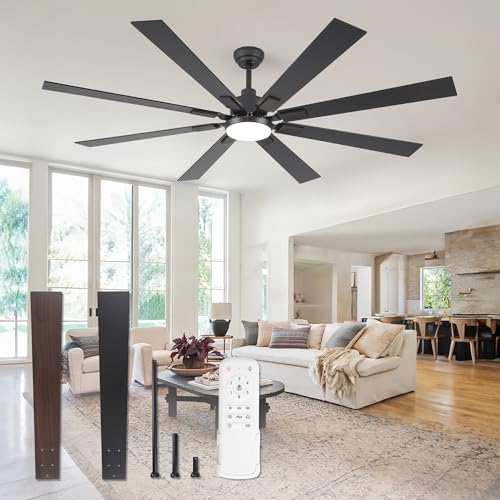
ZMISHIBO 72 inch Large Ceiling Fans with Lights and Remote, Indoor/Outdoor Black Modern Ceiling Fan for Kitchen Living Room Patio, 6 Speed Reversible Quiet DC Motor, 3 CCT, Dual Finish 8 Blades
72 Inch Ceiling Fan: This large ceiling fan includes 4“, 8”, and 24“ down rods, making it a...
As an affiliate, we earn on qualifying purchases.
Frequently Asked Questions
How Do Eco-Friendly Ceiling Fans Compare in Cost to Traditional Models?
Eco-friendly ceiling fans generally cost more upfront than traditional models due to sustainable materials and energy-efficient technology. However, you save money over time through lower energy bills and reduced environmental impact. While initial investment might be higher, the long-term benefits—like durability and reduced carbon footprint—make eco-friendly options a smarter, more sustainable choice. Your purchase aligns with eco-conscious values and promotes a greener lifestyle.
Are Eco-Friendly Materials Durable Enough for Long-Term Use?
Eco-friendly materials are generally durable enough for long-term use, especially when sourced from high-quality, sustainable options like bamboo, recycled metals, or responsibly harvested wood. You benefit from these materials’ resilience, which often matches or exceeds traditional options, while reducing environmental impact. By choosing eco-conscious ceiling fans, you guarantee longevity and sustainability, making your investment both eco-friendly and cost-effective over time.
Can Eco-Friendly Ceiling Fans Be Recycled at the End of Their Lifespan?
Yes, eco-friendly ceiling fans can often be recycled at the end of their lifespan, especially if made from recyclable materials like aluminum, steel, or certain plastics. You should check local recycling programs, as some components might require special handling. By choosing fans designed with recyclability in mind, you help reduce waste and support sustainable practices. Proper disposal guarantees that valuable materials are reused, minimizing environmental impact.
Do Eco-Friendly Fans Require Special Maintenance or Cleaning?
You might wonder if eco-friendly fans demand special care. The truth is, they typically don’t. Regular cleaning with a soft cloth and gentle detergent keeps them in top shape, just like conventional fans. However, using eco-safe cleaning products enhances their sustainability. So, while maintenance isn’t complicated, choosing eco-conscious cleaners guarantees your fan stays efficient and environmentally friendly, aligning with your commitment to sustainability.
Are There Certifications to Verify the Sustainability of These Ceiling Fans?
Yes, you can look for certifications like ENERGY STAR, LEED, or Forest Stewardship Council to verify a ceiling fan’s sustainability. These certifications guarantee the fan meets strict environmental standards, from energy efficiency to responsible manufacturing. By choosing certified models, you actively reduce your carbon footprint and support eco-conscious practices. Always check product labels and documentation to confirm the fan’s sustainability credentials before making a purchase.

Forrovenco Ceiling Fans with Lights and Remote, 52 Inch Outdoor Ceiling Fan for Patios Indoor with 3 Downrods, 3 Blades Modern Ceiling Fan, 6 Speed Reversible Quiet DC Motor Solid Wood Fan,52in,Walnut
Modern Ceiling Fan with Light: Our 3 blade ceiling fan with light features unique, planet-friendly, and renewable high-quality...
As an affiliate, we earn on qualifying purchases.
Conclusion
Choosing eco-friendly materials for ceiling fans isn’t just about sustainability; it’s about shaping a greener future. Think of each fan as a tiny eco-warrior, silently saving energy and reducing waste. Studies show that sustainably sourced materials can cut environmental impact by up to 30%. By making conscious choices, you’re not only upgrading your space but also contributing to a healthier planet—because every small action adds up, like droplets forming a powerful stream of change.

ZMISHIBO 2 Pack 52 Inch Outdoor Ceiling Fans with Remote, Black Ceiling Fan No light with Quiet Reversible DC Motor, 6 Speeds, 3 Blade Modern Ceiling Fans for Patio Living Room Bedroom Indoor
Indoor and Outdoor Use: The 2 pack black ceiling fans come with 4'' and 8'' downrods, so you...
As an affiliate, we earn on qualifying purchases.

addlon Ceiling Fans with Lights, 42 Inch Low Profile Ceiling Fan with Light and Remote Control, Flush Mount, Reversible, 3CCT, Dimmable, Quiet, Black Small Ceiling Fan for Bedroom Indoor/Outdoor Use
Ceiling Fan with Light: Bring more than just wind and light, but comfort! addlon modern ceiling fan, with...
As an affiliate, we earn on qualifying purchases.