
Good design reduces energy use by working with the environment’s natural processes, long before any technology is added. Thoughtful architecture considers factors like sunlight, wind, and thermal mass to minimize the need for mechanical cooling or heating. By choosing materials and building orientation wisely, you can create comfortable spaces that naturally stay cool or warm. This approach lowers costs and environmental impact over time. Keep exploring to discover how natural design strategies make buildings more sustainable from the start.

Get home appliances delivered free with Prime
- Fast, free delivery on millions of items
- Prime Video, Amazon Music and more included
- Member-only deals all year
Key Takeaways
- Thoughtful architectural choices naturally minimize energy needs by optimizing building orientation and layout for passive cooling.
- Use of materials with high thermal mass stabilizes indoor temperatures without relying on mechanical systems.
- Design strategies like shading, overhangs, and natural ventilation harness environmental processes to regulate indoor climate.
- Climate-responsive architecture adapts to local conditions, reducing the need for energy-intensive cooling or heating.
- Incorporating natural processes into design creates inherently efficient, eco-friendly spaces that require less technological intervention.
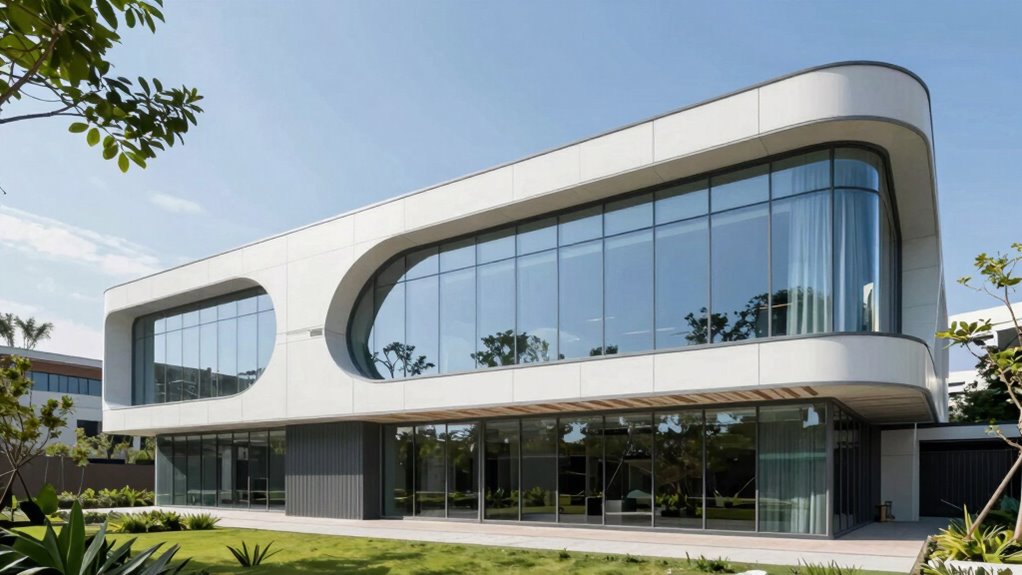
Have you ever wondered how much your environment’s design influences energy use before any new technology is even introduced? It’s a question that highlights the power of good design in everyday spaces. When you understand how thoughtful architectural choices can reduce energy consumption, you realize that sustainable architecture isn’t just about using eco-friendly materials; it’s about designing buildings that naturally require less energy to operate. This approach emphasizes aligning construction with the environment rather than working against it.
One of the most effective strategies in sustainable architecture is passive cooling. Instead of relying solely on air conditioning or mechanical systems, passive cooling takes advantage of natural processes to regulate indoor temperatures. When a building is designed with passive cooling in mind, you’re fundamentally harnessing the environment’s natural energy flows—like wind, shade, and thermal mass—to keep the interior comfortable. For example, orientation plays an essential role. Positioning windows, walls, and openings to maximize cross-ventilation helps air circulate freely, reducing the need for artificial cooling. Overhangs and shading devices protect from direct sunlight during hot months, lowering indoor temperatures without turning on the AC.
Passive cooling harnesses natural energy flows like wind and shade to reduce reliance on mechanical systems.
Materials also matter. Using thick walls with high thermal mass, such as concrete or brick, allows the building to absorb heat during the day and release it at night. This natural heat regulation keeps indoor temperatures stable, decreasing dependence on mechanical cooling systems. When you incorporate natural ventilation and appropriate insulation, you create a climate-responsive environment that minimizes energy use from the start. It’s about designing buildings that work with nature rather than against it, which not only reduces operational energy but also cuts down on long-term costs and environmental impact. Incorporating climate-responsive design principles can further optimize these benefits by tailoring the environment to specific local conditions.
What’s vital is recognizing that good design isn’t just about aesthetics; it’s about functionality that benefits the environment and your energy bills. When buildings are thoughtfully planned with sustainable architecture principles, passive cooling becomes a natural, effective tool for energy conservation. You don’t need high-tech solutions to make a significant difference—sometimes, the best approach is to engineer your environment to be self-sufficient. An understanding of passive cooling techniques helps highlight how natural processes can be harnessed to reduce reliance on technology, emphasizing that the most sustainable, energy-efficient buildings are those that are born from an understanding of natural processes, making technology a complement rather than a necessity. Additionally, considering environmentally responsive design can further enhance energy efficiency by integrating natural factors into the building’s overall concept. When designing with these principles in mind, you’re creating spaces that are inherently climate-responsive, which further reduces the need for artificial climate control. The result? A space that’s comfortable, eco-friendly, and cost-efficient long before any advanced technology is even installed.
As an affiliate, we earn on qualifying purchases.
Frequently Asked Questions
How Does Design Influence Occupant Behavior and Energy Use?
Good design influences your behavior and energy use by encouraging behavior modification through intuitive layouts and features. When spaces have aesthetic appeal, you’re more likely to feel comfortable and engaged, prompting you to use energy-efficient lighting, heating, or cooling systems naturally. Thoughtful design subtly guides your actions, reducing unnecessary energy consumption without relying solely on technology, making sustainable habits easier to adopt and maintain.
What Are Examples of Design Choices Reducing Energy Without Technology?
You can reduce energy through smart design choices like passive cooling, which naturally cools spaces without energy-consuming systems, and strategic material selection that enhances insulation and thermal comfort. By designing buildings with proper shading, ventilation, and reflective surfaces, you minimize reliance on mechanical cooling. Selecting materials with high thermal mass or low thermal conductivity helps maintain stable indoor temperatures, cutting energy use even before implementing advanced technology.
Can Good Design Compensate for Outdated Building Systems?
Absolutely, good design can breathe new life into outdated building systems, acting like a fresh coat of paint on worn walls. By focusing on architectural aesthetics and smart material selection, you can optimize natural light, airflow, and insulation. These choices help your building perform better, even if the tech is old. Thoughtful design creates an energy-efficient haven, proving that aesthetics and function go hand in hand to reduce energy use.
How Does Natural Lighting Impact Overall Energy Consumption?
Natural lighting considerably lowers your energy consumption by reducing the need for artificial light during daytime. Proper window placement and maximizing daylight penetration allow sunlight to illuminate your space effectively, cutting down on electricity use. When you optimize these design elements, you create a brighter, more inviting environment while conserving energy. This proactive approach not only benefits your energy bills but also promotes a healthier, more sustainable living or working space.
What Role Does Building Orientation Play in Energy Efficiency?
You play a key role in building orientation, which influences energy efficiency through strategic placement. By considering building materials that insulate well and integrating landscape features like trees and shading devices, you can naturally regulate indoor temperatures. Proper orientation minimizes heat gain in summer and heat loss in winter, reducing energy demands. Thoughtful landscape integration further enhances this effect, making your building more sustainable and energy-efficient overall.
Conclusion
Think of good design like planting a tree that shades your home, naturally cooling it without any tech. When you prioritize smart layouts and thoughtful materials, you’re slicing energy use right from the start—before fancy gadgets come into play. Imagine a city where buildings are shaped to catch the breeze, reducing cooling needs by 30%. That’s the power of good design: it’s the quiet hero, saving energy before technology even steps in.
Halloween Picks
halloween
As an affiliate, we earn on qualifying purchases.