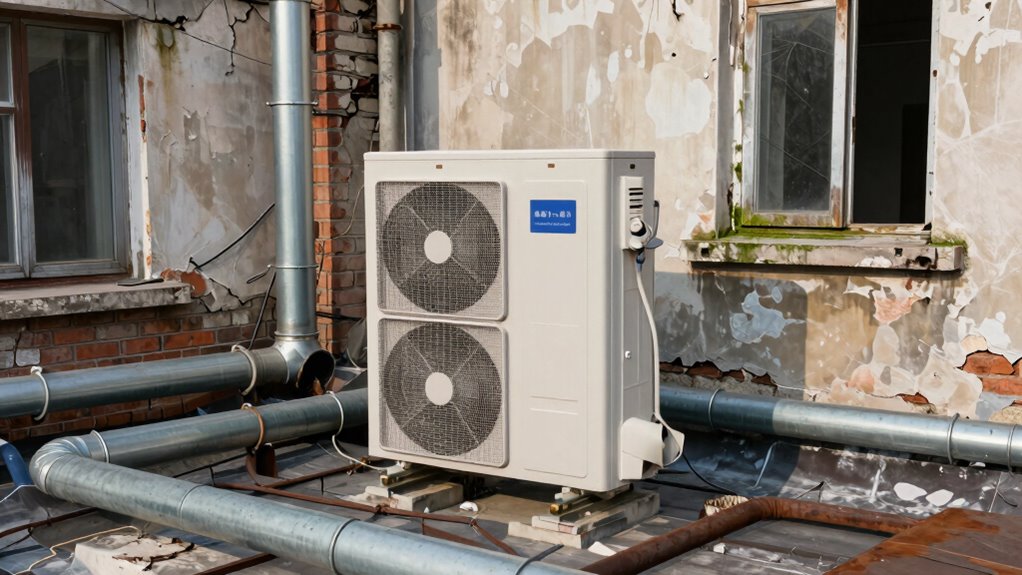

When you install a heat pump, it often uncovers hidden building issues like deteriorating insulation, leaking ducts, or outdated electrical systems that were previously ignored. These problems can be buried within the structure, hidden from view, but they may cause unexpected delays and cost overruns. Addressing these hidden problems is essential for safety and efficiency, and continuing forward could help you understand how to better prepare for these challenges.
Key Takeaways
- Installing heat pumps can reveal hidden structural or insulation issues previously masked by outdated systems.
- Retrofitting may require extensive upgrades to electrical and duct systems, exposing existing vulnerabilities.
- Older buildings often struggle to meet energy efficiency standards, leading to uncovering hidden damage.
- Discovering structural weaknesses or deteriorating components can cause project delays and increased costs.
- Addressing underlying problems during retrofit enhances long-term safety, efficiency, and building durability.
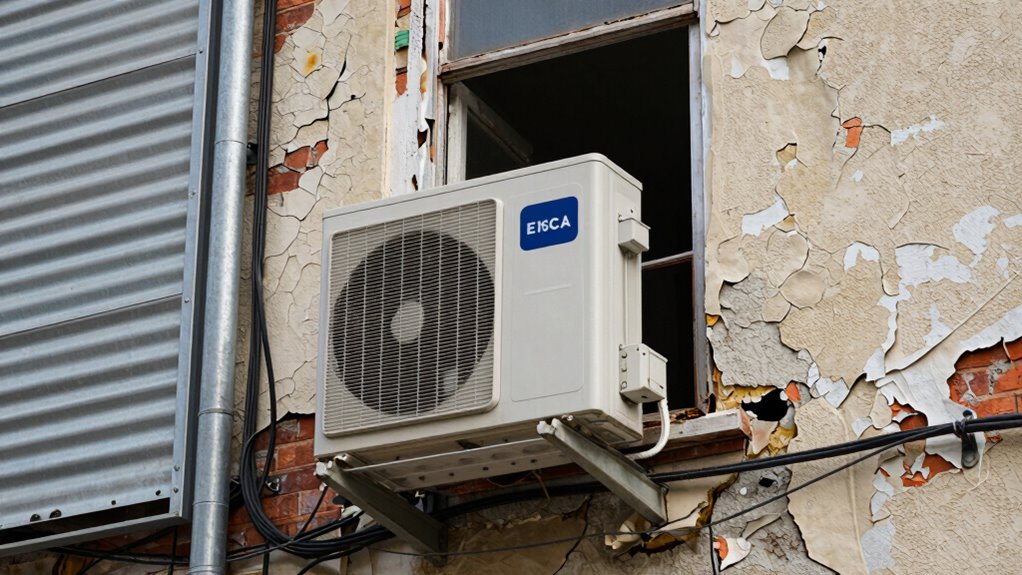
Have you ever considered that installing a heat pump might reveal underlying issues with your building’s structure or systems? When you decide to retrofit your property with a heat pump, it’s not just about updating your heating and cooling method; it’s about uncovering potential problems that have been hidden or ignored. One of the first challenges you might face is the costly installation process. Heat pumps often require significant modifications, such as upgrading electrical systems, improving insulation, or adjusting ductwork. These adjustments can quickly escalate costs beyond initial estimates, especially if your building wasn’t designed with modern energy efficiency standards in mind.
Installing a heat pump can reveal hidden building issues, leading to costly upgrades and extensive repairs.
As you move forward with the retrofit, you might notice that the true condition of your building’s infrastructure comes into focus. For example, older buildings with poor insulation or leaking ducts may struggle to achieve the energy efficiency promised by a new heat pump. Instead of just installing a new system, you might find yourself facing the need for extensive repairs, which can be both time-consuming and expensive. These issues can undermine the anticipated energy savings, leading to higher utility bills despite the investment in a more efficient heating and cooling system.
In many cases, the underlying problems aren’t immediately visible until you start the retrofit process. You could encounter deteriorating insulation, compromised foundation issues, or outdated electrical wiring that can’t handle the increased load of a modern heat pump. These hidden problems often mean you have to go beyond a simple upgrade, addressing structural weaknesses and old systems that compromise both safety and performance. While it’s frustrating to discover these issues mid-project, fixing them is essential to truly benefit from the energy efficiency that a heat pump offers. Additionally, these hidden issues are often linked to the overall condition of the building’s structural integrity, which is crucial to address for a successful retrofit.
Furthermore, discovering these bigger problems can cause delays and inflate your overall budget. You may need to hire specialists or undertake extensive renovations, which can quickly turn a straightforward retrofit into a major construction project. But confronting these issues head-on can ultimately improve your building’s longevity, safety, and overall energy performance. Addressing hidden building problems early on can also prevent costly repairs in the future and ensure the long-term success of your retrofit. Recognizing and planning for building vulnerabilities can help mitigate unexpected challenges during the retrofit process, saving time and money. It’s also important to consider how existing systems might impact the overall project scope and outcomes. Being aware of potential hidden risks related to aging components and infrastructure is essential for thorough planning and successful implementation. Instead of just focusing on the immediate benefits of a heat pump, you’ll be making an investment that ensures your building operates efficiently for years to come. So, even though the process might be more complicated and costly than you expected, exposing these larger problems can lead to a more sustainable and comfortable space in the long run.
As an affiliate, we earn on qualifying purchases.
Frequently Asked Questions
How Do I Know if My Building Is Suitable for a Heat Pump Retrofit?
You can determine if your building is suitable for a heat pump retrofit by checking its compatibility with the system’s requirements, like enough space and proper insulation. You should also assess potential retrofit challenges, such as existing ductwork and electrical capacity. Consulting a professional can help identify hidden issues that might complicate the upgrade, ensuring your building can handle the new technology efficiently and effectively.
What Are the Hidden Costs Associated With Heat Pump Retrofits?
Heat pump retrofits can open a can of worms, with hidden costs lurking beneath the surface. You might face cost overruns due to unexpected technical challenges, such as outdated wiring or insulation issues. These problems can inflate your budget, requiring extra repairs or upgrades. While the upfront price seems manageable, don’t overlook potential hidden costs that could turn your project into a financial swamp. Planning ahead helps you steer clear of surprises.
Can Existing Insulation Issues Affect Retrofit Success?
Yes, existing insulation issues can considerably affect retrofit success. Insulation barriers may prevent proper heat transfer, making your heat pump less efficient and increasing retrofit challenges. Poor insulation can lead to uneven heating or cooling, forcing you to address these issues first. Ignoring insulation problems during a retrofit might result in higher costs and reduced system lifespan, so it’s essential to evaluate and improve insulation before installing the heat pump.
How Long Does a Typical Heat Pump Retrofit Take?
A typical heat pump retrofit takes about one to three days, depending on your building’s size and complexity. During this time, your contractor installs the unit, updates electrical systems, and makes certain of proper insulation. This process boosts your energy efficiency and leads to significant cost savings over time. While some projects may take longer if underlying issues are found, most retrofits are completed quickly, helping you enjoy improved comfort and lower energy bills sooner.
Are There Specific Building Types That Are More Prone to Problems?
Like a house of cards, certain buildings are more prone to problems during heat pump retrofits. Older, poorly maintained structures, especially those with outdated building codes and compromised insulation, often reveal hidden issues. These buildings tend to struggle with energy efficiency, exposing flaws that weren’t initially apparent. You should carefully assess such types before retrofitting to prevent costly surprises and guarantee the upgrade enhances overall performance and compliance.
Conclusion
Retrofitting with a heat pump might seem like a simple upgrade, but it often reveals underlying building issues you didn’t see before. Instead of just saving energy, you could uncover costly structural problems or outdated systems lurking beneath the surface. While the upgrade promises efficiency, it’s also a reminder that a building’s true health runs deeper than its facade. Facing these surprises now can save you headaches—and money—later on.