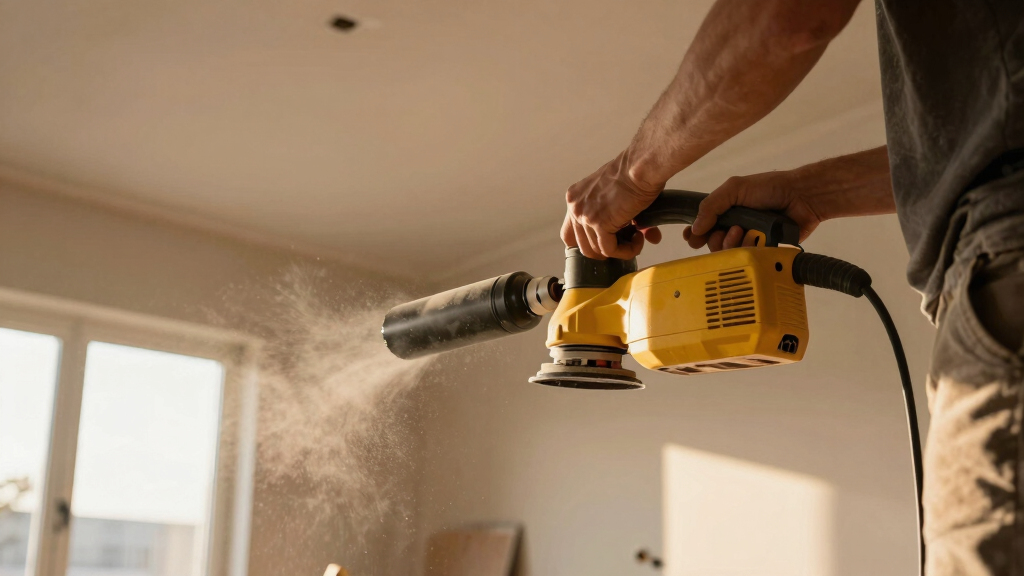

Choosing the best dust extractor for drywall and ceiling work involves balancing power, portability, and filtration efficiency. The Festool 578441 CT 15 stands out as the top overall pick thanks to its HEPA filtration and automatic features that minimize cleanup time. For those prioritizing ease of use and portability, the DEWALT DWV010 offers excellent performance with automatic filter cleaning in a manageable 8-gallon size. However, tradeoffs include higher costs for premium models and limitations in compactness or capacity. Continue reading to explore the full lineup and find the right fit for your specific drywall or ceiling projects.
Key Takeaways
- Powerful suction and HEPA filtration are essential for controlling fine dust during drywall and ceiling work.
- Automatic filter cleaning features significantly reduce maintenance time and improve workflow.
- Capacity varies widely; larger tanks reduce frequent emptying but can be less portable.
- Portability and weight matter for on-the-go jobs, with handheld or compact models favoring mobility.
- Price often correlates with features like auto-cleaning, filtration quality, and build durability.




More Details on Our Top Picks
Festool 578441 CT 15 Dust Extractor – HEPA Filter, Automatic Tool Start, High-Power Suction & AutoClean System
This Festool model stands out for its combination of robust HEPA filtration and a generous 15L container, making it ideal for continuous drywall and ceiling work without frequent emptying. Compared to the DEWALT DWV010, it offers superior filtration quality and a more durable build, though it comes with a higher price tag and slightly less portability. Its auto-clean system reduces maintenance downtime, ensuring consistent suction performance over long jobs. The compact design and steel chassis enhance durability and ease of transport on job sites. The touch operation makes it intuitive to control, and the included crevice and upholstery nozzles add versatility. The main tradeoff is its cost and slightly heavier weight, which could be a factor for those needing lightweight solutions.
Pros:- HEPA certified filtration captures fine dust efficiently
- Large 3.96-gallon capacity reduces frequent emptying
- AutoClean system minimizes manual maintenance
- Robust steel chassis enhances durability
Cons:- Higher price point may be prohibitive for casual users
- Slightly heavier and less portable compared to smaller models
Best for: Professional drywall contractors who prioritize power, filtration, and durability for large-scale projects.
Not ideal for: Home DIYers or hobbyists seeking a lightweight, budget-friendly extractor for occasional use.
- Capacity:3.96 gallons (15L)
- Filtration:HEPA Certified
- AutoClean:Yes
- Dimensions:Compact with steel chassis
- Weight:Approx. 20 lbs
- Warranty:3 years
Bottom line: This model is best suited for professionals needing reliable, high-capacity drywall dust extraction with minimal downtime.
DEWALT DWV010 HEPA Dust Extractor with Automatic Filter Cleaning, 8-Gallon
This DEWALT model makes a compelling case for those who need a large-capacity dust extractor, with an 8-gallon tank that reduces the need for frequent emptying during extensive drywall or ceiling work. It features an automatic filter clean that pulses every 30 seconds, allowing for continuous operation without interruption, which sets it apart from smaller or manual-clean models like the Festool CT 15. Its 150 CFM airflow ensures strong suction, while the rugged wheels and swivel connector make it highly durable and easy to maneuver around a busy job site. However, compared to the Festool, it lacks HEPA certification and has a noisier operation at 64 dB, which may be disruptive. It’s a solid choice for demanding jobs where capacity and continuous operation matter most.
Pros:- Large 8-gallon tank reduces emptying frequency
- Automatic filter pulsing enables continuous use
- Rugged wheels and swivel connector for durability
- High airflow at 150 CFM for strong suction
Cons:- No HEPA filtration, less suitable for fine dust
- Higher noise level at 64 dB
Best for: Contractors performing extensive drywall projects requiring large dust capacity and minimal downtime.
Not ideal for: Home users or small projects where portability and quiet operation are more important than volume.
- Tank Capacity:8 gallons
- CFM:150
- Automatic Filter Clean:Yes
- Noise Level:64 dB
- Hose Diameter:1.25 inch
- Weight:Approx. 22 lbs
Bottom line: Ideal for large-scale drywall work where capacity and continuous operation outweigh noise and filtration concerns.
DeWALT DWXAF101 Air Filtration System, 3-Speed Hanging Ceiling Dust Collectors for Woodworking, Remote Controlled Dust Collection Systems, 2 Stage Filtration
This DeWALT hanging ceiling dust collector excels in creating cleaner indoor environments, especially in workshops where ceiling-mounted air filtration is preferred over traditional vacuum-style extractors. Its 2-stage filtration with a HEPA filter captures over 95% of 0.3 μm particles, making it ideal for drywall and ceiling work where fine dust is prevalent. Unlike the Festool or DEWALT shop vacs, this system is designed to hang from the ceiling, saving floor space and providing coverage for larger areas. Its remote control and multiple modes allow for easy operation, even from a distance. The main tradeoff is that it’s not portable and is more suited for static installation, making it less ideal for mobile or quick-setup needs.
Pros:- 2-stage filtration with HEPA filter captures fine dust
- Ceiling-hanging design saves floor space
- Remote control for easy operation
- Multiple modes including automatic air quality sensing
Cons:- Not portable, fixed installation only
- Limited to indoor use
- Requires space for ceiling mounting
Best for: Workshop owners or contractors needing ongoing air quality control in fixed locations during drywall or ceiling work.
Not ideal for: DIYers or small jobs needing portable extraction or quick setup.
- Filtration:2-stage, HEPA
- Coverage Area:Ceiling-mounted
- Modes:4 (including auto sensing)
- Noise Level:Approx. 64 dB
- Power:105 watts
- Remote Control:Yes
Bottom line: Perfect for continuous air quality management in a fixed workshop environment during drywall and ceiling projects.
DEWALT 20V Handheld Vacuum Cordless, Car Vacuum with HEPA Filter, 6 Attachments and LED Light, High Performance Dry Only Small Shop Vac, Battery Not Included
This DEWALT handheld vacuum is a versatile, cordless option that I find useful for quick cleanups and spot dusting, especially given its small size and weight—only 6.8 lbs. While it won’t replace a dedicated dust extractor like the Festool or DEWALT shop vacs for large drywall debris, it excels in cleaning fine drywall dust from small areas, tools, or car interiors. Its 46 CFM suction and HEPA filter make it capable of handling fine dust without dispersing it back into the air. The included attachments, LED light, and cordless convenience make it a handy addition to any job site or garage. However, its runtime of just around 21 minutes and limited capacity mean it’s not suitable for large cleanup jobs. It’s best for quick, targeted cleaning rather than continuous dust extraction.
Pros:- Cordless and lightweight for easy maneuvering
- HEPA filter traps fine drywall dust
- Includes multiple attachments for versatile cleaning
- LED light illuminates dark areas
Cons:- Limited runtime around 21 minutes per charge
- Small capacity requires frequent emptying
- Not suitable for continuous large-scale dust collection
Best for: Finish carpenters, DIYers, or homeowners needing a portable, quick-clean solution for drywall dust and small messes.
Not ideal for: Heavy-duty drywall contractors requiring continuous dust collection over long periods.
- CFM:46
- Weight:6.8 lbs
- Run Time:21 minutes
- HEPA Filter:Yes
- Attachments:6 included
- Battery:Not included, 20V battery required
Bottom line: Excellent for spot cleaning and detailed dust removal, but not for extensive drywall dust extraction.
DEWALT 20V MAX* Dust Extractor, Brushless, Universal, Tool Only
This DEWALT dust extractor offers a highly portable and compact solution, ideal for use directly with power tools during drywall or ceiling work. Its brushless 20V motor provides reliable power, and with a capacity that is smaller than the DEWALT DWV010, it is designed for quick, on-the-spot cleanup rather than large-volume dust collection. Its wireless tool control feature allows for remote activation, which is a significant advantage in tight spaces or when managing multiple tools. Compared to larger models, its lightweight design and multiple strap points make it easy to carry and position for immediate use. The main tradeoff is its smaller capacity and lower airflow, making it less suitable for prolonged, heavy-duty dust extraction.
Pros:- Compact and lightweight for portability
- Wireless tool control for remote activation
- HEPA filter included for fine dust
- Multiple strap connection points for ergonomic positioning
Cons:- Limited capacity and airflow compared to larger models
- Designed for quick, on-demand use, not long-term extraction
- Battery not included, needs compatible 20V power source
Best for: Contractors and DIYers needing a lightweight, quick-connect dust extractor for use with cordless tools on drywall or ceiling projects.
Not ideal for: Large-scale drywall contractors requiring continuous high-volume dust collection.
- Capacity:Approx. 0.7 liters
- CFM:Not specified, designed for portability
- Weight:Approx. 3.1 kg
- Battery:20V MAX, battery sold separately
- Noise Level:Approx. 87 dB
- Control:Wireless tool activation
Bottom line: Best for on-the-fly dust management with cordless convenience, but not for extended drywall dust collection.
Festool 574837 Ct Midi I Hepa Bluetooth Dust Extractor
This dust extractor stands out for its impressive quiet operation—a significant upgrade over the louder Bosch VAC090AH. Its Bluetooth integration allows for remote start and control, reducing trips back to the machine, which can boost workflow efficiency. Compared to larger, more industrial models, the compact size and touch controls make it easier to operate in tight spaces. However, this model’s 130 CFM suction might be less powerful than the BOSCH VAC090AH’s 150 CFM, which could be a drawback for heavy-duty debris. Its 3.9-gallon container offers decent capacity, but for constant drywall dust, larger tanks could reduce emptying frequency. Overall, this pick is ideal for contractors prioritizing low noise and smart features over maximum suction power.
Pros:- Exceptionally quiet operation at around 60 decibels
- Bluetooth connectivity for remote start and control
- Compact and portable with internal hose holder
Cons:- Suction power of 130 CFM may be insufficient for very heavy debris
- Container capacity of 3.9 gallons might require frequent emptying during large jobs
Best for: Professionals needing a quiet, easy-to-control extractor for frequent drywall and ceiling work in noise-sensitive environments.
Not ideal for: Heavy-duty industrial jobs with large volume debris where maximum suction and capacity are essential.
- CFM:130
- Container capacity:3.9 gallons
- Bluetooth:Yes
- Hose holder:Internal
- Noise level:60 decibels
- Power source:Corded electric
Bottom line: This dust extractor is perfect for users who prioritize low noise and smart features in drywall and ceiling work, accepting some tradeoff in raw power.
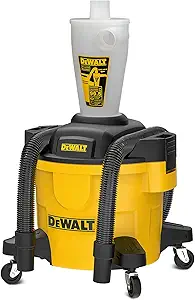
DEWALT Dust Separator with 6 Gallon Poly Tank, 99.5% Efficiency Cyclone Dust Collector, High-Performance Cycle Powder Collector Filter
This dust separator excels at preventing debris from clogging your vacuum, making it a cost-effective solution compared to picking up a larger, dedicated extractor like the BOSCH VAC090AH. Its 6-gallon poly tank offers ample capacity for drywall dust and debris, reducing the need for frequent emptying, unlike smaller units. Its high-efficiency cyclone design captures 99.5% of debris, minimizing suction loss and extending vacuum filter life. Compared to the Festool Ct Midi I, it’s less sophisticated in automation but more adaptable to existing shop vacuums. The tradeoff is that it doesn’t include a motor or suction itself, relying on your existing vacuum, which could limit portability. This makes it ideal for contractors wanting modular, budget-friendly debris separation without sacrificing capacity.
Pros:- Large 6-gallon capacity reduces emptying frequency
- High 99.5% debris separation efficiency
- Compatible with most vacuum cleaners
Cons:- Requires a compatible vacuum for suction, adding setup complexity
- No built-in motor or suction power, limiting standalone use
Best for: DIYers or small-shop professionals seeking a reliable cyclone separator to extend their vacuum’s lifespan and efficiency.
Not ideal for: Heavy drywall dust collection as a standalone unit where you need a dedicated, powerful extractor with HEPA filtration.
- Capacity:6 gallons
- Filtration efficiency:99.5%
- Compatibility:Most vacuum cleaners
- Material:Polypropylene
- Design:Cyclone
- Suction power needed:From existing vacuum
Bottom line: This cyclone separator provides a cost-effective, high-capacity debris management solution for users who already have a vacuum system in place.
BOSCH VAC090AH Portable 9 Gallon Dust Extractor with Auto Filter Clean and HEPA Filter
The BOSCH VAC090AH distinguishes itself with its auto filter cleaning system that activates every 15 seconds, helping to maintain consistent suction during long drywall sanding sessions. Its HEPA filter captures 99.97% of particles at 0.3 microns, surpassing many competitors like the DeWALT DWV010 for air quality control. The unit’s 150 CFM airflow and 97-inch static lift make it suitable for demanding drywall dust collection, especially in professional settings requiring OSHA compliance, like the DeWALT DWXAF101. The main tradeoff is its larger size and weight (28 pounds), which can reduce portability compared to smaller models. Its app controls and multiple power levels offer precise adjustment, but this added complexity isn’t necessary for all users. Overall, this makes a compelling choice for contractors who want reliable, automated, and compliant dust extraction.
Pros:- Automatic filter cleaning every 15 seconds
- High-efficiency HEPA filtration for cleaner air
- Powerful 150 CFM airflow and 97 in. lift
Cons:- Relatively heavy and bulky for portability
- Higher price point due to advanced features
Best for: Pro contractors needing a robust, maintenance-light extractor capable of meeting OSHA standards for drywall and ceiling work.
Not ideal for: DIY users or those with limited space, as the unit’s size and complexity may be overkill for small or infrequent jobs.
- CFM:150
- Static lift:97 inches
- Tank capacity:9 gallons
- HEPA filter:Yes, 99.97%
- Auto clean:Yes
- Weight:28 pounds
Bottom line: This dust extractor is ideal for professionals requiring hands-free maintenance and OSHA-compliant air quality, accepting the added size and cost.
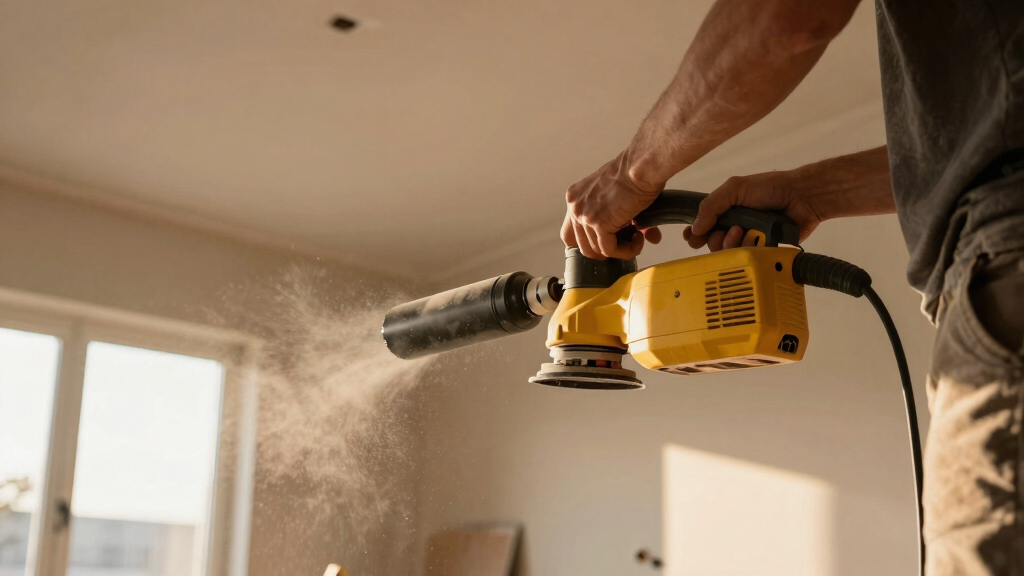
DEWALT DWV9180 Drywall Sander Dust Extractor Attachment Accessory
This attachment is tailored specifically for the DEWALT DWV9000 series drywall sander, providing a dust-free setup for drywall and ceiling sanding tasks. Unlike standalone extractors, it’s designed as a connector accessory that integrates with your existing DEWALT system, making it less suitable for general dust collection. Its durable plastic resin construction ensures long-term use, but it offers no suction power of its own. Compared with larger units like the BOSCH VAC090AH, it’s less versatile outside drywall sanding but excels at minimizing cleanup mess during sanding operations. The main tradeoff is that it depends entirely on your DEWALT vacuum or dust extractor, which limits mobility if you don’t already own compatible equipment. This pick makes the most sense for users who want clean drywall sanding with minimal setup.
Pros:- Seamless integration with DEWALT drywall sanders
- Durable plastic construction for long use
- Provides dust-free sanding environment
Cons:- Dependent on existing DEWALT vacuum system
- Limited to drywall sanding applications only
Best for: DIYers and professionals using DEWALT drywall sanders who need a reliable dust collection connection without investing in a full standalone extractor.
Not ideal for: General drywall dust collection or ceiling work where a dedicated, larger dust extractor is preferred for capacity and power.
- Compatibility:DEWALT DWV9000 series
- Material:Plastic resin
- Purpose:Drywall sanding dust collection
- Type:Connector accessory
- Weight:Lightweight
- Filter type:Not specified
Bottom line: This accessory is perfect for DEWALT drywall sander users seeking a tidy, dust-free sanding process, with the understanding it’s not a standalone dust extractor.
How We Picked
This selection was based on evaluating performance metrics such as suction power, filtration quality, and ease of maintenance. Usability factors like portability, noise levels, and user controls also played a role, ensuring the models are practical for drywall and ceiling tasks. Build quality and durability were prioritized because these tools often see frequent use in demanding environments. Lastly, value was assessed by balancing features against price, ensuring options are accessible for different budgets while meeting project needs. Products were ranked to highlight those that best combine these criteria for drywall and ceiling work in 2026.Factors to Consider When Choosing Best Dust Extractors For Drywall And Ceiling Work
Selecting the right dust extractor for drywall and ceiling work involves understanding several key factors that influence performance and usability. Beyond raw power, considerations like filtration type and capacity impact how effectively dust is contained and how frequently you need to empty the tank. Ease of maintenance, portability, and noise levels also affect daily workflow and user comfort. Making an informed choice requires balancing these features against your specific project scale and workspace environment.Power and Suction Capacity
For drywall and ceiling tasks, strong suction is vital to capture fine dust particles without clogging or losing efficiency. Look for models with high airflow ratings and motor power, especially if you’re working in larger spaces or with high-volume dust generation. A more powerful unit reduces the need for multiple passes and cleans the air more effectively, which is key for maintaining a safe, dust-free environment. However, increased power can come with added weight or noise, so consider your workspace constraints.
Filtration System
HEPA filters are highly recommended because they trap tiny particles and improve indoor air quality. A good filtration system minimizes dust escape during operation, which is especially important in enclosed or poorly ventilated spaces. Some models feature automatic filter cleaning, reducing manual maintenance and downtime. Be aware that higher-grade filters can increase upfront costs and replacement expenses, but they significantly enhance health safety and efficiency.
Tank Capacity and Portability
Capacity influences how long you can work without interruption. Larger tanks—like 8 or 9 gallons—are ideal for extensive projects, but they tend to be heavier and less portable. Conversely, smaller units are easier to carry and store but require more frequent emptying, which can slow down the workflow. If mobility is a priority, consider compact or handheld options, but ensure they still deliver adequate suction for your drywall or ceiling work.
Ease of Maintenance and Features
Features like automatic filter cleaning and simple tank disposal make ongoing maintenance manageable, especially during long projects. Noise levels also matter—quieter units contribute to a more comfortable working environment. Some models include remote controls or app connectivity for enhanced usability. Always check how straightforward it is to replace filters or empty the tank, as complex maintenance can lead to downtime or frustration.
Price and Overall Value
Prices range from budget-friendly to premium, with higher costs often reflecting better filtration, auto-cleaning, and durability. It’s tempting to choose the cheapest option, but compromised filtration or weaker suction can offset initial savings. Conversely, investing in a premium model may pay off in durability and lower maintenance over time. Balance your project scope, frequency, and budget to select a unit that delivers the best value for your specific drywall and ceiling needs.
Frequently Asked Questions
Is a HEPA filter necessary for drywall dust?
Yes, a HEPA filter is highly recommended because drywall dust contains fine particles that can become airborne and cause health issues. HEPA filters trap particles as small as 0.3 microns, significantly reducing respiratory hazards and creating a cleaner work environment. While non-HEPA units may be cheaper, they often allow dust to escape, making them less suitable for prolonged or indoor projects where air quality is a concern.
Can I use a standard shop vac for drywall dust?
While a standard shop vac can handle some drywall dust, it often lacks the filtration quality needed to contain fine particles safely. Many shop vacs do not have HEPA filters, and their filters can clog quickly, reducing suction power. Specialized dust extractors designed for drywall work typically include better filtration systems and auto-cleaning features, making them a more effective and healthier choice for dust control.
How important is portability for drywall dust extractors?
Portability matters if you’re working across multiple locations or in a space where mobility is essential. Smaller or handheld units are easier to carry and store but may sacrifice suction power or capacity. On the other hand, larger, wheeled models offer higher capacity and power but can be cumbersome to move. Consider your worksite layout and whether you need to frequently relocate the extractor when choosing the right model.
Are automatic filter cleaning features worth the extra cost?
Automatic filter cleaning features can significantly reduce routine maintenance and downtime, especially during long or continuous projects. They help maintain consistent suction performance and minimize manual filter taps or replacements. While they add to the initial expense, these features often improve overall workflow efficiency and can lead to cost savings over time by extending filter life and reducing cleaning effort.
What capacity should I look for in a dust extractor for drywall work?
The ideal capacity depends on your project size. For small to medium jobs, a 6-8 gallon tank is usually sufficient and more manageable. Larger projects may benefit from 9-gallon or bigger tanks, reducing the need for frequent emptying. Remember, bigger tanks tend to be heavier and less portable, so balance capacity with your workspace and mobility needs to make the best choice.
Conclusion
For most DIYers or light commercial projects, the DeWALT DWV010 offers a solid balance of performance, portability, and affordability. Professionals handling extensive drywall or ceiling work should consider the Festool 578441 CT 15 for its superior filtration and automatic features, despite its higher price. Those seeking premium durability and advanced features might opt for the Festool Ct Midi I. Beginners or smaller workshops will benefit from compact models like the DEWALT 20V MAX Dust Extractor, while contractors requiring portability should look at units with larger tanks and auto-cleaning systems. Ultimately, your choice depends on your project scale, workspace, and budget, but these options cover every scenario effectively in 2026.