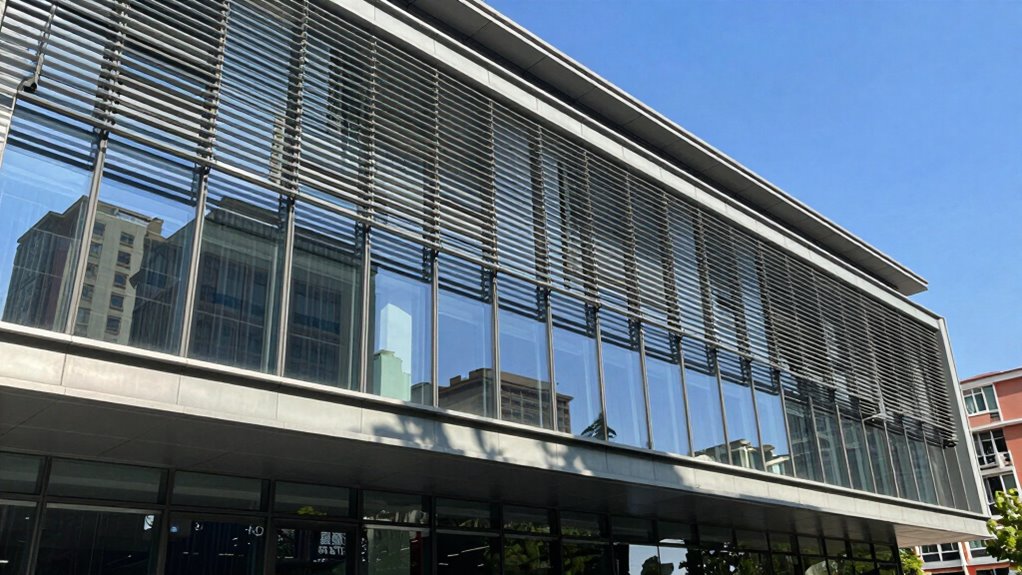

Exterior shading blocks or deflects solar radiation before it heats your building, preventing heat from entering your interior spaces. It creates a barrier that reduces direct sunlight on windows and walls, lowering the amount of heat transfer inside. This proactive approach keeps indoor temperatures cooler and lessens the need for air conditioning. By addressing solar gain early, exterior shading saves energy and enhances comfort. Keep exploring to discover how the right shading strategies can make a big difference.

Get home appliances delivered free with Prime
- Fast, free delivery on millions of items
- Prime Video, Amazon Music and more included
- Member-only deals all year
Key Takeaways
- Exterior shading blocks or deflects solar radiation before it enters, preventing heat buildup inside the building.
- It reduces direct sunlight on windows and walls, minimizing solar heat gain early in the day.
- Proper shading placement and adjustable features allow for seasonal control, preventing unnecessary cooling loads.
- By lowering indoor temperatures passively, exterior shading decreases the need for mechanical cooling systems.
- It enhances overall energy efficiency, reducing outdoor air conditioning energy consumption and associated costs.
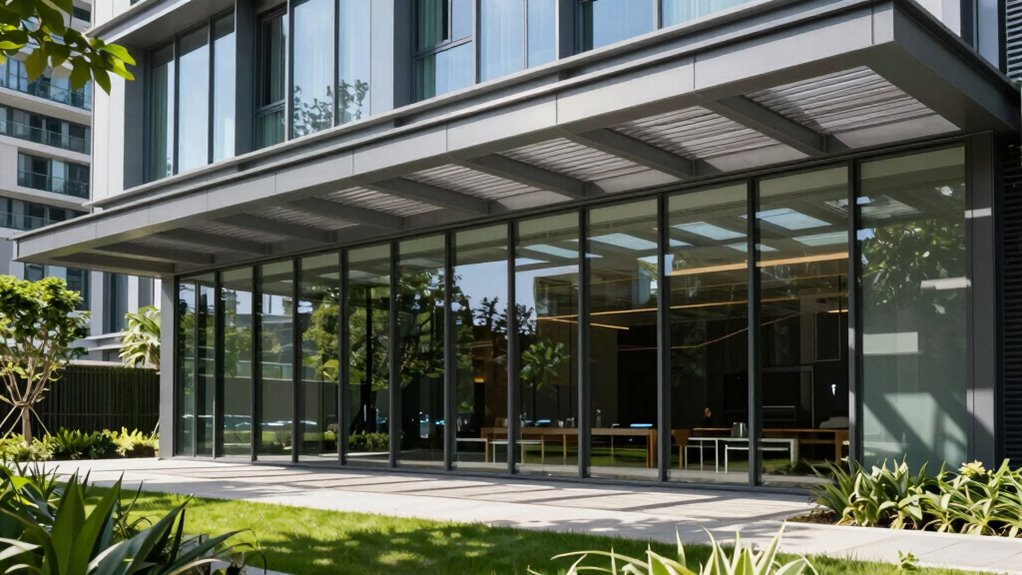
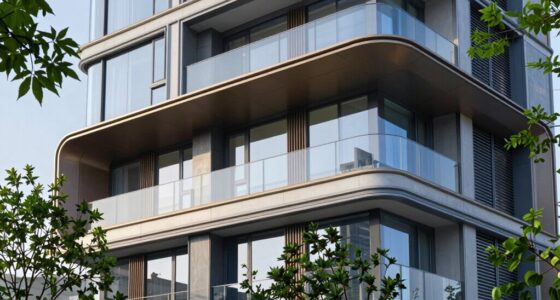
Exterior shading plays a crucial role in managing cooling loads for buildings by reducing heat gain from sunlight. When the sun shines directly onto your windows and walls, it causes solar gain, which leads to increased indoor temperatures. This extra heat makes your cooling system work harder, consuming more energy and raising utility bills. By installing exterior shading devices like awnings, louvers, or pergolas, you create a barrier that blocks or deflects much of this solar radiation before it even reaches your building’s interior. As a result, you keep indoor spaces cooler naturally, which directly enhances your building’s energy efficiency.
Exterior shading reduces heat gain from sunlight, keeping indoor spaces cooler and boosting energy efficiency naturally.
When you think about solar gain, it’s not just about comfort but also about reducing the overall energy demand. Exterior shading helps you control the amount of sunlight entering your windows during peak heat hours. When you prevent excessive solar gain, your air conditioning units don’t have to operate as long or as intensely, which saves energy and reduces wear and tear on your HVAC system. This proactive approach means you’re addressing the problem before it even starts, rather than reacting to rising indoor temperatures after they’ve already increased. Additionally, exterior shading can help mitigate the impact of solar radiation, which is a key factor in indoor heat gain. Incorporating passive cooling strategies like exterior shading further supports sustainable building practices. Implementing design techniques that optimize shading can maximize their effectiveness in different environments, especially when tailored to specific climate conditions.
In addition, exterior shading provides a layer of insulation that helps regulate indoor temperatures more consistently. By blocking direct sunlight, you minimize temperature fluctuations, which means your cooling system doesn’t need to run as often or at full capacity. This results in lower energy consumption and, consequently, lower greenhouse gas emissions. Over time, this effort translates into significant cost savings on energy bills and a smaller environmental footprint, making your building more sustainable. Employing proper shading placement is essential to ensure maximum efficiency and comfort throughout the year. Properly designed shading systems can also enhance the aesthetic appeal of your building, adding to its value and curb appeal.
Furthermore, exterior shading devices can be customized to suit your building’s orientation and local climate conditions, maximizing their effectiveness. For example, adjustable louvers can be tilted to block the high summer sun while allowing in winter sunlight when warmth is appreciated. This adaptability ensures your building remains comfortable year-round without over-relying on mechanical cooling. By investing in exterior shading, you’re taking a smart, strategic step toward reducing your cooling loads from the outset, which ultimately boosts your building’s energy efficiency and sustainability.
As an affiliate, we earn on qualifying purchases.
Frequently Asked Questions
How Does Exterior Shading Impact Energy Costs Long-Term?
Exterior shading considerably impacts your long-term energy costs by providing substantial energy savings. It reduces the need for air conditioning, cutting down on utility bills. Over time, these savings translate into notable cost benefits, making exterior shading a smart investment. By controlling heat gain early, you lower cooling loads efficiently, ensuring your energy expenses stay manageable while enhancing comfort and sustainability in your space.
What Materials Are Most Effective for Exterior Shading?
Imagine a sturdy shield protecting your home—metal, wood, or fabric—each symbolizing durability and style. Metal offers exceptional durability and modern aesthetic options, resisting weather and aging well. Wood provides natural beauty and blends seamlessly with outdoor environments, though it needs maintenance. Fabric shades are versatile, lightweight, and come in various colors, making them an attractive choice that combines durability with aesthetic appeal, giving you both functionality and visual charm.
Can Exterior Shading Be Automated for Better Efficiency?
Yes, exterior shading can be automated for better efficiency. You can install smart sensors that detect sunlight and temperature, triggering automated controls to adjust shading in real-time. This system guarantees ideal shading, reducing cooling loads without manual effort. By integrating smart sensors and automated controls, you enhance energy savings, improve occupant comfort, and prevent overexposure to heat, all while maintaining a seamless, responsive shading system.
How Does Climate Influence Shading Design Choices?
Climate considerably influences your shading design choices by dictating regional shading strategies that suit local conditions. In hot, sunny climates, you’ll want to prioritize climate adaptability with deep overhangs or louvers that block intense rays. Conversely, milder or cooler regions may require lighter shading to allow sunlight in during winter. Tailoring your exterior shading to your climate helps optimize comfort and energy efficiency year-round.
What Maintenance Is Required for Exterior Shading Systems?
You should plan regular cleaning schedules for your exterior shading systems, ideally every three to six months, to prevent dirt buildup that can reduce effectiveness. Material durability varies—metal shades may need less maintenance than fabric ones, which require more frequent cleaning and potential replacement. Keeping your shading in top shape guarantees it continues to protect your space, conserve energy, and lasts longer, ultimately saving you money over time.
Conclusion
By implementing exterior shading, you can drastically cut your cooling loads before they even begin—it’s like having a fortress against relentless heat. These shading devices act as your first line of defense, preventing solar heat gain and keeping your space cooler naturally. Embracing exterior shading isn’t just smart; it’s a game-changer that transforms your building into an energy-efficient sanctuary. Trust me, once you see the difference, you’ll wonder how you ever managed without it.
NFL season / tailgating Picks
team gear
As an affiliate, we earn on qualifying purchases.