Your choice of exterior color directly impacts how much heat your building absorbs or reflects. Lighter shades reflect more sunlight, helping keep the interior cooler, while darker hues trap heat, increasing indoor temperatures. Using high solar reflectance index (SRI) finishes can lower energy costs by reducing heat gain. Color contrast and reflective coatings also influence thermal performance. To understand how these factors can maximize energy efficiency and comfort for your building, explore further details.

Get home appliances delivered free with Prime
- Fast, free delivery on millions of items
- Prime Video, Amazon Music and more included
- Member-only deals all year
Key Takeaways
- Lighter colors reflect more sunlight, reducing heat absorption and cooling energy needs.
- Darker hues absorb more heat, increasing indoor temperatures and cooling system workload.
- High Solar Reflectance Index (SRI) surfaces reflect solar radiation, lowering heat gain.
- Color contrast can cause uneven heat absorption, affecting thermal comfort and stress.
- Reflective coatings and material properties enhance heat management and energy efficiency.
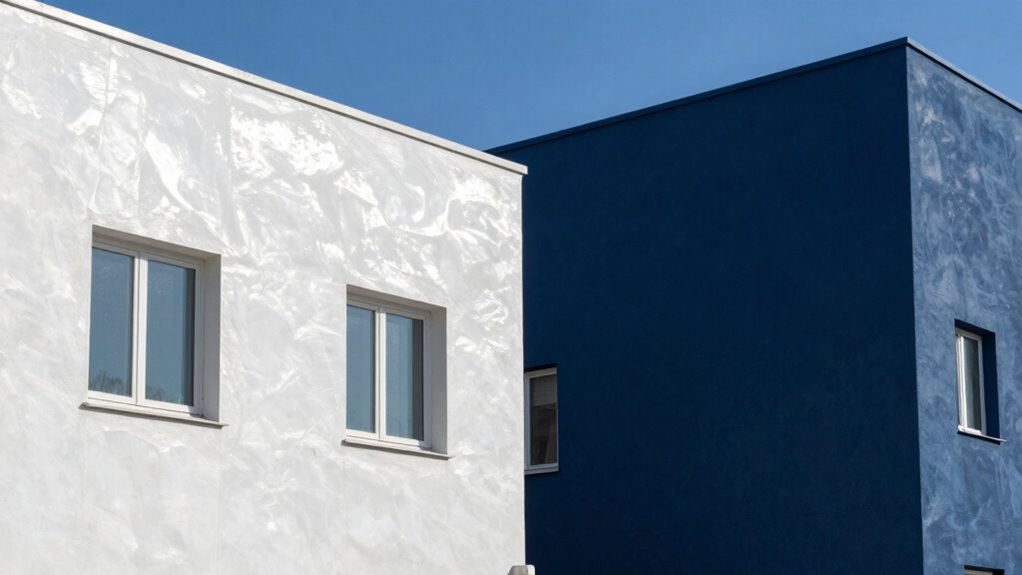
Choosing the right exterior color for your building can considerably impact its heat gain, especially in warmer climates. When selecting colors, you need to think beyond aesthetics and consider how color contrast and material reflectivity influence temperature regulation. Lighter shades tend to reflect more sunlight, helping keep your building cooler, while darker hues absorb more heat, increasing the internal temperature. This difference in heat absorption can notably affect your energy bills, as cooling systems work harder to maintain comfortable indoor temperatures. Additionally, selecting exterior finishes with a high Solar Reflectance Index (SRI) can further enhance your building’s ability to reflect solar radiation and stay cooler naturally. Color contrast plays a crucial role in how your building interacts with sunlight. For example, a light-colored wall paired with a darker trim creates a contrast that can influence heat absorption. High contrast combinations often lead to uneven heating, where darker sections absorb more heat, causing potential thermal stress and increased cooling demands. Conversely, low contrast, such as a uniform light color, promotes even reflectivity and reduces heat gain across surfaces. When you choose colors with high contrast, you should consider how they might create hot spots or uneven heating, especially during the hottest months. Understanding the impact of color contrast can help optimize your building’s thermal performance. Furthermore, incorporating reflective coatings can significantly improve your building’s heat management. Additionally, considering urban heat island effects can be vital when designing for large-scale developments in metropolitan areas. Recognizing how material reflectivity interacts with color choices is essential for achieving optimal thermal comfort and energy efficiency.
As an affiliate, we earn on qualifying purchases.
Frequently Asked Questions
How Does Color Reflectivity Influence Indoor Temperature?
Color reflectivity directly influences indoor temperature by determining how much sunlight your building’s surface reflects. Lighter colors with high reflectivity bounce more sunlight, keeping interiors cooler, while darker shades absorb heat, raising indoor temperatures. Your surface texture also plays a role; smooth surfaces reflect more light, whereas rough textures can trap heat. By choosing high-reflectivity colors with good contrast and surface textures, you can effectively reduce indoor heat gain.
Are Certain Color Combinations Better for Energy Efficiency?
Certain color combinations are better for energy efficiency because high contrast, like light and dark shades, can improve heat reflection and reduce cooling costs. You should consider pairing colors with strong contrast for better thermal performance. Additionally, these combinations enhance the building’s aesthetic appeal, making your property more attractive while also lowering energy consumption. Choosing the right color contrast balances visual appeal and functionality, helping you save on energy bills.
How Does Climate Impact Color Choice Effectiveness?
Climate is the weather’s mood ring, influencing your color choices’ effectiveness. In hot, sunny areas, lighter colors reflect more solar reflection, keeping buildings cooler. Conversely, darker hues absorb heat, which can worsen the urban heat islands effect. In cooler climates, darker shades help retain warmth. So, your exterior color should match your local climate, maximizing solar reflection where needed and reducing heat gain, making your building more energy-efficient year-round.
Can Exterior Colors Affect HVAC Energy Consumption?
Yes, exterior colors can influence HVAC energy consumption. Light colors reflect more sunlight, keeping your building cooler and reducing cooling loads, while dark colors absorb heat, increasing cooling needs. Your choice also ties into color psychology and aesthetic appeal, shaping how your building looks and feels. By selecting appropriate exterior colors, you can enhance energy efficiency, lower costs, and create a visually appealing environment that aligns with your design goals.
What Role Does Building Material Play With Color in Heat Gain?
You’re right to wonder how building material influences heat gain alongside color. Darker materials absorb more heat—up to 80% more than lighter ones—making them less energy-efficient. Material durability guarantees long-term performance, while aesthetic appeal influences design choices. When combined with color, durable, light-colored materials reflect heat more effectively, reducing cooling needs and enhancing energy savings, all while maintaining a pleasing look.
Conclusion
In the end, choosing the right exterior color isn’t just about style — it’s your secret weapon against unwanted heat gain. Think of it as your own personal armor, much like a knight’s shield, protecting your home from the sun’s relentless rays. By selecting lighter hues or reflective finishes, you can keep your space cooler and slash energy bills. So, don’t be a square—pick colors wisely and keep your castle comfortable all year round!
NFL season / tailgating Picks
team gear
As an affiliate, we earn on qualifying purchases.