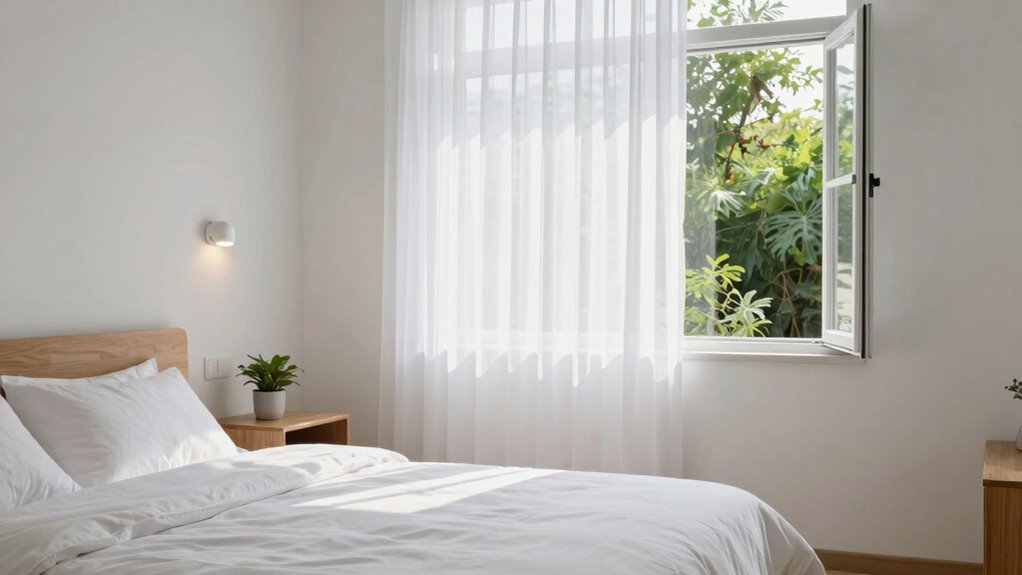

Your bedroom design can influence your energy use and air quality without you noticing. Light colors reflect sunlight, helping keep the room cooler, while dark tones absorb heat for warmth in winter. Proper furniture placement boosts airflow, reducing reliance on HVACs, and choosing breathable fabrics minimizes pollutants. Strategic placement and material choices support better air circulation and cleaner indoor air. Keep exploring to discover simple ways to make your bedroom both more energy-efficient and healthier.

Get home appliances delivered free with Prime
- Fast, free delivery on millions of items
- Prime Video, Amazon Music and more included
- Member-only deals all year
Key Takeaways
- Color choices in bedroom design influence heat absorption and reflection, affecting indoor temperature regulation and energy consumption.
- Furniture placement impacts airflow and ventilation, enhancing air circulation and reducing reliance on heating and cooling systems.
- Selecting breathable, low-emission materials minimizes indoor pollutants and supports healthier air quality.
- Strategic arrangement of furniture prevents airflow obstructions, promoting even temperature distribution and pollutant dispersion.
- Proper ventilation and material choices work together to maintain fresh, clean indoor air while optimizing energy efficiency.

Your bedroom design can considerably impact your home’s energy consumption, influencing heating, cooling, and lighting needs. The way you choose color schemes and arrange furniture plays a subtle but powerful role in how efficiently your space uses energy. Light colors, such as whites, creams, or pastels, reflect more sunlight and help keep your room cooler during warmer months. Conversely, darker tones absorb heat, which can be beneficial in colder seasons by reducing the need for extra heating. When you select your color palette thoughtfully, you can naturally regulate temperature, reducing reliance on air conditioning or heating systems.
Furniture placement also affects energy use and air quality without requiring any high-tech solutions. Properly positioning your furniture can improve airflow, making heating and cooling systems work less hard. For example, keeping large pieces away from vents or windows prevents blockages that trap heat or cold air. Placing your bed or seating areas near windows can take advantage of passive solar heating, warming your space naturally during the day. On the other hand, positioning furniture to avoid obstructing airflow vents allows for better circulation, which keeps the air fresh and evenly distributed. This not only reduces the strain on your HVAC system but also enhances indoor air quality by preventing stagnation. Additionally, air circulation can help disperse indoor pollutants, contributing to a healthier environment.
Your choice of furniture also impacts air quality directly. Heavy, densely upholstered furniture can trap dust, allergens, and pollutants, which can degrade air quality over time. Opting for lighter, breathable fabrics or using furniture with minimal chemical treatments can help minimize indoor pollutants. Additionally, keeping clutter organized and avoiding overcrowding creates less surface area for dust accumulation, making it easier to keep the air clean. Proper furniture placement and thoughtful selection contribute to reducing dust and allergens, which is especially important if you or your family members have allergies or respiratory issues. Incorporating indoor air quality considerations into your design choices supports healthier living environments overall. Techniques such as proper ventilation and choosing low-emission materials further enhance air quality. Making informed choices about furniture materials can also significantly improve your home’s overall air purity.
Frequently Asked Questions
How Does Bedroom Lighting Affect Overall Energy Consumption?
Bedroom lighting considerably impacts your overall energy consumption. By using lighting control systems, you can easily turn off lights when not needed, saving energy. Opt for energy-efficient bulbs like LEDs, which consume less power and last longer. These choices reduce your electricity bills and environmental footprint. So, being mindful of your lighting habits and upgrading to efficient options helps you cut energy use without sacrificing comfort.
Can Choosing Specific Fabrics Improve Indoor Air Quality?
Choosing specific fabrics can considerably improve indoor air quality by enhancing fabric ventilation and serving as allergen barriers. You should select breathable, natural fabrics that allow air to circulate, reducing moisture and mold buildup. Additionally, opt for hypoallergenic materials that block dust mites and pet dander. These choices create a healthier environment, minimize allergens, and promote better sleep, all while subtly influencing your bedroom’s air quality and overall comfort.
What Role Do Bedroom Plants Play in Air Purification?
Bedroom plants play a significant role in air purification through air filtration. By selecting the right plants, like snake plants or pothos, you can effectively remove toxins and improve air quality. These plants absorb airborne pollutants and release oxygen, creating a healthier environment. Plant selection matters, so choose species known for their air-purifying capabilities to maximize the benefits and keep your bedroom fresher and cleaner.
How Does Mattress Material Influence Indoor Air Quality?
You might think mattress materials don’t impact air quality, but they do. Synthetic mattresses often off gas volatile organic compounds (VOCs), affecting your indoor air quality. Switching to natural fiber options, like organic cotton or wool, reduces off gassing and creates a healthier sleep environment. Choosing these eco-friendly materials helps keep your bedroom air cleaner, supporting better breathing and overall wellness.
Are There Energy-Efficient Heating Options Suitable for Bedrooms?
Yes, there are energy-efficient heating options perfect for bedrooms. You can install smart thermostats to optimize temperature control, reducing energy waste and keeping your room cozy. Additionally, making insulation improvements helps retain heat, so your heating system works less. Combining these strategies guarantees your bedroom stays warm efficiently, lowering energy bills and maintaining better air quality. These solutions are simple yet effective ways to enhance comfort and sustainability.
Conclusion
By paying attention to your bedroom design, you can subtly influence your energy consumption and air quality. Simple choices like better insulation or air purifiers can make a big difference. Did you know that poorly ventilated bedrooms can increase indoor pollutants by up to 60%? Small adjustments not only improve your sleep but also promote a healthier environment. So, next time you redesign, remember—it’s about creating a space that works quietly behind the scenes for your well-being.
NFL season / tailgating Picks
team gear
As an affiliate, we earn on qualifying purchases.