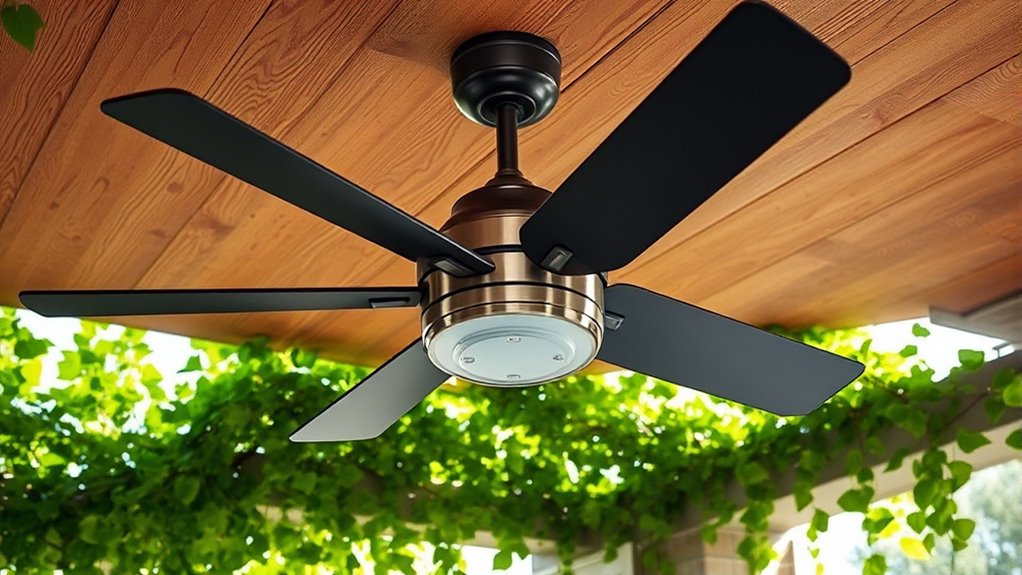

When selecting a smart outdoor ceiling fan, focus on models with corrosion-resistant materials like stainless steel or weatherproof coatings to guarantee durability in harsh environments. Look for fans with Wi-Fi or Bluetooth connectivity, compatibility with smart home systems, and environmental sensors for automation. Prioritize those with appropriate IP ratings (at least IP44, preferably IP65) to guard against water and dust. Considering these factors will help you choose a long-lasting, high-performing unit—more details ahead to guide your decision.
Key Takeaways
- Choose fans made from corrosion-resistant materials like stainless steel or weatherproof polymer with appropriate IP ratings.
- Ensure integrated smart features such as Wi-Fi, voice control, and compatibility with home automation ecosystems.
- Verify outdoor durability with sealed electrical components, UV-resistant finishes, and robust weatherproof housings.
- Confirm secure outdoor mounting options and proper sealing of electrical connections for long-term operation.
- Prioritize models with high-quality motors, vibration dampening, and proven outdoor longevity supported by warranties.
Choosing the right smart ceiling fan for outdoor use requires careful consideration of durability, control features, and environmental resistance. Outdoor environments expose fans to elements such as moisture, temperature fluctuations, and airborne debris, which necessitate specific design features for reliable operation. Begin by evaluating the fan’s material composition—look for models constructed with corrosion-resistant materials like stainless steel, aluminum, or high-quality polymer composites. These materials prevent rust and degradation over time, ensuring longevity in humid or salty coastal conditions. The fan’s blades should be designed with weatherproof coatings or finishes that resist UV damage and corrosion, maintaining aerodynamic efficiency without deterioration.
Select corrosion-resistant materials like stainless steel or aluminum for durable outdoor ceiling fans.
Control features are equally critical. Opt for fans equipped with integrated Wi-Fi or Bluetooth connectivity that enable seamless integration with smart home ecosystems. These controls allow you to operate the fan remotely via smartphone apps or voice commands, providing convenience and precise temperature or airflow adjustments. Confirm that the fan supports compatible automation platforms such as Amazon Alexa, Google Assistant, or Apple HomeKit, which facilitate scheduling and scene management. Additionally, consider models with built-in sensors—such as temperature or humidity sensors—that automatically adjust operation based on environmental conditions, optimizing energy consumption and comfort. Incorporating energy-efficient components can further enhance long-term savings and sustainability.
Environmental resistance extends beyond corrosion and moisture; the fan must withstand temperature extremes and airborne particles. Select fans with sealed electrical components and IP (Ingress Protection) ratings appropriate for outdoor use—generally, IP44 or higher—to prevent dust ingress and water splashing from any direction. In coastal or high-humidity areas, a higher IP rating (IP65 or above) provides additional protection. The motor must be rated for continuous operation under temperature variations, with thermally protected motors that prevent overheating during prolonged use. Additionally, consider the fan’s vibration and noise levels—models designed with balanced blades and vibration dampening mechanisms minimize noise and mechanical wear, ensuring stable operation over time.
Installation considerations are crucial; verify that mounting brackets and hardware are rated for outdoor use and are compatible with your existing structure. Proper sealing around electrical connections prevents water ingress and corrosion, which is essential for maintaining safety and functionality. Lastly, review manufacturer specifications and warranty coverage to guarantee the product’s resilience in your specific climate. A well-chosen smart outdoor ceiling fan combines robust construction, advanced control options, and environmental protections, delivering reliable performance while enhancing outdoor comfort and convenience.

52in Smart Low Profile Ceiling Fans with Lights Remote,Quiet DC Motor,Outdoor Indoor Flush Mount Ceiling Fan,Control with WIFI Alexa App,Dimmable,6-speed,3 White Wood blades,for Modern Bedroom Patio
【Voice &APP &Remote Control】52 inch Ceiling fan with lights and remote (handheld and wall mounted), still in control…
As an affiliate, we earn on qualifying purchases.
As an affiliate, we earn on qualifying purchases.
Frequently Asked Questions
Are Smart Outdoor Ceiling Fans Energy-Efficient?
Yes, smart outdoor ceiling fans are energy-efficient because they incorporate advanced motor technology and adjustable speed settings that reduce power consumption. By enabling remote control and automation, you can optimize operation based on real-time needs, minimizing unnecessary energy use. Additionally, many models use eco-friendly materials and energy-saving features like timers and sensors, ensuring you save electricity while maintaining effective airflow in outdoor spaces.
Can Smart Fans Be Controlled Remotely via Smartphone?
Yes, smart fans can be controlled remotely via smartphone. You simply download the compatible app, connect it to your fan’s Wi-Fi or Bluetooth, and then you can adjust settings such as speed, oscillation, and lighting from anywhere within the network range. These fans often support scheduling and automation features, allowing you to customize operation for energy efficiency and convenience. Confirm your smart fan has reliable connectivity for seamless remote management.
What Safety Features Are Essential for Outdoor Fans?
You need outdoor fans with weatherproof enclosures that resist moisture, rain, and corrosion. Make sure they have thermal overload protection to prevent motor overheating, and use UL-listed components for safety compliance. Look for fans with waterproof electrical connections and sealed bearings to prevent debris ingress. Additionally, consider safety features like automatic shutoff during electrical faults and secure mounting brackets to withstand outdoor elements, guaranteeing safe, reliable operation.
Do Smart Outdoor Fans Require Professional Installation?
No, smart outdoor fans don’t always require professional installation. However, their complex wiring, smart features, and weatherproofing mean a DIY setup can be challenging. If you’re comfortable with electrical work and follow manufacturer instructions carefully, you might install it yourself. Otherwise, hiring a professional ensures proper wiring, safety, and ideal performance, especially considering outdoor conditions. Prioritize safety and compliance to maximize your fan’s lifespan and functionality.
How Weather-Resistant Are Smart Outdoor Ceiling Fans?
Smart outdoor ceiling fans are designed with weather-resistant features, typically featuring corrosion-resistant blades, sealed electrical components, and moisture-proof housings. These elements protect the motor and electronics from rain, humidity, and outdoor elements. However, their durability varies by model. You should verify the IP (Ingress Protection) rating, with higher ratings (IP65 or above) indicating superior resistance to water and dust, ensuring reliable operation in challenging weather conditions.

Fanbulous 52" Outdoor Ceiling Fans with Lights and Remote Control,IP65 Wet Rated Waterproof Ceiling Fan with 6-Speed DC Motor, Farmhouse Gazebo Fan for Porch Patios Pavilion(Black)
FOR ALL WEATHER: Our outdoor gazebo fan features an IP65 waterproof rating and a newly upgraded shade design…
As an affiliate, we earn on qualifying purchases.
As an affiliate, we earn on qualifying purchases.
Conclusion
Choosing the right smart ceiling fan for outdoor use is like selecting a reliable compass—guiding you through comfort and efficiency. Focus on weather resistance, smart features, and compatibility with your existing systems to guarantee peak performance. By prioritizing durability and technological integration, you’ll enhance your outdoor space with a fan that’s as dependable as a lighthouse in a storm. Make an informed choice, and enjoy a seamless blend of innovation and resilience.

65" All-Weather Outdoor Ceiling Fan with Light and Remote – IP65 Waterproof, High 9504 CFM, Energy Efficient & Quiet DC Motor, 8-Blade Black Aluminum for Patio, Porch, Pergola, Office, Garage
【Engineered for All-Season Outdoor Performance】The ShreeFindee IP65 waterproof black outdoor ceiling fan is designed for all-weather use, effectively…
As an affiliate, we earn on qualifying purchases.
As an affiliate, we earn on qualifying purchases.

42 Inch Outdoor Ceiling Fan with Lights, IP65 Waterproof, APP & Remote Control, Dimmable 3CCT LED, 6-Speed Quiet DC Motor, Hanging Gazebo Fan Black Plug in Ceiling Fan with Cord for Patios Porch
IP65 Full Weatherproof Protection: Engineered with a superior IP65 rating, this outdoor ceiling fan is built to withstand…
As an affiliate, we earn on qualifying purchases.
As an affiliate, we earn on qualifying purchases.