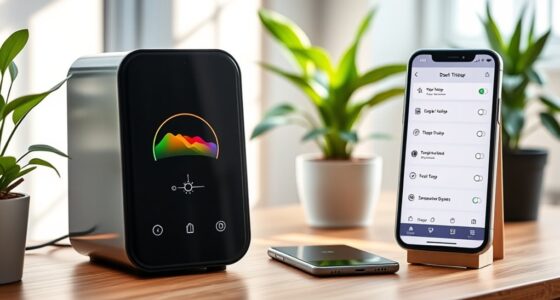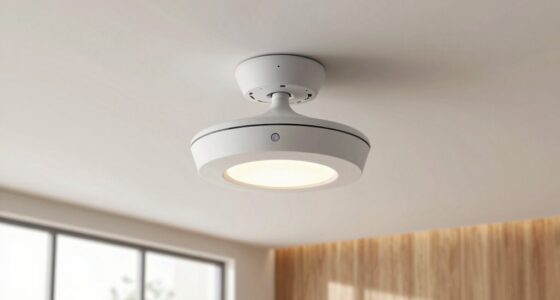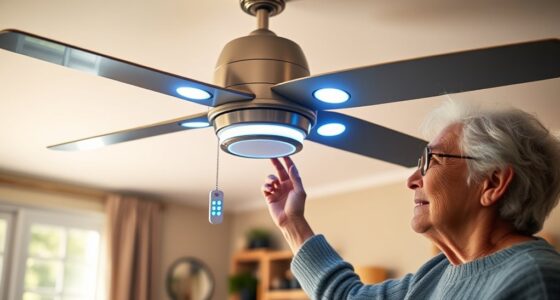
Family arguments over fan settings often happen because of different preferences for remote versus wall controls. Remote controls offer convenience and quick access, but they can be misplaced or forgotten, causing frustration. Wall controls stay fixed, making them durable and easy for everyone to use, but they lack flexibility. These differences in convenience and reliability often fuel disagreements. If you keep exploring, you’ll discover how these control options can influence household harmony and comfort.
Key Takeaways
- Disagreements often stem from different family members preferring to control fan settings via remote or wall switch.
- Conflicts arise when remote controls are misplaced or settings are changed without others’ knowledge.
- Fixed wall controls can cause disputes if users feel they lack flexibility or easy access.
- Variations in user habits, like forgetting to turn off the fan, lead to disagreements over energy use.
- Miscommunication about who last adjusted the fan or which control to use frequently causes family arguments.
Have you ever wondered which control method is better for managing your devices—remote control or wall control? When it comes to controlling fans or other appliances, this question often sparks debates among family members. Both options have their advantages, but understanding how they impact energy efficiency and user convenience can help you decide which is best for your household.
Choosing between remote and wall controls affects convenience and energy efficiency in your home.
A remote control offers the flexibility to operate your fan from anywhere in the room or even outside it, providing a level of user convenience that many find appealing. With a simple press of a button, you can adjust the speed, turn the device on or off, or set a timer without needing to get up. This is especially handy for those who want quick access, or for family members who may have mobility challenges. Remote controls also enable you to program settings or switch modes from a distance, reducing the need to constantly walk to the device.
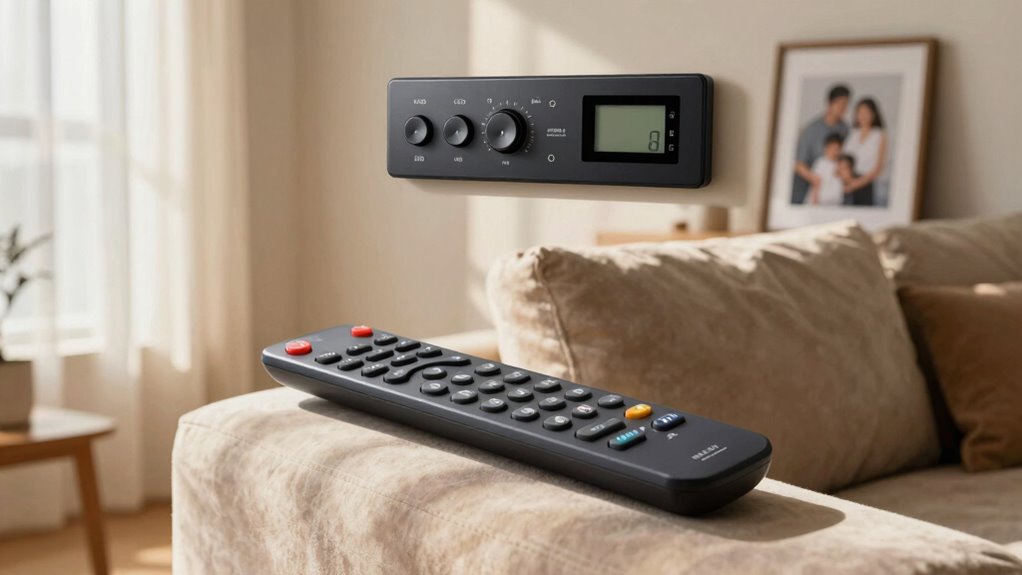
However, some households find that remote controls can lead to misplacement or forgetfulness—someone might leave it on the sofa, or accidentally drop it behind furniture. This can be frustrating when you’re trying to quickly adjust settings. Wall controls, on the other hand, are fixed in a convenient location, so they’re always accessible. They eliminate the risk of losing the remote, streamlining the process of managing your devices. Wall controls also tend to be more durable and less prone to damage, which can be a plus for busy households. Plus, having a dedicated control panel often simplifies the overall user experience, especially when multiple family members need to operate the same device.
From an energy efficiency standpoint, both control methods can be effective, but their impact depends on how often and how easily they’re used. Remote controls encourage turning devices off when not needed, since it’s so easy to do so from anywhere. This can help reduce unnecessary energy consumption. Wall controls, by providing a fixed and consistent point of access, also promote mindful use—if everyone knows exactly where the switch is, they’re more likely to turn off devices when not in use. Additionally, the technological advancements in projectors and home appliances have made remote controls even more intuitive and energy-efficient.
Ultimately, the choice between remote and wall control boils down to your household’s habits, needs, and preferences.

Ohniyou Ceiling Fans with Lights, 52'' Low Profile Ceiling Fan with Light and Remote/APP Control, Modern Flush Mount Ceiling Fan for Indoor Bedroom Living Room, Dimmable, Qiuet DC Motor, Black
Smart Ceiling Fans with APP & Remote Control: This modern ceiling fan with lights has all functions controllable…
As an affiliate, we earn on qualifying purchases.
As an affiliate, we earn on qualifying purchases.
Frequently Asked Questions
Can Remote Controls Be Hacked or Interfere With Other Devices?
Yes, remote controls can be hacked or interfere with other devices due to security concerns. Hackers might exploit weak signals or insecure connections, especially with smart remotes, risking unauthorized access. Additionally, device compatibility issues can cause interference, making controls unpredictable. To protect your devices, keep firmware updated, use strong passwords, and ensure your remote control systems have proper security features in place.
Are Wall Controls More Energy-Efficient Than Remote Controls?
Imagine reclaiming control over your energy bills—wall controls are often more energy-efficient than remote controls. Because they’re fixed and easy to access, you’re less likely to forget to turn off the fan, promoting better energy conservation. This simple switch can lead to significant cost savings over time, making your home more efficient. With wall controls, you stay in charge, helping you save money and reduce waste effortlessly.
How Do I Reset a Malfunctioning Fan Wall Control?
To reset a malfunctioning fan wall control, start by turning off the power at the circuit breaker to guarantee safety. Wait a few minutes, then turn the power back on. Use the troubleshooting fan guide to locate the reset button or switch on the wall control. Press and hold it for several seconds to perform a fan reset. If issues persist, consult the manufacturer’s instructions or contact an electrician for further assistance.
Do Remote Controls Have a Longer Range Than Wall Controls?
Remote controls typically have a longer range than wall controls because they rely on fan signal transmission through remote frequency, which can vary depending on the model. You can usually operate your fan from farther away with a remote, often reaching 30-50 feet, while wall controls are limited to the proximity of the switch. Keep in mind, interference or obstacles can affect the remote’s effective range.
Which Control Method Is Better for Children or Elderly Users?
For children or elderly users, wall controls often win because they’re safer and easier to access. Imagine a child accidentally changing fan speed or a senior struggling to reach a remote across the room. Wall controls provide clear visibility and child safety features, while accessibility options like large buttons or simplified interfaces help elderly users. You want a solution that’s both safe and simple—making your home more comfortable and secure.
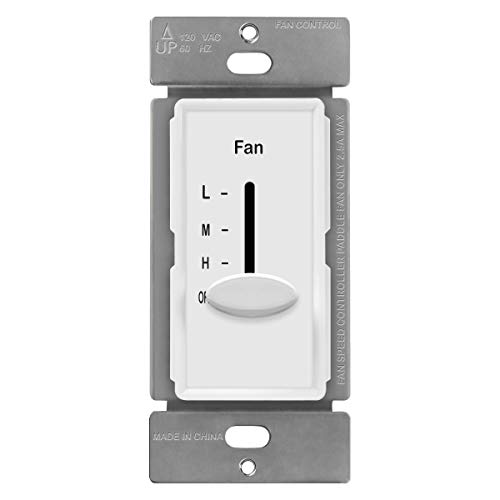
ENERLITES 3 Speed In Wall Ceiling Fan Control, Slide switch, 120VAC, 2.5A, Single-Pole, No Neutral Wire Required, 17000-F3-W-F, White
Modern decorator style fan switch allows for quiet 3 speed control. Compatible with 3 speed fans only
As an affiliate, we earn on qualifying purchases.
As an affiliate, we earn on qualifying purchases.
Conclusion
Ultimately, your remote and wall control are like two captains vying for command of the breeze. When you choose to listen to one, you steer your home’s comfort smoothly. But if you let their rivalry divide you, tempers flare and harmony fades. Remember, it’s not about who has the final say—it’s about working together. After all, harmony in your home depends on uniting these symbols of control, turning them from sources of conflict into tools of peace.

YYILIS Magnetic Remote Control Holder Wall Mount, 4 Pack TV Remote Control Holder for Fan/Air Conditioner, Self-Adhesive Bedside Caddy for TV Backside/Bedroom/Office/RV Home Organizer Storage(Black)
Organize Remote Controls: Tired of looking around for lost remotes and accidentally broken ones? Keep your remote control…
As an affiliate, we earn on qualifying purchases.
As an affiliate, we earn on qualifying purchases.

Kasa Smart Ceiling Fan Control & Dimmer Switch | Adjustable 4-Speed Fan & Brightness Control | Works w/Apple HomeKit, Alexa & Google Home | 2.4G Wi-Fi Only, Single Pole, Neutral Wire Required | KS240
【4 Fan Speeds】 Tailor your airflow to your exact preferences by choosing from four fan speeds for the…
As an affiliate, we earn on qualifying purchases.
As an affiliate, we earn on qualifying purchases.