
TL;DR

Get home appliances delivered free with Prime
- Fast, free delivery on millions of items
- Prime Video, Amazon Music and more included
- Member-only deals all year
Apple’s HomeView commercial shows a family navigating a hectic morning, prompting some viewers to call it stressful and confusing. Parents of teenagers, including CNET editor Bridget Carey, said the scene felt familiar; whether the device actually helps families put down personal phones remains unknown.
Apple’s commercial introducing its HomeView smart display has drawn sharply different reactions: some viewers describe its fast-paced family morning as confusing or stressful, while parents of teenagers say the chaos feels familiar. The debate highlights a question the ad leaves open: whether a shared household screen can help families stay connected without reaching for their own phones.
The commercial runs for just over three minutes and follows a family of five rushing through the morning. Its scenes include a father making French toast, a mother searching for keys, an argument about the thermostat, a teenage boy using whipped cream from a can and an unexpected video call. The story culminates in the family watching a security-camera feed as their daughter leaves with a boyfriend whose existence has apparently been a secret.
The Verge’s report describes the ad as an unusual fit for Apple’s generally orderly advertising style. Tech analyst Benedict Evans called it stressful and confusing, according to the report. In response, CNET editor Bridget Carey defended the portrayal, saying it resembled her own mornings. Other people responding on Threads also said the ad felt accurate or resonated with them.
Jen Tuohy, a Verge senior reviewer and parent of two teenagers, questioned one detail rather than the overall disorder. “The most unrealistic part of the video is that no one is holding an iPhone,” she said. The report also points to staged details that may strain credibility, including a charging cable apparently routed through a hole in the kitchen island and a teenager checking a private message on a shared screen while her brother is nearby.
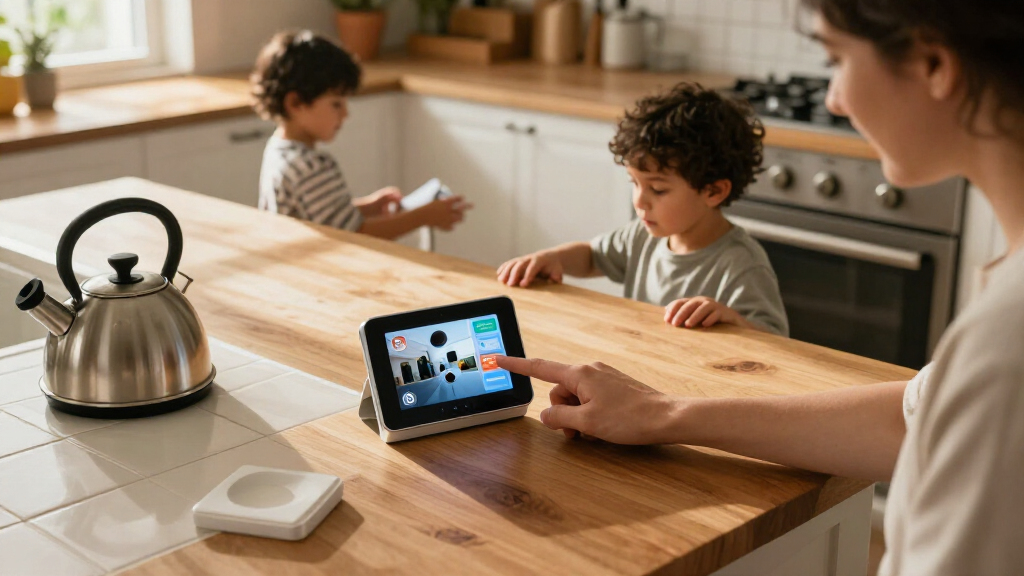
The contrast in reactions matters because the ad is selling more than a display: it presents HomeView as a possible focal point for family life. In the commercial, a single screen serves up household information and connects family members, offering a different image from several people absorbed in separate phones. That is the ad’s implied promise, not proof of how the product works in daily use.
The scenes also make the product’s role hard to judge. Evans’ concern, as described by The Verge, is that HomeView does not resolve the problems unfolding around it; the spontaneous call from the grandparents, for example, appears to add to the commotion. For parents, the familiar disorder may make the ad relatable. For other viewers, the same rapid sequence can make the product’s purpose less clear.
That distinction is relevant to potential buyers deciding whether a shared display belongs in a family kitchen. The ad offers a vision of people gathering around one device, but the report provides no evidence that households will put their phones aside or that the screen will make mornings easier.
smart home display for family kitchen
As an affiliate, we earn on qualifying purchases.
As an affiliate, we earn on qualifying purchases.
From Polished Ads to Family Disorder
The Verge contrasts this commercial with Apple’s more restrained presentation in its Vision Pro advertising, which the report characterizes as a quiet, polished lifestyle image. HomeView’s spot instead leans into noise, clutter and overlapping family demands. The shift in tone appears to be part of what has made the commercial stand out and prompted disagreement over whether it feels authentic.
The report’s examples of viewers’ reactions are anecdotal, drawn from comments on Threads and people quoted by the publication. They show differing responses, not a representative survey of public opinion. The ad’s family scenario is also a fictional portrayal; it cannot establish how useful HomeView would be in real households.
““It was exactly what my morning is like and it was the most real ad I’ve ever seen from Apple.””
— Bridget Carey, CNET editor at large
HomeView’s Real-World Role
The report does not establish how HomeView performs outside the commercial, whether families would use it instead of personal phones or whether it makes routines easier. It also does not provide product specifications, pricing, availability or details about the device’s privacy features. The ad’s depiction of a teenager checking a message on a communal screen raises a plausibility question, but the source does not verify how HomeView handles private messages or who can see them.
It is also unclear how widely the criticism or praise is shared. The reported responses are individual comments and reactions, not polling. The extent to which the commercial is intended to demonstrate practical functions, rather than create an impression of shared family life, is not specified in the source material.
The Test Is Household Use
The next meaningful test will come from use in real homes: whether family members turn to the shared display for useful information, ignore it, or continue using their own phones. The Verge report frames those as open questions rather than established outcomes. The source does not state a release schedule or identify a coming product milestone, so no further launch details can be confirmed here.
For now, the commercial has made one thing clear: Apple’s portrayal of a crowded, unruly morning resonates with some parents while leaving other viewers unsure what problem HomeView is meant to solve. Whether the device changes that morning routine remains to be seen.
Key Questions
What is Apple’s HomeView ad about?
The commercial introduces the HomeView smart display through a fast-paced morning in a family of five, with meals, missing keys, a thermostat dispute, a video call and a teenager leaving with a boyfriend.
Why do some parents say the ad feels realistic?
Some parents of teenagers told The Verge that the overlapping demands and family disorder resemble their own mornings. CNET editor Bridget Carey said the scene was like her morning, while other commenters described the ad as accurate or relatable.
Why have other viewers found the commercial confusing?
The ad moves quickly through several household problems, and some viewers have questioned whether HomeView solves any of them. The report cites a spontaneous video call as one moment that seems to add to the commotion.
Does the ad show that HomeView replaces personal phones?
No. The commercial presents a shared screen as an alternative way for family members to get information, but the report offers no evidence that people will put down their own phones in actual homes.
What is still unknown about HomeView?
The source material does not provide confirmed details about the device’s price, availability, specifications or privacy features. Its usefulness in everyday family life also remains untested in the report.
Source: rss
Halloween Picks
halloween
As an affiliate, we earn on qualifying purchases.