
TL;DR

Get home appliances delivered free with Prime
- Fast, free delivery on millions of items
- Prime Video, Amazon Music and more included
- Member-only deals all year
Matter Alpha’s report identifies seven types of smart-home devices that may benefit from Thread: bulbs, contact and occupancy sensors, locks, blinds, buttons and remotes, and home hubs or media devices. The report describes potential advantages such as lower power use and mesh connectivity, but benefits depend on device features and a compatible Thread border router.
Matter Alpha has published a guide to seven smart-home device categories that may benefit from Thread, a low-power wireless mesh standard. The report points to bulbs, sensors, locks, blinds, buttons and remotes, and devices such as media streamers that can act as Thread border routers, while noting that features vary by product.
The guide argues that many simple smart-home products do not need the bandwidth of Wi-Fi. Thread’s low-power, low-bandwidth connection can suit battery-powered devices and products placed around a home, while its mesh design allows compatible devices to relay data. A Thread network requires a border router to connect it with other networks and services; households should check what their existing equipment supports.
The seven categories in the report are smart bulbs, door and window sensors, motion and occupancy sensors, smart locks, blinds and shades, smart buttons and remotes, and home hubs or media devices. Examples named include IKEA’s KAJPLATS bulbs, which the report describes as supporting Matter over Thread alongside Zigbee, and the Aqara Smart Lock U400. It also identifies the Google TV Streamer, Apple TV 4K (third generation, 128 GB), and Echo Dot Max as examples of devices associated with smart-home connectivity or hub functions.
For bulbs, the report highlights a possible additional role: some Thread devices can relay data for other Thread products. It cautions that router functionality is not universal, so buyers should verify the feature on the manufacturer’s product information. For sensors and locks, it emphasizes their battery-powered operation and potential placement away from a Wi-Fi router. For blinds and buttons, the appeal is sending basic commands without requiring a high-bandwidth connection.
Where Thread Can Help at Home
The practical case for Thread is strongest when a device is battery-powered, spread across multiple rooms, or asked to send small, frequent commands. A mesh network can give compatible products another way to communicate, which may be useful for sensors that trigger lights, heating, or alerts, and for locks at exterior doors. These are potential benefits, not a guarantee that every Thread device will respond faster or reach farther than a comparable Wi-Fi product.
Thread also matters to shoppers building a Matter-based system because it can connect supported products across brands. But compatibility depends on the exact device, software, and presence of a suitable border router. Buyers should compare those requirements with the existing smart-home setup rather than choosing a product on its Thread label alone.
Products Worth Considering

Philips Hue Bridge Pro Smart Lighting Hub

Blueair Blue Pure 511i Max Air Purifier for Home and Bedroom
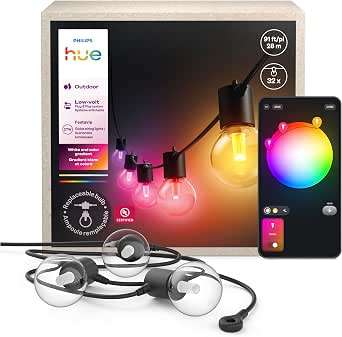
Philips Hue Festavia Globe Outdoor String Lights, 32 Bulbs, 91 ft
As an affiliate, we earn on qualifying purchases.
Thread’s Role in Matter Setups
The report places Thread alongside Matter, the smart-home interoperability standard used by compatible products. Thread is the wireless networking layer; Matter provides a common way for supported devices and platforms to work together. The two are related but not interchangeable, and a product’s support for one does not by itself establish support for the other.
Matter Alpha’s page also notes that some products support more than one connection method. Its KAJPLATS bulb example combines Matter over Thread with a Zigbee mode for older setups. The report’s device list is presented as a guide to categories, not a complete compatibility database, and it includes an affiliate-links disclosure.
Compatibility Depends on Each Device
The report does not provide comparative test results for power use, connection range, reliability, or response times, so its claims about devices being “better” with Thread should be read as an assessment of potential fit rather than measured performance. It also does not provide a complete list of models, prices, or regional availability across all seven categories.
Some product capabilities need particular care: not every Thread bulb acts as a router, and a home needs compatible equipment to form and connect a Thread network. The supplied source text ends during its smart-button section, so its discussion of that category is incomplete. It is also unclear from the report whether every named media device supports all the same Thread and Matter functions in every configuration.
Check Support Before Buying
Consumers considering a Thread product should check the manufacturer’s current specifications for Thread, Matter, border-router requirements, and any router or repeater role. They should also confirm that the product works with the smart-home platform they use and whether a hub or other compatible device is required.
Further product details, hands-on testing, and updated compatibility information would help establish how much Thread improves performance for each category. Until then, the report is best treated as a shortlist of use cases to investigate, rather than proof that Thread is always preferable to Wi-Fi or another connection method.
Key Questions
What is Thread in a smart home?
Thread is a low-power wireless mesh networking standard used by compatible smart-home devices. It is designed for products that generally send small amounts of data, such as sensors and controls.
Does a Thread device need a border router?
A Thread network typically needs a Thread border router to connect with other networks and services. Check the device and platform requirements, since some home hubs and media devices may provide this function.
Which smart-home devices may benefit most from Thread?
Matter Alpha highlights battery-powered sensors and locks, along with bulbs, blinds, buttons, and remotes. The likely benefit depends on placement, the device’s features, and the rest of the home network.
Does Matter support mean a device uses Thread?
No. Matter and Thread serve different roles: Matter is an interoperability standard, while Thread is a networking option. Check the product’s specifications for both separately.
Source: matteralpha.com