TL;DR

Get home appliances delivered free with Prime
- Fast, free delivery on millions of items
- Prime Video, Amazon Music and more included
- Member-only deals all year
Ideal Home’s renovation editor tested the VonHaus 2,500W 11-fin oil-filled radiator in a living room and open-plan kitchen diner for two weeks. In the kitchen diner, the reviewer recorded a 2.5°C temperature rise after an hour; the test is a single-home review, not a guarantee of performance in every space.
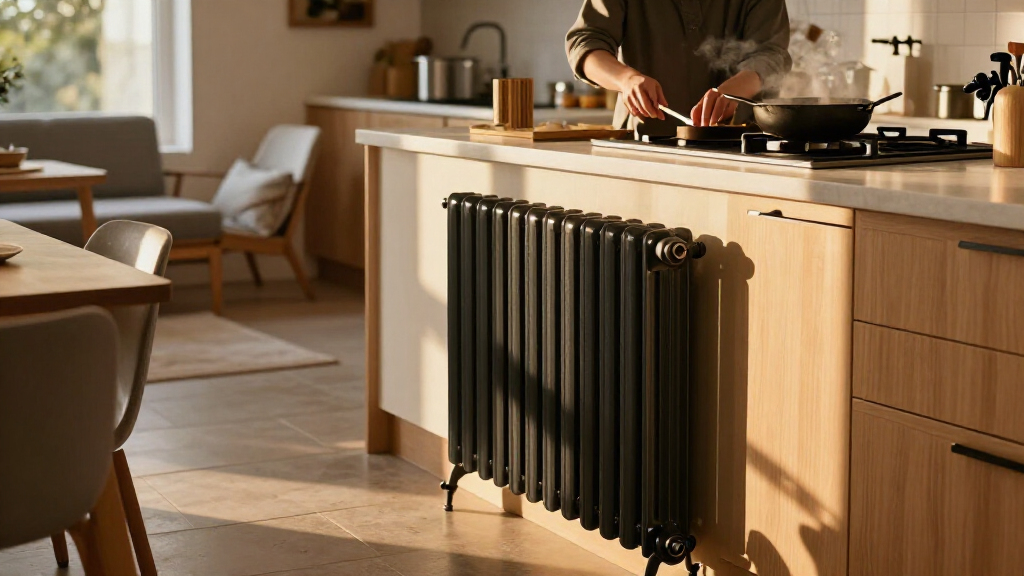
Ideal Home has reported results from a two-week test of the VonHaus 2,500W 11-fin oil-filled radiator, with its reviewer recording a 2.5°C rise over one hour in an approximately 22-square-metre open-plan kitchen diner. The test offers a practical example of how a portable heater performed in one home, but it does not establish how the model will heat other rooms or what it will cost each household to run.
The reviewer tested the radiator in the kitchen diner and living room of a 1970s, three-bedroom home. In the kitchen diner, the room temperature rose by about 1°C after 20 minutes and by 2.5°C after an hour. The reviewer also reported feeling warmth from around five metres away. The review did not give a starting or ending temperature for the kitchen-diner test.
In the approximately 18-square-metre living room, the reviewer measured a temperature increase from 16.8°C to 17.8°C in the first 10 minutes using the highest setting. The temperature reached 20.2°C after 30 minutes and 22.2°C after an hour. The reviewer said warmth appeared evenly distributed and that the radiator continued giving off heat for nearly an hour after being switched off.
The unit has three power settings — 1,000W, 1,500W and 2,500W — along with a thermostat dial and timer. It weighs 10kg and has wheels, which the reviewer found useful for moving it between rooms. The model has no remote control or smart features. Ideal Home listed a recommended retail price of £79.99; current prices and availability may differ.
What the Kitchen Test Shows
The results give readers a measured example of what a portable oil-filled radiator did in a larger shared living space, rather than relying only on a manufacturer’s room-size estimate. A recorded rise of 2.5°C over an hour may help someone considering occasional, room-by-room heating decide whether this type of appliance is worth investigating.
However, the reading reflects one home and one test. The article does not report the outdoor temperature, heat loss, thermostat setting details beyond the highest living-room mode, or a controlled comparison with the home’s central heating. The result should not be treated as a promised temperature increase for a similar-sized kitchen diner.
Running cost also depends on the selected power level and the price paid per unit of electricity. Ideal Home’s listed estimate was 26–66 pence per hour, but that range is tied to its stated assumptions and energy tariff context. Readers should check their own electricity rate and the appliance’s actual power use before estimating household costs.
As an affiliate, we earn on qualifying purchases.
How the Two-Week Trial Worked
Ideal Home’s reviewer said she tested the radiator over two weeks, using it in both the living room and kitchen diner of her home. She described herself as the publication’s renovation editor and said her work also covers home-energy content. These details explain the setting and the reviewer’s stated experience; they do not make the test a laboratory assessment.
The product is an oil-filled electric radiator, with an 11-fin design and a timer. The reviewer said assembly involved attaching the wheel bases with U-shaped bolts. She found the process fiddlier than expected because the radiator needed to be turned over and was difficult to stabilise before the wheels were fitted; she suggested having another person help. Once assembled, she found it straightforward to plug in and use.
The review describes the model as suitable for rooms up to 30 square metres, while its own open-plan test was in a space of about 22 square metres. That suitability figure is product information reported by Ideal Home, not an independently established limit for all homes. The publication also noted the unit’s plain appearance and its lack of connected controls.
“I was pleased to notice that I could feel the room warming up after just 10 minutes.”
— Ideal Home reviewer
Limits of the Room Readings
The review does not provide the kitchen diner’s starting or ending temperature, the outdoor conditions, or details about whether doors and windows were open during the test. It also does not report a side-by-side comparison with another heater or the home’s central heating. Those gaps make it difficult to predict how quickly the unit would warm a different open-plan room.
The article’s stated running-cost range depends on electricity prices and operating conditions that may change. It does not set out a measured bill for the two-week trial. The review also does not establish whether the radiator will maintain a target temperature in colder weather, or how its performance changes with different insulation, ceiling height or layout.
Check Price and Power Needs
Readers considering the radiator can check the current price, product instructions and warranty information with the retailer or manufacturer, as the £79.99 recommended price in the review may not reflect today’s offers. Comparing the heater’s 1,000W, 1,500W and 2,500W settings with a household’s electricity tariff can give a more useful running-cost estimate than relying on a general hourly range.
Anyone using a portable electric heater should follow the manufacturer’s safety instructions, keep it clear of curtains and other materials, and avoid covering it. The review reports a test in one home; more independent measurements across different room types would be needed to assess how consistently this model performs in open-plan spaces.
Key Questions
How much did the temperature rise in the kitchen diner?
In the reviewer’s approximately 22-square-metre kitchen diner, the temperature rose by about 1°C after 20 minutes and 2.5°C after an hour. The review did not state the room’s starting temperature.
What power settings does the VonHaus radiator have?
The radiator has three settings: 1,000W, 1,500W and 2,500W. It also has a thermostat dial and timer, but no remote control or smart features, according to the review.
How much does the radiator cost to run?
Ideal Home listed an estimated running-cost range of 26–66 pence per hour. Actual costs depend on the power setting, how long the heater runs and the household’s electricity rate.
Is the radiator easy to move?
The 10kg unit has wheels. The reviewer said it moved across hard floors and carpet, although she found it easier to pull it over a rug. Attaching the wheels was the more awkward part of setup.
Will it heat every open-plan kitchen effectively?
The review cannot establish that. Its result came from one home and one kitchen-diner test; insulation, room layout, ceiling height and outside conditions may affect performance elsewhere.
Source: rss
Halloween Picks
halloween
As an affiliate, we earn on qualifying purchases.