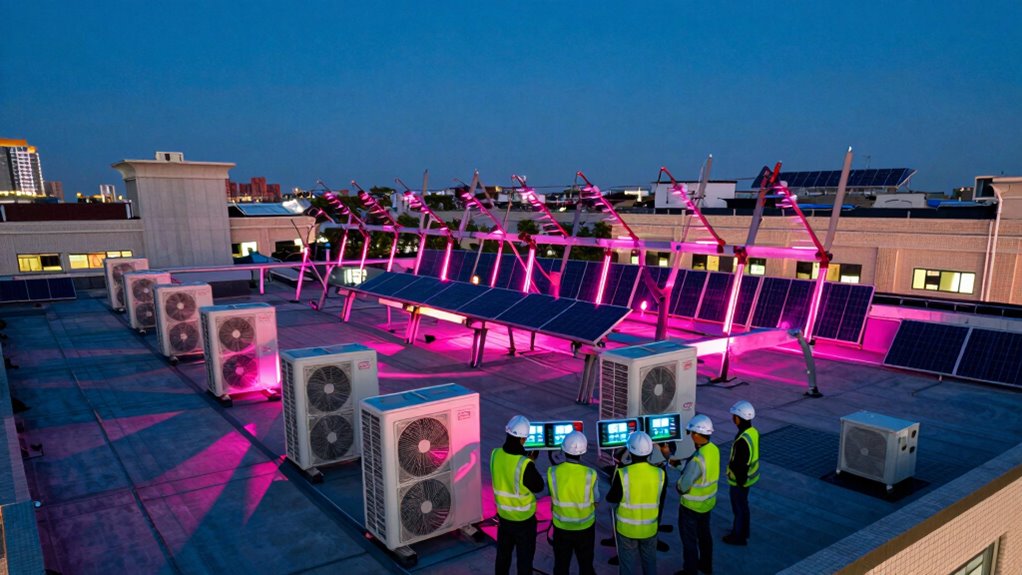

Demand charges teach you that your peak power use directly impacts your energy bills, especially during high-demand times. When you run multiple appliances or heavy equipment simultaneously, your demand spikes, leading to higher costs. Managing your consumption—like staggering appliance use or shifting tasks to off-peak hours—can cut these charges. Being aware of how your habits affect peak demand helps save money and supports grid stability; there’s more to discover that can help you optimize your energy use.
Key Takeaways
- Demand charges reveal how peak power use significantly impacts energy costs.
- Managing demand through behavioral and equipment adjustments can reduce peak load.
- Awareness of demand charges encourages smarter energy consumption during high-demand periods.
- Load management strategies help prevent costly spikes and promote grid stability.
- Responsible peak demand management supports environmental sustainability and energy efficiency.
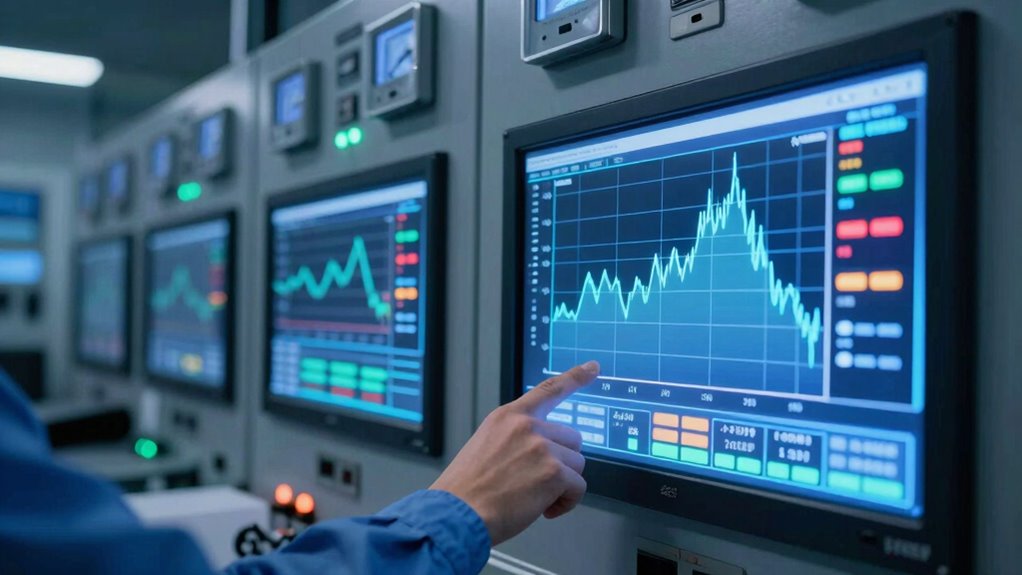
Understanding demand charges is essential because they directly impact your energy costs, especially during peak power use periods. These charges are a key part of energy pricing, designed to reflect how much power you consume during the highest demand times. When your energy usage spikes, your utility company doesn’t just bill you for the total energy you use; it also charges for the peak demand, which can considerably increase your overall bill. Recognizing this helps you better understand how your consumption patterns influence costs and encourages smarter energy habits.
Understanding demand charges helps you control peak energy costs and encourages smarter consumption habits.
Demand charges reveal a lot about consumer behavior. They show that your actions—such as turning on multiple appliances at once or running high-power equipment during certain hours—can have a tangible financial impact. Instead of being a fixed fee, demand charges fluctuate based on your peak usage, meaning your choices directly affect how much you pay. This insight motivates you to manage your energy use more intentionally, perhaps by staggering appliance operation or shifting certain tasks to off-peak hours. Over time, you become more aware of how your habits contribute to demand spikes and learn to adjust accordingly. Load management is a crucial strategy to help control these fluctuations and reduce costs.
By understanding demand charges, you’re better equipped to make informed decisions about energy consumption. For example, if you notice your bill increases during hot summer days, it might be due to the extra air conditioning load during peak hours. Recognizing the link between energy pricing and your behavior allows you to optimize your usage—like setting your AC to a slightly higher temperature or using fans instead during peak periods. These small adjustments can lead to notable savings and reduce the strain on the grid during critical times. Additionally, adopting energy-efficient appliances can significantly reduce your overall demand and help manage costs.
Demand charges also serve as an educational tool, showing you the importance of efficiency and load management. They underline the fact that peak power use isn’t just a technical issue but a personal one, tied directly to how you operate your home or business. Managing your consumption during peak times not only helps lower your costs but also contributes to a more stable and sustainable energy system. Essentially, demand charges teach you that your choices matter and that responsible energy use benefits everyone. Additionally, understanding peak demand can help you identify opportunities to improve your overall energy efficiency. As you become more mindful of your energy consumption, you can implement smarter strategies that benefit both your wallet and the environment.
As an affiliate, we earn on qualifying purchases.
Frequently Asked Questions
How Do Demand Charges Impact Overall Electricity Billing Costs?
Demand charges increase your overall electricity billing costs based on your peak power use, often during high-demand periods. By understanding time of use rates, you can schedule energy-intensive tasks during off-peak hours. Peak shaving strategies help you reduce your peak demand, lowering demand charges and overall costs. This approach encourages efficient energy use, saving you money and easing the strain on the grid during busy times.
What Are the Best Strategies to Reduce Peak Power Consumption?
To reduce peak power consumption, you should prioritize demand reduction during high-usage periods while practicing peak management. Shift energy-intensive tasks to off-peak hours, use smart scheduling, and invest in demand response programs. These strategies work together to flatten demand peaks, lowering demand charges and overall costs. Effective peak management not only saves money but also helps balance grid stability, making your energy use more efficient and sustainable.
How Do Demand Charges Vary Between Different Industries?
Demand charges vary between industries because of industry-specific tariffs and seasonal demand patterns. For example, manufacturing plants face high demand charges during peak production times, while retail stores might see spikes during holiday seasons. You need to understand these industry-specific tariffs and seasonal fluctuations to optimize energy use, reduce costs, and avoid high demand charges. Tailoring your energy strategies to these factors can lead to significant savings and better grid management.
Can Demand Charges Incentivize More Energy-Efficient Practices?
Demand charges can be a game-changer, making you feel like a superhero fighting high energy costs. They definitely incentivize you to adopt energy-efficient practices through demand reduction, which lowers your peak power use. By managing your demand wisely, you not only cut costs but also contribute to a more sustainable environment. This dual benefit encourages smarter energy consumption, helping you stay ahead in cost management while supporting global efforts for cleaner energy.
What Technological Tools Help Monitor Peak Power Usage?
You can monitor peak power usage effectively with smart meters and energy analytics tools. Smart meters provide real-time data on your energy consumption, helping you identify when your usage spikes. Energy analytics platforms analyze this data, offering insights and suggestions to optimize your energy use, reduce peaks, and lower costs. Together, these tools empower you to make smarter decisions about managing your energy, ultimately improving efficiency and saving money.
Conclusion
Understanding demand charges is like reading the pulse of your energy habits—they reveal when you’re hitting your peak and help you manage your power use better. By trimming those high-demand moments, you can save money and reduce strain on the grid. Think of demand charges as a lighthouse guiding you away from energy waste. With smarter choices, you’ll keep your power bills low and your energy footprint lighter—illuminating the path toward a more efficient future.