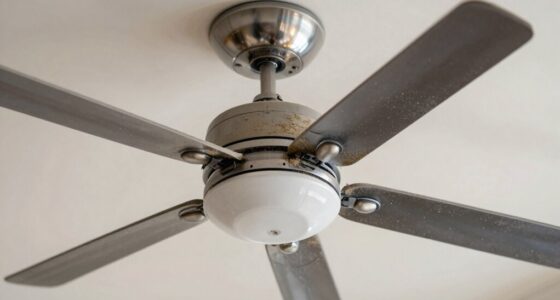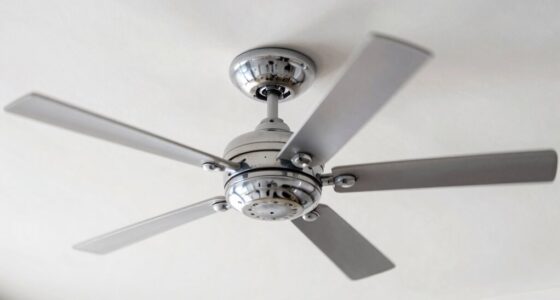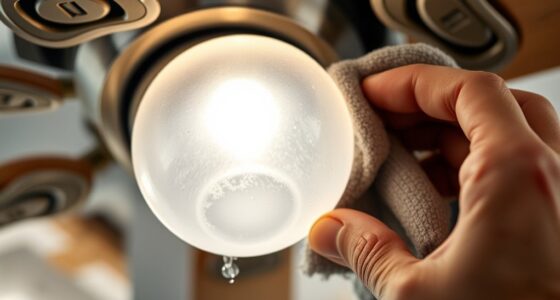
Don’t forget to include your appliance’s motor housing in your monthly deep clean. Unplug the device before starting, then use a soft cloth or microfiber to wipe away dust on accessible surfaces. For vents and crevices, compressed air works best to blow out stubborn debris. Regular cleaning helps prevent overheating, maintain airflow, and extend your appliance’s life. Keep your equipment in top shape—more tips to guarantee thorough maintenance await if you continue exploring.
Key Takeaways
- Regularly clean motor housing to prevent dust buildup that can impair appliance performance and longevity.
- Always unplug devices before cleaning and use soft brushes or microfiber cloths for exterior dust removal.
- Use compressed air to blow out dust from vents and crevices, ensuring proper airflow and cooling.
- Neglecting motor housing cleaning can cause overheating, reduced efficiency, and potential motor failure over time.
- Incorporate motor housing cleaning into your monthly routine to maintain appliance health and extend lifespan.

Ever wonder how to keep your home consistently spotless without feeling overwhelmed? One effective way is to incorporate a monthly deep clean into your routine. While it’s easy to focus on visible surfaces like floors and countertops, don’t forget the motor housing of your vacuum or appliances. Dust buildup in these areas can seem insignificant at first, but over time, it can affect performance and even cause damage. Regularly cleaning the motor housing helps maintain ideal function and extends the lifespan of your equipment. Incorporating simple routine maintenance like this can make a big difference in keeping your home organized and running smoothly.
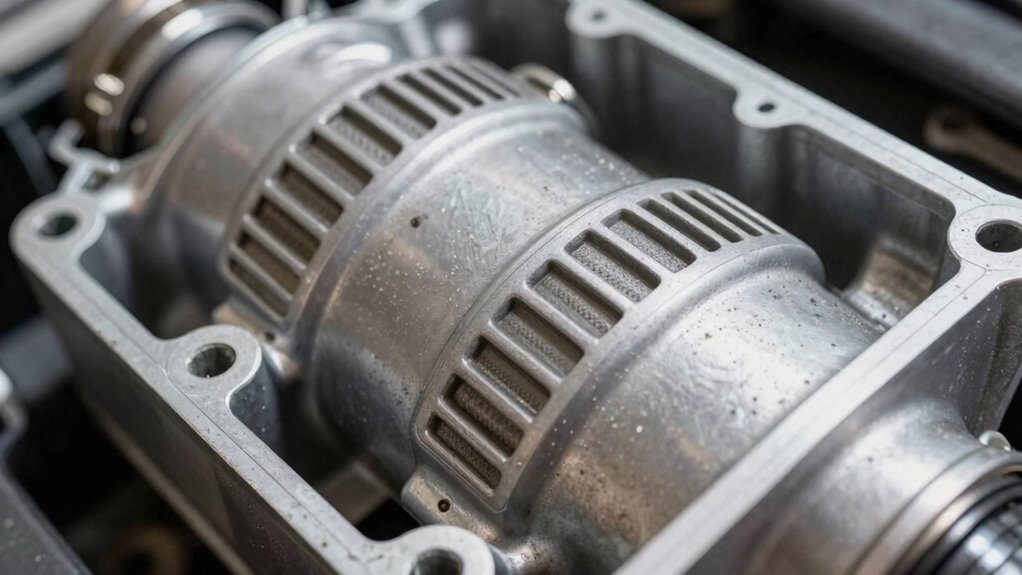
Start by unplugging your vacuum or appliance before you begin any cleaning. Use a soft brush or a microfiber cloth to gently remove dust from the exterior of the motor housing. Pay close attention to vents and air intake areas, as dust tends to accumulate there and can hinder airflow. Reducing dust buildup isn’t just about keeping things tidy; it’s about ensuring your appliance runs smoothly and efficiently. Neglecting this step can lead to overheating or motor failure, which means costly repairs or replacements down the line.
In addition to wiping down the exterior, consider using compressed air to blow out dust from vents and crevices. This method helps remove stubborn particles that are difficult to reach with a cloth. Be cautious when using compressed air—hold the can upright and use short bursts to avoid moisture getting into the motor. Regular maintenance of this sort prevents dust from settling deep inside the motor housing, which can cause overheating or reduced suction power if you’re dealing with a vacuum.

ZMISHIBO 52 Inch Ceiling Fan with Light, App&Remote Control, Flush Mount Low Profile, Dimmable 20W LED Light, Quiet Reversible Motor for Bedroom, Living Room, Apartment, Black
Perfect Size for Rooms: This 52-inch ceiling fan is ideal for cooling and illuminating spacious areas like living...
As an affiliate, we earn on qualifying purchases.
Frequently Asked Questions
How Often Should I Deep Clean the Motor Housing?
You should deep clean your motor housing every three to six months to prevent dust buildup and guarantee peak performance. During this maintenance, carefully remove dust and debris, and check the lubricant levels if applicable. Regular cleaning keeps dust from accumulating, which can cause overheating or damage. By staying consistent with this schedule, you’ll maintain efficient operation and extend your equipment’s lifespan.
Can I Use Water to Clean the Motor Housing?
You should avoid using water to clean the motor housing because water damage and electrical risks can occur. Even if it seems safe, water can seep into sensitive components, causing malfunctions or short circuits. Instead, use a dry cloth or compressed air to remove dust and debris. This method keeps your motor housing clean without risking electrical hazards or damage, ensuring your device stays in top condition.
What Tools Are Best for Cleaning the Motor Housing?
You should use brush tools and compressed air to clean the motor housing effectively. A soft-bristled brush helps loosen dust and debris without damaging components, while compressed air blasts away dirt from hard-to-reach places. Avoid using water or liquid cleaners, as they can harm the motor. Combining these tools guarantees a thorough clean, keeping your motor housing in good condition and preventing potential issues down the line.
Are There Signs Indicating the Motor Housing Needs Cleaning?
Did you know that 60% of motor failures are linked to dust buildup? If you notice your device overheating, strange noises, or reduced performance, it’s a clear sign the motor housing needs cleaning. Dust accumulation can cause overheating risks, so regularly inspecting for visible dust or debris helps prevent damage. Keeping the motor housing clean guarantees ideal operation and prolongs your device’s lifespan.
Will Cleaning the Motor Housing Improve Device Performance?
Cleaning the motor housing will definitely improve your device’s performance. Dust buildup can cause overheating, leading to reduced efficiency or damage. By regularly removing dust and debris, you prevent overheating and ensure smooth operation. A clean motor housing allows better airflow, cooling the motor effectively. So, don’t skip this step; it helps maintain your device’s longevity and keeps it running at peak performance.

52in Smart Low Profile Ceiling Fans with Lights Remote,Quiet DC Motor,Outdoor Indoor Flush Mount Ceiling Fan,Control with WIFI Alexa App,Dimmable,6-speed,3 White Wood blades,for Modern Bedroom Patio
【Voice &APP &Remote Control】52 inch Ceiling fan with lights and remote (handheld and wall mounted), still in control...
As an affiliate, we earn on qualifying purchases.
Conclusion
Don’t overlook the motor housing during your monthly deep clean. While it might seem like a tedious task, neglecting it can lead to reduced performance and even damage. You might think it’s unnecessary if your device runs fine, but regular maintenance prevents costly repairs down the line. Taking a few extra minutes now guarantees your equipment stays in top shape, saving you time and money in the long run. Keep your gear clean, and it’ll serve you better for longer.

Ceiling Fans with Lights and Remote, 52 Inch Outdoor Fans for Patios, USA Original Patent, ETL Listed, 3 Downrods, 5 Blades, 6 Speeds Reversible Noiseless DC Motor Wood Fans for Farmhouse, 52", Walnut
52" Ceiling Fans With Lights: Our 52 inch ceiling fan light features unique, sustainable, and renewable high-quality natural...
As an affiliate, we earn on qualifying purchases.
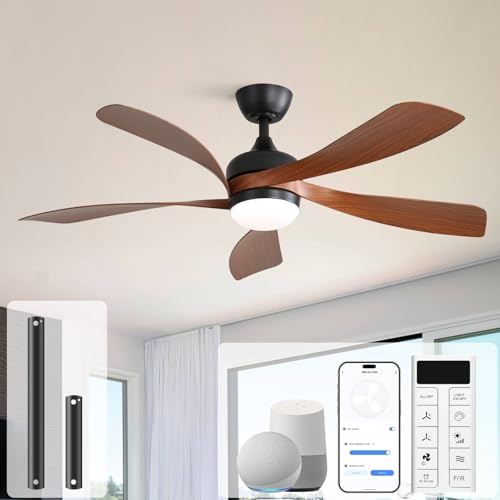
Sofucor 52" Smart Ceiling Fan, Indoor/Outdoor Ceiling Fans with Lights and Remote, Compatible with Alexa/Google/App, 3-Color Light 6-Speed Timing Reversible DC Motor for Bedroom Living Room Patio
Voice & App & Remote Control: Sofucor alexa ceiling fan with light can be controlled in 3 ways....
As an affiliate, we earn on qualifying purchases.