To maintain your ceiling fan monthly, power it off and safely remove the blades for deep cleaning. Wipe each blade with a microfiber cloth or soft brush, using mild solutions for stubborn dirt, and dry thoroughly. Inspect motor vents and connections, tightening loose parts and removing dust with compressed air. Apply manufacturer-approved lubricant to bearings or bushings, rotating blades to distribute it evenly. Proper reassembly and testing ensure quiet, efficient operation; more detailed steps highlight how to optimize performance and longevity.

Get home appliances delivered free — and shop member deals
- Fast, free delivery on millions of items
- Access to Prime Big Deal Days deals on October 6–7
- Prime Video, Amazon Music and more included
Key Takeaways
- Turn off the fan, disconnect power, and safely remove blades for thorough cleaning with microfiber cloths and mild solutions.
- Inspect motor housing, vents, wiring, and mounting hardware for damage or dust buildup; clean and tighten as needed.
- Use compressed air or a soft brush to clear dust from motor vents and surrounding components to maintain proper airflow.
- Lubricate bearings or bushings with manufacturer-approved lubricant, rotating blades to distribute evenly.
- Reassemble, secure all parts, restore power, and test for smooth, quiet operation to ensure optimal performance.
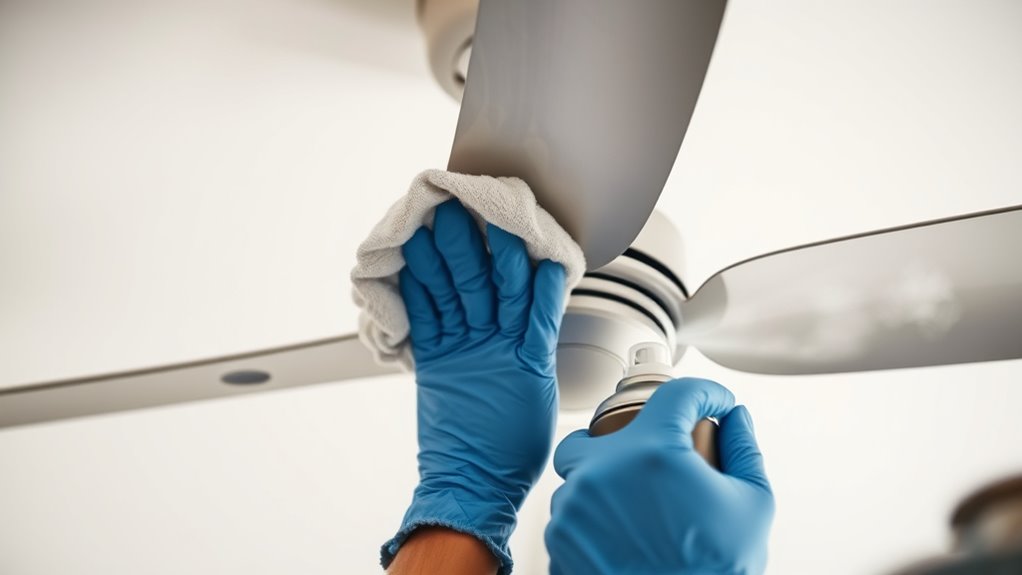
Regular monthly maintenance of your ceiling fan is essential to guarantee peak performance and longevity. Proper cleaning and lubrication ensure that the motor operates efficiently, reduce unnecessary wear on components, and minimize noise levels. To achieve this, start by turning off the fan and disconnecting it from power to prevent accidental activation during service. Use a stable ladder or step stool to access the fan blades safely, and wear gloves to protect your hands from dust and debris.
Regular monthly ceiling fan maintenance ensures optimal performance and longevity.
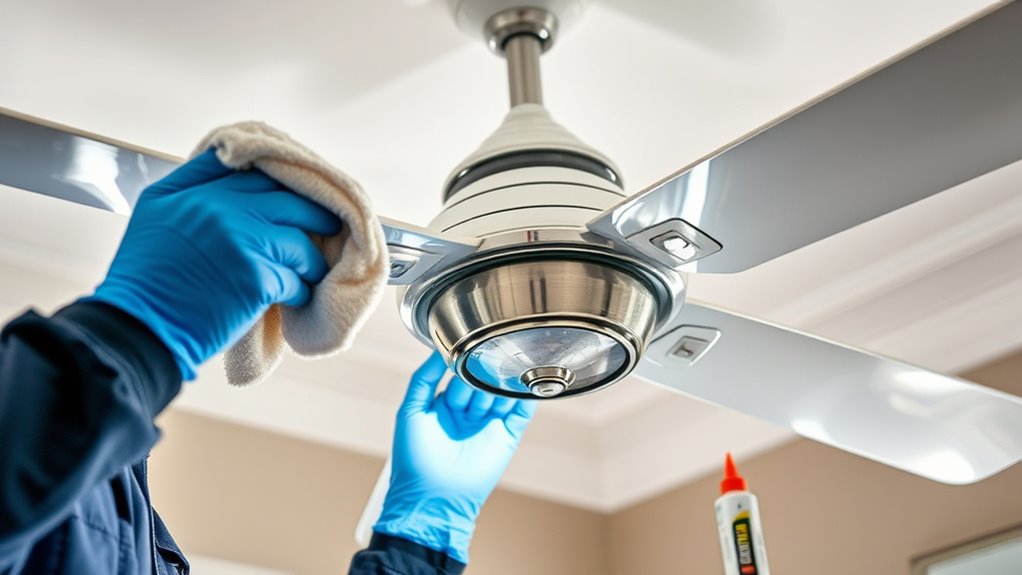
Begin by removing the fan blades carefully, noting their orientation and mounting hardware. Use a microfiber cloth or soft brush to wipe each blade thoroughly, removing dust, dirt, and any accumulated grime. For stubborn spots or sticky residues, dampen the cloth slightly with a mild cleaning solution—avoid harsh chemicals that could damage the finish or the blade material. Pay particular attention to the edges and the areas near the mounting points, as these tend to gather the most debris. Once cleaned, dry the blades completely to prevent moisture from causing corrosion or imbalance issues.
Next, inspect the fan’s motor housing and the surrounding components. Over time, dust and dirt infiltrate the motor vents, which can lead to overheating and reduced efficiency. Use compressed air or a soft brush to clear debris from the vents, ensuring unobstructed airflow. While cleaning, check for signs of wear or damage, such as frayed wiring, loose mounting brackets, or corrosion. Tighten any loose screws or bolts using the appropriate tools, ensuring that the fan is securely fastened to the ceiling to prevent wobbling or vibrations during operation. Proper airflow and ventilation are critical for maintaining optimal motor temperature and performance.
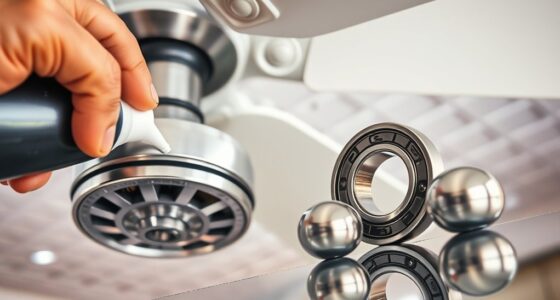
Lubrication is a critical step in maintaining excellent fan performance. Locate the motor’s lubrication points, typically accessible through small service ports or openings in the motor housing. Apply the manufacturer-recommended lubricant, usually light machine oil or a specialized fan oil, directly into the bearings or bushings. Avoid over-lubricating, as excess oil can attract dust and create build-up, impeding the fan’s smooth rotation. Rotate the fan blades manually to distribute the lubricant evenly across moving parts. If your fan lacks lubrication points, consult the manufacturer’s instructions before attempting any lubrication, as some modern models are maintenance-free.
Finally, reassemble the fan components carefully, ensuring all screws and mounting hardware are tightened to manufacturer specifications. Restore power and test the fan at various speeds, listening for unusual noises or vibrations that may indicate imbalance or improper installation. Performing these steps monthly keeps your ceiling fan operating at peak efficiency, reduces the risk of mechanical failure, and extends the lifespan of the unit. This systematic approach to cleaning and lubrication delivers consistent performance, energy efficiency, and quiet operation.
As an affiliate, we earn on qualifying purchases.
Frequently Asked Questions
How Often Should I Replace Ceiling Fan Blades?
You should replace ceiling fan blades if they are warped, cracked, or greatly damaged, typically every 10 to 15 years. Regular inspection is essential; look for signs of wear or imbalance. If cleaning and minor repairs don’t restore proper function or balance, replacing the blades guarantees ideal airflow and safety. Always choose compatible blades and properly install them to prevent wobbling or noise issues.
Can I Upgrade Fan Controls for Better Efficiency?
Yes, upgrading your fan controls can improve efficiency. You can install a dimmer switch, a remote control system, or a smart controller that adjusts speed and airflow based on room occupancy and temperature. These options allow precise regulation of fan operation, reducing energy consumption. Make sure compatibility with your fan model and follow manufacturer instructions for safe installation. Upgraded controls optimize airflow and minimize power use, enhancing overall performance.
What Safety Precautions Are Necessary During Maintenance?
You should always turn off the ceiling fan and disconnect it from power before starting maintenance. Use insulated tools to prevent electrical shocks and wear safety gloves and goggles to protect against debris. Make certain the fan blades are stationary before cleaning or lubricating. Verify power is off with a voltage tester. These precautions minimize risks, ensuring safe, effective maintenance without injury or electrical hazards.
Are There Eco-Friendly Lubricants for Ceiling Fans?
Yes, eco-friendly lubricants for ceiling fans include plant-based oils like jojoba or coconut oil, and synthetic lubricants labeled biodegradable. You should select lubricants free from petroleum derivatives, which can harm the environment. Always verify the product’s biodegradability and non-toxicity before application. Applying eco-friendly lubricants helps reduce environmental impact, promotes sustainability, and ensures your ceiling fan operates smoothly without releasing harmful chemicals into the ecosystem.
How Do I Troubleshoot Wobbling Fans After Cleaning?
If your ceiling fan wobbles after cleaning, first check for uneven blade angles; studies show imbalance causes 80% of wobbling issues. Use a level to verify blade pitch, and tighten any loose screws or brackets. Balance the blades with a fan balancing kit, starting from the heaviest blade. Regularly inspecting and adjusting blade alignment guarantees smooth operation and minimizes wobbling, extending your fan’s lifespan.
Conclusion
Just like a finely tuned engine, your ceiling fan relies on regular maintenance to perform effectively. By deep cleaning and lubricating each month, you prevent dust buildup and mechanical wear, ensuring smooth operation and longevity. Neglecting these steps is akin to allowing rust and debris to corrode essential machinery. Stay proactive, and your fan will continue to circulate air efficiently, much like a well-oiled, resilient machine working seamlessly beneath the surface.
Halloween Picks
halloween
As an affiliate, we earn on qualifying purchases.