
TL;DR

Get home appliances delivered free — and shop member deals
- Fast, free delivery on millions of items
- Access to Prime Big Deal Days deals on October 6–7
- Prime Video, Amazon Music and more included
A Hunker report highlights the sharpening puck, a palm-sized silicon carbide whetstone, as a portable alternative to bench grinders for sharpening lawn mower blades. The dual-grit tool works with the blade removed and clamped, using honing oil and a circular motion. The report also emphasizes that sharp blades cut cleanly, helping grass heal faster and resist disease.
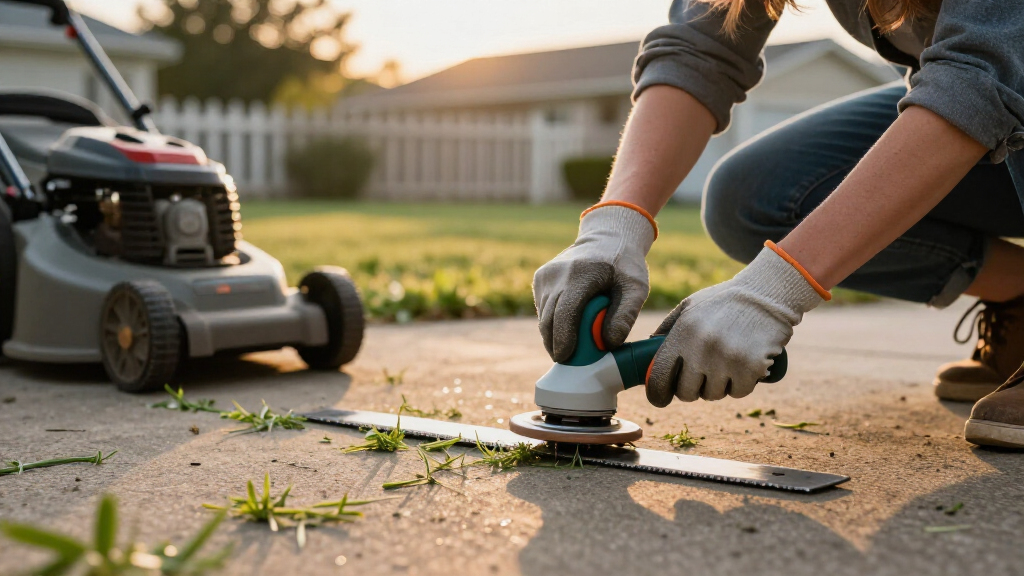
A pocket-sized sharpening puck can sharpen lawn mower blades without a bench grinder, according to a recently published report from home improvement site Hunker. The palm-shaped whetstone, typically 3 inches wide and 1 inch thick, removes the need for bulky powered equipment while delivering what the report describes as a clean, sharp edge with minimal effort.
According to Hunker, a sharpening puck is a whetstone made of silicon carbide, usually 3 inches wide and 1 inch thick. Many models, including the Lansky Puck, are dual grit: one side is coarse for removing material quickly and shaping the blade, while the other side has a medium grit for putting on the final sharp edge. Beyond mower blades, the report notes the tool can sharpen other edges such as axes and shovels.
The recommended process, per the report: remove the mower blade from the deck and clamp it securely in a vice so it does not slip. Prime the puck with honing oil so the stone glides easily over the metal. If the blade is very dull, start with the coarse side, moving the stone across the blade in a circular motion at a consistent angle, then switch to the medium side for the finishing edge. Hunker advises balancing the blades before reattaching them to the deck, and cleaning the puck with honing oil to remove stuck metal before storing it.
The report also points to a safety benefit: because the puck lacks the fast-moving spinning wheels of a bench grinder, Hunker describes it as one of the safest ways to sharpen a mower blade.
Why Sharp Blades Protect Your Lawn
The maintenance case behind the tool matters as much as the tool itself. According to Hunker, a sharp blade produces a clean, even cut that grass heals from quickly. Dull blades, by contrast, rip the ends of grass, causing additional stress and leaving the lawn susceptible to disease. For homeowners without a workshop or bench grinder, a low-cost handheld stone makes regular blade maintenance far more practical — a sharpened blade once or twice per season can directly affect lawn health.
The portability point is the report’s central comparison: a bench grinder is powerful but stationary, while a puck fits in a pocket or toolbox and requires no power source. That lowers the barrier for routine sharpening rather than relying on a shop trip or a dedicated grinding setup.
How the Puck Compares to Other Methods
Bench grinders have long been a default sharpening tool because they can sharpen, polish, and remove rust from metal, as Hunker acknowledges. But the report notes the machine is not mobile, which limits where and how conveniently it can be used. Hunker also observes that a range of purpose-built sharpening tools exist for mower blades, and ranks the puck among the easiest in terms of ease of use and results.
The puck itself is not new — dual-grit stones like the Lansky Puck are established hardware-store items — but the report’s contribution is framing it as a practical substitute for powered grinding in routine mower maintenance.
“A better tool in terms of portability and ease of use is a sharpening puck, which is a pocket-sized tool you can use to sharpen your lawn mower blades in a jiffy.”
— Hunker report
What the Report Leaves Out
Several practical details are not covered in the source report. It does not specify how long sharpening with a puck takes compared with a bench grinder, nor how frequently blades should be sharpened. No specific sharpening angle is given — the instructions only say to maintain a consistent angle. Pricing, product comparisons beyond the Lansky Puck mention, and durability over time are also not addressed. The claims about ease of use and results are the publisher’s assessment rather than independently tested findings.
Blade Removal and Safety Steps First
Anyone attempting the method should start with the preparatory steps the report treats as given: disconnecting the mower’s spark plug before removing the blade, removing the blade from the deck, and clamping it in a vice. After sharpening, blades should be balanced before reinstallation to avoid vibration and uneven cutting. Readers can also expect sharpening puck usage guides to stay relevant through the mowing season, as hardware retailers continue stocking dual-grit stones like the Lansky Puck. As with any mower blade work, following the manufacturer’s instructions is advised.
Key Questions
What is a sharpening puck?
A palm-sized whetstone made of silicon carbide, usually about 3 inches wide and 1 inch thick. Most, like the Lansky Puck, are dual grit — a coarse side for fast material removal and a medium side for the final edge.
Do you sharpen the blade while it’s still on the mower?
No. According to Hunker, you should remove the blade from the deck and clamp it securely in a vice before sharpening. (In practice, that also means disconnecting the spark plug first for safety.)
Why does a sharp mower blade matter for grass health?
Sharp blades make a clean cut that grass heals from quickly. Dull blades rip grass ends, stressing the plant and leaving the lawn more vulnerable to disease, per the report.
Is a sharpening puck safer than a bench grinder?
Hunker describes it as one of the safest sharpening methods because it has no fast-moving spinning wheels. Standard precautions — a secured vice, controlled motions, and eye protection — still apply.
How do you maintain the sharpening puck itself?
Rinse or douse the stone with honing oil to remove metal particles stuck in the surface, then store it in a toolbox, according to the report.
Source: rss
Cold & flu season Picks
humidifiers
As an affiliate, we earn on qualifying purchases.