If your ceiling fan squeaks, start by checking the blades for proper alignment, ensuring they are evenly spaced and securely attached. Next, inspect the mounting hardware for loose screws or brackets and tighten them carefully. Finally, look at the motor area and apply a few drops of lubricant if needed, avoiding over-lubrication. Addressing these common issues often resolves the squeak, but exploring further can help you identify other potential causes.
Key Takeaways
- Inspect and realign ceiling fan blades for proper spacing and straightness to prevent rubbing and squeaks.
- Lubricate the motor’s oil ports or grease fittings with light-weight oil to reduce friction.
- Tighten loose screws or brackets securing the fan to eliminate vibrations and noise.
- Clean dust and debris from blades regularly to prevent imbalance and squeaking.
- Check for worn or damaged parts and replace if squeaking persists after basic maintenance.
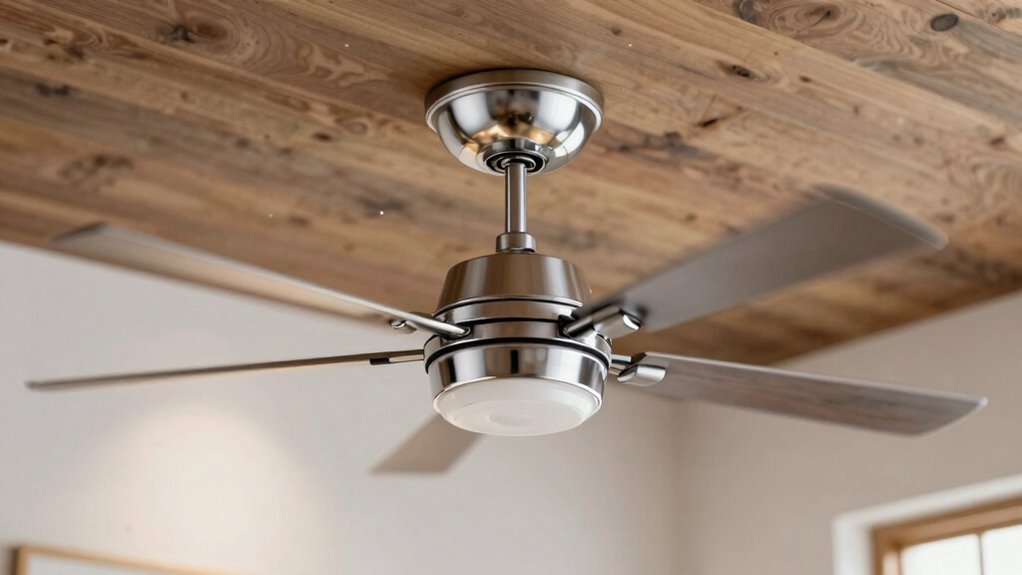
A squeaking ceiling fan can be both annoying and disruptive, especially when you’re trying to relax or concentrate. The good news is, many squeaks are easy to fix if you know where to look first. The most common causes often involve fan blade alignment or insufficient motor lubrication, so start your inspection there. When blades aren’t properly aligned, they can rub against the fan’s housing or other components, creating that squeaking noise. Carefully check each blade’s position and make sure they’re evenly spaced and securely attached to the motor hub. If any blades are bent or misaligned, gently straighten them or tighten their screws to ensure smooth rotation. Misaligned blades not only cause noise but can also put uneven stress on the motor, leading to further issues down the line.
Next, turn your attention to motor lubrication. Over time, the motor’s moving parts can dry out or gather dust, causing increased friction and squeaking. Many ceiling fans have oil ports or grease fittings—if your model does, use a few drops of lightweight machine oil or the recommended lubricant to keep the motor running smoothly. Be cautious not to over-lubricate, as excess oil can attract dust and debris, which might cause more noise. If your fan doesn’t have lubrication ports, the motor is sealed, and you might need to replace it entirely if squeaking persists. Regular maintenance, including lubricating the motor periodically, can prevent squeaks from developing in the first place. Additionally, understanding the importance of proper maintenance can help prolong the lifespan of your fan and keep it running quietly.
Regularly lubricate your ceiling fan’s motor to prevent squeaks and ensure smooth operation.
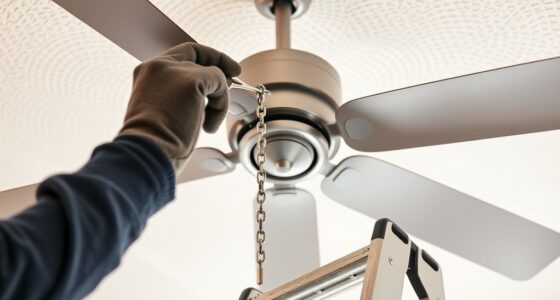
While inspecting the blades and motor, don’t forget to check the mounting hardware. Sometimes, loose screws or brackets can cause vibration and noise. Tighten any loose screws, but be careful not to overtighten, as this can crack the blades or damage the housing. Also, examine the mounting bracket that attaches the fan to the ceiling; if it’s loose, the entire unit can wobble, leading to squeaks during operation. Ensuring everything is securely fastened can eliminate many common sources of noise.
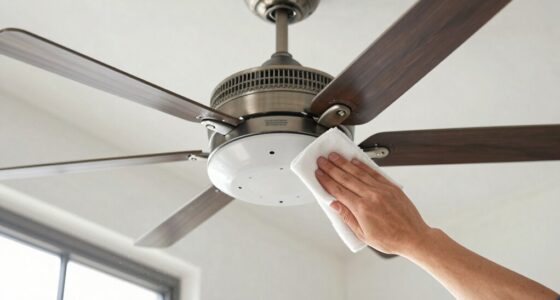
Lastly, consider the environment and the fan’s age. Dust buildup on blades can cause imbalance, leading to squeaks as the fan spins unevenly. Regularly dusting and cleaning your fan blades can help maintain smooth operation. If after these checks your fan still squeaks, it might be time to consult a professional or consider replacing worn-out parts. Addressing fan blade alignment, motor lubrication, and loose mounting hardware are the most straightforward ways to silence that squeak and restore peaceful airflow in your space.

YFANITI 20 Pcs Ceiling Fan Balancing Kit, 5 Sets High Calibration Blade Balance Tool Including 5 Pcs Resilient Clips and 15 Pcs Metal Self-Adhesive 3G Weight,Fan Balancing Kit
Efficient Wobble & Noise Reduction:The Ceiling Fan Balancing Kit includes a balance clip and 3 self-adhesive 3G metal…
As an affiliate, we earn on qualifying purchases.
As an affiliate, we earn on qualifying purchases.
Frequently Asked Questions
Can a Squeaking Ceiling Fan Be Fixed Without Professional Help?
Yes, you can fix a squeaking ceiling fan without professional help through DIY maintenance and fan troubleshooting. Start by turning off the fan and inspecting the blades for dirt or damage, then clean and tighten any loose screws. Lubricate the motor if needed, and check the mounting bracket for stability. With a little patience, these simple steps often resolve squeaking issues, saving you time and money.
How Often Should Ceiling Fan Blades Be Cleaned to Prevent Noise?
Think of your ceiling fan blades as a dance floor for dust; if you ignore them, dust buildup can cause a squeaking serenade. You should clean your blades every 1 to 2 months to keep the rhythm smooth and quiet. Regular blade maintenance prevents dust from settling into the grooves, ensuring your fan stays silent and spinning gracefully. A quick wipe keeps the music of your home peaceful and uninterrupted.
Does Changing the Fan’s Speed Setting Affect Squeaking?
Changing your fan’s speed setting can sometimes affect squeaking, especially if the fan blade alignment isn’t perfect or if remote control interference causes inconsistent operation. When you switch speeds, it can shift the blades slightly or create vibrations that lead to noise. Make sure your blades are properly aligned, and check for any interference from remote controls. These small adjustments can often reduce squeaking and improve your fan’s performance.
Are There Specific Types of Lubricants Recommended for Ceiling Fans?
Think of your ceiling fan as a well-oiled machine needing just the right elixir. For squeaking, use the recommended lubricants like lightweight oil or silicone spray, which glide smoothly and won’t gum up the works. Avoid WD-40 or heavy greases. Stick to the recommended lubricants, and you’ll quiet the squeak while keeping your fan spinning silently. Remember, just a drop can make all the difference in harmony.
How Can I Tell if the Motor or Blades Are Causing the Squeak?
You can tell if the squeak comes from the motor or blades by observing their behavior. If the blades wobble or seem unbalanced, it’s likely blade imbalance causing the squeak. If the fan runs roughly, makes noise when starting, or feels hot, motor wear may be the issue. Inspect the blades for dirt or looseness, and listen closely; motor issues often produce a higher-pitched squeal.

Ceiling Fan Oil 8 Oz Universal Fan Lubricant
KEEP YOUR FANS RUNNING SMOOTHLY: Keeps Box, Ceilings, table and portable fans operating smoothly in any temperatures!
As an affiliate, we earn on qualifying purchases.
As an affiliate, we earn on qualifying purchases.
Conclusion
Now that you know the three trouble spots—blades, mounting, and motor—you’re ready to banish that bothersome squeak. With a little inspection and a touch of TLC, your ceiling fan will run smoothly and silently once again. Don’t delay—diligently diagnose, diligently dust, and diligently dampen those squeaks away. Keep your cool and conquer the creaks, so your space stays serene, silent, and squeak-free!

MBAIYO 30 Pcs Ceiling Fan Blade Screws, 1/4"-20 x 3/8 Carbon Steel Phillips Pan Motor Replacement Screw for Lighting Ceiling Fan Blades Fans Light Cover Screw Cap
【Premium 30-Piece Set】Get complete coverage with our 30 Pcs ceiling fan blade screws replacement screws for ceiling fan…
As an affiliate, we earn on qualifying purchases.
As an affiliate, we earn on qualifying purchases.
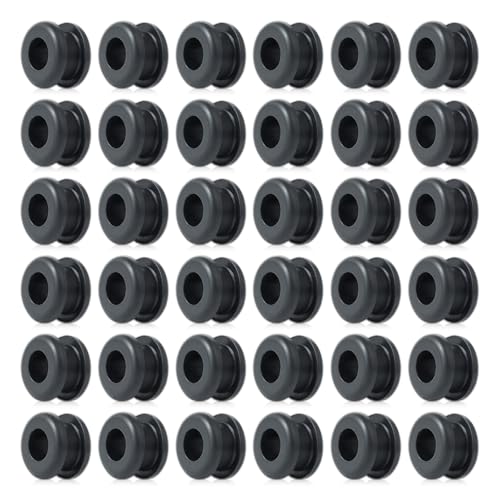
36 Pcs Rubber Grommet Kits for Hunter Ceiling Fan Parts, Ceiling Fan Replacement Parts for Fan Repair, Maintenance, Vibration Reduction and Stable Operation, Black
Perfectly Compatible: Rubber grommet kits are completely compatible with ceiling fan Hunter parts with 1/2"" screw holes, and…
As an affiliate, we earn on qualifying purchases.
As an affiliate, we earn on qualifying purchases.