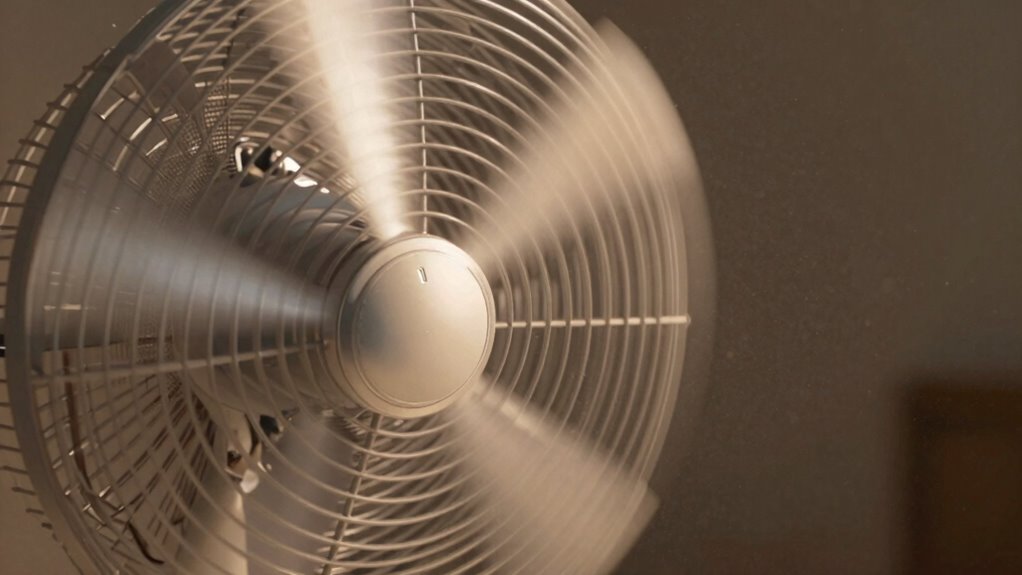

If your fan is humming or buzzing unexpectedly, it’s a sign that something’s wrong electrically. Common causes include a failing capacitor or worn motor bearings, which can lead to overheating or motor failure if ignored. Wobbling or increased noise indicates mechanical issues that require attention. Addressing these signs early can prevent costly repairs or dangerous failures. Stay alert to these clues, and you’ll discover more about how to keep your fan safe and working efficiently.

Get home appliances delivered free with Prime
- Fast, free delivery on millions of items
- Prime Video, Amazon Music and more included
- Member-only deals all year
Key Takeaways
- Unusual humming or buzzing may indicate a failing motor capacitor or motor bearing issues needing prompt inspection.
- A wobbling fan or increased noise suggests mechanical misalignment or worn-out bearings that require professional attention.
- Swelling, leaking, or visible damage to the capacitor signals electrical failure and potential motor overheating.
- Ignoring noise signs risks motor burnout, overheating, and more costly repairs or complete fan failure.
- Regular maintenance, such as cleaning and checking electrical components, helps prevent electrical clues of impending motor problems.

Electrical fan noise can be disruptive, especially when you’re trying to concentrate or sleep. If your fan starts humming or buzzing unexpectedly, it’s a clear sign that something isn’t right. Ignoring these sounds can lead to more serious issues or even complete failure of your appliance, so it’s vital to identify the cause early on. One common culprit behind persistent noise is a worn-out motor bearing. Over time, the bearing can become dry, dirty,, or misaligned, causing the motor to produce a grinding or squeaking sound. When the bearing wears down, it struggles to support the motor shaft smoothly, which results in increased friction and noise. You might notice that the humming gets louder or that the fan wobbles slightly when spinning. Addressing a faulty motor bearing promptly can prevent the motor from overheating or seizing altogether, saving you money and inconvenience.
Another frequent source of noise is capacitor failure. The capacitor plays an essential role in starting the motor and maintaining smooth operation. If the capacitor is failing, you might hear a loud buzzing or humming noise whenever the fan turns on or during operation. Capacitor issues often cause the motor to struggle to start, run unevenly, or produce intermittent noises. In some cases, the capacitor can swell or leak, which increases the likelihood of electrical arcing or overheating. When the capacitor isn’t functioning properly, the motor’s efficiency drops, and the noise becomes more pronounced. Recognizing the signs of capacitor failure early helps you avoid complete motor burnout and guarantees your fan continues to run quietly and efficiently. Additionally, electrical load‑planning and regular maintenance are key to preventing these issues from developing into costly repairs. If your fan is making a humming or buzzing noise, it’s a good idea to turn it off and inspect it carefully. Check for any visible signs of damage around the motor bearing or capacitor. If you’re comfortable with small repairs, you might be able to replace the capacitor yourself, but for issues like a worn-out motor bearing, consulting a professional is often the safest choice. Regular maintenance, such as cleaning the motor and lubricating the bearings, can also extend the lifespan of your fan and keep noise levels down. Remember, these noises are signals that your fan needs attention. Ignoring them can lead to more expensive repairs or the need to replace the entire unit. By paying close attention to these electrical clues, you can keep your fan running smoothly and quietly for years to come.
As an affiliate, we earn on qualifying purchases.
Frequently Asked Questions
Can a Humming Fan Indicate a Motor Failure?
Yes, a humming fan can indicate motor failure. You might also notice fan blade issues or power supply problems causing the noise. The humming often signals that the motor is struggling or misaligned, which could lead to complete failure if not addressed. Check for loose blades, obstructions, or inconsistent power supply, and consider replacing or repairing the motor to prevent further damage.
Is Buzzing Noise Normal During Fan Startup?
A buzzing noise during fan startup is often normal, caused by the fan blade overcoming initial resistance and airflow disturbance. This brief sound indicates the motor is engaging and the blades are aligning. However, if the buzzing persists or worsens, it could signal a problem like loose parts or motor issues. Pay attention to the duration and intensity of the noise to determine if it’s a normal startup or a sign of trouble.
How Can I Differentiate Between Electrical and Mechanical Noises?
You can tell if the noise is electrical or mechanical by listening carefully. Electrical issues often produce a consistent buzzing or humming, sometimes with a slight vibration, while mechanical problems like bearing issues or loose blades cause irregular, rattling, or grinding sounds. If your fan’s noise changes with speed, check for loose blades or worn bearings, which typically create mechanical noises, rather than electrical components.
Are There Safety Risks With a Humming Fan?
A humming fan can pose safety risks, especially if caused by a fan blade imbalance or electrical short circuit. You might notice overheating, sparks, or persistent buzzing, which are warning signs. Ignoring these signals is like inviting trouble—risking electrical fires or damage. Always unplug the fan, inspect for loose blades or frayed wiring, and call a professional if you’re unsure. Safety first keeps your home humming smoothly.
When Should I Replace a Noisy Fan?
You should replace a noisy fan when it becomes persistent despite fan maintenance and noise troubleshooting efforts. If cleaning the blades, tightening components, or lubricating moving parts doesn’t reduce the noise, it’s a sign the fan’s motor or internal parts are failing. Ignoring the issue can pose safety risks or cause further damage. Trust your judgment—timely replacement guarantees safety, efficiency, and peace of mind.
Conclusion
If your fan’s hum turns into a gentle whisper of trouble, it’s worth paying attention. Sometimes, that subtle buzz hints at a deeper current running beneath the surface. Ignoring these signals can turn a minor hiccup into a more serious affair. Trust your ears and don’t brush off the sound—consider it a quiet nudge to keep things running smoothly. After all, a well-tuned fan keeps your space comfortable and your worries at bay.
Cold & flu season Picks
humidifiers
As an affiliate, we earn on qualifying purchases.