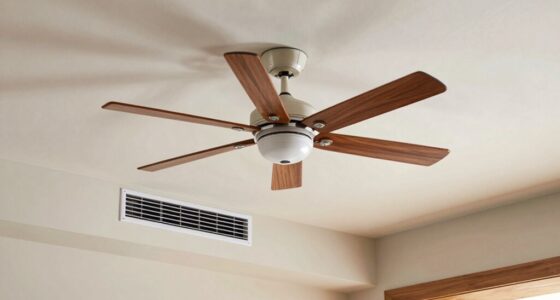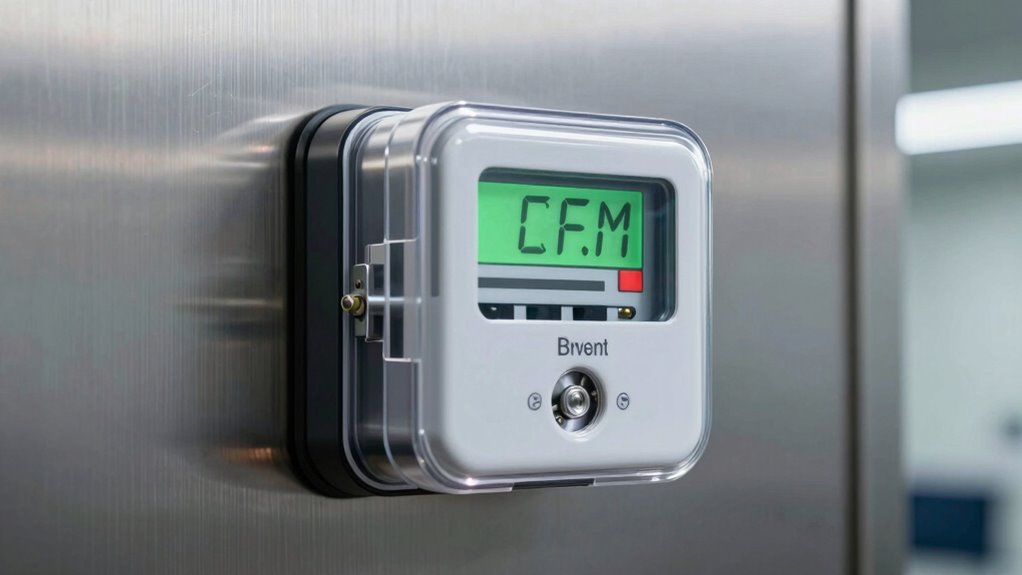

CFM per Watt is a key metric that shows how efficiently your ventilation system uses energy to move air. A higher ratio means you get more airflow for less power, helping you save on energy bills. It also guarantees your system meets standards, improves indoor air quality, and reduces environmental impact. Prioritizing this efficiency metric can cut costs and prolong equipment life. Keep exploring to learn how to choose the best fans and optimize your ventilation system.
Key Takeaways
- Higher CFM per Watt indicates more efficient airflow, reducing energy consumption and lowering your ventilation costs.
- This metric helps predict operational expenses by showing how much air is moved for each watt used.
- Fans with better CFM per Watt meet ventilation standards efficiently, avoiding excess energy use and associated bills.
- Improving CFM per Watt leads to energy savings over time, decreasing your overall utility expenses.
- Prioritizing high CFM per Watt equipment supports sustainable, cost-effective ventilation systems that minimize long-term costs.
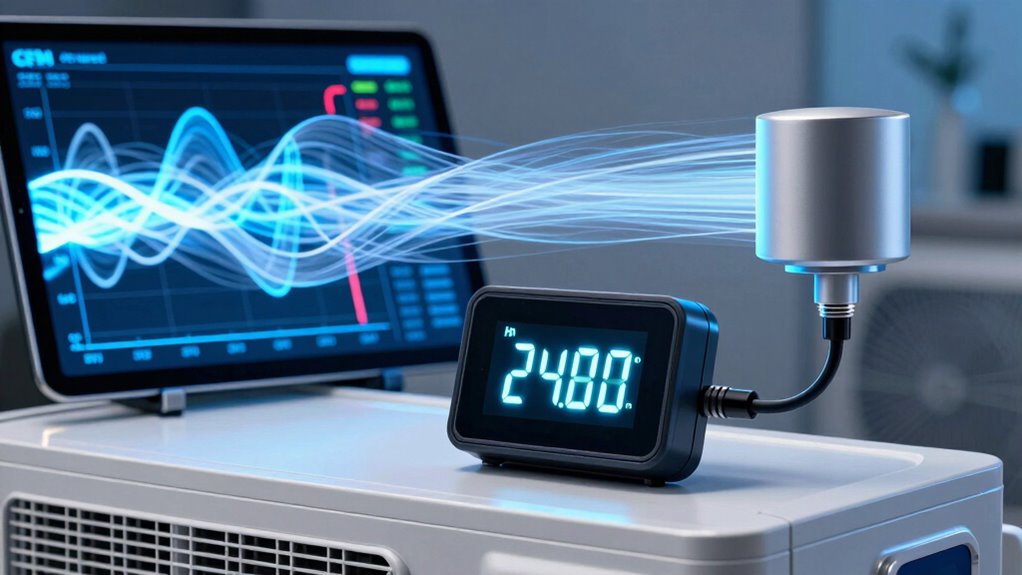
Have you ever wondered how efficiently a fan or ventilation system operates? It’s a question that matters more than you might think, especially when it comes to managing energy bills and maintaining a comfortable environment. The key metric you should pay attention to is CFM per Watt, which measures how much airflow (cubic feet per minute) a fan produces relative to the power it consumes. This number isn’t just a technical detail; it directly impacts your energy savings and compliance with ventilation standards. When you select a fan with a high CFM per Watt rating, you’re choosing equipment that moves more air for less energy, leading to lower utility bills over time. It also ensures that your ventilation system operates within recognized standards, maintaining indoor air quality without unnecessary energy waste.
Understanding ventilation standards helps set the benchmark for what’s considered efficient and safe. These standards, often set by organizations such as ASHRAE or local building codes, specify minimum airflow rates to ensure proper indoor air quality and occupant comfort. If your ventilation system falls short, it could lead to poor air quality, mold growth, or increased energy costs due to overworking less efficient fans. Conversely, selecting a fan with a high CFM per Watt rating aligns with these standards more effectively, ensuring you meet or exceed ventilation requirements while optimizing energy use. This balance becomes especially important in large commercial or industrial settings, where small efficiencies can translate into substantial cost savings and improved sustainability.
Choosing fans with high CFM per Watt ensures compliance with standards and maximizes energy efficiency.
Energy savings come into focus when you realize that a small increase in CFM per Watt can considerably reduce your energy consumption. Fans that operate efficiently don’t just save money—they also lessen your environmental impact by lowering overall energy demand. Over time, the difference in electricity costs adds up, especially if you’re running ventilation systems continuously. Furthermore, choosing energy-efficient fans often means less wear and tear, reducing maintenance costs and prolonging equipment lifespan. This efficiency metric becomes your guide for making smarter purchasing decisions, ensuring you get the best airflow with the least power usage. Additionally, certifications and standards can help identify fans that meet high efficiency benchmarks.
In the end, understanding and prioritizing CFM per Watt helps you create an efficient, cost-effective ventilation system that meets standards and saves money. It’s a simple yet powerful way to ensure your indoor environment remains healthy and comfortable without draining your budget. By focusing on this key metric, you’re taking control of your energy consumption and making choices that benefit both your wallet and the planet.
high CFM per Watt ventilation fan
As an affiliate, we earn on qualifying purchases.
As an affiliate, we earn on qualifying purchases.
Frequently Asked Questions
How Does CFM per Watt Compare to Other Efficiency Metrics?
You’ll find that CFM per watt offers a clearer picture of efficiency compared to airflow standards and noise metrics, which focus more on regulation compliance or sound levels. Unlike airflow standards, it directly measures how much air you get for energy used. Noise metrics don’t reflect energy efficiency. By comparing CFM per watt, you can better gauge how cost-effective and energy-efficient your ventilation system really is.
Can CFM per Watt Be Used for All Types of Fans?
You can use CFM per watt for most fan motors, but it’s most effective for fans designed for ventilation or air circulation. It helps you gauge efficiency, but keep in mind that noise levels can vary even with high CFM per watt ratings. For quieter operation, look for fans with lower noise levels, and remember that some fan types may not have consistent efficiency measurements using this metric.
What Factors Influence a Fan’s CFM per Watt Rating?
Think of a fan’s cfm per watt rating as a finely tuned engine, where airflow optimization and motor efficiency are the gears driving performance. Factors like blade design, motor quality, and operating speed influence this rating. When these elements align, your fan works smarter, not harder, translating into better airflow with less energy. So, focus on these factors to maximize efficiency and keep your energy bills in check.
Is Higher CFM per Watt Always Better for Energy Savings?
Higher CFM per watt isn’t always better for energy savings if it doesn’t meet ventilation standards or causes high noise levels. You need a balance; a more efficient fan that provides adequate airflow while keeping noise low helps you save energy and stay compliant. Always consider your ventilation needs and noise preferences, as overspending on high CFM per watt fans may not improve comfort or safety, negating potential savings.
How Can Consumers Improve Their Fan’s CFM per Watt Efficiency?
Imagine your fan as a superhero fighting energy waste—boost its airflow enhancement and cut down power consumption! To improve efficiency, clean or replace dirty filters, ensure proper vent placement, and upgrade to energy-efficient models. Using fans at ideal speeds and sealing leaks around ducts help maximize airflow without extra power. These simple steps turn your fan into a mighty energy-saving hero, slashing bills and boosting performance effortlessly.
Conclusion
By paying closer attention to CFM per watt, you’re gently steering your energy use in a smarter direction. It’s like choosing a more mindful route—sometimes the path isn’t the fastest, but it’s the one that leads to better savings and happier bills. So, embrace this little tweak in your approach; it’s a subtle shift that can make a big difference over time. After all, a little effort today can brighten your tomorrow.