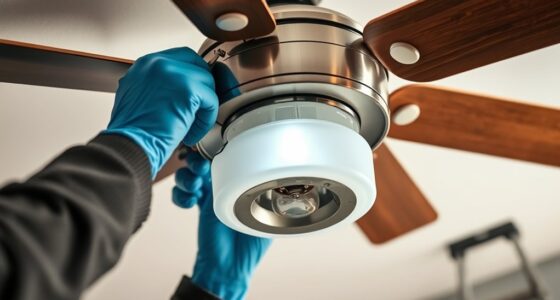
After installing your ceiling fan, start by powering it on and observing for wobbling, noise, or vibrations. Inspect the blades for dust, damage, or loose mounting hardware, tightening as needed. To balance the fan, temporarily attach masking tape to suspect blades to identify the wobbling source. Once pinpointed, add balancing weights per manufacturer instructions until the movement stabilizes. Ensuring proper testing and correction can drastically improve performance, safety, and longevity—more details help optimize your setup.
Key Takeaways
- Verify all blades are securely mounted and free of damage before initial operation.
- Observe the fan for wobbling or noise during startup and address issues as needed.
- Use masking tape on blades to identify imbalance sources and attach balancing weights accordingly.
- Recheck fan stability at different speeds after balancing to ensure smooth, vibration-free operation.
- Perform regular maintenance like cleaning blades and tightening hardware to maintain proper balance and safety.
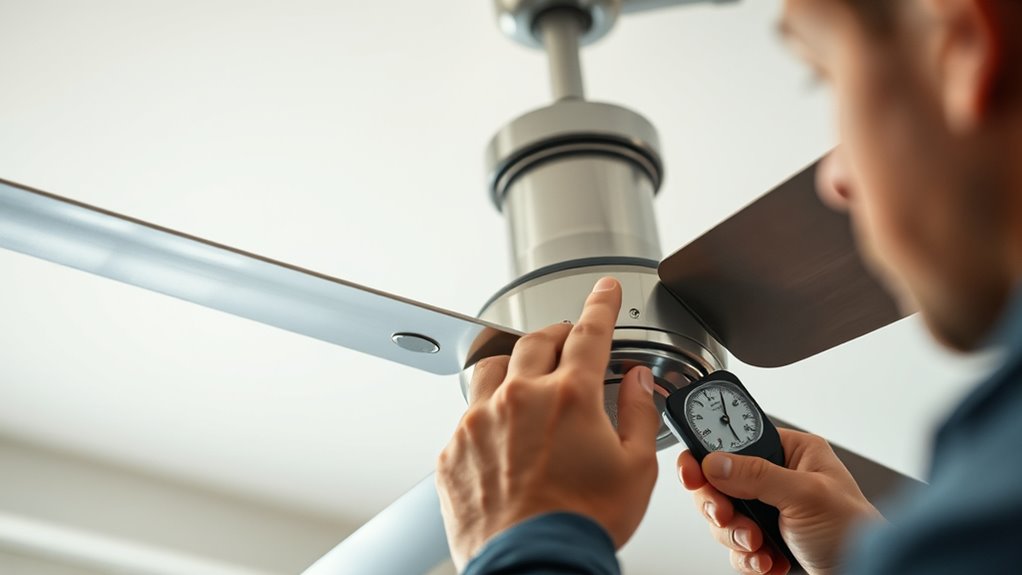
After installing a ceiling fan, it’s essential to verify its operation and guarantee proper balance for peak performance and safety. Proper testing begins with a visual inspection to ensure all components are securely attached and aligned according to manufacturer specifications. Confirm that the mounting bracket is firmly anchored to the ceiling joist or support beam, as loose mounting can lead to wobbling or instability. Next, power the fan on at its designated switch or control system, and observe its initial operation. The fan blades should rotate smoothly without excessive vibration, noise, or wobbling. If any irregularities appear, further balancing measures are necessary before proceeding.
Begin by inspecting all components and securing the mounting bracket before testing your ceiling fan.
To assess the fan’s balance, note the presence of any noticeable wobble or oscillation during operation. These symptoms typically indicate that one or more blades are either heavier or lighter than the others, causing uneven rotation. Begin by turning off the fan and ensuring the blades are clean and free of dust or debris, which can affect weight distribution. Next, manually inspect each blade’s position and mounting hardware. Tighten any loose screws or brackets, as loose fittings can cause imbalance and vibrations. If the blades are warped or damaged, replacing them is advisable to restore proper balance.
Once the physical checks are complete, perform a dynamic balancing test. Turn the fan back on and observe its behavior from different angles. If wobbling persists, use a blade balancing kit or a simple DIY method: place a small piece of masking tape on the top of a suspect blade’s edge, then turn the fan on again. Repeat this process with each blade to identify which one causes the wobble. If adding tape to a particular blade reduces wobbling, that blade is the source of imbalance. Remove the tape and attach small balancing weights or clip-on weights to the underside of the problematic blade, following the manufacturer’s instructions. This fine-tuning process ensures even weight distribution, reducing vibrations and noise.
To prevent future issues, consider regular maintenance such as periodic cleaning and inspection of blades and hardware. Finally, after balancing, recheck the fan’s operation at different speeds to confirm stability across all settings. The fan should run quietly and smoothly, with minimal vibration or movement. Keep in mind that ongoing maintenance, such as periodic cleaning and inspection of blades and hardware, helps maintain peak performance and safety over time. Proper testing and balancing are critical steps that ensure your ceiling fan operates efficiently, quietly, and safely, preventing potential hazards and prolonging its lifespan.

KALIONE Ceiling Fan Blade Balancing Kit Including Fan Balancing Clips and 12pcs Metal Self-Adhesive 3G Weight Practical Fan Balance Kit for Ceiling Fan Weight Balancing 4pcs
Package Content: You will receive 4 sets of fan balancing kit, enough quantity meets all your needs.
As an affiliate, we earn on qualifying purchases.
As an affiliate, we earn on qualifying purchases.
Frequently Asked Questions
How Often Should I Test and Balance My Ceiling Fan?
You should test and balance your ceiling fan at least once every six months, or whenever you notice unusual wobbling, noise, or uneven airflow. Regular testing guarantees peak performance and safety. If you install a new blade or experience changes in the fan’s operation, perform balancing immediately. Consistent maintenance prevents excessive wear, reduces noise, and prolongs the fan’s lifespan, ensuring efficient, safe operation over time.
Can Improper Balancing Cause Ceiling Fan Motor Damage?
Improper balancing can indeed cause ceiling fan motor damage. When a fan is unbalanced, the uneven weight distribution creates additional strain on the motor bearings and internal components. This increased load can lead to overheating, premature wear, and eventual motor failure. To prevent damage, you should regularly check and balance your fan, especially if you notice wobbling or noise, ensuring smooth operation and extending the lifespan of the motor.
Are There Specific Tools Needed for Testing and Balancing?
You’ll need a few specific tools for testing and balancing your ceiling fan. A digital or magnetic level helps guarantee proper alignment, while a fan blade balancing kit, usually containing clip-on weights, allows precise adjustments. Surprisingly, imbalance causes up to 70% of fan wobbling issues. Using these tools accurately ensures peak performance, reduces noise, and prevents motor strain, prolonging your fan’s lifespan. Proper testing and balancing are essential for safe, efficient operation.
What Signs Indicate My Ceiling Fan Needs Balancing?
You’ll notice wobbling or excessive vibration when your ceiling fan needs balancing. Unusual noises, uneven airflow, or the fan shifting slightly are also clear indicators. If the fan blades appear tilted or if the wobbling worsens over time, these signs suggest imbalance. Addressing these issues promptly guarantees smooth operation, reduces wear on components, and prevents potential damage to the fan or ceiling. Regular inspections help maintain peak performance.
Is Professional Assistance Necessary for Balancing a Ceiling Fan?
You don’t necessarily need professional help to balance your ceiling fan if you’re comfortable with basic troubleshooting. First, turn off the fan and carefully check for loose or damaged blades. Use a balancing kit to add weights and correct wobbling. However, if the wobbling persists or you’re unsure about handling delicate parts, consulting a professional guarantees safety and proper balancing, preventing potential damage to your fan or ceiling.
KALIONE Ceiling Fan Blade Balancing Kit Including Fan Balancing Clips and 12pcs Metal Self-Adhesive 3G Weight Practical Fan Balance Kit for Ceiling Fan Weight Balancing 4pcs
Package Content: You will receive 4 sets of fan balancing kit, enough quantity meets all your needs.
As an affiliate, we earn on qualifying purchases.
As an affiliate, we earn on qualifying purchases.
Conclusion
After testing and balancing your ceiling fan, you’ll notice how quiet and efficient it runs—almost as if the initial installation was perfectly aligned. This coincidence highlights the importance of proper balancing techniques, ensuring ideal performance and longevity. When you take the time to fine-tune your fan, you prevent unnecessary wear and reduce noise, ultimately saving time and money. A precisely balanced ceiling fan isn’t just a happy accident; it’s the result of careful, deliberate effort.
KALIONE Ceiling Fan Blade Balancing Kit Including Fan Balancing Clips and 12pcs Metal Self-Adhesive 3G Weight Practical Fan Balance Kit for Ceiling Fan Weight Balancing 4pcs
Package Content: You will receive 4 sets of fan balancing kit, enough quantity meets all your needs.
As an affiliate, we earn on qualifying purchases.
As an affiliate, we earn on qualifying purchases.
KALIONE Ceiling Fan Blade Balancing Kit Including Fan Balancing Clips and 12pcs Metal Self-Adhesive 3G Weight Practical Fan Balance Kit for Ceiling Fan Weight Balancing 4pcs
Package Content: You will receive 4 sets of fan balancing kit, enough quantity meets all your needs.
As an affiliate, we earn on qualifying purchases.
As an affiliate, we earn on qualifying purchases.