Installing separate switches for your fan and light gives you better control, letting you turn on the fan without lighting and vice versa. This setup saves energy, reduces costs, and makes it easier to customize your room’s comfort for different situations or seasons. Plus, it simplifies maintenance and upgrades, especially if you go for smart switches later. Keep exploring to discover how this simple change can make a big difference in your daily comfort and energy savings.
Key Takeaways
- Independent switches allow customized control, enabling fans or lights to operate separately for comfort and energy savings.
- Separating switches improves energy efficiency by turning off unused devices, reducing unnecessary electricity consumption.
- It simplifies maintenance and future upgrades, making troubleshooting and smart home integration easier.
- Separate controls offer seasonal flexibility, letting you adjust airflow and lighting based on weather and time of day.
- Enhanced control enhances convenience, comfort, and the ability to create optimized living environments.
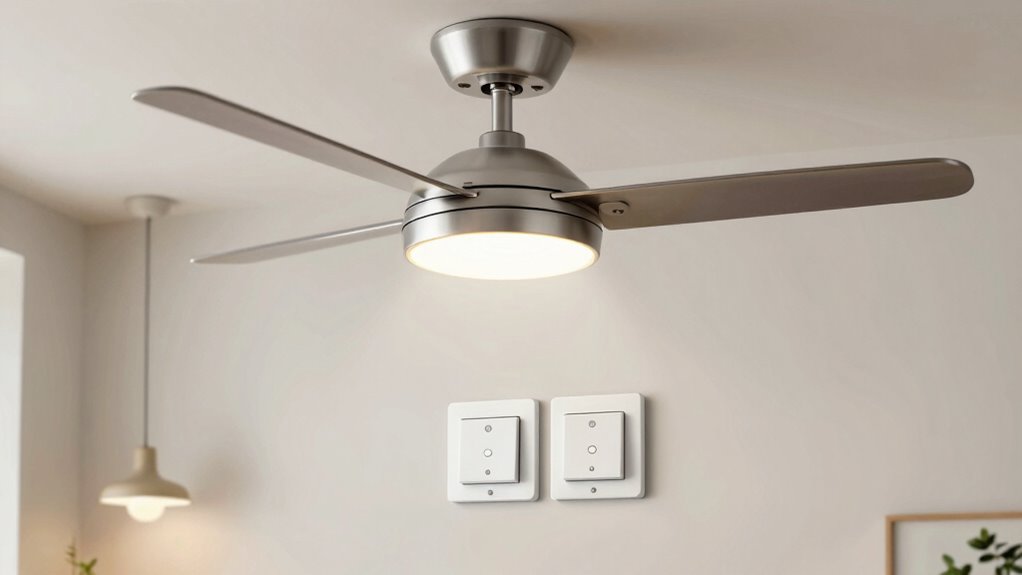
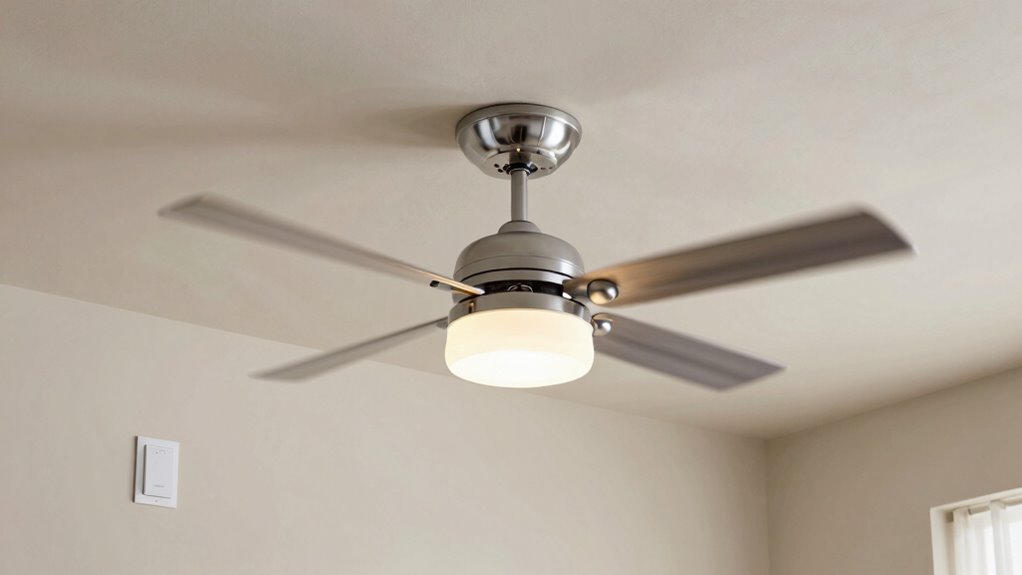
Installing a fan and light on separate switches gives you greater control over your room’s comfort and energy use. When you set up your switches this way, you no longer have to turn both the fan and light on or off together. Instead, you can choose to run just the fan during warm days or keep the light off to save energy. This setup allows for better customization of your space, enhancing comfort without wasting electricity. Plus, with the rise of wireless control options, you can even manage these switches remotely or through smart home systems, adding convenience and further boosting energy efficiency.
Opting for separate switches means you can operate your fan independently of the light, which is especially helpful during seasons when you want air circulation but don’t need illumination. If you’re trying to conserve energy, turning off the light when it’s not needed reduces unnecessary power consumption. Meanwhile, running the fan alone can help cool down a room without the added energy cost of lighting. Over time, these small choices add up to noticeable savings on your utility bills. When you integrate wireless control, such as smart switches or apps, you gain even more flexibility. You can turn your fan or light on and off from anywhere, schedule their operation, or set them to respond to your presence or preferences. This level of control maximizes energy efficiency because you’re not wasting power when rooms are unoccupied, and you can fine-tune usage based on your habits.
Besides energy savings, separate switches improve your comfort. You won’t get stuck in a situation where you’re cooling a room with the fan while the light is blaring, or vice versa. This setup also makes it easier to troubleshoot or replace switches without affecting the entire system. If you decide to upgrade your home, installing wireless control options during this process simplifies future adjustments. These smart switches can often be integrated into home automation systems, giving you voice control or scheduled operation, further optimizing energy use and convenience. Additionally, understanding projector technology can help you create the perfect viewing environment that complements your energy-efficient home setup.

TREATLIFE Smart Ceiling Fan Control and Dimmer Light Switch, 2.4GHz WiFi Only, Neutral Wire Required, Single Pole Fan & Light Switch Combo, Works with Alexa, Google Home & SmartThings, Remote Control
Note: Designed for stable 2.4GHz Wi-Fi connections only (5GHz not supported). No hub required. A neutral wire is…
As an affiliate, we earn on qualifying purchases.
As an affiliate, we earn on qualifying purchases.
Frequently Asked Questions
Can Separate Switches Increase Energy Efficiency?
Yes, separate switches can increase energy savings because you only turn on what you need. This reduces unnecessary power usage, especially if you often leave the fan or light on. However, keep in mind that wiring complexity might increase, making installation slightly more challenging. Overall, the energy efficiency benefits usually outweigh the extra wiring work, giving you better control and savings over time.
Are There Any Additional Safety Concerns With Separate Switches?
Yes, there are additional safety concerns with separate switches. You need to guarantee proper electrical safety by following correct wiring procedures, as wiring complexity increases with separate switches. Improper wiring can lead to electrical shocks or shorts. Always turn off power before working, double-check connections, and consider hiring a professional if you’re unsure. Taking these precautions minimizes risks and keeps your setup safe for daily use.
How Much Does Installing Separate Switches Typically Cost?
Installing separate switches usually costs between $50 and $150 per switch, depending on your home’s wiring complexity. You might think it’s a small difference, but it can substantially improve convenience and control. The wiring complexity influences the total expense—more complicated setups increase labor and materials. While it’s an upfront investment, the added flexibility and safety make it worth every penny, especially if you value convenience over a simple, one-switch solution.
Can Existing Fixtures Be Easily Converted to Separate Switches?
You can often convert existing fixtures to separate switches, but it depends on fixture compatibility and wiring complexity. If your wiring has a dedicated feed for each function, the process is straightforward. However, if the wiring is combined or outdated, it might require additional work, like rewiring or installing new switches. Consulting an electrician helps guarantee a safe, efficient conversion tailored to your home’s wiring setup.
Do Separate Switches Affect the Lifespan of the Fan or Light?
Think of switch wiring as a relay race; separate switches let each runner, or fixture, perform at their best. Using dedicated switch placement reduces strain on the fan or light, potentially extending their lifespan. Proper wiring guarantees consistent power flow, preventing flickers or surges that wear out components faster. So, yes, separate switches can help your fan and light last longer by minimizing electrical stress and providing clearer control.
TREATLIFE Smart Ceiling Fan Control and Dimmer Light Switch, 2.4GHz WiFi Only, Neutral Wire Required, Single Pole Fan & Light Switch Combo, Works with Alexa, Google Home & SmartThings, Remote Control
Note: Designed for stable 2.4GHz Wi-Fi connections only (5GHz not supported). No hub required. A neutral wire is…
As an affiliate, we earn on qualifying purchases.
As an affiliate, we earn on qualifying purchases.
Conclusion
Sure, separating your fan and light switches might seem like extra work now, but it’s a small hassle for big convenience later. Imagine never fumbling in the dark to turn on the fan, or accidentally adjusting the light when you just want fresh air. Sometimes, the little extra effort saves you from frustration and surprises. So, go ahead—put in the work now, and enjoy the irony of how such a simple upgrade can make your life so much easier.

ENERLITES 3 Speed Ceiling Fan Control and LED Dimmer Light Switch, 2.5A Single Pole Light Fan Switch, 300W Incandescent Load, No Neutral Wire Required, 17001-F3-W, White
Compatible with dimmable LED, incandescent, and halogen lights. For mechanical fans with pull string speed control.
As an affiliate, we earn on qualifying purchases.
As an affiliate, we earn on qualifying purchases.

Kasa Smart Ceiling Fan Control & Dimmer Switch | Adjustable 4-Speed Fan & Brightness Control | Works w/Apple HomeKit, Alexa & Google Home | 2.4G Wi-Fi Only, Single Pole, Neutral Wire Required | KS240
【4 Fan Speeds】 Tailor your airflow to your exact preferences by choosing from four fan speeds for the…
As an affiliate, we earn on qualifying purchases.
As an affiliate, we earn on qualifying purchases.