
To install a ceiling fan in a drop or suspended ceiling, first turn off the power and verify that the circuit is de-energized. Locate a suitable support point, such as a ceiling joist or reinforced grid, ensuring it can bear the fan’s weight. Use appropriate mounting brackets and hardware to secure the fan firmly, then connect the wiring according to electrical codes. Properly attach blades and test for operation, stability, and noise—details for a safe, professional setup are covered below.
Key Takeaways
- Turn off power and verify de-energization before starting installation.
- Identify structural supports like ceiling joists or reinforced grid to secure the fan.
- Use appropriate mounting brackets compatible with suspended ceiling grid for stable attachment.
- Connect electrical wiring securely, matching hot, neutral, and ground wires per code.
- Ensure all components are tightened, then restore power to test fan operation and stability.
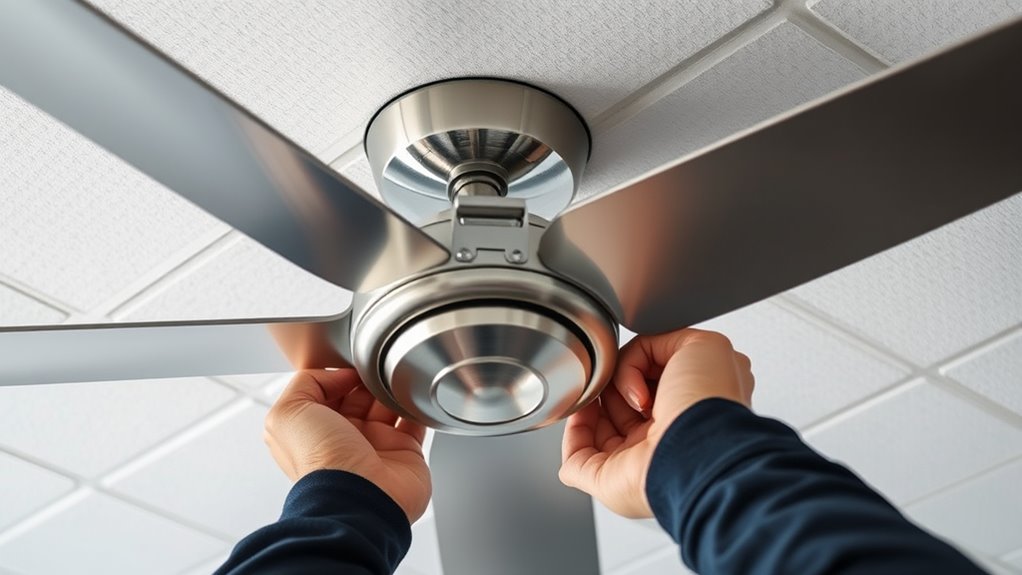
Installing a ceiling fan requires careful preparation and adherence to safety protocols to guarantee proper operation and structural integrity. When working within a drop or suspended ceiling, you must first assess the ceiling’s construction to determine the most effective mounting method. Identify the presence of ceiling tiles, grid supports, and available joists or support beams. Confirm that the existing grid can support the weight of the fan, especially if it’s larger or heavier, and verify that electrical wiring is accessible and up to code. Safety precautions include turning off the main power supply before beginning work, ensuring the circuit is de-energized, and using a voltage tester to confirm power is off.
Ensure safety first: turn off power and verify wiring before installing a ceiling fan in a suspended ceiling.
Next, you should locate the ideal mounting point, typically aligning with a ceiling joist or structural support within the ceiling grid. If a joist isn’t directly above the intended location, you’ll need to reinforce the grid with a suitable mounting bracket or install a support brace that can bear the fan’s weight. For suspended ceilings, a mounting bracket designed for grid systems is essential; it must securely attach to the grid or a support structure capable of handling the load. Carefully lift the mounting bracket into position, ensuring it’s level, and fasten it securely with appropriate hardware, such as toggle bolts or screws that are compatible with the grid and ceiling materials.
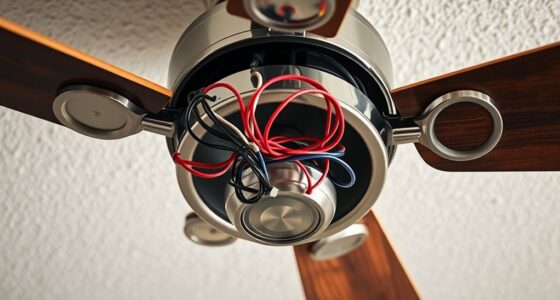
Once the mounting mechanism is firmly in place, you should connect the electrical wiring according to the manufacturer’s specifications. This involves connecting the fan’s wires to the electrical supply, typically matching black (hot), white (neutral), and green or bare copper (ground) wires. Use wire nuts and electrical tape to ensure secure, insulated connections, and double-check that all wiring complies with local electrical codes. After wiring, attach the fan’s mounting bracket or canopy to the support structure, ensuring it’s flush and level, which is critical for the fan’s balanced operation. Additionally, consider vertical storage solutions to keep the workspace organized and prevent clutter during installation.
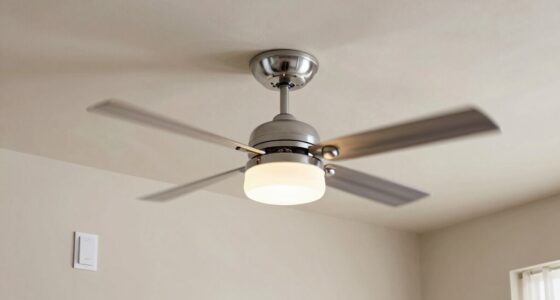
Finally, attach the fan blades and light fixtures, if applicable, following the manufacturer’s instructions. Make sure all screws are tightened to prevent wobbling or vibrations during operation. Once assembled, restore power and test the fan’s operation at various speeds, checking for noise, wobble, or instability. Adjust the mounting or balancing as needed. Properly installed, a ceiling fan in a suspended ceiling will provide efficient airflow while maintaining safety, stability, and longevity.
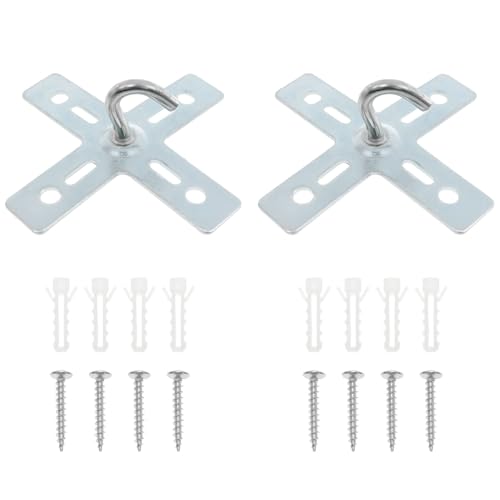
FINBe 2pcs Ceiling Hook kit Cross Ceiling Fan Hook Metal Hanging Plate Fastener Equipped with Installation Screws Suitable for Ceiling Fans or Suspended Lamps
Excellent material: Made of carbon steel and treated with galvanization on the surface, it features high hardness, strong…
As an affiliate, we earn on qualifying purchases.
As an affiliate, we earn on qualifying purchases.
Frequently Asked Questions
Can I Install a Ceiling Fan Without Existing Wiring?
Yes, you can install a ceiling fan without existing wiring, but it requires additional steps. You’ll need to run new electrical wiring from your power source to the fan location, which may involve drilling, fishing wires through the ceiling, and installing a new electrical box rated for fan support. Always turn off power at the circuit breaker and consult local electrical codes. If unsure, hire a licensed electrician for safe and compliant installation.
What Tools Are Essential for Installing a Suspended Ceiling Fan?
Think of installing a suspended ceiling fan like assembling a complex puzzle. You’ll need a drill with various bits to make precise holes, a stud finder to locate ideal mounting points, a voltage tester to guarantee safety, and a screwdriver for securing brackets. Additionally, a ladder provides safe access. Having these tools ready guarantees a smooth, safe installation, minimizing errors and ensuring your fan operates reliably and efficiently.
How Do I Ensure the Fan Is Balanced and Not Wobbling?
To guarantee your ceiling fan is balanced and doesn’t wobble, start by turning off the power and checking the blades for damage or dirt. Use a blade balancing kit to identify any uneven blades, then tighten all blade screws securely. If wobbling persists, add balancing weights to the blades’ tips. Verify the fan’s mounting bracket is level and securely attached. Regular maintenance and proper installation are key for maximum stability.
Is It Necessary to Turn off the Power at the Breaker?
Turning off the power at the breaker is essential, much like shutting a valve before fixing a leak. It guarantees your safety and prevents electrical shocks during installation or maintenance. Always switch off the circuit to eliminate live current, then verify with a voltage tester. This step safeguards you and guarantees a smooth, hazard-free process. Never skip this; safety must precede any electrical work on your ceiling fan.
Can I Install a Fan in a Ceiling With Insulation?
Yes, you can install a fan in a ceiling with insulation. Make sure you carefully select a fan designed for insulated ceilings, which often includes a built-in housing to prevent insulation contact. Maintain proper clearance around the fan blades to avoid insulation interference and ensure safe operation. Always turn off power at the breaker before installation, and follow manufacturer guidelines to prevent damage to insulation or fan components.

Arlington FS420SCL Steel Fixture Box Kit for Suspended Ceilings, 20 cu-in
Comes preset for a 24-Inch grid
As an affiliate, we earn on qualifying purchases.
As an affiliate, we earn on qualifying purchases.
Conclusion
Installing a ceiling fan in a drop or suspended ceiling requires careful planning and adherence to safety standards. For example, a homeowner successfully installed a fan in their office by securely anchoring the mounting bracket to the ceiling grid and verifying electrical connections. Precision in measuring, proper use of tools, and following manufacturer instructions guarantee ideal performance and safety. When executed correctly, this process results in efficient airflow and long-term durability, making it a valuable upgrade for any suspended ceiling space.

Filloman 2 Terminal Cooling Fan Harness Connector Plug, Compatible with Universal 12V Electric Fans, 1/4" Blade Terminals, 6.69 Inch 12AWG Wire
【Compatible with Most 12V Electric Cooling Fans】Compatible with most 12V electric cooling fans, this 2-pin harness plug works…
As an affiliate, we earn on qualifying purchases.
As an affiliate, we earn on qualifying purchases.
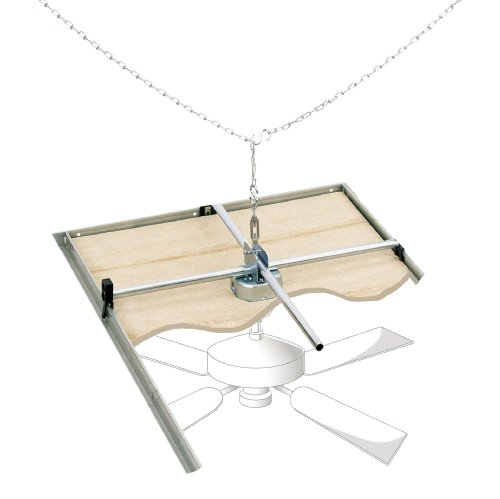
Westinghouse 0107000 Saf-T-Grid for Suspended Ceilings
Saf-T-Box allows safe, simple installation of fans and fixtures, ideal for new construction and where attic is accessible
As an affiliate, we earn on qualifying purchases.
As an affiliate, we earn on qualifying purchases.