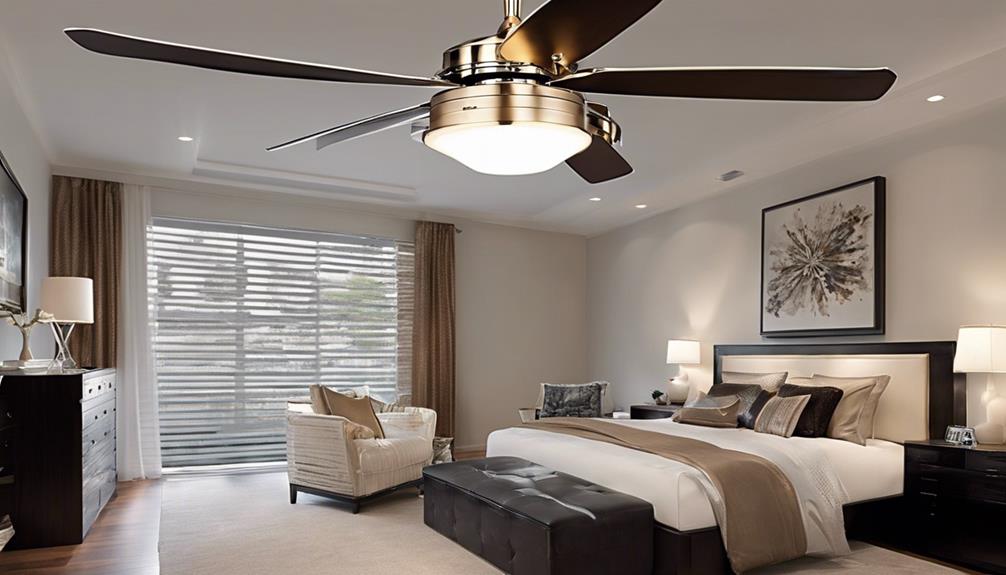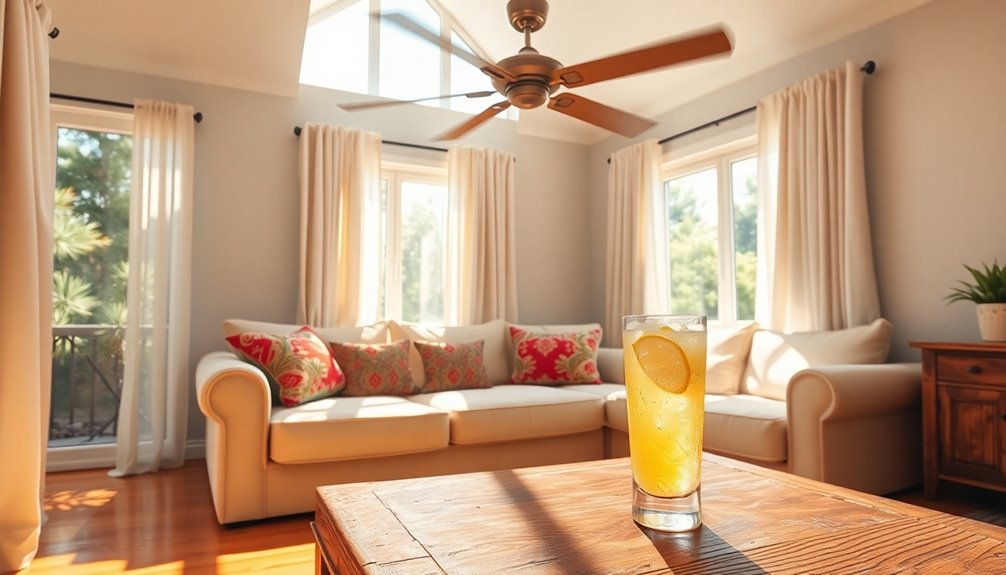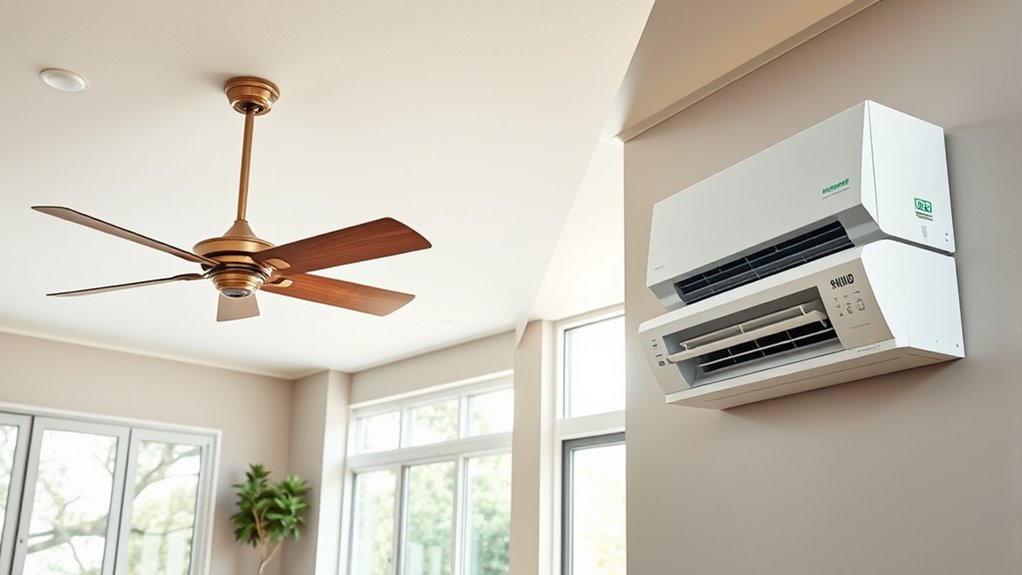

When comparing energy usage, ceiling fans are markedly more efficient, typically consuming around 15 to 100 watts per hour, making them ideal for continuous operation in moderate climates. In contrast, air conditioners use between 500 to 2000 watts, drawing substantial power to actively cool and dehumidify spaces. While fans mainly create airflow and don’t lower room temperature, ACs offer more effective cooling but at higher energy costs. Exploring further reveals how to optimize energy savings based on climate and needs.
Key Takeaways
- Ceiling fans typically use 15-100 watts, while air conditioners consume 500-2000 watts per hour, making fans more energy-efficient.
- Fans mainly create airflow for cooling without lowering room temperature; ACs actively reduce indoor temperature.
- Continuous operation of fans incurs minimal energy costs, whereas ACs significantly increase electricity bills due to higher power usage.
- Fans are effective in dry, moderate climates and do not dehumidify, unlike ACs which cool and dehumidify simultaneously.
- Using fans alongside ACs can optimize energy efficiency and reduce overall cooling costs in suitable environments.
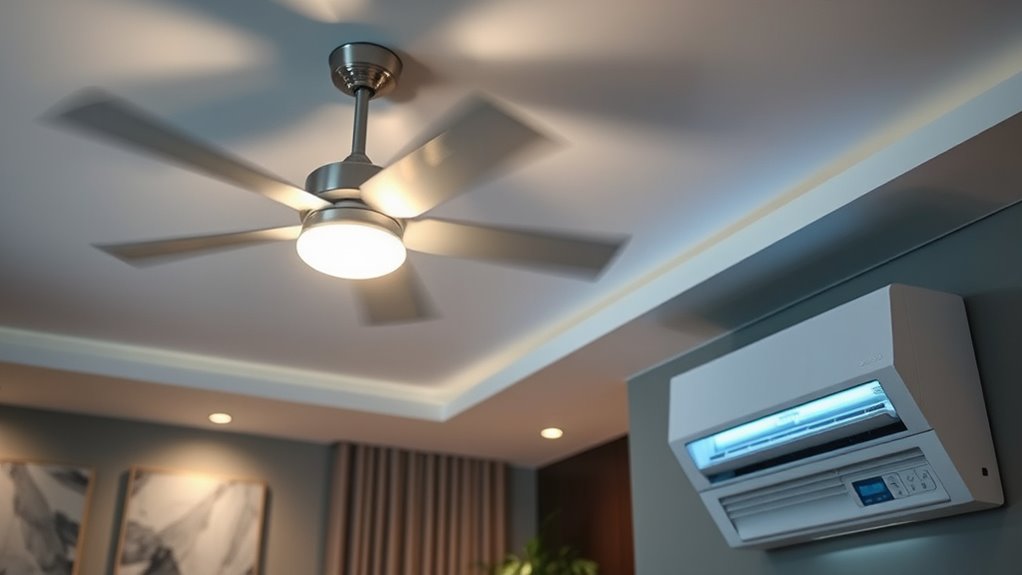
When choosing between ceiling fans and air conditioners for cooling your space, understanding their respective mechanisms and efficiency is essential. Ceiling fans operate by creating airflow that enhances the body’s natural cooling process through evaporation of sweat. They do not lower the room temperature but instead generate a wind-chill effect that makes occupants feel cooler. Conversely, air conditioners actively lower the ambient temperature by removing heat from indoor air through refrigeration cycles. They utilize a compressor, condenser, expansion valve, and evaporator to transfer heat outside, resulting in a notably temperature drop within the space.
Ceiling fans create airflow and a wind-chill effect, while air conditioners actively cool by removing heat from indoor air.
From an energy consumption perspective, ceiling fans are markedly more efficient. They typically consume between 15 to 100 watts per hour, depending on size and speed settings. This low power usage makes them suitable for continuous operation, especially in moderate climates or during times when only slight cooling is needed. Because fans do not directly alter the thermal environment, their energy usage remains relatively constant regardless of the room’s starting temperature. This consistency allows for predictable energy costs and minimal strain on electrical systems. Additionally, the overall energy efficiency of cooling methods plays a significant role in long-term cost savings.
Air conditioners, on the other hand, have a higher energy footprint. They often draw between 500 to 2000 watts per hour, with larger units or those running at higher capacities consuming more. The refrigeration cycle’s mechanical components and compressor demand substantial electrical power, especially when maintaining low temperatures over extended periods. Their energy efficiency is often measured by the Seasonal Energy Efficiency Ratio (SEER), which indicates how many units of cooling are produced per unit of energy consumed. Higher SEER ratings correspond to better efficiency, but even the most efficient units typically use considerably more power than fans.
Efficiency differences are also influenced by usage patterns and environmental conditions. Ceiling fans are most effective in dry, mild climates or when outdoor temperatures are not excessively high. They do not provide dehumidification or cooling below ambient temperatures, limiting their effectiveness during heatwaves or high humidity. Air conditioners are capable of cooling and dehumidifying simultaneously, making them suitable for extreme conditions but at a higher energy cost.
In terms of operational costs, ceiling fans offer a clear advantage. Their minimal energy consumption translates into lower electricity bills, especially when used in conjunction with passive cooling strategies. Air conditioners, while providing more substantial temperature reductions, incur higher costs due to their greater energy demands. To optimize energy efficiency, you might consider using fans to circulate air alongside an air conditioner, reducing the load on the cooling system. Ultimately, your choice hinges on balancing the desired thermal comfort with the long-term energy expenditure, recognizing that fans excel in energy efficiency but do not replace the cooling capacity of air conditioners in high-temperature scenarios.
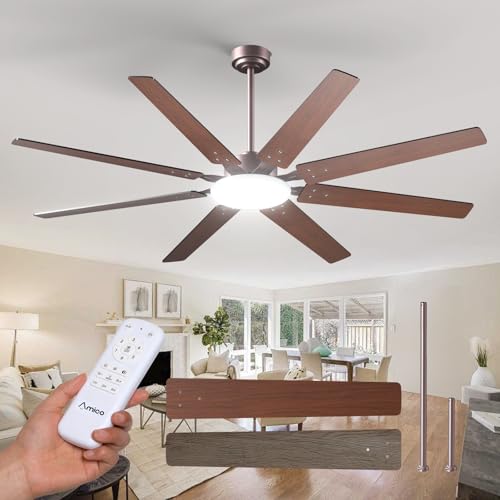
Amico 72 inch Farmhouse Bronze Ceiling Fan with Light, Large Energy Efficient Ceiling Fans with Remote, Reversible DC Motor, Dimmable 3CCT LED, Quiet Indoor/Outdoor for Living Room, Bedroom, Patio
Ceiling Fan with Light: Decorate your home with Amico ceiling fan! While bringing you coolness and comfort, it…
As an affiliate, we earn on qualifying purchases.
As an affiliate, we earn on qualifying purchases.
Frequently Asked Questions
Do Ceiling Fans Improve Air Quality?
Ceiling fans don’t directly improve air quality, but they enhance comfort by circulating air, which can reduce humidity levels and prevent stale air buildup. This circulation helps disperse indoor pollutants and allergens, making the environment feel fresher. However, they don’t filter or remove airborne particles like HEPA filters or air purifiers. For genuine air quality improvement, combine ceiling fans with air filtration systems for ideal indoor air health.
How Do Maintenance Costs Compare Long-Term?
You’ll find ceiling fans generally have lower long-term maintenance costs compared to air conditioners. For example, a study shows that ceiling fans require only periodic cleaning and motor lubrication, averaging $50 annually. In contrast, air conditioners often need professional servicing, refrigerant refills, and component replacements, totaling around $200-$300 yearly. This difference stems from the simpler mechanical design of fans, making them more cost-effective over their lifespan while offering reliable performance.
Can Ceiling Fans Be Used in Winter?
Yes, you can use ceiling fans in winter by reversing their rotation to clockwise. This creates an upward airflow, redistributing warm air trapped near the ceiling. This process helps maintain a consistent room temperature and reduces heating costs. Make sure your fan has a reversible motor, and set it accordingly. Using ceiling fans this way improves energy efficiency during colder months without compromising comfort.
Are Air Conditioners More Eco-Friendly Than Fans?
You might think air conditioners are more eco-friendly than fans, but ironically, they typically consume more energy and emit more greenhouse gases. While AC units cool effectively, their compressor and refrigerant systems require significant power, increasing environmental impact. Fans, on the other hand, use less energy by simply circulating air, making them a more sustainable choice for mild conditions. So, for eco-conscious living, fans often outperform air conditioners in environmental friendliness.
Do Ceiling Fans Reduce Energy Bills Effectively?
Yes, ceiling fans can effectively reduce your energy bills by consuming considerably less power than air conditioners. They operate using minimal electricity, typically between 15-75 watts, compared to air conditioners that often use over 2000 watts. By increasing air circulation, ceiling fans improve comfort without cooling the air, allowing you to set your thermostat higher and save on cooling costs, especially during moderate weather conditions.
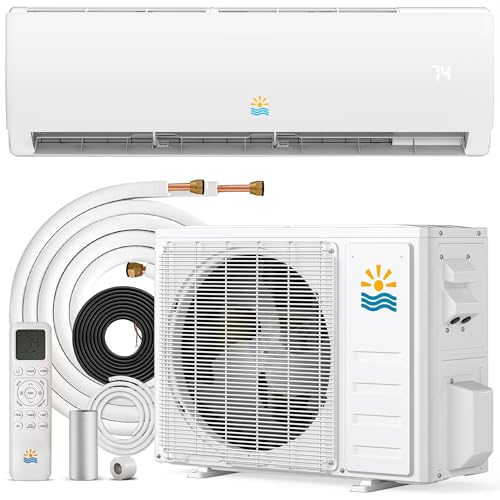
Rellytech Mini Split AC/Heating System – 17000 BTU Ductless Heat Pump Inverter Heating and Cooling, 17 SEER2 208V/230V Energy Efficient Air Conditioner Up to 1050sq.ft, Pre-charged, Installation Kit
YEAR-ROUND COMFORT WITH MINI SPLIT: Rellytech mini split ac/heating system is engineered with a high-power compressor, heat pump,…
As an affiliate, we earn on qualifying purchases.
As an affiliate, we earn on qualifying purchases.
Conclusion
In the battle of energy efficiency, ceiling fans clearly outshine air conditioners—unless you prefer skyrocketing utility bills and environmental guilt. While fans provide a gentle breeze with minimal power draw, ACs deliver a climate-controlled paradise at a steep energy cost. So, if you enjoy sacrificing efficiency for comfort, go ahead, crank up that AC. Otherwise, embracing ceiling fans offers a smarter, greener choice—because who needs excessive energy consumption when a simple breeze can do the trick?

52 Inch Ceiling Fans with Lights, Upgraded 6 Blade Design, Remote Control, Ultra Quiet Reversible DC Motor, 6 Speeds, 3CCT Dimmable LED, Memory Function, Double Sided Blade for Bedroom Livingroom
【High-Quality 52-Inch Ceiling Fan with Light】Eterfun 52-inch ceiling fan features six double-coated blades and an 11-inch dimmable LED…
As an affiliate, we earn on qualifying purchases.
As an affiliate, we earn on qualifying purchases.

Feelfunn 8000 BTU Portable Air Conditioner, 3-in-1 Cools 350 Sq.Ft, Quiet AC with Fan & Dehumidifier, LED Display, Remote, 24H Timer, Window Kit, for Bedroom/Office/Dorms
【8000 BTU Fast Cooling】Powerful 8000 BTU ASHRAE (5000 BTU SACC) portable air conditioner cools bedrooms, living rooms, offices,…
As an affiliate, we earn on qualifying purchases.
As an affiliate, we earn on qualifying purchases.