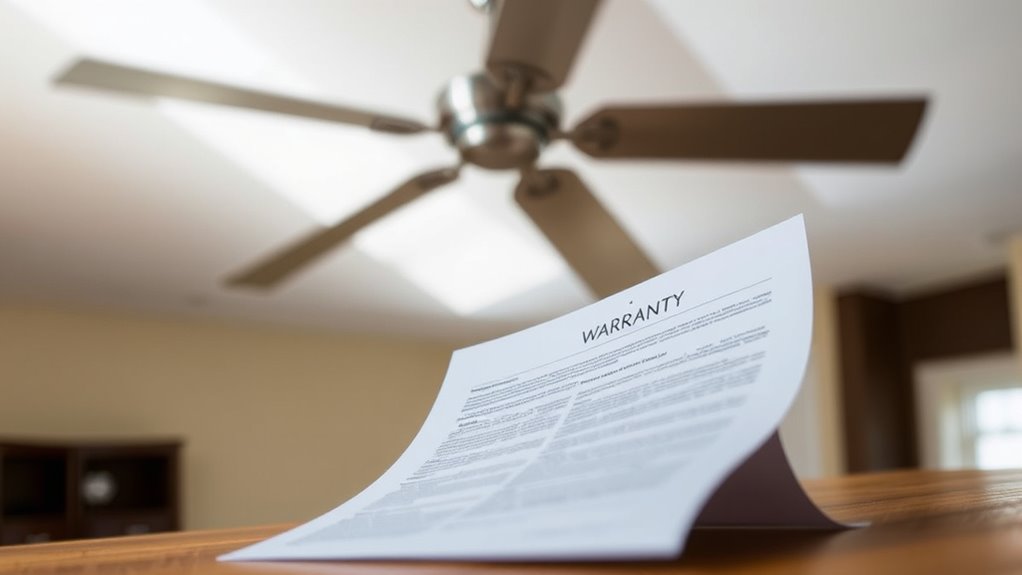

To understand your ceiling fan warranty, know that it typically covers manufacturer defects like motor or blade issues for 1 to 5 years, but excludes damages caused by misuse, improper installation, or external factors like storms. Confirm you keep your proof of purchase and follow installation and maintenance guidelines, as neglect or DIY repairs can void coverage. Being aware of these terms helps protect your investment—more detailed information awaits to guide you through every detail.
Key Takeaways
- Warranties typically cover manufacturing defects for 1 to 5 years, including parts and sometimes labor, with proper documentation required.
- Damages caused by improper installation, misuse, or external factors like storms usually void the warranty.
- Repairs are performed by authorized service providers; DIY fixes can invalidate warranty coverage.
- Retain proof of purchase and follow the claim process promptly to ensure coverage within the warranty period.
- Proper installation, regular maintenance, and adherence to guidelines are essential to preserve warranty validity.
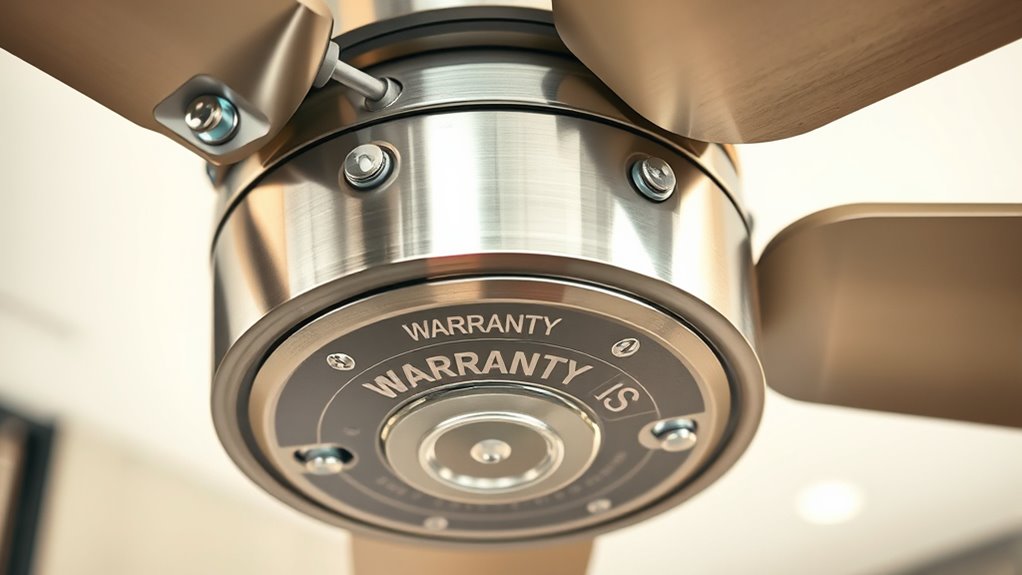
Understanding the warranty terms for your ceiling fan is essential to guarantee you’re protected against potential defects and issues. When you purchase a ceiling fan, it’s not just about the sleek design or quiet operation; it’s about knowing exactly what coverage you have if something goes wrong. Carefully review the warranty document, as it details what repairs or replacements are covered, the duration of coverage, and the specific conditions that might void your warranty. This knowledge helps you avoid surprises and ensures you can act swiftly if needed.
Most warranties cover manufacturing defects, which include issues like faulty motors, broken blades, or electrical failures that occur within a specified period. However, it’s vital to understand that not all damages are covered. For example, damage caused by improper installation, misuse, or external factors such as storms or accidents typically void the warranty. The warranty terms often specify that only authorized service providers can perform repairs or replacements, so attempting DIY fixes or using unauthorized technicians can jeopardize your coverage. Keep in mind that some warranties have limited durations—commonly one to five years—so knowing the exact timeline helps you plan accordingly.
Most warranties cover manufacturing defects but exclude damages from improper installation, misuse, or external factors, which can void your coverage.
Pay attention to the warranty’s scope of coverage. Some warranties are extensive, covering both parts and labor, while others only cover parts. In cases where labor isn’t included, you might need to pay for technician services separately, so budgeting for potential repair costs is wise. Additionally, warranties often require you to retain proof of purchase, such as receipts or registration cards, to validate your claim. Failing to provide proper documentation can delay or even invalidate your warranty claim, leaving you responsible for repair costs.
Another critical aspect involves understanding the warranty’s limitations and exclusions. For instance, normal wear and tear, cosmetic damages, or issues caused by environmental factors—such as rust or corrosion—are usually not covered. Some warranties specify that you must follow installation instructions and maintenance guidelines strictly; neglecting these can be grounds for denial. If you notice a defect within the warranty period, act promptly by contacting the authorized service provider and providing all necessary documentation. Waiting too long could mean losing your coverage, especially if the warranty has a time limit.
In essence, protecting yourself begins with reading and understanding the warranty terms thoroughly. It’s a safeguard that ensures you’re not left vulnerable if your ceiling fan develops problems early in its lifespan. By knowing what’s covered, what voids the warranty, and how to properly file a claim, you empower yourself to handle issues efficiently and confidently, making the most of your investment.

PHORUS 52 Inch Tropical Ceiling Fans with Lights and Remote,Outdoor Palm Leaf Ceiling Fan for Patios Porch Bedroom, Dimmable, 6 Speeds, Reversible, Dark Brown
[Tropical style Ceiling Fan]: 52"outdoor ceiling fan features 5 unique palm leaf blades with exquisite craft, attractive appearance...
As an affiliate, we earn on qualifying purchases.
Frequently Asked Questions
Are Extended Warranties Available for Ceiling Fans?
Yes, extended warranties are often available for ceiling fans. You can purchase these from retailers or manufacturers to cover additional repairs or replacements beyond the standard warranty period. Be sure to read the fine print, as coverage varies and may include parts, labor, or both. Protect your investment by considering an extended warranty, especially if your fan is high-end or installed in a high-traffic area.
How Do I File a Warranty Claim?
To file a warranty claim, first gather your proof of purchase and the warranty documentation. Contact the manufacturer’s customer service via phone or their website, providing details about the defect and your fan’s model number. Follow their instructions carefully, which may include sending photos or mailing the fan for inspection. Act promptly to make certain your claim is processed smoothly and safeguard your rights under the warranty.
Does Warranty Cover Installation Errors?
A warranty acts as a guardian, shielding you from unforeseen flaws. Typically, it doesn’t cover installation errors since the warranty’s purpose is to cover manufacturing defects or parts failure. You must verify the installation was done correctly; otherwise, the warranty might be void. Always review your specific warranty terms closely, and if installation errors are involved, contact a professional to avoid losing coverage and to protect your investment effectively.
Are There Regional Warranty Restrictions?
Yes, regional warranty restrictions can apply, and you should check your specific area’s policies. Manufacturers often limit coverage based on geographic location due to differences in climate, local regulations, or authorized service providers. You must read your warranty carefully to understand any regional exclusions or conditions. Protect yourself by verifying coverage details for your region before making a purchase, ensuring you’re fully aware of any limitations that could affect your claim.
What Is the Process for Warranty Dispute Resolution?
If you encounter a warranty dispute, start by reviewing your warranty documentation carefully. Contact the manufacturer’s customer service promptly, providing all relevant purchase and product details. Keep records of your communications and any supporting evidence. Be persistent and follow their prescribed dispute resolution process, which may include inspections or additional documentation. If unresolved, consider escalating to consumer protection agencies or legal channels to make sure your rights are protected.

Forrovenco Ceiling Fans with Lights and Remote, 52 Inch Outdoor Ceiling Fan for Patios Indoor with 3 Downrods, 3 Blades Modern Ceiling Fan, 6 Speed Reversible Quiet DC Motor Solid Wood Fan,52in,Walnut
Modern Ceiling Fan with Light: Our 3 blade ceiling fan with light features unique, planet-friendly, and renewable high-quality...
As an affiliate, we earn on qualifying purchases.
Conclusion
Think of your ceiling fan warranty as a sturdy shield, guarding your investment through each season’s change. By understanding the terms and conditions, you’re not just safeguarding your purchase—you’re ensuring peace of mind, like a vigilant guardian watching over your comfort. Pay close attention to details, and you’ll find that your warranty becomes a symbol of reliability, offering reassurance when you need it most. Trust in the protection you’ve secured, and let your fan serve you faithfully for years to come.

addlon Ceiling Fans with Lights, 42 Inch Low Profile Ceiling Fan with Light and Remote Control, Flush Mount, Reversible, 3CCT, Dimmable, Quiet, Black Small Ceiling Fan for Bedroom Indoor/Outdoor Use
Ceiling Fan with Light: Bring more than just wind and light, but comfort! addlon modern ceiling fan, with...
As an affiliate, we earn on qualifying purchases.

Amico Ceiling Fans with Lights, 42 inch Low Profile Ceiling fan with Light and Remote Control, Flush Mount, Reversible, 3CCT, Dimmable, Noiseless, Black Ceiling Fan for Bedroom, Indoor/Outdoor Use
Ceiling Fan with Light: Decorate your home with Amico ceiling fan! While bringing you coolness and comfort, it...
As an affiliate, we earn on qualifying purchases.