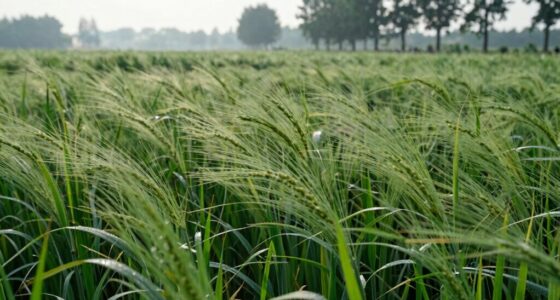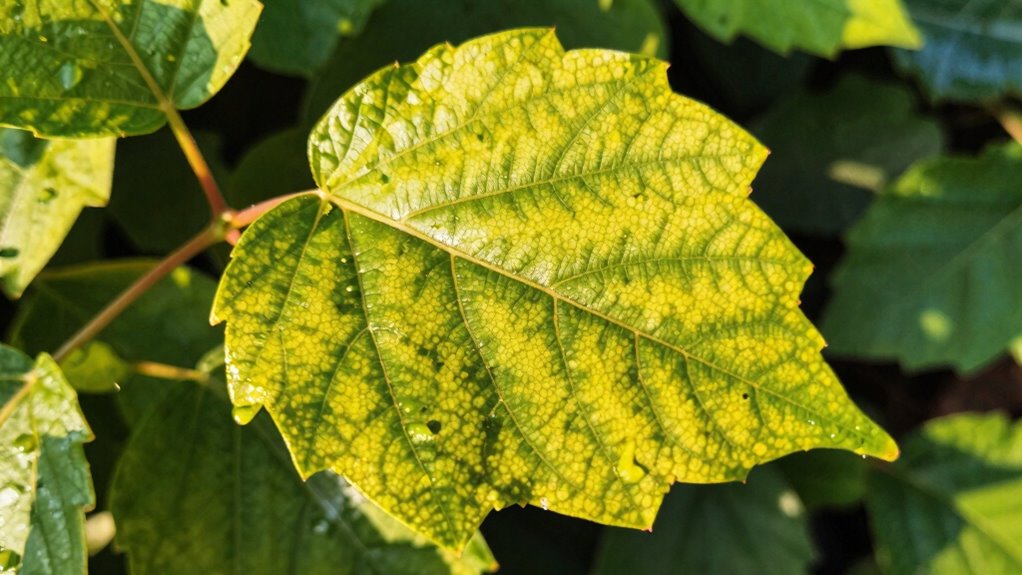

You might find that leaf temperature matters more than air temperature because it directly affects how well your plants can carry out photosynthesis and stay healthy. Leaves can heat up or cool down faster than the surrounding air, which impacts enzyme activity and water loss. Monitoring leaf temperature gives you a clearer picture of plant stress and needs. Keep exploring to discover how understanding leaf temperature can help you optimize plant care and promote healthier growth.

Get home appliances delivered free — and shop member deals
- Fast, free delivery on millions of items
- Access to Prime Big Deal Days deals on October 6–7
- Prime Video, Amazon Music and more included
Key Takeaways
- Leaf temperature directly affects photosynthesis efficiency, often more than surrounding air temperature.
- Environmental factors like sunlight, humidity, and wind cause leaf temperature to differ from air temperature.
- Excessive leaf heat can cause enzyme denaturation, reducing plant productivity regardless of air temperature.
- Monitoring leaf surface temperature provides a more accurate assessment for plant health management.
- Proper regulation of leaf temperature enhances plant resilience better than relying solely on air temperature.
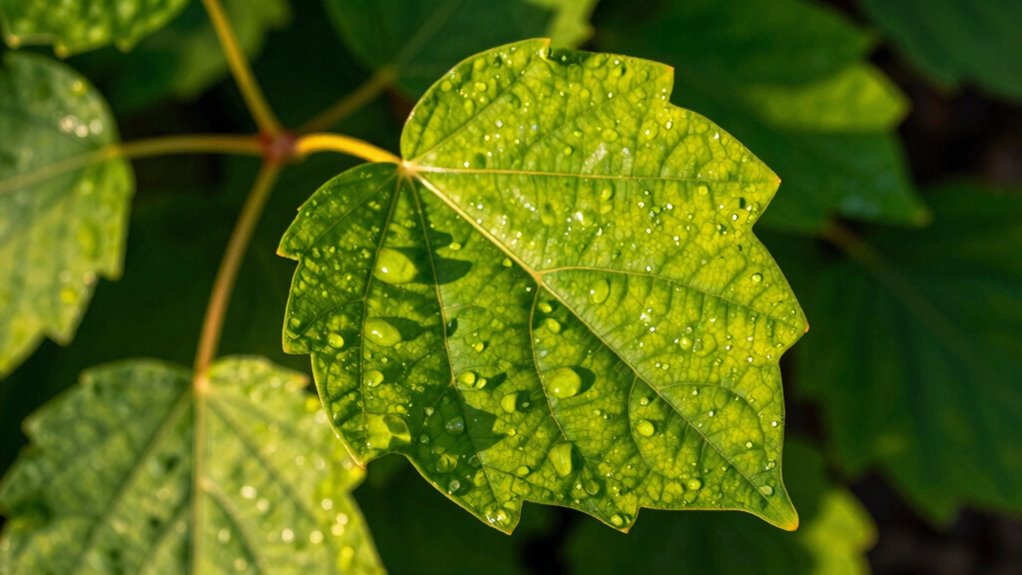
Understanding the temperature of leaves is essential because it directly influences a plant’s photosynthesis, transpiration, and overall health. When leaves are too hot or too cold, their ability to carry out photosynthesis efficiently drops, which means less energy production for the plant. Conversely, if leaves stay within an ideal temperature range, photosynthesis runs smoothly, supporting better growth and resilience. This is why leaf temperature can sometimes be more critical than the air temperature surrounding the plant. While air temperature gives you a broad sense of the climate, leaf temperature reflects the immediate environment of the plant’s crucial processes. It’s affected by factors such as sunlight intensity, humidity, wind, and soil moisture, all of which can cause leaf temperatures to differ markedly from the air temperature.
If leaves become excessively hot, their photosynthesis efficiency drops because enzymes involved in photosynthesis can become denatured or less effective at higher temperatures. This decline hampers the plant’s ability to produce sugars and other essential compounds. Additionally, elevated leaf temperatures can increase transpiration rates, leading to water stress if the plant cannot replenish lost moisture quickly enough. This stress makes the plant more susceptible to pests and diseases, as weakened plants are less able to defend themselves. Pests often target plants with compromised health, and high leaf temperatures can create a perfect environment for infestations or fungal growth. Conversely, if leaves are too cold, photosynthesis slows down, and the plant’s growth can stagnate, making it vulnerable to environmental stresses and pests alike.
Monitoring leaf temperature helps you maximize watering schedules, shading, and other cultural practices to keep leaves within their ideal temperature range. Proper management can boost photosynthesis efficiency, providing the plant with the energy it needs to grow robustly and resist pests. It also helps you recognize early signs of stress, such as abnormal leaf temperatures, so you can take corrective action before damage occurs. In essence, understanding and controlling leaf temperature isn’t just about comfort—it’s a crucial tool for promoting plant health, enhancing photosynthesis efficiency, and reducing vulnerability to pests and diseases. By paying close attention to the temperature on the leaf surface rather than just the air temperature, you gain a more accurate picture of your plant’s true environmental needs and can adjust your care practices accordingly. Recognizing the factors that influence leaf temperature, such as solar radiation, can help you make more informed decisions about plant placement and protection strategies. Moreover, understanding how humidity and wind affect leaf temperature can assist in creating optimal growing conditions for your plants. Maintaining a stable microclimate around your plants can also be key to regulating leaf temperature and ensuring healthy growth.
A thorough understanding of leaf temperature regulation can also guide you in selecting appropriate plant varieties that are better adapted to your local climate conditions.
As an affiliate, we earn on qualifying purchases.
Frequently Asked Questions
How Does Leaf Temperature Affect Photosynthesis Efficiency?
You might notice that leaf temperature directly impacts photosynthesis efficiency by influencing the photosynthesis rate and leaf enzymatic activity. When leaves are too hot, enzymes involved in photosynthesis become less effective, slowing down the process. Conversely, if leaves are too cool, enzyme activity also drops, reducing photosynthesis. Maintaining a suitable leaf temperature guarantees enzymes work at peak efficiency, maximizing photosynthesis and overall plant health.
Can Leaf Temperature Influence Plant Drought Resistance?
Think of leaf cooling as your sweat helping you stay cool; it plays a vital role in drought resistance. When leaves stay cooler, they reduce water stress by slowing evaporation. If your plants can regulate their leaf temperature effectively, they’re better equipped to withstand drought. So, managing leaf cooling directly influences how resilient your plants are against water scarcity, making leaf temperature a key factor in drought resistance.
What Methods Are Used to Measure Leaf Temperature in the Field?
You can measure leaf temperature in the field using infrared thermometers, which provide quick, non-contact readings of surface temperature. Thermal imaging cameras are also effective, offering detailed temperature maps of multiple leaves simultaneously. Both tools allow you to monitor leaf responses to environmental conditions in real-time, helping you understand plant stress, transpiration rates, or drought resistance. These methods are practical, accurate, and essential for field-based plant research.
How Does Leaf Temperature Vary Across Different Plant Species?
Think of leaf temperature as a chameleon’s color—varying widely across species. You’ll find that plants with adaptations for thermal regulation, like thick cuticles or reflective surfaces, keep their leaves cooler or warmer depending on their environment. Different species respond uniquely to sunlight, wind, and humidity. So, leaf temperature isn’t one-size-fits-all; it reflects each plant’s species adaptation to maintain ideal functioning amid changing conditions.
Is Leaf Temperature More Affected by Climate Change Than Air Temperature?
Yes, leaf temperature is more affected by climate change than air temperature because leaf cooling mechanisms and microclimate variation directly influence it. You’ll notice that in hotter conditions, leaves can heat up faster and reach higher temperatures, impacting plant health. Microclimates around leaves, such as shade or wind, profoundly alter their temperature, making leaf temperature a more sensitive indicator of climate change’s effects than air temperature alone.
Conclusion
You might think air temperature is all that matters, but leaf temperature holds the real power in plant health. It directly influences photosynthesis, water loss, and overall growth. If you ignore how leaves warm or cool, you could miss essential signs of stress or resilience. Embrace the idea that leaf temperature can be more telling than the air around it—because understanding this truth could mean the difference between a thriving plant and one that withers away.
NFL season / tailgating Picks
team gear
As an affiliate, we earn on qualifying purchases.