Understanding wind chill involves recognizing how wind speed amplifies heat loss from your skin, making it feel colder than the actual temperature. Fan efficiency impacts airflow, with high-performance fans maximizing circulation and reducing energy use. When combined, wind chill and fan performance influence thermal comfort and equipment operation, especially in cold environments. Analyzing these factors helps optimize heating and ventilation strategies, ensuring safety and efficiency—if you want to grasp how these elements interact, this guide continues with essential insights.
Key Takeaways
- Wind chill increases perceived cold by enhancing convective heat loss from skin and surfaces.
- Fan efficiency involves maximizing airflow while minimizing energy use, affecting comfort and system performance.
- Higher wind speeds disrupt warm boundary layers, amplifying wind chill effects and influencing heating strategies.
- Proper fan placement and adjustable airflow help maintain thermal comfort amid changing wind conditions.
- Considering wind chill and fan efficiency together optimizes energy use, enhances comfort, and prevents equipment issues.

Understanding wind chill and fan efficiency is essential for enhancing thermal comfort and energy use in both residential and industrial settings. Wind chill represents the perceived decrease in temperature caused by the combined effect of ambient air temperature and wind speed. This phenomenon accelerates heat loss from exposed surfaces, including human skin, by increasing convective heat transfer. When wind speed increases, the boundary layer of warm air surrounding your body is disrupted more rapidly, leading to a faster transfer of heat away from your skin. This results in a perceived temperature that can be markedly lower than the actual air temperature, influencing heating, cooling, and ventilation strategies.
Accurately quantifying wind chill involves understanding the heat transfer mechanisms at play. The convective heat transfer coefficient rises with wind speed, which means that increasing airflow enhances the rate at which heat is removed from surfaces. For example, in cold environments, neglecting wind chill effects can lead to underestimating the thermal stress experienced by occupants or equipment, potentially causing discomfort or failure. Conversely, in warm settings, increasing airflow can facilitate cooling, but only if the fan efficiency aligns with the specific environmental conditions.
Fan efficiency directly impacts the effectiveness of airflow in mitigating or amplifying wind chill effects. An efficient fan maximizes airflow delivery while minimizing energy consumption, ensuring that the desired thermal conditions are achieved economically. Fan performance can be characterized by parameters such as airflow rate (CFM – cubic feet per minute), static pressure, power consumption, and overall efficiency ratings. In practice, selecting a fan with ideal efficiency involves balancing these parameters against the environmental demands and operational constraints. For example, a high-efficiency fan operating at its ideal point will provide sufficient airflow to reduce perceived cold in winter or aid in cooling in summer, without incurring excessive energy costs.
The interplay between wind chill and fan efficiency underscores the importance of precise system design. When designing ventilation or heating systems, engineers must consider prevailing wind conditions and select fans that can adapt to varying airflow requirements. Proper placement, orientation, and control mechanisms ensure that airflow is directed effectively, minimizing energy waste while maintaining occupant comfort. In industrial applications, accurate modeling of wind chill effects coupled with high-efficiency fans can prevent equipment overheating or overcooling, thus extending operational lifespan and reducing operational costs. Overall, understanding these variables allows you to implement solutions that optimize thermal comfort while conserving energy, making both environmental and economic sense.
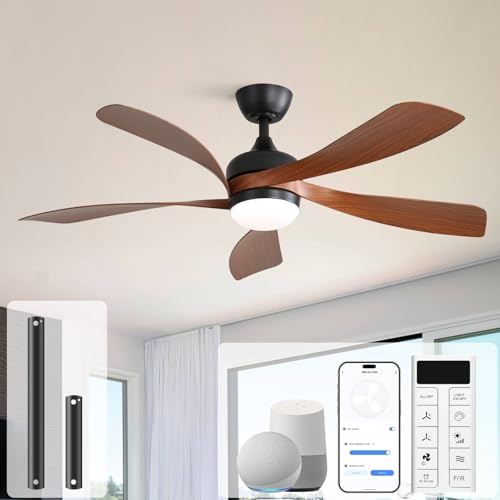
Sofucor 52" Smart Ceiling Fan, Indoor/Outdoor Ceiling Fans with Lights and Remote, Compatible with Alexa/Google/App, 3-Color Light 6-Speed Timing Reversible DC Motor for Bedroom Living Room Patio
Voice & App & Remote Control: Sofucor alexa ceiling fan with light can be controlled in 3 ways....
As an affiliate, we earn on qualifying purchases.
Frequently Asked Questions
How Does Humidity Affect Wind Chill Calculations?
Humidity doesn’t directly affect wind chill calculations, as they primarily depend on air temperature and wind speed. However, high humidity can influence perceived coldness by reducing the body’s ability to evaporate moisture, which can make the environment feel colder. This perceived chill may align with wind chill effects but isn’t incorporated into standard formulas. Thus, while humidity impacts comfort and perception, it isn’t a factor in the numerical wind chill calculation.
Can Wind Chill Impact Electronic Fan Performance?
Yes, wind chill can impact electronic fan performance by increasing heat dissipation efficiency. As wind chill lowers the perceived temperature around the fan, it enhances convective heat transfer from the device, preventing overheating. This leads to improved cooling performance, especially in cold environments. However, wind chill does not affect the fan’s mechanical operation directly but influences its thermal management, allowing sustained operation and potentially extending component lifespan.
What Are the Best Ways to Test Fan Efficiency?
You can test fan efficiency by measuring airflow with an anemometer, recording the volume of air moved per unit time. Next, compare the power consumption using a wattmeter to assess energy use relative to airflow. Conduct controlled tests at various speeds and environments, noting temperature and humidity. This precise data reveals performance consistency, helping you identify inefficiencies and optimize your fan setup for maximum effectiveness.
How Does Altitude Influence Wind Chill Effects?
Altitude influences wind chill effects by decreasing air pressure, which causes the air to become less dense. As you ascend, the thinner air reduces the transfer of heat away from your skin, diminishing wind chill’s cooling effect. Consequently, at higher elevations, even with the same wind speed, you experience less cold sensation due to the lower air density. This relationship emphasizes the importance of altitude considerations in thermal comfort assessments.
Are There Safety Standards for Wind Chill in Fan Design?
You should know that safety standards for wind chill in fan design are critical and well-defined. Industry regulations, like those from OSHA and ANSI, set strict guidelines ensuring fans operate safely under various conditions. These standards specify maximum permissible wind chill effects to prevent frostbite or hypothermia risks. By conforming to these, you ensure that fan performance remains both efficient and safe, avoiding catastrophic failures or health hazards.

ZMISHIBO 52 Inch Ceiling Fan with Light, App&Remote Control, Flush Mount Low Profile, Dimmable 20W LED Light, Quiet Reversible Motor for Bedroom, Living Room, Apartment, Black
Perfect Size for Rooms: This 52-inch ceiling fan is ideal for cooling and illuminating spacious areas like living...
As an affiliate, we earn on qualifying purchases.
Conclusion
By grasping wind chill and fan efficiency, you access the key to ideal comfort and energy use. Think of wind chill as nature’s silent artist, sculpting perceived cold, while your fan’s efficiency is the engine that drives clarity through complexity. Mastering these concepts empowers you to fine-tune environmental controls, much like a conductor guiding an orchestra. Ultimately, understanding these principles allows you to harness air flow’s true potential, transforming raw data into precise, effective climate management.

Ohniyou Ceiling Fans with Lights, 52'' Low Profile Ceiling Fan with Light and Remote/APP Control, Modern Flush Mount Ceiling Fan for Indoor Bedroom Living Room, Dimmable, Qiuet DC Motor, Black
Smart Ceiling Fans with APP & Remote Control: This modern ceiling fan with lights has all functions controllable...
As an affiliate, we earn on qualifying purchases.

Passky Ceiling Fans with Lights, 52 inch Sleek Ceiling Fan with Light and Remote Control, 3CCT, Dimmable, Reversible, Noiseless, Black Ceiling Fan for Bedroom, Living Room
Ceiling Fan with Light: Passky ceiling fan with light, pass the breeze, light you sky. Our 52 inch...
As an affiliate, we earn on qualifying purchases.