
To find your biggest power leaks with whole-home energy monitoring, start by installing smart meters that give real-time data on your energy use. Look for sudden spikes or patterns during specific times to identify appliances or areas causing waste. Establish a baseline to spot phantom loads and leaks, then take actions like sealing gaps or upgrading appliances. Keep exploring these strategies to uncover even more ways to cut costs and improve efficiency.
Key Takeaways
- Use smart meters to monitor real-time energy consumption and identify spikes indicating leaks.
- Conduct energy audits to detect hidden leaks, insulation gaps, and inefficient appliances.
- Establish a baseline to recognize abnormal power usage and phantom loads from devices left plugged in.
- Analyze usage patterns to pinpoint times of excessive energy draw and target specific leaks.
- Implement targeted improvements like sealing gaps, upgrading appliances, and shifting high-energy activities.

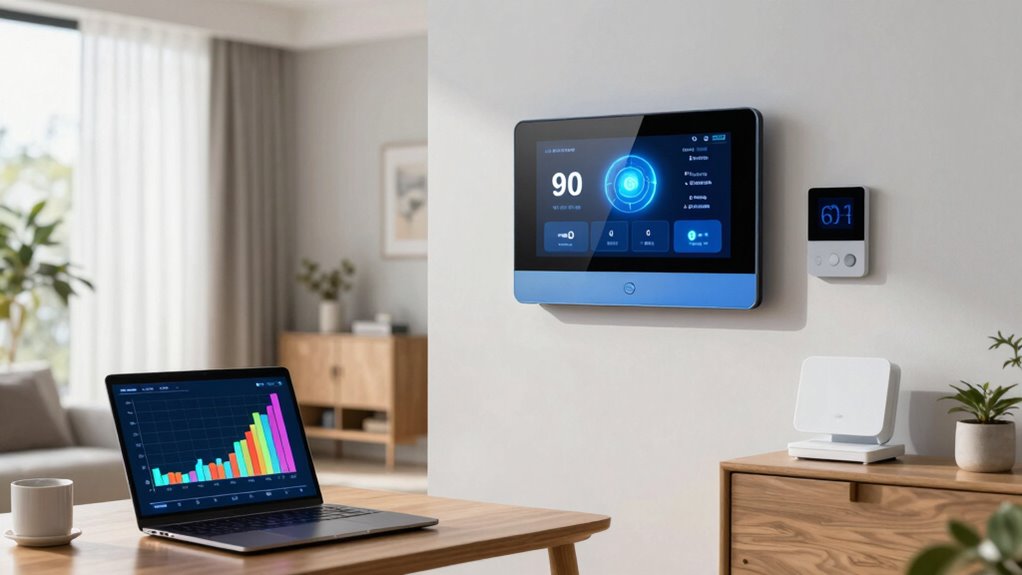
Whole-home energy monitoring provides homeowners with real-time insights into their energy consumption, allowing you to identify inefficiencies and reduce waste. When you install smart meters, you gain immediate access to detailed data about how much energy your home uses at any given moment. Unlike traditional meters, smart meters transmit usage information directly to your utility company and often provide you with a user-friendly interface to track your consumption. This visibility helps you spot patterns, such as spikes during certain times of day, so you can pinpoint where energy is being unnecessarily wasted. Using smart meters effectively starts with understanding your baseline consumption. By analyzing this data, you can identify appliances or behaviors that draw excessive power. For example, if your smart meter shows unusually high usage when you’re not actively using appliances, it might indicate phantom loads—devices that draw power even when turned off. Recognizing these leaks encourages you to unplug or replace energy-hungry devices, saving you money over time. Conducting an energy audit complements the insights from your smart meter. An energy audit involves a professional or DIY assessment of your home’s energy efficiency. During an audit, experts examine insulation levels, HVAC systems, lighting, and appliances, looking for areas where energy escapes or is wasted. They may use tools like blower doors or thermal imaging cameras to find hidden leaks and insulation gaps. The results of an energy audit often reveal overlooked issues that your smart meter data alone can’t uncover. Combining these approaches gives you a thorough understanding of your home’s energy profile. Energy efficiency assessments can help pinpoint specific areas where upgrades will have the greatest impact. Once you identify the biggest power leaks, you can target your efforts to improve efficiency. For example, if your energy audit uncovers poor insulation, sealing gaps around windows and doors can considerably reduce heating and cooling waste. If your smart meter data highlights high energy use during specific times, you might shift certain activities, like laundry or dishwashing, to off-peak hours. Upgrading to energy-efficient appliances or installing smart thermostats can also make a notable difference.

Smart Home Energy Monitor with 16 50A Circuit Level Sensors, Real-Time Power Usage & Electricity Cost Tracking, Ideal for Rental Homes & Shared Apartments, App History, Compatible with Home Assistant
⚡ EASY INSTALLATION: Installs in circuit panel of most homes with clamp-on sensors. Supports single-phase up to 240VAC…
As an affiliate, we earn on qualifying purchases.
As an affiliate, we earn on qualifying purchases.
Frequently Asked Questions
What Is the Average Cost of Whole-Home Energy Monitoring Systems?
The average cost of whole-home energy monitoring systems ranges from $200 to $500, depending on features and brands. When doing a cost comparison, consider installation fees, which can add $50 to $200 if you hire a professional. Some systems are DIY-friendly, saving on installation costs. Overall, investing in energy monitoring can save you money in the long run by identifying your biggest power leaks.
How Long Does It Take to See Results After Installing Monitoring Devices?
Think of your energy monitoring devices like a diet tracker—you see results quickly. Usually, you’ll notice improvements within a week, as the installation timeline allows the system to gather accurate data. Monitoring accuracy improves as the system learns your usage patterns. You’ll start identifying power leaks early on, enabling you to make adjustments and save energy fast. Expect to see actionable insights within just a few days.
Can Energy Monitors Detect Specific Appliances Causing High Energy Use?
Yes, energy monitors can detect specific appliances causing high energy use by analyzing power usage patterns. You can identify appliances through appliance identification features, which distinguish individual devices based on their unique energy signatures. By monitoring these patterns over time, you’ll spot which appliances consume the most power, helping you target efficiency improvements. This detailed insight empowers you to make smarter energy choices and reduce unnecessary electricity costs.
Are There Any Safety Concerns With Installing Energy Monitoring Equipment?
Yes, there are some safety concerns with installing energy monitoring equipment. You should be cautious about electrical hazards during installation, especially if you’re working with high voltage circuits. To guarantee installation safety, follow manufacturer instructions carefully and consider hiring a licensed electrician if you’re unsure. Properly installed monitors help prevent electrical accidents and ensure safe operation, giving you peace of mind while managing your home’s energy use.
How Do I Interpret the Data From My Energy Monitor Effectively?
To interpret your energy monitor data effectively, focus on data analysis by examining energy trends over time. Look for patterns showing high usage periods or unexpected spikes, which indicate leaks or inefficiencies. Use the monitor’s graphs and reports to identify appliances or habits that consume the most power. This insight helps you make smarter decisions, like adjusting usage or upgrading equipment, ultimately saving energy and lowering bills.

Eyedro Home Energy Monitor – Real-Time Electricity Usage Monitor with Solar Net Metering – Whole House Power Consumption Monitor – WiFi/Ethernet Smart Energy Meter with Reports & History, 2 Sensors
Take Control of Your Power Use in Real Time: The Eyedro Home Energy Monitor gives you instant insight…
As an affiliate, we earn on qualifying purchases.
As an affiliate, we earn on qualifying purchases.
Conclusion
By installing a whole-home energy monitor, you’ll uncover hidden power leaks that silently drain your wallet. Think of it as your home’s energy detective, shining a light on the unseen culprits. With this knowledge, you can make smarter choices, cut costs, and boost efficiency. Remember, a well-monitored home is like a finely tuned instrument—harmonizing every note of your energy use for a more sustainable, savings-filled future.
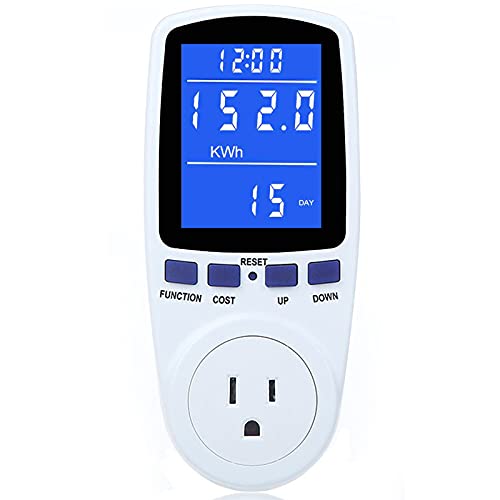
Upgraded Watt Power Meter Plug Home Electrical Usage Monitor Consumption, Energy Voltage Amps Kill Tester with Backlight, Overload Protection, 7 Modes Display
Various Monitoring Parameters: The power meter plug can monitor the power (W), energy (kWh), volts, amps, hertz, power…
As an affiliate, we earn on qualifying purchases.
As an affiliate, we earn on qualifying purchases.

TOPDON TC004 Mini Thermal Imaging Camera, 240 x 240 TISR Resolution, 15-Hour Battery Life, 128 x 128 IR Resolution, 25Hz Handheld Infrared Camera with High/Low Temp Alerts, Auto Shutdown- Blue
【Enhanced Thermal Clarity】Start with 128×128 thermal imaging and enhance to 240×240 resolution with TISR technology for greater details….
As an affiliate, we earn on qualifying purchases.
As an affiliate, we earn on qualifying purchases.