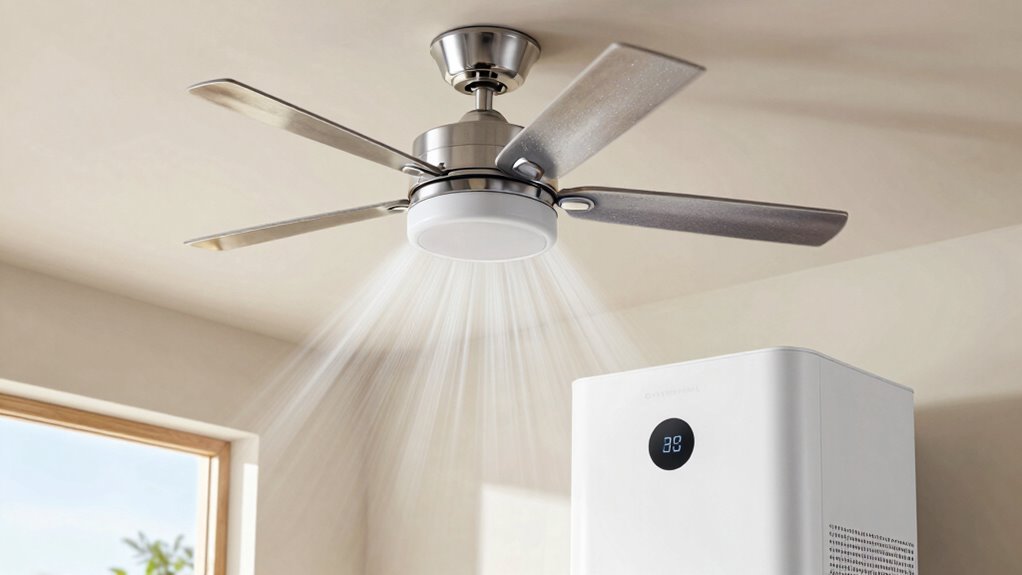
Using a dehumidifier combined with a ceiling fan can make your space feel cooler without lowering your thermostat. The dehumidifier reduces excess moisture, preventing that sticky, humid feeling, while the ceiling fan circulates air for a revitalizing breeze. This combo improves indoor comfort and can even help you set your thermostat higher, saving energy and lowering bills. Want to discover more tips to maximize this setup? Keep exploring for expert advice and simple tricks.
Key Takeaways
- Using a dehumidifier reduces indoor moisture, making the air feel cooler without lowering the thermostat.
- Ceiling fans circulate air, enhancing comfort and reducing the need for lower temperatures.
- The combined effect improves cooling efficiency and can lower energy bills by reducing AC workload.
- Maintaining low humidity levels prevents mold and mildew, contributing to a fresher, more breathable environment.
- Proper operation and regular maintenance of both appliances ensure quiet, effective, and energy-efficient cooling.
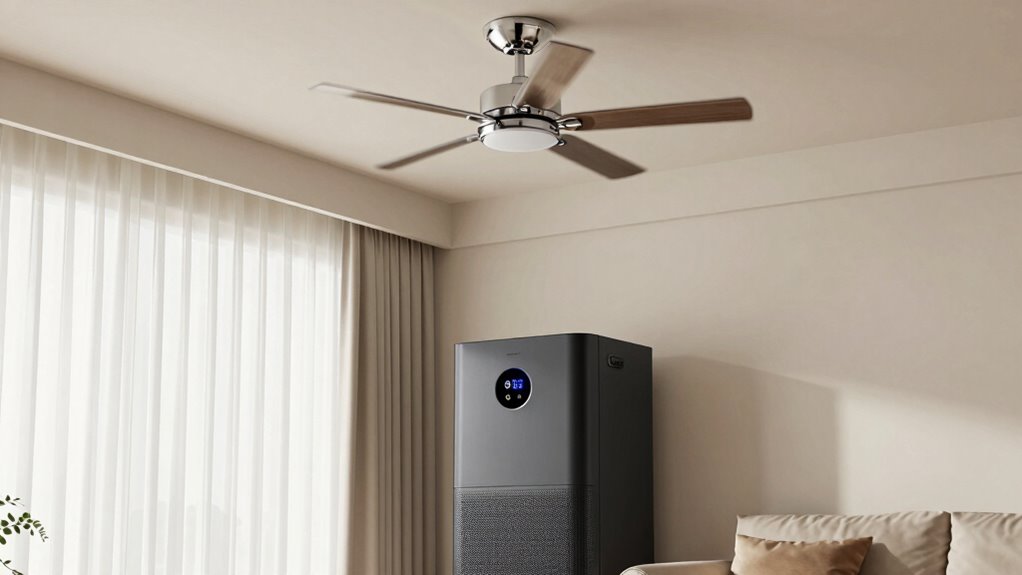
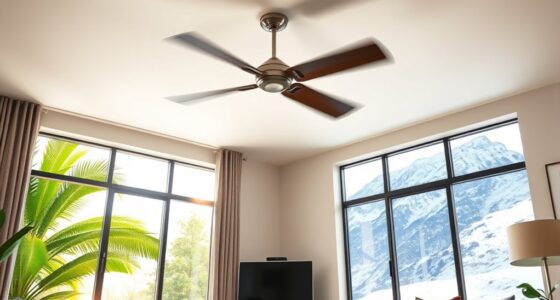
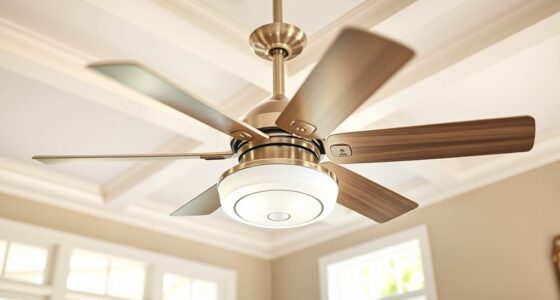
Using a dehumidifier and ceiling fan together can considerably improve your indoor comfort by reducing excess moisture and circulating air. When you combine these two appliances, you create a more pleasant environment without necessarily turning down the thermostat. This approach allows you to stay cooler and more comfortable while saving energy and reducing utility costs. As you operate both devices, you’ll notice that your space feels fresher, less sticky, and more breathable. The dehumidifier pulls moisture from the air, which not only improves comfort but also helps prevent mold and mildew. Meanwhile, the ceiling fan keeps the air moving, preventing stagnant pockets of warm, humid air from settling. Additionally, choosing models with integrated smart controls can optimize performance and further enhance energy efficiency. One of the biggest advantages of using a dehumidifier and ceiling fan together is their impact on energy efficiency. Instead of lowering the thermostat, which causes your air conditioning system to work harder and consume more power, you can rely on these devices to enhance comfort. The dehumidifier reduces the humidity, making the air feel cooler even at higher temperatures, while the fan promotes air circulation. This combined effort means you can set your thermostat a few degrees higher and still feel cool and comfortable. Over time, this strategy cuts down on energy bills and minimizes wear on your air conditioning system, extending its lifespan. However, it’s important to contemplate noise levels when running both appliances simultaneously. Modern dehumidifiers are designed to operate quietly, but some models can still generate noticeable sounds, especially during high-capacity operation. Ceiling fans are typically quiet as well, but their noise depends on the speed setting and blade design. When used together, these sounds might add up, potentially causing some disturbance, especially if you’re sensitive to noise. To mitigate this, choose energy-efficient models with low noise ratings and operate the fan at a moderate setting. This way, you maximize comfort without sacrificing peace and quiet in your home. It’s also worth noting that both appliances are easy to maintain and operate. Regularly cleaning the dehumidifier’s filter and ensuring the fan blades are dust-free keeps them running efficiently and quietly. By integrating the dehumidifier and ceiling fan into your daily routine, you create a cooling strategy that’s effective, energy-conscious, and unobtrusive. You’ll find that you can enjoy a cooler, more comfortable space without the need to crank up the air conditioning or deal with loud, disruptive noises. This combination allows you to optimize indoor comfort, save energy, and enjoy a quieter home environment all at once.

DGUAM 5000 Sq. Ft Dehumidifier, Max 95 Pint/Day Dehumidifier for Basement & Home, Compressor Dehumidifier with Drain Hose, Smart Humidity Control, Energy Efficient & Quiet for Bedroom, Large Rooms
【From Damp to Comfortable – 95 Pints/day Powerful Dehumidifier for Basement, Home & Large Rooms】: This dehumidifier for…
As an affiliate, we earn on qualifying purchases.
As an affiliate, we earn on qualifying purchases.
Frequently Asked Questions
Can Using Both Reduce Energy Bills Effectively?
Yes, using both can reduce your energy bills effectively. They help you feel cooler without relying on the air conditioner, which consumes more energy. By comparing costs, you’ll find that running a dehumidifier and ceiling fan costs less than cranking up your AC. This approach boosts energy savings, lowers your utility bills, and maintains comfort. Just make sure they’re used efficiently for maximum cost comparison benefits.
How Loud Are Combined Dehumidifier and Fan Setups?
The noise levels of combined dehumidifier and fan setups vary but generally fall into the moderate range, often comparable to a conversation at home. To reduce sound, consider sound mitigation options like placing units on vibration pads or in insulated cabinets. Some models feature quieter operation modes, so check specifications. With proper placement and choosing quieter models, you can enjoy comfort without significant noise disruptions.
Are There Safety Concerns With Running Both Devices Simultaneously?
Hold onto your bonnet, modern safety is key! Running both devices together isn’t inherently unsafe, but you should prioritize electrical safety. Verify each device is plugged into properly grounded outlets and avoid overloading circuits. Place them away from water sources and ensure good ventilation around each. Proper device placement prevents overheating and electric hazards. Always follow manufacturer guidelines, and if unsure, consult an electrician to keep your home safe while optimizing comfort.
Which Room Sizes Are Best Suited for This Combo?
You’ll find that this combo works best in medium to large rooms, around 200 to 400 square feet. For ideal sizing, choose a dehumidifier with a capacity suited to your room’s humidity level and a ceiling fan that can circulate air effectively. Smaller rooms may not benefit as much, while larger spaces might require multiple units. Make sure both devices are appropriately rated to maximize comfort and efficiency.
How Often Should I Maintain or Clean These Devices?
Ever wonder if you’re neglecting your devices? You should clean your dehumidifier and ceiling fan at least once a month to guarantee ideal device lifespan and efficiency. Regular cleaning removes dust and dirt, preventing malfunctions and prolonging their life. Check manufacturer instructions for specific maintenance tips, but staying consistent with your cleaning schedule keeps your devices running smoothly and helps you enjoy a cooler, more comfortable home longer.

72 inch Ceiling Fans with Lights,Large Ceiling Fan with Light and Remote Control, Dimmable, 3CCT, Quiet, Black Modern Ceiling fan For Living Room, Bedroom, Kitchen, Patio, Farmhouse, Indoor/Outdoor
Ceiling Fan with Light: Decorate your home with Amico ceiling fan! While bringing you coolness and comfort, it…
As an affiliate, we earn on qualifying purchases.
As an affiliate, we earn on qualifying purchases.
Conclusion
By pairing a dehumidifier with a ceiling fan, you create a breeze that feels like a cool ocean breeze on a hot day, without needing to lower your thermostat. This dynamic duo keeps your space comfortable and inviting, proving that sometimes, the simplest solutions are the most effective. So next time the heat hits, remember: you don’t have to fight the thermostat—let these devices work together to keep you cool as a cucumber.

Whynter ARC-148MHP 14,000 BTU Portable Air Conditioner and 10,000 BTU Portable Air Heater with Dehumidifier and Fan for 500 Square Foot Rooms, White
Powerful Yet Quiet: The ideal AC unit for bedrooms, this 14,000 BTU / 10,000 BTU (SACC) indoor air…
As an affiliate, we earn on qualifying purchases.
As an affiliate, we earn on qualifying purchases.

Concrobium Mold Control, 32 oz Spray – Eliminates & Prevents Mold – EPA-Registered, Bleach-Free, Odorless, VOC-Free
Eliminates & Helps Prevent Mold: Targets existing mold at the source and leaves behind an invisible barrier that…
As an affiliate, we earn on qualifying purchases.
As an affiliate, we earn on qualifying purchases.