Ceiling fans generally use less energy than box fans when operated continuously because they move larger volumes of air efficiently at lower wattages, typically between 15-75 watts. In contrast, box fans often consume 45-100+ watts for similar airflow, making them less energy-efficient overall. Ceiling fans are ideal for sustained comfort and reducing cooling costs, while box fans excel for targeted, short-term use. To understand which option suits your needs best, consider how your usage patterns impact energy consumption.

Get home appliances delivered free with Prime
- Fast, free delivery on millions of items
- Prime Video, Amazon Music and more included
- Member-only deals all year
Key Takeaways
- Ceiling fans generally consume less power (15-75 watts) than box fans (45-100+ watts) for comparable airflow.
- Ceiling fans are more energy-efficient for continuous, whole-room airflow and reducing cooling costs.
- Box fans use more energy per hour, especially when used for targeted, short-term cooling needs.
- Properly rated, energy-efficient ceiling fans maximize savings by lowering reliance on air conditioning.
- Box fans are portable and suitable for temporary cooling but tend to be less energy-efficient overall.
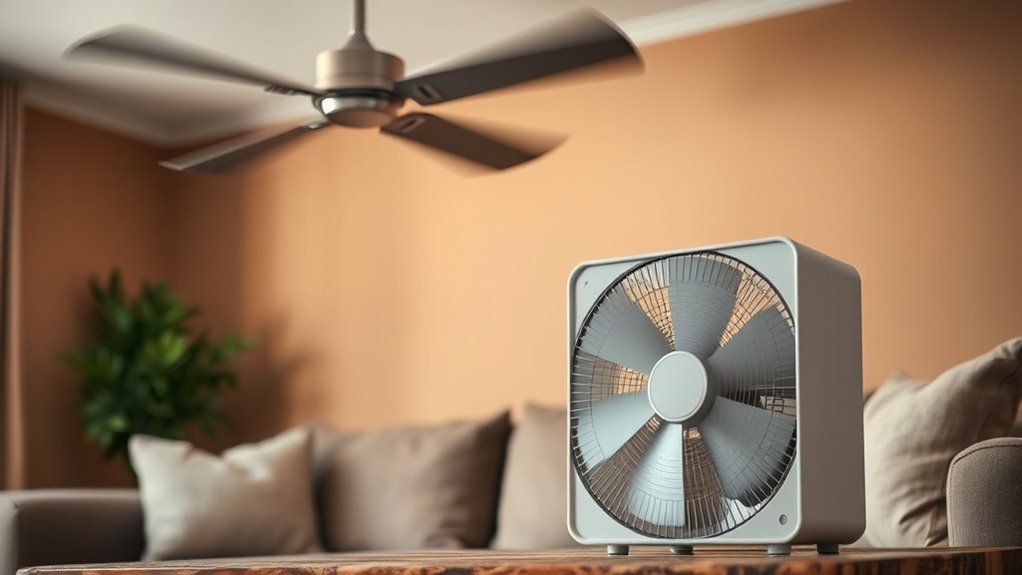
When choosing between a ceiling fan and a box fan, understanding their respective advantages and limitations is essential for making an informed decision. Both fans serve the primary purpose of circulating air within a space, but their energy consumption profiles differ markedly based on design, operation, and intended use. To determine which uses less energy, you need to analyze their power draw, efficiency, and the typical conditions under which they operate.
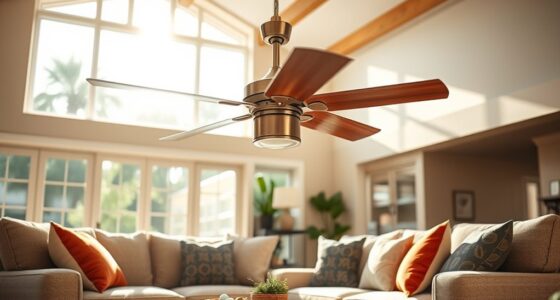
Ceiling fans are generally more energy-efficient when used to maintain consistent airflow across a room. They consume between 15 and 75 watts depending on size, speed settings, and motor efficiency. The larger blades and slower rotation speed enable them to move substantial volumes of air while consuming relatively little power. Because ceiling fans are mounted overhead, they create a gentle, widespread airflow that can considerably reduce the need for air conditioning. This reduction in cooling load translates directly into energy savings, especially in moderate climates or seasons. However, ceiling fans require a dedicated power supply and installation costs can be higher, which might offset some energy efficiency benefits if the fan is rarely used or improperly maintained.
Ceiling fans are highly energy-efficient for maintaining consistent airflow and reducing air conditioning needs.
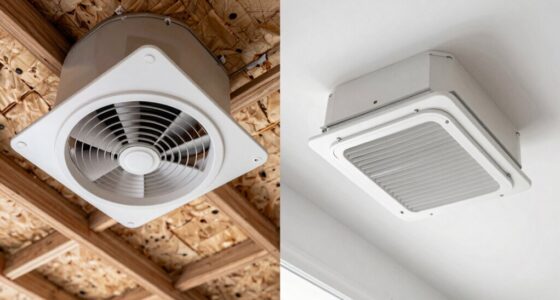
In contrast, box fans are typically portable, plug into standard outlets, and are often used for localized cooling or ventilation. Their power consumption usually ranges from 45 to 100 watts, with some models pushing higher depending on size and speed settings. Because they are smaller and more focused in their airflow, box fans tend to consume more energy per unit of air moved than ceiling fans, especially when used continuously for extended periods. Nonetheless, their portability allows you to target specific areas, potentially reducing the need to cool entire rooms and thereby saving energy indirectly. If you only need to cool a small space temporarily, a box fan can be more efficient in terms of overall energy use for that specific task.
The efficiency of each fan type also depends on how they are used. Ceiling fans, when operated at ideal speeds and combined with proper room insulation, can considerably cut cooling costs. Conversely, box fans are more effective for short-term, targeted cooling but tend to consume more power relative to their airflow output. Additionally, the energy efficiency of both fans improves when used with energy-saving features such as variable speed controls and timers.
Furthermore, selecting fans with energy-efficient motors can significantly impact overall energy consumption and operational costs. Ultimately, if your goal is to minimize overall energy consumption while maintaining comfortable indoor temperatures, ceiling fans tend to be more energy-efficient for continuous use. They circulate air more broadly, reducing reliance on air conditioning and lowering energy bills over time. Box fans, while convenient and versatile, generally consume more energy per hour for smaller or more localized cooling tasks. Hence, your choice should consider not just the raw energy numbers, but also the specific cooling needs and usage patterns of your space.
Products Worth Considering

Bose SoundLink Flex Bluetooth Speaker (2nd Gen), Portable Waterproof Speaker, Black

LEVOIT Vital 200S-P Smart Air Purifier for Large Rooms

Dyson Cyclone V10 Origin Cordless Vacuum
As an affiliate, we earn on qualifying purchases.
Frequently Asked Questions
Do Ceiling Fans Consume More Power When Running at Higher Speeds?
Yes, ceiling fans consume more power at higher speeds because their motors work harder to increase blade rotation. As the speed setting rises, energy usage increases proportionally, though typically remaining below that of many box fans. You should consider that running your ceiling fan at lower speeds consumes less energy, making it more efficient for continuous use. Adjusting the speed allows you to balance comfort and energy consumption effectively.
How Does Room Size Affect the Energy Efficiency of Fans?
Think of your room as a garden that needs the right amount of watering. Smaller rooms require less energy, so a fan consumes less power to circulate air effectively. Larger spaces need more airflow, increasing energy use. To maximize efficiency, choose a fan with appropriate size and speed settings for your room’s dimensions. Proper sizing guarantees you don’t waste energy, keeping your cooling both effective and economical.
Are Energy-Efficient Models Available for Both Ceiling and Box Fans?
Yes, energy-efficient models are available for both ceiling and box fans. These models feature advanced motors, optimized blade designs, and energy-saving settings that reduce power consumption without sacrificing performance. When selecting a fan, look for ENERGY STAR certification, which guarantees efficiency standards. By choosing these models, you can effectively cool your space while minimizing electricity use, ultimately saving you money and reducing your environmental impact.
Does Using a Fan With a Thermostat Save More Energy?
Using a fan with a thermostat can save you more energy because it automatically adjusts operation based on room temperature, preventing unnecessary running. When the room reaches the set temperature, the fan turns off or reduces speed, conserving power. This precision control ensures you’ll use only what you need, making your cooling more efficient. Implementing a thermostat-equipped fan is a smart move for energy-conscious households seeking ideal comfort.
What Maintenance Tips Can Reduce a Fan’s Energy Consumption?
You can reduce your fan’s energy consumption by regularly cleaning blades and vents to prevent dust buildup, which hampers efficiency. Make certain blades are balanced to avoid unnecessary motor strain, and lubricate moving parts annually to maintain smooth operation. Replace worn-out or damaged parts promptly. Additionally, using a fan with a programmable timer or smart controls allows you to optimize usage, preventing unnecessary operation and saving energy over time.
Conclusion
When comparing energy use, a ceiling fan generally consumes less power than a box fan, making it the more efficient choice for long-term cooling. Think of your energy bill as a garden—choosing the right fan is like watering wisely; it keeps your costs and environmental impact in check. By understanding these differences, you can make a smarter, more sustainable decision that benefits your wallet and the planet alike.