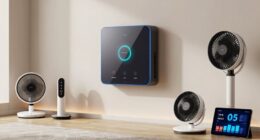
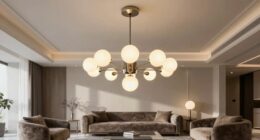
To maximize efficiency, you should adjust fan speeds based on real-time airflow needs, using variable speed controls or smart thermostats to balance comfort and energy use. For lighting, analyze task-specific requirements and incorporate dimming controls, occupancy sensors, and daylight harvesting to reduce unnecessary energy consumption. Regularly monitor system performance and maintain equipment to guarantee optimal operation. Implementing adaptive control strategies helps harmonize lighting and airflow settings, and continuing with this approach open up even greater efficiency gains.
Key Takeaways
- Use variable speed controls and smart thermostats to automate fan speed adjustments based on real-time occupancy and temperature data.
- Implement dimming controls and occupancy sensors to optimize lighting levels according to activity and natural daylight availability.
- Maintain proper calibration of HVAC and lighting systems to ensure consistent performance and energy efficiency.
- Leverage daylight harvesting and automated scheduling to reduce artificial lighting during daytime use.
- Continuously monitor system performance and adjust settings to balance occupant comfort with energy conservation.

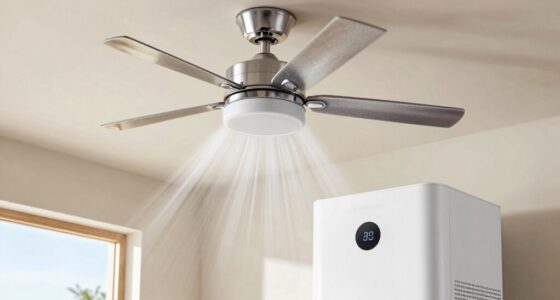
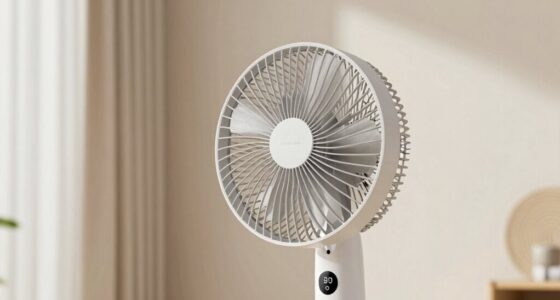
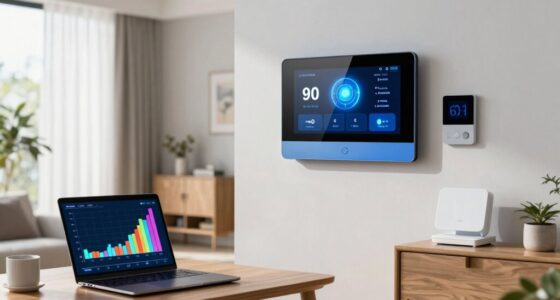
Adjusting fan speed and lighting is essential for optimizing comfort and energy efficiency in indoor environments. Proper calibration of these systems allows for precise control over thermal comfort and illumination levels, which directly impacts energy consumption and occupant satisfaction. When you adjust fan speeds, you’re influencing air circulation patterns, which can either enhance or hinder heat transfer. A higher fan speed increases air movement, promoting faster cooling or heating, but it also consumes more energy. Conversely, lower speeds reduce energy expenditure but may compromise comfort if the air isn’t circulated effectively. Achieving the ideal fan setting requires understanding the relationship between airflow, occupant load, and ambient temperature. For instance, in a well-insulated room, moderate fan speeds can suffice to maintain comfort, whereas in spaces with high thermal loads or large occupancy, higher speeds might be justified during peak times. You should consider the duty cycle of the fan—running it at maximum capacity constantly isn’t energy-efficient and can lead to unnecessary wear, so implementing variable speed controls or smart thermostats can help automate adjustments based on real-time data. Additionally, proper maintenance of the fan and lighting systems ensures consistent performance and energy efficiency. Lighting adjustments follow a similar principle. Over-illumination results in wasted energy and potential discomfort, while insufficient lighting hampers visibility and productivity. You need to analyze the specific tasks performed within the space to determine appropriate lighting levels, aligning with standards such as illuminance requirements for workspaces. Dimming controls, occupancy sensors, and daylight harvesting systems enable dynamic adjustments that optimize energy use without sacrificing functionality. For example, during daylight hours, increasing reliance on natural light reduces dependence on artificial sources, thereby decreasing energy consumption. When adjusting lighting, consider the color temperature and lumen output, as these factors influence visual comfort and energy efficiency. Cooler temperatures are often more energy-efficient but might not be suitable for all environments, especially where warmer tones are preferred for ambiance. Integrating fan and lighting controls through centralized building management systems allows for synchronized adjustments, further enhancing efficiency. Automated schedules can be programmed based on occupancy patterns, while sensor feedback ensures adjustments respond to real-time conditions. You should regularly analyze usage data to identify patterns or anomalies that could suggest suboptimal settings or equipment malfunctions. Continuous monitoring and fine-tuning are essential; static settings rapidly become outdated as occupancy or environmental conditions change. To optimize both systems, consider incorporating smart controls that adapt dynamically to changing conditions, increasing overall efficiency. Ultimately, maximizing efficiency involves balancing occupant comfort with energy conservation through precise, data-driven adjustments. This approach minimizes waste, reduces operational costs, and extends the lifespan of mechanical and electrical components, ensuring a sustainable and effective indoor environment.

Leviton Decora Smart Fan Speed Controller, Wi-Fi 2nd Gen, Neutral Wire Required, Works with My Leviton, Alexa, Google Assistant, Apple Home/Siri & Wired or Wire-Free 3-Way, D24SF-1RW, White
DON'T WORRY ABOUT STALE AIR – make your existing ceiling fan smart to circulate airflow and improve the…
As an affiliate, we earn on qualifying purchases.
As an affiliate, we earn on qualifying purchases.
Frequently Asked Questions
How Can I Automate Fan and Lighting Adjustments?
You can automate fan and lighting adjustments by installing smart devices like thermostats, motion sensors, and smart switches. These devices connect to a central control system or app, allowing you to set parameters for automatic operation based on occupancy, time, or ambient conditions. Integrating these with automation platforms such as Home Assistant or SmartThings enables real-time, data-driven adjustments, maximizing energy efficiency while maintaining comfort.
What Are the Energy Savings From Optimal Fan and Light Settings?
Ideal fan and light settings can cut energy consumption by 20-30%. By reducing fan speeds during off-peak hours and dimming lights when natural daylight is sufficient, you lower electricity use considerably. Automated controls ensure these adjustments occur precisely when needed, minimizing waste. Over time, these efficiencies translate into substantial cost savings and reduced environmental impact, making your energy management more sustainable and cost-effective.
Are There Smart Devices Compatible With My Current System?
Yes, many smart devices are compatible with your current system, especially if it supports standard protocols like Wi-Fi, Zigbee, or Z-Wave. You can integrate smart thermostats, lighting controls, and fan controllers to optimize energy use. Confirm your system’s hub or controller supports these protocols, and check device specifications for compatibility. This setup enables you to automate adjustments, enhance efficiency, and remotely monitor energy consumption effectively.
How Do Weather Changes Affect Optimal Fan and Lighting Settings?
Weather changes considerably impact your fan and lighting settings. For example, on a hot, sunny day, you might lower your fan speed to prevent overcooling and increase lighting only when necessary, reducing energy use. Cooler or cloudy days may require higher fan speeds to maintain comfort. By analyzing external temperature and sunlight data, smart systems can automatically optimize settings, ensuring maximum efficiency while maintaining comfort and minimizing energy consumption.
What Maintenance Is Needed to Keep Systems Running Efficiently?
You should regularly inspect and clean filters, vents, and light fixtures to prevent dust buildup that hampers efficiency. Check electrical connections for corrosion or looseness, and replace worn components promptly. Schedule seasonal maintenance to calibrate sensors and verify system settings, ensuring ideal operation. Additionally, monitor energy consumption data to identify inefficiencies, and perform system updates or repairs as needed to maintain peak performance and reduce operational costs.

ECOELER Motion Sensor Dimmer Switch, Dimmer Electrical Light Switches with Occupancy Sensor, Single Pole for CFL/LED/Incandescent Bulb, Neutral Wire Required, Wall Plate Included, White, 2Pack
Hands Free Control: Enjoy the convenience of hands-free lighting control. With motion sensor and ambient light sensor, the…
As an affiliate, we earn on qualifying purchases.
As an affiliate, we earn on qualifying purchases.
Conclusion
By fine-tuning your fan speed and lighting, you optimize your environment like a skilled conductor directing an orchestra, balancing energy flow and ambiance. Precise adjustments act as the keystone in a well-constructed arch, ensuring stability and efficiency. When you analyze and calibrate these settings carefully, you create a symphony of functionality that minimizes waste and maximizes comfort. Ultimately, your environment becomes a finely tuned machine, harmonizing energy use with operational excellence.

Hubbell DLCPCI Daylight Harvesting Photocell Sensor, Indoor, 24V, White
24 Volt
As an affiliate, we earn on qualifying purchases.
As an affiliate, we earn on qualifying purchases.

New! Honeywell Home Programmable Thermostat, Single-Stage, 1 Heat/1 Cool Compatibility, 5-2 Day Schedule, X2P, White, RTH20B
CUSTOMIZE: Choose to receive change air filter reminders and select display settings to optimize this thermostat for home.The…
As an affiliate, we earn on qualifying purchases.
As an affiliate, we earn on qualifying purchases.