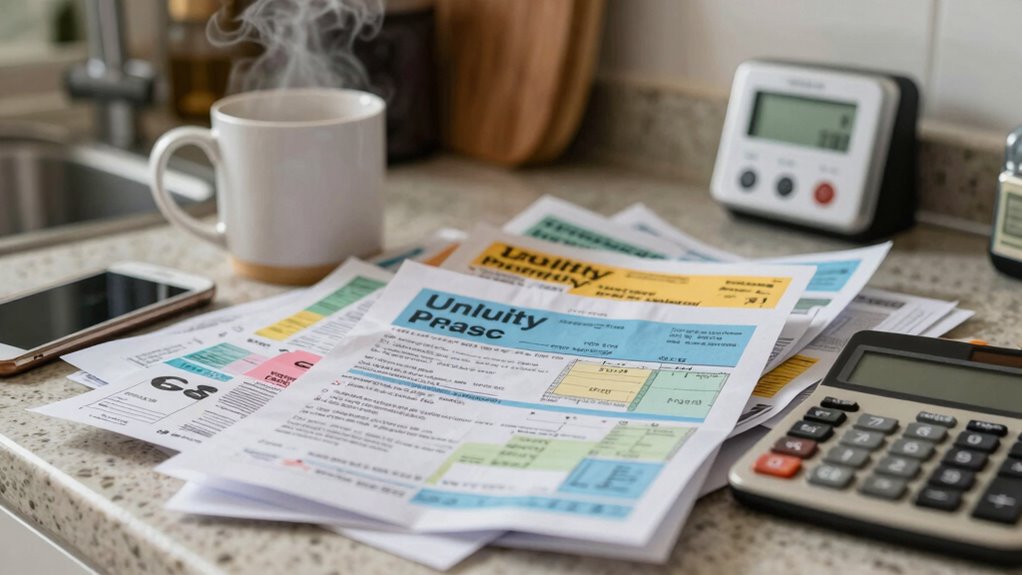

Utility bills confuse many people because of their complex charges, fluctuating rates, and hidden fees. You might see different line items like delivery charges, taxes, and environmental fees that aren’t always clear. Changes in rates due to market or seasonal factors can also make it hard to understand how much you owe. If you want to better grasp what’s behind these costs, there’s more to discover that can help you save and stay informed.

Get home appliances delivered free with Prime
- Fast, free delivery on millions of items
- Prime Video, Amazon Music and more included
- Member-only deals all year
Key Takeaways
- Complex billing structures with multiple charges and fees make it hard to understand total costs.
- Rate fluctuations driven by market, seasonal, and regulatory factors create confusion over bill increases.
- Common errors like incorrect readings or data entry lead to overcharges and mistrust in bills.
- External influences on rates and lack of transparency hinder consumers from understanding cost changes.
- Limited knowledge about billing details and external factors prevents people from easily identifying errors or explaining charges.
Utility bills often confuse people because they can be difficult to understand and compare. You might look at your bill and wonder why the amount varies from month to month or why certain charges seem unclear. One common issue is billing errors, which can happen for various reasons, such as incorrect meter readings or mistakes in data entry. These errors can lead to overcharges or undercharges, making it hard for you to trust the bill’s accuracy. When you notice a sudden spike in your bill that doesn’t match your usage, it’s natural to question whether there’s been a mistake. Sometimes, utility companies correct these errors once you report them, but it can be frustrating to spend time verifying your bill and communicating with customer service.
Another reason utility bills cause confusion is rate fluctuations. Utility providers often change their rates due to market conditions, regulatory decisions, or seasonality. For example, during colder months, heating costs rise, and in summer, air conditioning can considerably boost your energy consumption. These fluctuations can make it tricky to compare bills from different months or years. You might think you’re using less energy, yet your bill increases, leading to confusion. It’s important to understand that rates aren’t static; they shift based on external factors and the provider’s pricing policies. Without this knowledge, you might wrongly assume your usage has increased when, in fact, the rate per unit of energy has just gone up. Additionally, the complexity of billing structures can contribute to your confusion. Many utility bills include various charges, taxes, fees, and surcharges, which aren’t always straightforward. You may see line items labeled as delivery fees, environmental charges, or infrastructure costs, and wonder what they mean or why they’re added. This complexity makes it difficult to compare bills directly or figure out where your money is going each month. Recognizing billing errors and rate fluctuations can help you better understand your utility bills and identify possible issues early. Being aware of utility billing structures can also empower you to decipher the various components more effectively. Understanding the factors influencing rates can further clarify why costs change over time. Knowing how external market conditions impact your bill can help you anticipate and plan for future changes. Gaining knowledge about utility regulations can additionally help you recognize when rate changes are justified or unfair.
Frequently Asked Questions
How Are Utility Rates Calculated?
Utility rates are calculated based on your energy consumption during billing cycles. You’re charged a certain rate per unit of energy used, which varies depending on your provider and location. Your bill reflects the total energy consumed, often influenced by factors like peak usage times. Billing cycles determine how often you’re billed, usually monthly or quarterly, so your charges fluctuate with your energy needs over time.
What Do Different Charges on the Bill Mean?
Imagine your utility bill as a map with different landmarks. The charges, like the service fee explanations, show what you’re paying for—such as connection costs or energy used. Billing terminology can seem confusing, but each item explains where your money goes. The service fee covers maintenance, while usage charges reflect your consumption. Understanding these charges helps you see how your bill is built and where to look to save money.
Why Do Utility Bills Vary Month to Month?
Your utility bills vary month to month because of billing cycles and usage fluctuations. Billing cycles change slightly each month, affecting how much you’re charged. Additionally, your usage can fluctuate due to weather, lifestyle changes, or appliances, impacting the bill. These factors combined cause the differences, making each month’s bill unique. Monitoring your usage and understanding billing periods can help you better anticipate and control your utility costs.
What Is a Typical Utility Bill Comparison?
A typical utility bill comparison shows how billing cycles and usage patterns influence your costs. You might pay more during colder months due to increased heating or less in milder weather. Comparing bills over several months highlights these trends, helping you understand your consumption habits. By tracking your usage patterns and noting billing cycle differences, you can better manage your energy expenses and avoid surprises on future bills.
How Can I Reduce My Utility Bill Costs?
To cut your utility bills, start implementing energy saving tips like switching to LED bulbs, unplugging devices when not in use, and adjusting your thermostat. Regularly review your bills for billing error prevention, ensuring charges are accurate. You can also upgrade insulation or invest in energy-efficient appliances. These steps help reduce energy consumption, lowering costs, and avoiding unexpected charges, making your utility bills more manageable.
Conclusion
Utility bills can feel like a tangled maze, leaving you puzzled and frustrated. But remember, you’re not alone in this confusion—many face the same storm. By understanding the basics and asking questions, you can navigate these waters with confidence. Think of your bill as a map; once you learn to read it, you’ll steer clear of surprises and sail smoothly. With a little patience, you’ll turn that confusing jumble into clarity.
Halloween Picks
halloween
As an affiliate, we earn on qualifying purchases.