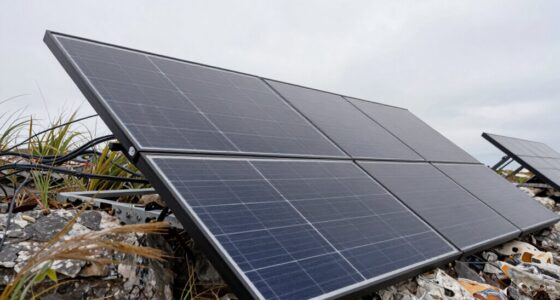
Home energy resilience helps you keep power during disruptions by adding backup systems like batteries or microgrids, and it supports grid stability without disconnecting. Energy independence, on the other hand, lets you generate and manage all your energy needs on your own, making you fully self-sufficient and off-grid. While resilience helps you recover quickly from outages, independence focuses on complete control over your energy. If you want to understand how these strategies differ in purpose and design, keep exploring.

Get home appliances delivered free with Prime
- Fast, free delivery on millions of items
- Prime Video, Amazon Music and more included
- Member-only deals all year
Key Takeaways
- Resilience focuses on maintaining power during disruptions, while independence aims for complete self-sufficiency and off-grid operation.
- Resilience involves backup systems for quick recovery, whereas independence requires extensive renewable generation and storage for autonomous functioning.
- Resilience ensures system robustness and stability during outages, while independence eliminates reliance on external grid sources entirely.
- Resilience supports grid stability and rapid restoration, whereas independence emphasizes full control over energy without grid dependence.
- Resilience balances grid connection with backup solutions; independence seeks complete independence from the grid.
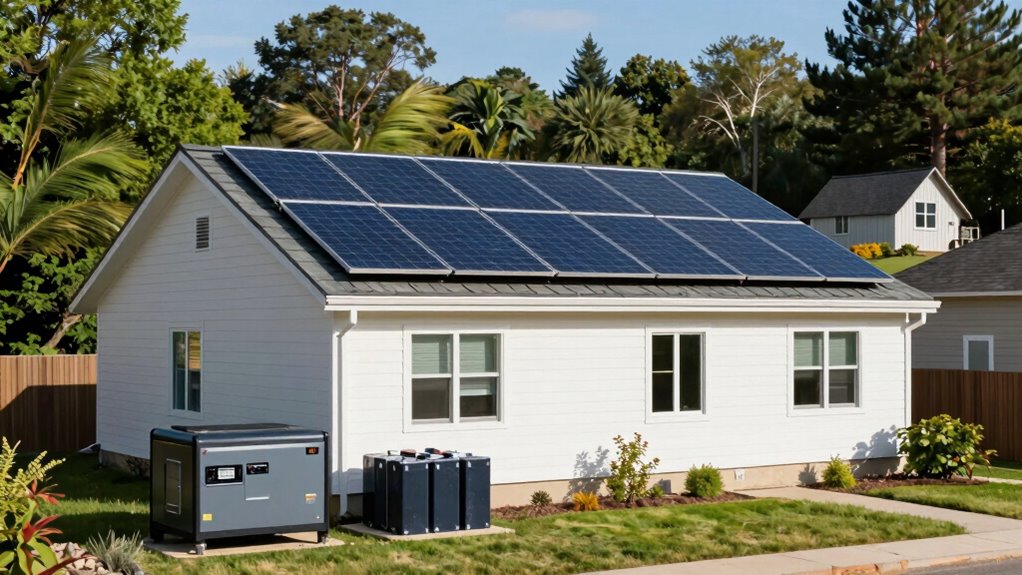
Have you ever wondered whether your home should focus more on weathering disruptions or on reducing reliance on the grid altogether? The distinction between home energy resilience and energy independence might seem subtle, but understanding it can guide your choices. When you prioritize resilience, you’re aiming for your home to withstand and recover quickly from unexpected events—like storms, grid failures, or other disruptions—while maintaining essential functions. It’s about creating a system that’s robust enough to handle shocks without complete shutdowns, often by supporting grid stability and integrating renewable energy sources effectively.
Resilience centers on ensuring your home can operate during power outages or disturbances, often by incorporating backup systems like batteries or microgrids. These systems enable your home to continue functioning, even if the main grid goes down. This approach doesn’t necessarily mean disconnecting from the grid but rather making your home capable of weathering disruptions while still staying connected when the grid is stable. It’s a strategic balance—enhancing your home’s ability to adapt to unpredictable conditions without sacrificing access to reliable power. In this way, resilience emphasizes adaptability, quick recovery, and maintaining essential services during adverse events. Energy storage plays a vital role in supporting this resilience, providing the backup power needed during outages. Additionally, the integration of renewable energy sources can enhance both resilience and sustainability.
Resilience means keeping your home powered during outages while staying connected to the grid.
On the other hand, energy independence pushes further, aiming for a state where your home generates and manages all its energy needs without relying on the grid. This often involves installing extensive renewable systems, like solar panels and wind turbines, coupled with large battery storage. The goal is to become self-sufficient, reducing or eliminating your dependence on external power sources altogether. While this approach can provide security against grid outages, it also requires significant investment and careful planning to ensure you generate enough renewable energy year-round. The process of achieving energy independence involves a comprehensive understanding of your energy consumption and local renewable resources. Independence means you’re not just prepared; you’re off the grid, controlling your energy flow entirely. Self-sufficiency is often a key motivation for those seeking to fully manage their energy future.
Achieving energy resilience can also contribute to the overall stability of your local or regional power system, especially when many homes adopt such practices. The key difference lies in scope and intent. Resilience focuses on maintaining power and quick recovery during disruptions, often supporting grid stability and renewable integration in a way that enhances overall system robustness. Energy independence is about complete self-reliance, where your home produces, stores, and consumes its energy without connection to the larger grid. Both approaches aim to improve your energy security, but resilience is more about safeguarding day-to-day stability and quick recovery, while independence seeks to eliminate reliance altogether. Depending on your priorities, budget, and location, you might choose one approach or combine elements of both to create a home energy system tailored to your needs.
As an affiliate, we earn on qualifying purchases.
Frequently Asked Questions
Can Home Energy Resilience Ensure Power During Widespread Grid Failures?
Yes, home energy resilience can guarantee power during widespread grid failures by providing backup power sources like batteries or generators. This setup helps you maintain essential functions even when grid stability is compromised. By investing in resilient energy solutions, you reduce reliance on the grid, ensuring continuous power. This proactive approach keeps your home operational and minimizes disruption, giving you peace of mind during emergencies or outages.
What Technologies Specifically Enhance Energy Independence at Home?
You can enhance energy independence at home through smart meters and energy storage systems. Smart meters give you real-time data on your energy use, helping you optimize consumption and reduce reliance on the grid. Energy storage, like batteries, allows you to store excess solar power or energy generated during off-peak hours for use when the sun isn’t shining or during outages. Together, these technologies empower you to take control of your energy supply.
How Do Costs Compare Between Resilience and Independence Strategies?
Think of building resilience like planting a sturdy tree—costs are steady, focusing on durability, while independence is like harvesting your own fruit—initial investments are higher. Resilience strategies often have lower upfront costs, fitting into your budget considerations, but may require ongoing maintenance. Independence strategies, though pricier initially, can save money long-term. So, weigh the cost comparison carefully to match your financial goals and energy needs.
Are Government Incentives Available for Resilience or Independence Upgrades?
Yes, government incentives are available for both resilience and independence upgrades. You can access policy incentives like tax credits, rebates, and grants that support installing solar panels, battery storage, or backup generators. These financial assistance programs aim to reduce upfront costs and encourage energy self-sufficiency. Be sure to check federal, state, and local programs, as eligibility and offerings vary depending on your location and specific upgrade plans.
How Do Climate Impacts Influence Resilience Versus Independence?
Think of climate impacts as shifting tides. They challenge your resilience by forcing your home to adapt quickly, like a boat adjusting to waves. Climate change heightens the need for climate adaptation strategies, ensuring your home withstands storms and heat. Energy storage becomes your lifeboat, keeping power steady during outages. While independence focuses on self-sufficiency, resilience emphasizes adapting to these unpredictable shifts, safeguarding your home against the ever-changing climate.
Conclusion
In the battle for your home’s energy future, understanding the difference between resilience and independence is essential. Resilience guarantees your home can withstand any storm or blackout, while independence aims for total self-sufficiency. Think of resilience as your fortress against nature’s fury—unshakable and steadfast—whereas independence is the solo journey of self-reliance. Embrace resilience to safeguard your sanctuary; it’s your ultimate shield in a world of unpredictable energy storms.
Fall yard work Picks
leaf blowers
As an affiliate, we earn on qualifying purchases.