
TL;DR
House Beautiful’s report asks an 11-year-old to assess furnishings and decor for a room aimed at Gen Alpha. The child’s comments favor comfortable shapes, practical storage, adaptable colors and pieces that feel appropriately scaled, but the report does not present a broad survey of children’s preferences.
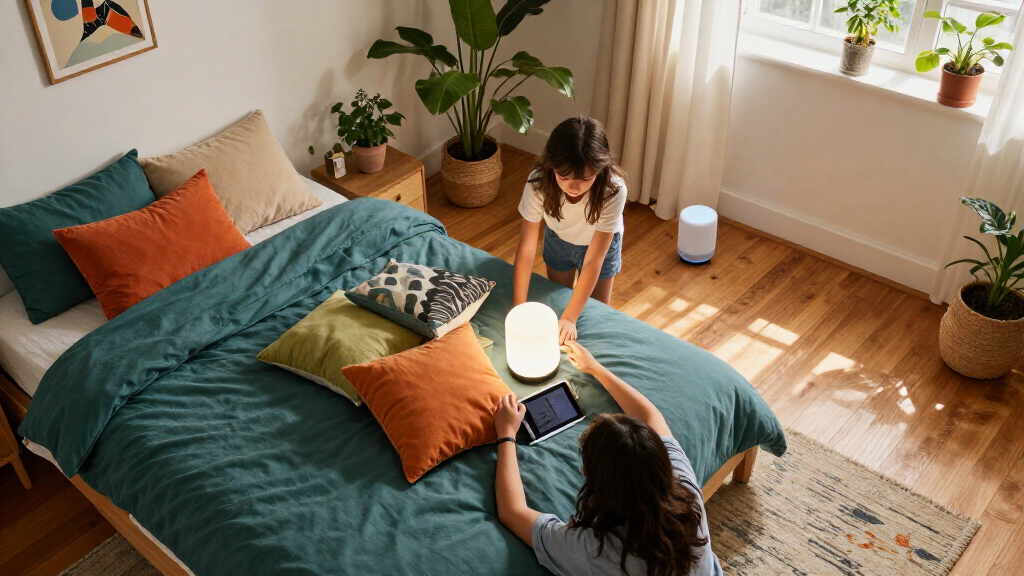
House Beautiful published a room-design report in which an 11-year-old reviews furnishings and decor through a child’s perspective, describing what feels comfortable, useful and appealing. The comments offer a firsthand illustration of how one young person evaluates bedroom choices, though they do not establish what Gen Alpha as a whole prefers.

Get home appliances delivered free with Prime
- Fast, free delivery on millions of items
- Prime Video, Amazon Music and more included
- Member-only deals all year
The child’s reactions connect appearance with everyday use. A rounded piece of furniture should feel comfy without looking cartoonish, the child says, while a smaller rug can add character without forcing one pattern across the room. A quieter, less bold rug might work better across an entire floor, according to the comments included in the report.
Storage and surface space also matter in the child’s assessments. The child favors a nightstand with a large top for keeping many items nearby and prefers its white finish because it looks “cleaner and neater.” Another item earns praise for combining decoration with storage: the child says a pink jewelry piece has enough room and makes more sense than leaving a black case in the middle of a room.
Several comments point to flexibility. The child likes a cream-colored item that could work with different room styles, and a shoe organizer that might also hold towels or school supplies. The report also describes a light that initially caused confusion but became more appealing when imagined on a wall, where its color could change like LED strips. A bookshelf, meanwhile, is preferred for feeling more like a regular shelf than a tall display tower.
Comfort, Storage and Room to Personalize
The report’s value is its direct glimpse of one child’s decision-making, rather than a market-wide claim about young consumers. The comments suggest that a room’s appeal may depend not just on color or novelty, but on whether furniture is comfortable, offers enough space and can serve more than one purpose.
For readers planning a child’s bedroom, that distinction can make design decisions more practical: asking the person who will use the room may reveal preferences adults overlook, such as a nightstand’s usable surface or whether a storage item can be repurposed. The report also shows that a child can respond to design details with nuance, liking playful features while rejecting an overly cartoon-like look. These observations are illustrative, not evidence that all children of the same age or generation share the same tastes.
Products Worth Considering

Levoit Core 400S-P Smart Air Purifier for Large Rooms

Levoit EverestAir-P Smart Air Purifier for Large Rooms

Philips Hue Smart Light Starter Kit with Bridge and 4 White and Color A19 Bulbs
As an affiliate, we earn on qualifying purchases.
A Child Reacts to Specific Room Pieces
The supplied House Beautiful report is organized around an interview-style set of reactions to individual products and design options, rather than a formal study or a set of decorating rules. Its examples range across rugs, a nightstand, lighting, storage and shelving. The child comments on specific qualities—including color, shape, scale and placement—and sometimes imagines uses different from the item’s apparent main purpose.
That format matters when interpreting the piece: the statements reflect one child’s responses to items presented in the report. The source material does not identify a wider sample, report a survey method or provide evidence that the preferences represent a generation-wide trend. Its clearest takeaway is the value of asking a young room user what they like and why.
“The shape should be round and plump. It doesn’t look too much like a marshmallow. I want it to look comfy, but not like a cartoon.”
— The 11-year-old, as quoted in House Beautiful
One Child Is Not a Generation
The report presents one 11-year-old’s opinions. The supplied source does not say how the child was selected, whether they were shown additional options, or whether other children were interviewed. It also provides no survey data, sales figures or research testing whether these preferences are common among Gen Alpha.
The source material does not give a publication date, identify every product shown in the original presentation or report any follow-up on which pieces were ultimately chosen. Accordingly, the comments should be read as individual reactions, not as a definitive guide to what children broadly want in their rooms.
How Families Can Use These Reactions
The report does not announce a follow-up study or a next publication milestone. For readers applying its examples, the practical next step is to involve the child who will use the room: ask about comfort, storage, color and where an item would go, then weigh those preferences against available space and household needs.
Whether these observations reflect broader Gen Alpha tastes remains unanswered by the supplied report. A larger survey or interviews with children from different ages and backgrounds would be needed to support claims about generation-wide preferences.
Key Questions
What is the report about?
House Beautiful presents an 11-year-old’s reactions to room furnishings and decor, including rugs, lighting, storage and shelving.
What design features did the child like?
The child praised comfort, useful storage, ample surface space, adaptable colors and objects that combine decoration with a practical purpose.
Does the report show what all Gen Alpha children prefer?
No. It records one child’s opinions and does not provide a survey or other evidence showing that the views represent the wider generation.
What is the clearest practical takeaway for families?
Ask the child who will use the room about specific choices, including comfort, scale, storage and placement, rather than assuming an adult’s preferences will match theirs.
Source: rss